
The Sequoia has an exceptional durability reputation, but older generations—especially the 5.7-liter V8 models—earned much of it. The 2026 Sequoia’s twin-turbo hybrid powertrain is fundamentally different and hasn’t accumulated comparable long-term evidence.
Its competitors face similar uncertainty. The Armada now uses a turbocharged V6, while GM has dealt with documented problems involving certain earlier 6.2-liter V8s.
So there isn’t enough long-term evidence to crown an undisputed 2026 reliability champion. The better approach is to compare each SUV’s powertrain, known risks, and existing durability evidence.
Most Reliable Full-Size SUVs: Quick Comparison
| SUV | Strongest Advantage | Main Reliability Consideration | Our Assessment |
|---|---|---|---|
| Toyota Sequoia | Exceptional historical durability | Newer twin-turbo hybrid system | Strong candidate, not yet proven long-term |
| Chevrolet Tahoe | Established platform and service network | Engine-specific risks | Practical choice with careful engine selection |
| GMC Yukon | Tahoe engineering with premium options | Similar GM powertrain exposure | Good alternative; configuration matters |
| Ford Expedition | Established EcoBoost powertrain family | Turbocharged engine and transmission history | Worth considering |
| Nissan Armada | Strong capability and substantial redesign | New V6 and transmission | Promising, limited long-term evidence |
| Lexus LX | Heavy-duty architecture and premium engineering | Turbocharged engine and luxury-system complexity | Appealing but expensive to repair |
These are qualified buying recommendations, not a statistical ranking. A vehicle’s position in the table does not imply a measured reliability advantage over the next one.

1. Toyota Sequoia — The Strongest Historical Durability Reputation
The Sequoia’s durability reputation was largely built by the 2008–2022 generation and its 5.7-liter 3UR-FE V8. Today’s model is fundamentally different, using a 437-hp, 583-lb-ft i-FORCE MAX system that combines a twin-turbo V6 with hybrid assistance primarily for performance and torque.
Toyota’s related V6 engine family has faced manufacturing-related issues in certain applications, but those shouldn’t be generalized to every Sequoia without checking the exact model, production period, and VIN.
Our assessment: The Sequoia remains promising for long-term ownership, but the old V8’s longevity cannot prove the new hybrid’s durability.
See our longest-lasting SUVs analysis for the historical evidence.
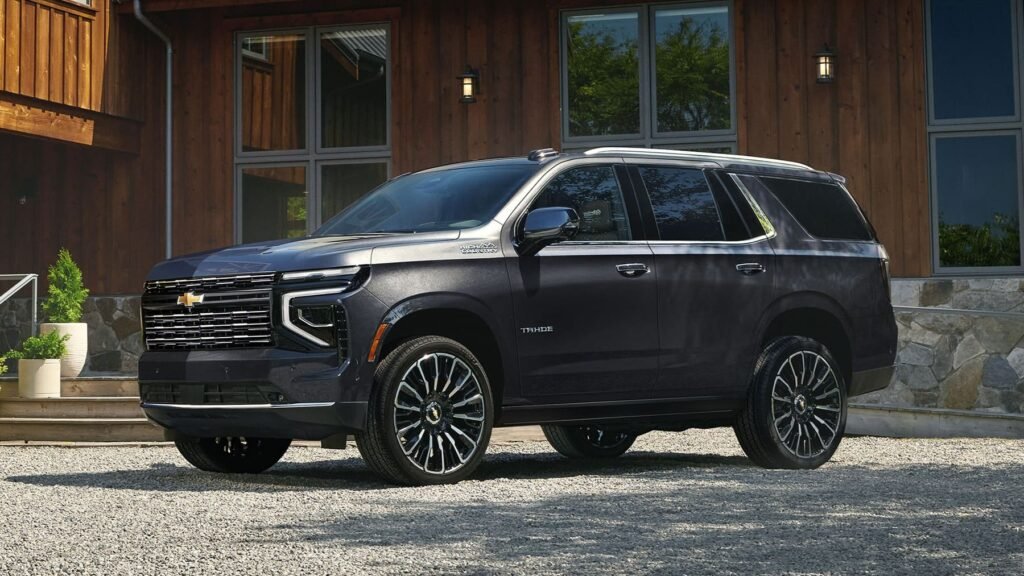
2. Chevrolet Tahoe — A Practical Choice, but the Engine Matters
The Chevrolet Tahoe benefits from an established full-size SUV platform, broad parts availability and a substantial service network. However, its reliability cannot be evaluated independently of its engine. For 2026, buyers can choose among three powertrains:
| Engine | Output | Main Consideration |
|---|---|---|
| 5.3L gasoline V8 | 355 hp | Familiar configuration; inspect cylinder-deactivation-related history |
| 6.2L gasoline V8 | 420 hp | Strong performance; investigate applicable engine campaigns |
| 3.0L Duramax diesel | 305 hp | Excellent highway efficiency; diesel-specific maintenance |
The Tahoe’s 6.2-liter L87 V8 deserves scrutiny. GM recalled certain 2021–2024 vehicles after documented connecting-rod and crankshaft manufacturing defects could cause engine failure. That’s a serious failure mechanism, but the recall’s production scope shouldn’t automatically be applied to later Tahoes.
The 5.3-liter V8 avoids that specific L87 recall but retains cylinder-deactivation complexity, while the Duramax diesel adds emissions-system considerations.
Our assessment: The Tahoe remains a practical full-size SUV, but I’d prioritize engine choice, maintenance history, and VIN-specific campaigns over trim level.
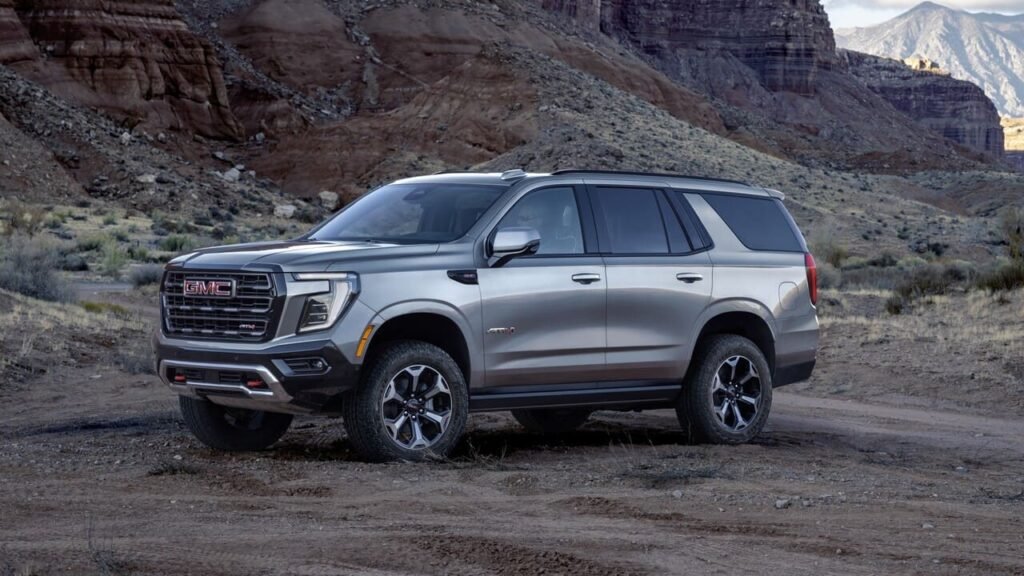
3. GMC Yukon — Similar Mechanical Risks, Different Ownership Experience
The Yukon shares its core engineering and available 5.3-liter V8, 6.2-liter V8, and 3.0-liter Duramax diesel with the Tahoe, so the GMC badge doesn’t inherently make it more reliable.
The bigger difference is equipment. Higher Yukon trims can add sophisticated suspension, driver-assistance, and luxury systems that improve the experience but increase long-term repair exposure. The Yukon XL also offers substantially more cargo space for large families.
Our assessment: Choose the Yukon over the Tahoe for space, equipment, or styling—not an assumed mechanical reliability advantage.
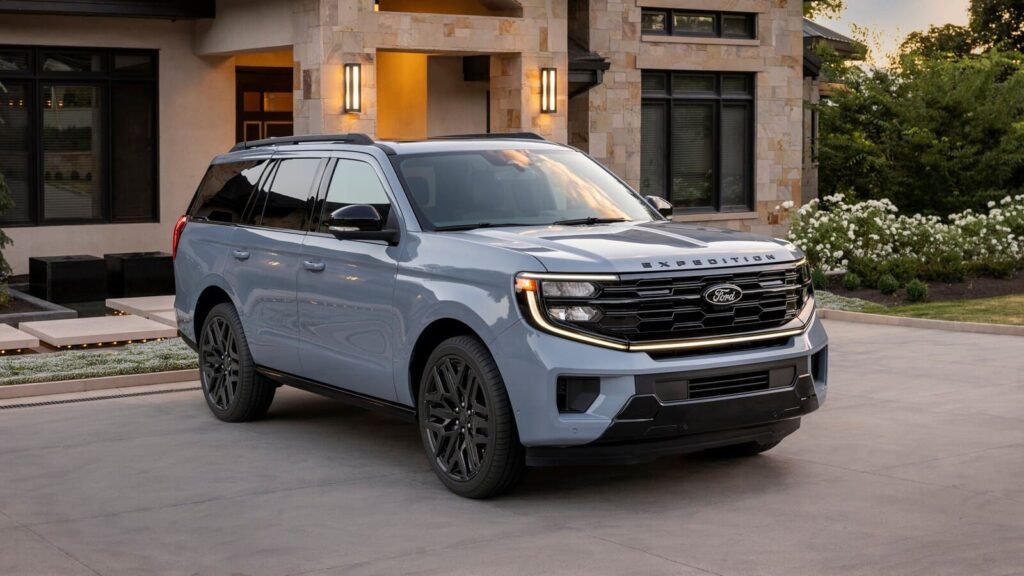
4. Ford Expedition — A Serious Alternative With a Mature Engine Family
The 2026 Expedition uses Ford’s 3.5-liter twin-turbo EcoBoost V6 and 10-speed automatic, producing 400 hp or up to 440 hp in high-output form. Unlike some newer rivals, this powertrain family has substantial real-world history.
Earlier applications have experienced timing-system, cam-phaser, and transmission concerns, but those shouldn’t automatically be applied to every 2026 model; revisions and calibrations matter.
Our assessment: The Expedition deserves consideration alongside the Tahoe and Yukon. Research the exact model year and service history rather than treating turbocharging itself as a reliability problem.

5. Nissan Armada — Promising, but the Redesign Needs Time
The redesigned Armada replaces the old 5.6-liter V8 with a 425-hp, 516-lb-ft 3.5-liter twin-turbo V6 and nine-speed automatic, delivering substantially more torque. A higher-output NISMO version joins the 2026 lineup.
The problem for reliability-focused buyers is simply time. The new engine, transmission, electronics, and available suspension technology haven’t accumulated enough long-term evidence, and the previous V8 Armada’s durability record cannot substitute for it.
Our assessment: The new Armada looks promising, but buyers prioritizing long-term certainty may want more real-world data before treating it as a proven choice.

6. Lexus LX — Premium Engineering With Expensive Failure Exposure
The Lexus LX benefits from Land Cruiser-derived engineering and a strong durability history, but today’s powertrains are different. The LX 600 uses a 409-hp twin-turbo V6, while the LX 700h adds hybrid assistance for 457 combined hp, replacing the previous LX 570’s naturally aspirated V8 formula.
That history is encouraging, but it cannot prove the new powertrains’ long-term durability. And mechanical robustness doesn’t necessarily mean inexpensive ownership when sophisticated suspension, electronics, and luxury equipment are involved.
Our assessment: The LX remains compelling, but its reputation shouldn’t substitute for model-specific long-term evidence.
Why Proven Platforms Don’t Guarantee Proven Powertrains
The key lesson is that engineering maturity belongs to specific components and systems—not simply brands or nameplates. The Sequoia and Armada have strong histories, yet today’s engines and transmissions differ fundamentally from those that built those reputations.
Likewise, turbocharging isn’t inherently unreliable, and mechanical simplicity doesn’t guarantee durability. What matters is whether the engine, cooling, lubrication, controls, manufacturing, and emissions systems have proved themselves together.
GM’s 6.2-liter recall reinforces the point: its documented failures involved specific manufacturing defects, not simply the fact that it was a powerful V8. Reliability depends on design maturity, manufacturing consistency, and real-world validation—not simplicity alone.
Which Full-Size SUV Would I Actually Buy?
For long-term ownership, I’d start with the Sequoia, Tahoe, and Expedition, then evaluate the exact powertrain and configuration. The Sequoia brings strong Toyota SUV heritage but a relatively new hybrid system; the Tahoe offers excellent parts and service availability, with the 5.3-liter V8 particularly interesting; and the Expedition combines useful packaging with an established EcoBoost family.
For luxury, I’d consider the Lexus LX with an appropriate repair budget. The redesigned Armada is promising but still needs more long-term evidence. If cargo space is critical, consider the Suburban, Yukon XL, or Expedition MAX instead of compromising with a shorter SUV.
For running-cost comparisons, see our most fuel-efficient full-size SUVs guide
Final Verdict: What’s the Most Reliable Full-Size SUV in 2026?
The Toyota Sequoia has exceptional historical durability, but its current hybrid generation hasn’t accumulated enough evidence to crown it the reliability winner. The Tahoe, Yukon, and Expedition remain credible alternatives, while the newer Armada and LX require more separation between nameplate reputation and current-generation data.
For ownership beyond 150,000 miles, prioritize the exact engine, transmission, maintenance history, recalls, and potential major repair costs. The most reliable full-size SUV isn’t necessarily the one with the strongest reputation. It’s the configuration with the strongest relevant evidence—and risks you’re prepared to accept.
- Chinese Cars Are Winning the Technology Race—But Will They Last?
- 2024 Toyota Camry Reliability: Is It Toyota’s Smartest Buy?
- 2023 Toyota Camry Reliability: Is Paying More Really Worth It?
- 10 Most Reliable Used Cars in 2026: Specific Years to Buy
- 2022 Toyota Camry Reliability: Is It the Best Used Camry?
- Car Reliability Ratings Explained: Which Ones Can You Actually Trust?
*Disclaimer: This website provides automotive content for informational purposes only and should not be considered professional advice. While we strive for accuracy, we do not guarantee the reliability or suitability of any vehicle or product mentioned—always conduct your own research before making purchasing decisions. Additionally, some links on this site are affiliate links, meaning we may earn a commission if you make a purchase, at no extra cost to you.