
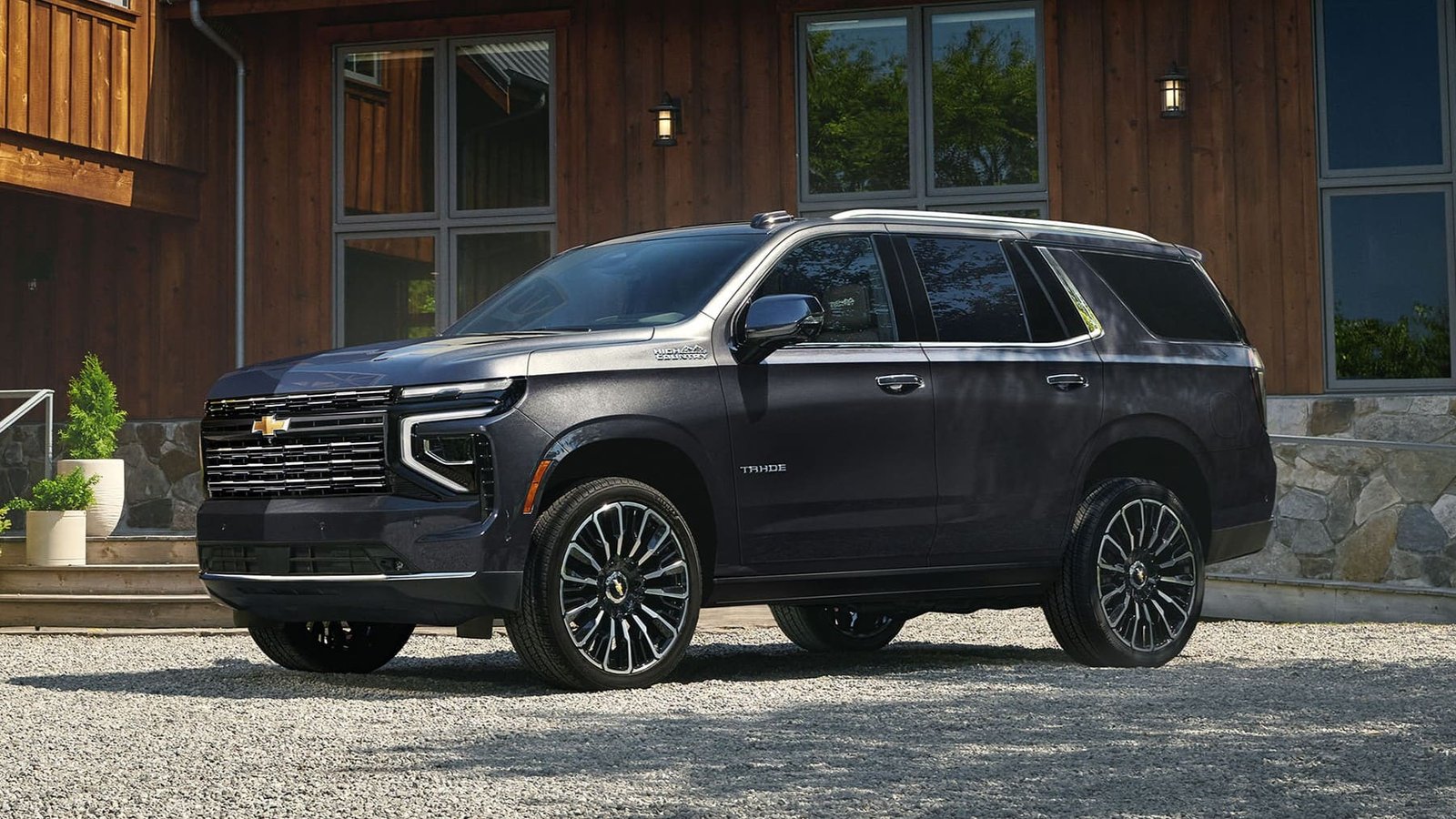
If fuel economy comes first, a full-size SUV isn’t the obvious choice. But if you genuinely need three usable rows, substantial cargo space or serious towing capacity, the better question is: which full-size SUV does the job with the least fuel?
For 2026, the answer is surprisingly varied. Diesel, hybrid and turbocharged gasoline powertrains can all improve efficiency—but they get there in very different ways.
The Most Fuel-Efficient Full-Size SUVs
| SUV | Powertrain | EPA Fuel Economy* | Why It Stands Out |
|---|---|---|---|
| Chevrolet Tahoe Duramax 2WD | 3.0L turbodiesel I6 | 22/26/24 mpg | Best overall efficiency |
| Chevrolet Suburban Duramax 2WD | 3.0L turbodiesel I6 | 21/26 mpg | Huge interior + excellent highway economy |
| Toyota Sequoia RWD | 3.4L twin-turbo V6 hybrid | 21/24/22 mpg | Hybrid torque + towing capability |
| Ford Expedition 4×2 | 3.5L twin-turbo V6 | 16/24 mpg | Strong gasoline alternative |
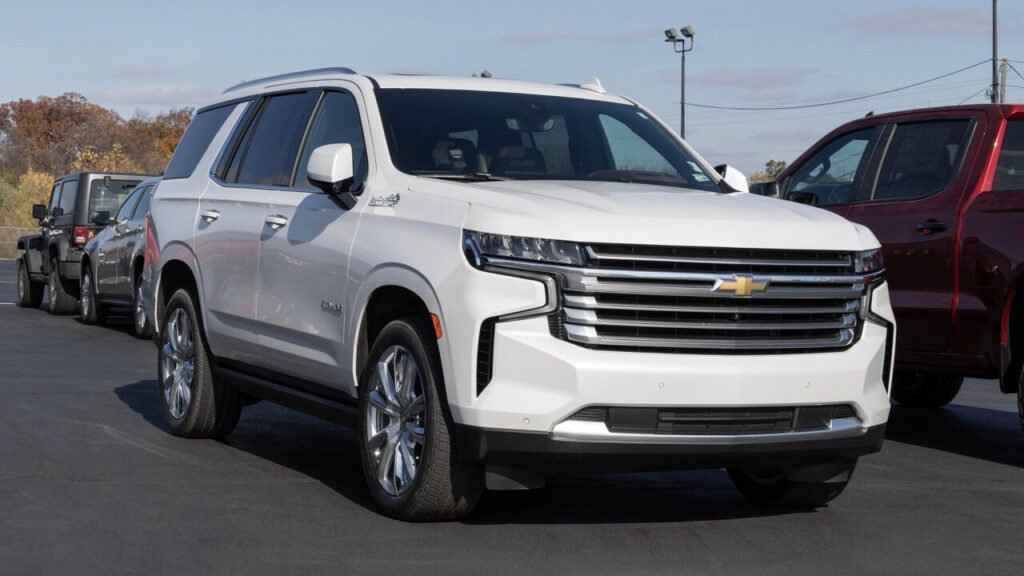
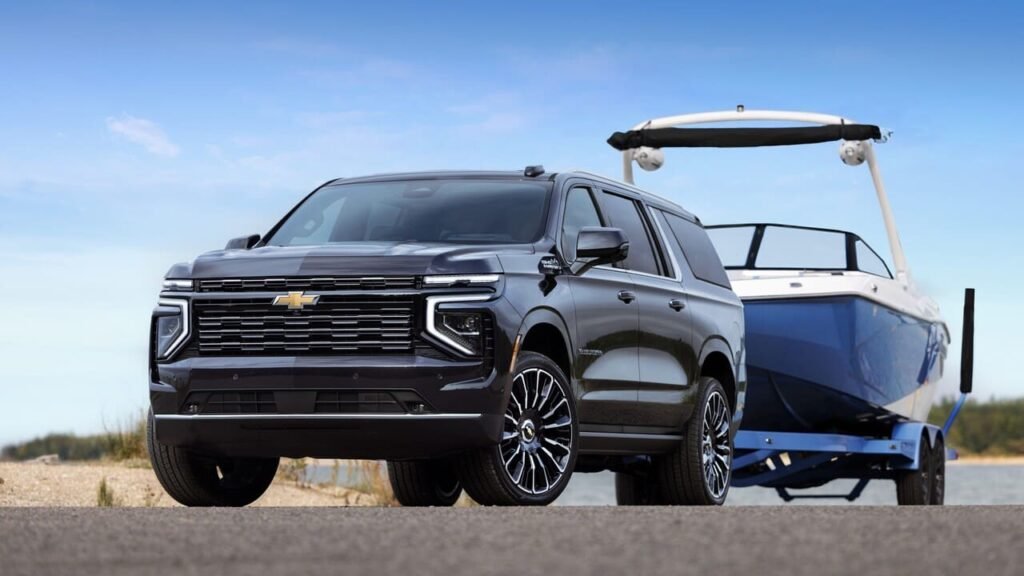
1. Chevrolet Tahoe Duramax — Best Overall
The 2026 Chevrolet Tahoe Duramax 2WD leads this group at 22 mpg city, 26 highway and 24 combined, with Chevrolet estimating up to 624 miles of highway range. Its 3.0-liter turbodiesel also produces 305 hp and 495 lb-ft, giving a heavy SUV the low-rpm torque it needs for passengers, cargo and towing without sacrificing efficiency.
The catch is cost: diesel prices vary, while DEF and diesel emissions hardware add ownership considerations. So 24 mpg doesn’t automatically mean cheapest to run, but for high-mileage highway driving and towing, the Duramax preserves the Tahoe’s capability while burning remarkably little fuel for its size.
Best for: High-mileage driving, road trips and towing.
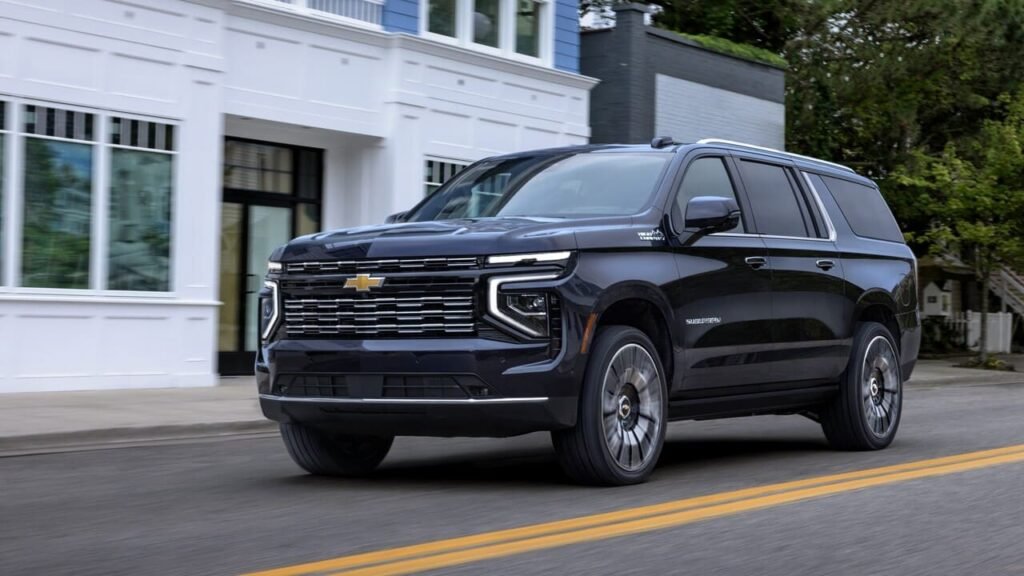
2. Chevrolet Suburban Duramax — Best for Maximum Space
The 2026 Suburban Duramax 2WD returns an EPA-estimated 21 mpg city and 26 highway, despite offering even more space than the Tahoe. Chevrolet also estimates up to 728 miles of highway range, making that extra size surprisingly road-trip friendly.
Its advantage isn’t different technology but more usable space with similar highway efficiency. If you genuinely need the Suburban’s additional cargo room behind three rows, the Duramax lets you keep it without accepting traditional large-V8 fuel consumption.
Best for: Large families traveling with passengers and substantial luggage.

3. Toyota Sequoia — Best Hybrid
The 2026 Toyota Sequoia proves that hybrid doesn’t automatically mean spectacular MPG. Its standard i-FORCE MAX system combines a twin-turbo 3.4-liter V6, electric motor and 10-speed automatic for 437 hp and 583 lb-ft, while the most efficient RWD versions return 21 city, 24 highway and 22 combined mpg.
That’s intentional. Toyota uses hybridization here for efficiency and low-speed capability, helping the Sequoia tow up to 9,500 pounds when properly equipped. It’s a capability-oriented hybrid, not a Prius-sized economy play—and configuration matters, with some 4WD versions dropping to 19/22/20 mpg.
Best for: Buyers wanting hybrid efficiency without giving up serious towing capability.
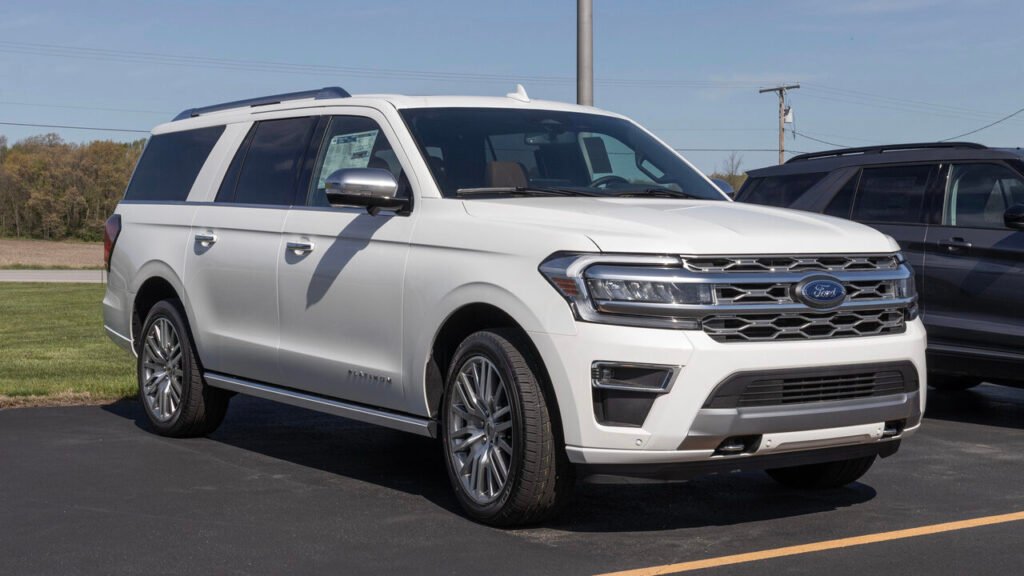
4. Ford Expedition — Best Conventional Gasoline Alternative
The 2026 Ford Expedition is the conventional gasoline alternative, using a 3.5-liter twin-turbo V6 with 400 hp and 480 lb-ft. Certain 4×2 versions achieve 16 mpg city and 24 highway while towing up to 9,600 pounds when properly equipped—impressive capability without diesel or hybrid hardware.
The catch is city driving. That 24-mpg highway figure looks reasonably close to the Tahoe Duramax’s 26 mpg, but 16 versus 22 mpg in the city creates a much larger real-world gap for commuters and suburban drivers.
Best for: Strong towing capability without diesel or hybridization.
Why 20 MPG Is Better Than It Sounds
MPG is an unintuitive measurement. The difference between 15 and 20 mpg looks like only five miles per gallon, but financially, it can be enormous.
At 12,000 miles per year:
| Fuel Economy | Fuel Used Per Year |
|---|---|
| 15 mpg | 800 gallons |
| 20 mpg | 600 gallons |
| 25 mpg | 480 gallons |
A five-mpg improvement matters far more when fuel economy is poor. At 12,000 miles per year, improving from 15 to 20 mpg saves 200 gallons annually—about $650 a year or $6,500 over ten years at $3.25 per gallon.
By comparison, moving from 45 to 50 mpg saves only about 27 gallons a year. That’s the MPG illusion: improving a 6,000-pound SUV by five mpg can save dramatically more fuel than making an already-efficient economy car another five mpg better.
Diesel vs. Hybrid: Two Different Solutions
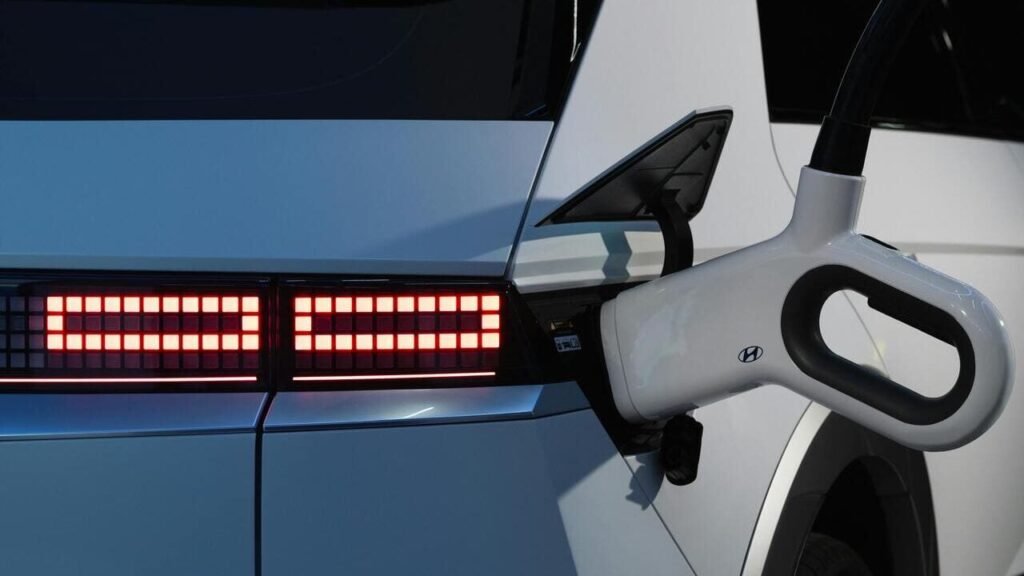
The Tahoe Duramax and Sequoia solve the same problem differently. The Duramax relies on diesel efficiency and low-rpm torque, making it particularly effective under sustained loads and highway driving; the Sequoia uses regenerative braking and electric assistance, recovering energy that would otherwise be lost during braking.
Neither automatically wins. Fuel price, driving pattern, maintenance and purchase price still matter, which is why the most fuel-efficient SUV isn’t necessarily the cheapest to own.
Configuration Can Quietly Destroy Your MPG Advantage
EPA fuel economy applies to a specific configuration, not simply a model name. Equipment that adds weight, rolling resistance or drivetrain losses can noticeably increase consumption, including:
- 4WD
- Larger wheels
- Aggressive tires
- Off-road equipment
- Additional weight
The Sequoia shows the effect clearly: its most efficient RWD configuration reaches 22 mpg combined, while several 4WD versions manage around 20 mpg—a roughly 10% increase in fuel consumption with the same basic powertrain. If efficiency matters, don’t just choose the right SUV; choose the right version.
Do You Actually Need a Full-Size SUV?
If you regularly tow, carry six people with luggage or use a Suburban’s cargo capacity, an efficient full-size SUV makes sense. But buying a 6,000-pound SUV for one annual vacation means paying its fuel penalty during the other 51 weeks.
For two adults, two children, commuting and groceries, a smaller three-row crossover or hybrid may make far more sense—and you can rent something larger when needed. Our Top SUVs for Road Trips and Long Drives guide covers those alternatives.
The most efficient full-size SUV is still a full-size SUV. Sometimes the biggest fuel saving comes from choosing a smaller vehicle, not a different engine.
Which Fuel-Efficient Full-Size SUV Would I Buy?
For substantial highway mileage, we’d choose the Tahoe Duramax: 24 mpg combined, 26 mpg highway, strong low-rpm torque and long range suit a large SUV exceptionally well. Need maximum cargo space? Move to the Suburban Duramax. The Sequoia trades some efficiency for hybrid-assisted torque and strong towing, while the Expedition remains the conventional gasoline choice for serious towing.
But don’t shop by MPG alone. Consider annual fuel consumption, driving pattern, fuel type and exact configuration. Most importantly, make sure you actually need a full-size SUV—because even the most efficient one still requires moving roughly three tons everywhere you go.
- Chinese Cars Are Winning the Technology Race—But Will They Last?

- 2024 Toyota Camry Reliability: Is It Toyota’s Smartest Buy?
- 2023 Toyota Camry Reliability: Is Paying More Really Worth It?
- 10 Most Reliable Used Cars in 2026: Specific Years to Buy

- 2022 Toyota Camry Reliability: Is It the Best Used Camry?
- Car Reliability Ratings Explained: Which Ones Can You Actually Trust?
*Disclaimer: This website provides automotive content for informational purposes only and should not be considered professional advice. While we strive for accuracy, we do not guarantee the reliability or suitability of any vehicle or product mentioned—always conduct your own research before making purchasing decisions. Additionally, some links on this site are affiliate links, meaning we may earn a commission if you make a purchase, at no extra cost to you.