
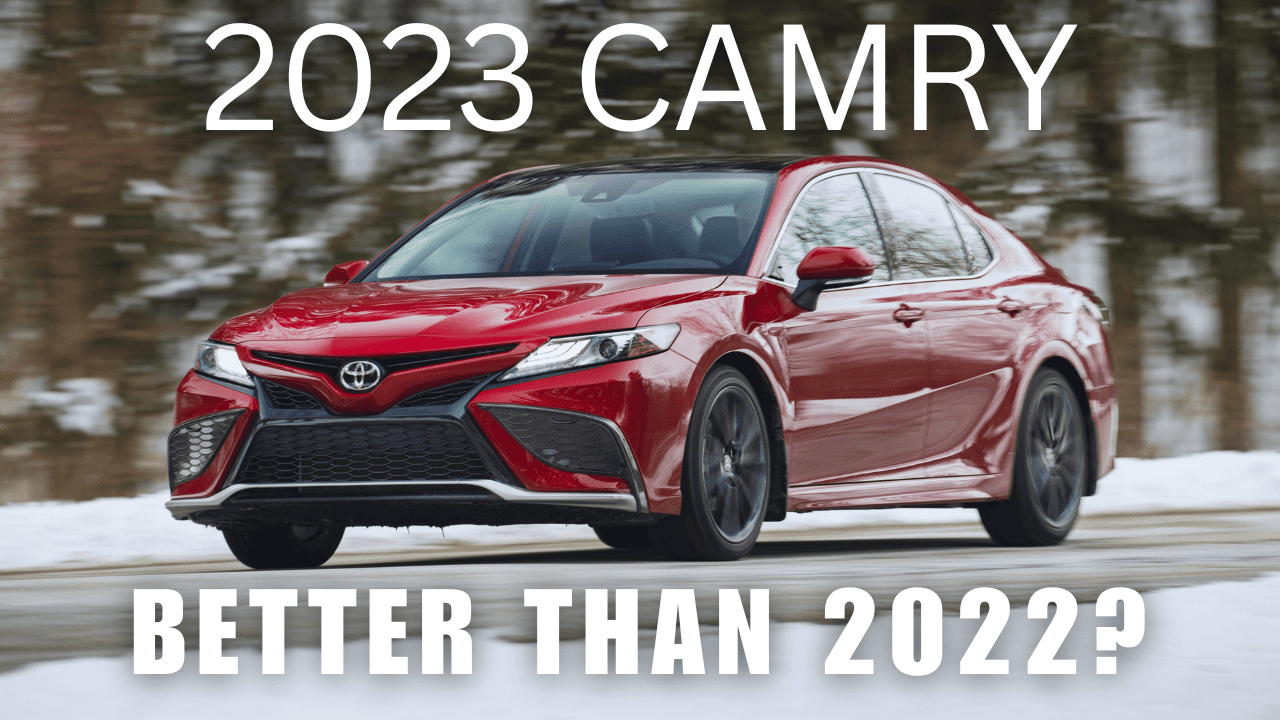
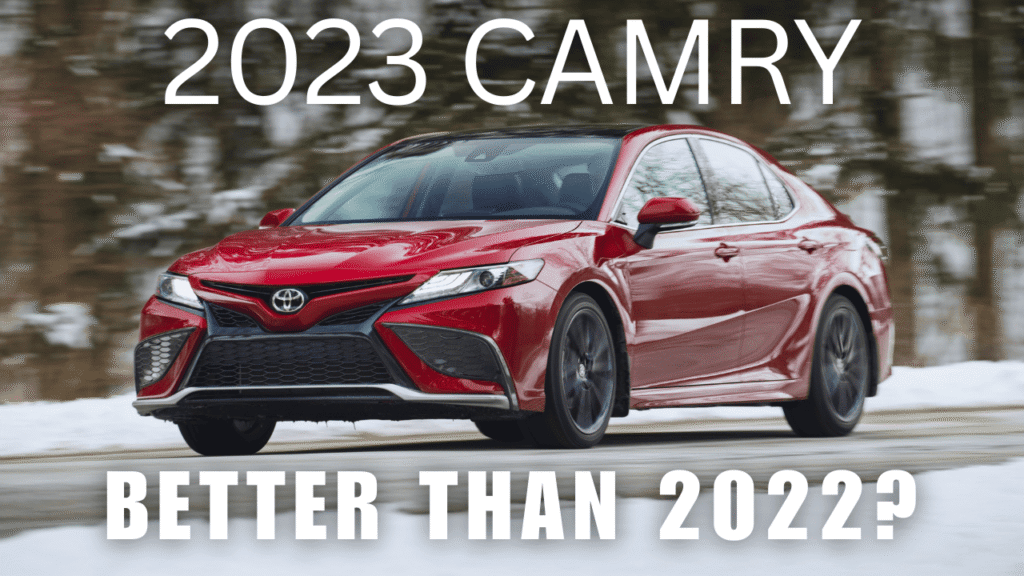
The 2023 Toyota Camry benefits from being a late-production XV70 rather than from any major mechanical breakthrough. Its engines, transmissions, and hybrid system were already well established, giving buyers a mature platform with a strong reliability record—but also making the mechanically similar 2021 and 2022 models difficult to ignore.
That turns the decision into a question of price, not reliability. If a comparable 2023 costs only modestly more than a 2022, the newer model’s lower age and potentially lower mileage make sense; if the premium runs into thousands, you’re largely paying more for a newer version of the same proven Camry.
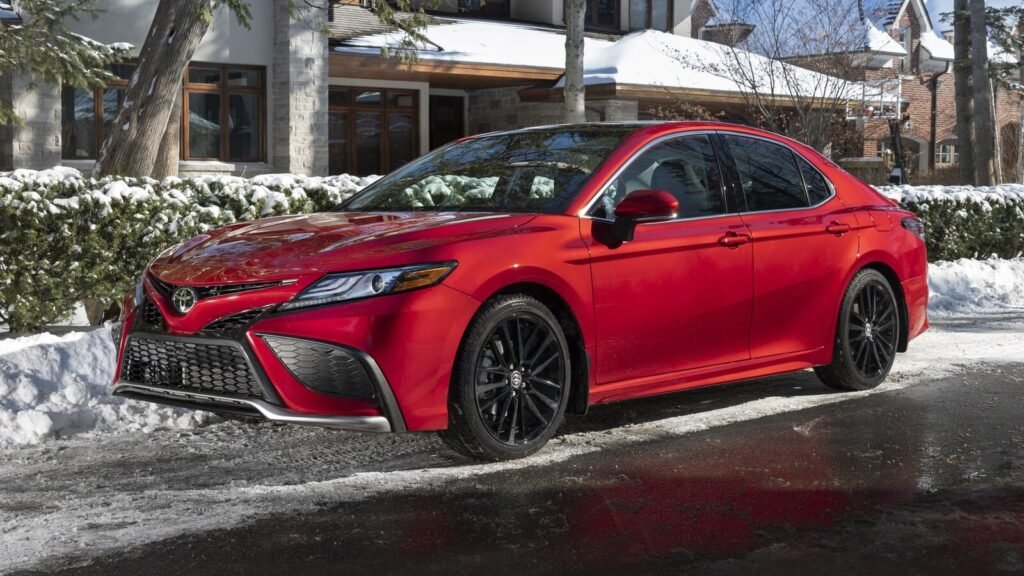
TopCarList Ownership Score
| Category | Score |
|---|---|
| Reliability | 9.9 / 10 |
| Maintenance Cost | 9.8 / 10 |
| Fuel Economy | 9.5 / 10 |
| Resale Value | 9.8 / 10 |
| Comfort | 9.6 / 10 |
| Technology | 9.5 / 10 |
| Value for Money | 9.6 / 10 |
| Overall TopCarList Score | 9.8 / 10 |
Bottom Line in 30 Seconds
The 2023 Camry remains one of the most dependable family sedans you can buy. The question isn’t whether it’s reliable—it absolutely is. The real question is whether the additional purchase price over a 2022 delivers enough value to justify the premium.
What’s New for 2023?
From a reliability standpoint, very little changed. Toyota wisely left the proven mechanical package alone. The familiar lineup continued:
| Powertrain | Horsepower | Transmission |
|---|---|---|
| 2.5L Dynamic Force I4 | 203 hp | 8-Speed Automatic |
| 3.5L V6 | 301 hp | 8-Speed Automatic |
| 2.5L Hybrid | 208 hp (combined) | eCVT |
Rather than redesigning major components, Toyota concentrated on trim availability, equipment packages, and manufacturing consistency. That’s exactly the kind of stability long-term owners appreciate.
2022 vs. 2023: Should You Spend More?
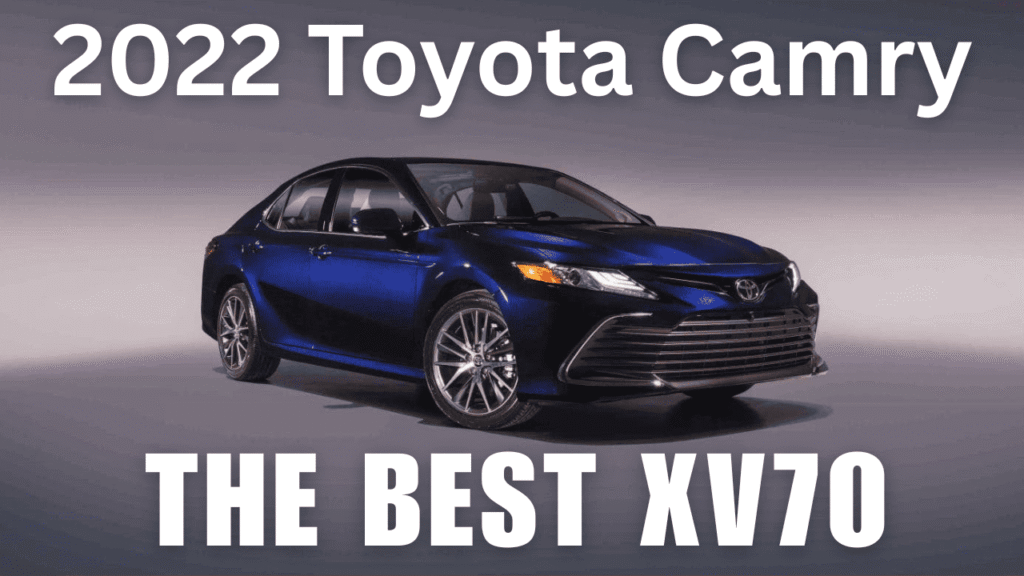
Here’s where buyers often overestimate the importance of model years. Mechanically, the two cars are nearly twins.
| Category | 2022 | 2023 |
|---|---|---|
| Engine Reliability | ★★★★★ | ★★★★★ |
| Transmission Reliability | ★★★★★ | ★★★★★ |
| Technology | ★★★★★ | ★★★★★ |
| Build Quality | ★★★★★ | ★★★★★ |
| Value for Money | ★★★★★ | ★★★★☆ |
Notice something interesting. The newer car isn’t necessarily the better value. If a 2023 costs only slightly more than a comparable 2022, I’d choose it without hesitation. If it costs several thousand dollars more, the 2022 becomes the smarter financial decision.
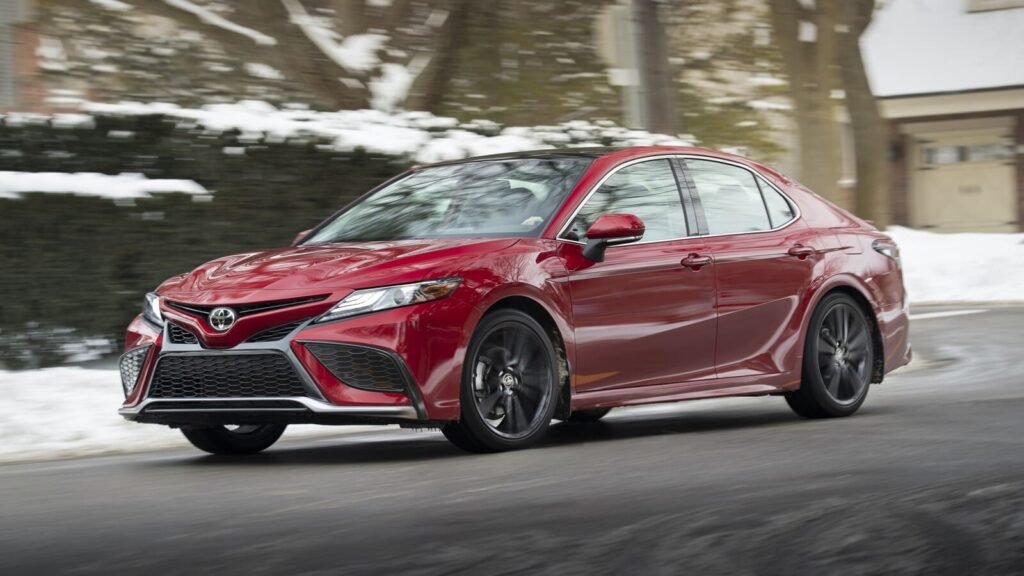
Reliability Ratings
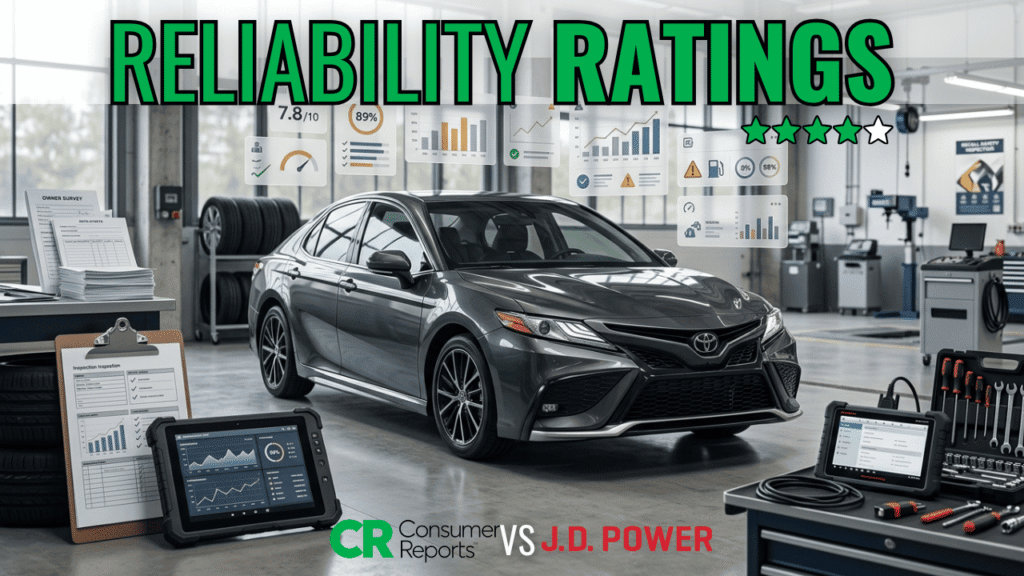
Independent reliability organizations continue ranking the Camry among the very best in the class.
| Organization | Rating |
|---|---|
| Consumer Reports | Above Average Predicted Reliability |
| J.D. Power | Excellent Quality & Reliability |
| RepairPal | 4.0 / 5.0 |
| IIHS | Top Safety Pick+ (properly equipped) |
| Average Annual Repair Cost | Around $390 |
The consistency of these ratings across multiple model years says more than any single score. Toyota wasn’t simply building a reliable car—it was building the same reliable car year after year.
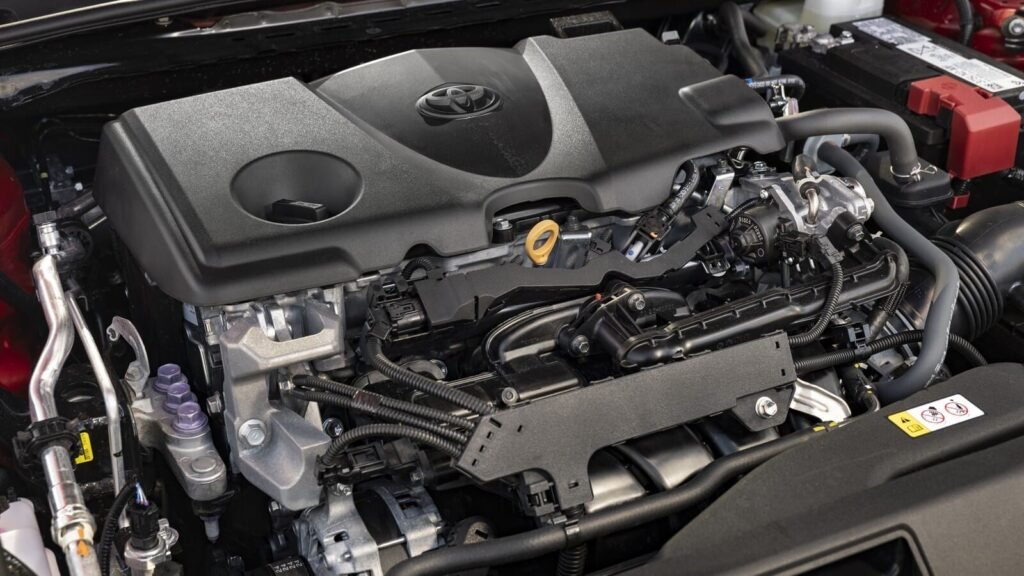
Engine Reliability
Both gasoline engines continued demonstrating exceptional durability.
2.5-Liter Dynamic Force Four-Cylinder
By 2023, this engine had firmly established itself as one of Toyota’s best modern four-cylinders. Owners consistently report:
- Excellent fuel economy
- Minimal oil consumption
- Low repair frequency
- Smooth performance
- Outstanding long-term durability
Routine servicing remains the key to reaching 200,000 miles and beyond.
3.5-Liter V6
The naturally aspirated V6 became increasingly rare across the industry, making the Camry one of the last mainstream sedans still offering effortless six-cylinder performance.
Its reliability record remains excellent, with few widespread mechanical concerns reported.
Transmission Reliability
Toyota’s eight-speed automatic had fully matured by 2023.
The hesitation complaints that dominated discussions surrounding the 2018 launch had largely disappeared, leaving a transmission known more for dependable service than controversy.
Routine maintenance remains inexpensive, and long-term mechanical failures continue to be uncommon.
Most Common Problems
Even the 2023 Camry isn’t entirely free from owner complaints.
Fortunately, they remain relatively minor.
1. Infotainment Software
Occasional Bluetooth pairing or touchscreen responsiveness issues still appear in owner forums.
Severity: ★★☆☆☆
2. Brake Noise
Some owners continue reporting light brake squeal under specific conditions.
Severity: ★★☆☆☆
3. Minor Interior Rattles
Small dashboard or trim noises may develop as mileage increases.
Severity: ★☆☆☆☆
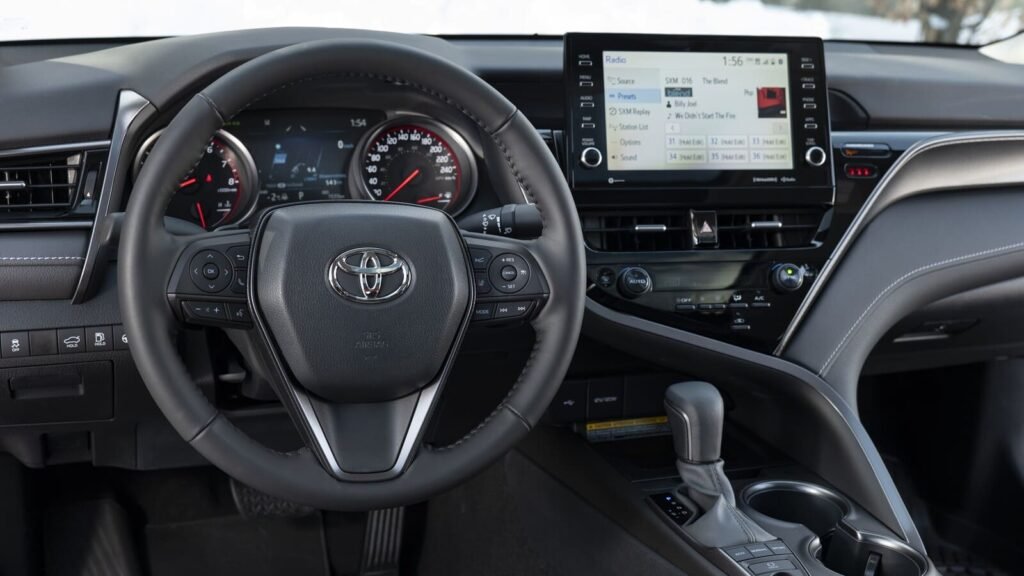
Problems at a Glance
| Problem | Frequency | Severity | Typical Cost |
|---|---|---|---|
| Infotainment software | Moderate | Low | Software update |
| Brake noise | Moderate | Low | $200–400 |
| Interior rattles | Low | Very Low | Minimal |
Perhaps the biggest compliment I can give the 2023 Camry is that reliability is no longer the deciding factor. Value is. That’s exactly where a mature Toyota platform should be.
Recall History
By 2023, the XV70 Camry had become one of the most mature platforms in Toyota’s lineup. As a result, recall activity was relatively limited compared with the launch years.
That doesn’t mean you should ignore recalls entirely. Even on a highly reliable vehicle, confirming that all factory campaigns have been completed is one of the simplest ways to avoid unnecessary problems after purchase.
2023 Toyota Camry Recall Summary
| Recall | Affected Component | Potential Risk | Toyota Remedy |
|---|---|---|---|
| Limited production safety campaigns* | Various components | Varies by production batch | Inspection and replacement if required |
For most buyers, recall history shouldn’t be a deciding factor. Condition, maintenance history, and previous ownership matter far more.
Hybrid Reliability
By 2023, Toyota’s hybrid system had little left to prove. Years of real-world data continue showing excellent durability, low operating costs, and impressive fuel economy. Taxi fleets, ride-share drivers, and commuters have accumulated enormous mileages with surprisingly few major repairs.
The Hybrid remains particularly attractive for buyers who spend most of their time in city traffic.
Hybrid Reliability Summary
| Component | Reliability |
|---|---|
| Hybrid Battery | ★★★★★ |
| eCVT Transmission | ★★★★★ |
| Electric Motors | ★★★★★ |
| Power Electronics | ★★★★☆ |
| Cooling System | ★★★★★ |
Battery replacement remains a common concern among shoppers, but real-world ownership suggests most batteries last far longer than many buyers expect.
Maintenance Costs
Mechanically, the 2023 Camry remains refreshingly uncomplicated.
Routine servicing follows Toyota’s familiar maintenance schedule, replacement parts are widely available, and labor costs remain lower than many competing sedans.
Typical Maintenance Costs
| Service | Estimated Cost |
|---|---|
| Engine oil & filter | $60–100 |
| Tire rotation | $25–60 |
| Engine air filter | $25–60 |
| Cabin air filter | $30–70 |
| Front brake pads | $250–450 |
| Brake pads & rotors | $500–800 |
| Spark plugs | $250–450 |
| Transmission fluid service | $250–450 |
| Coolant replacement | $150–250 |
| 12V battery | $180–300 |
These figures represent typical U.S. repair costs. Actual pricing varies by location, but the Camry remains one of the least expensive midsize sedans to maintain over the long term.
Reliability by Mileage
Although the 2023 model hasn’t accumulated the same number of ultra-high-mileage examples as earlier years, every indication suggests it will follow the same pattern.
| Mileage | Typical Ownership Experience |
|---|---|
| 0–50,000 miles | Routine maintenance only |
| 50,000–100,000 miles | Tires, brakes, battery, filters |
| 100,000–150,000 miles | Suspension wear items, spark plugs, fluid services |
| 150,000–200,000 miles | Continued dependable ownership with preventative maintenance |
| 200,000–300,000+ miles | Strongly expected based on previous XV70 model years |
Toyota hasn’t fundamentally changed the mechanical package, which gives buyers confidence that the 2023 model should age much like its predecessors.
TopCarList Buyer Profile
Who is the 2023 Camry best suited for?
| Buyer Type | Recommendation |
|---|---|
| Daily commuter | ⭐⭐⭐⭐⭐ |
| Family vehicle | ⭐⭐⭐⭐⭐ |
| Highway commuter | ⭐⭐⭐⭐⭐ |
| Uber/Lyft driver | ⭐⭐⭐⭐⭐ |
| First-time buyer | ⭐⭐⭐⭐☆ |
| Driving enthusiast | ⭐⭐⭐⭐☆ |
If your priorities include reliability, low ownership costs, and long-term value, it’s difficult to find many weaknesses.
Who Should Skip the 2023 Camry?
This may surprise you, but not every buyer should automatically choose the newest Camry they can afford.
Skip the 2023 if…
You’re focused on getting the best value
A comparable 2022 Camry often delivers virtually the same ownership experience while costing noticeably less on the used market.
You’re planning to keep the car for 15 years
The 2023 is an excellent choice, but -maintained 2022 should realistically provide almost identical longevity.
If the savings are significant, I’d invest the difference in maintenance rather than the newer model year.
You want the latest factory warranty
In that case, it may be worth comparing the 2024 Camry, especially if the price gap is relatively small.
You expect a dramatic improvement over the 2022
Mechanically, there isn’t one.
The differences are simply too small to justify paying a large premium.
How Does It Compare with the Competition?
Competition remained fierce throughout 2023, but the Camry continued leading in the areas that matter most to long-term owners.
| Model | Reliability | Ownership Costs | Driving Enjoyment |
|---|---|---|---|
| 2023 Toyota Camry | ★★★★★ | ★★★★★ | ★★★★☆ |
| Honda Accord | ★★★★☆ | ★★★★☆ | ★★★★★ |
| Hyundai Sonata | ★★★★☆ | ★★★★☆ | ★★★★☆ |
| Kia K5 | ★★★★☆ | ★★★★☆ | ★★★★☆ |
| Nissan Altima | ★★★☆☆ | ★★★☆☆ | ★★★★☆ |
The Accord remains the better choice for buyers prioritizing driving dynamics.
The Camry remains the stronger choice for buyers prioritizing ownership confidence.
TopCarList XV70 Ranking
| Model Year | TopCarList Rating |
|---|---|
| 2018 | ⭐⭐⭐⭐☆ |
| 2019 | ⭐⭐⭐⭐⭐ |
| 2020 | ⭐⭐⭐⭐⭐ |
| 2021 | ⭐⭐⭐⭐⭐ |
| 2022 | ⭐⭐⭐⭐⭐ |
| 2023 | ⭐⭐⭐⭐⭐ |
| 2024 | Coming Soon |
Mechanic’s Buying Checklist
Before purchasing any used 2023 Camry, I’d recommend checking:
Mechanical
- Cold start quality.
- Smooth transmission operation.
- Suspension noises.
- Brake condition.
- Tire wear consistency.
Interior
- Test Bluetooth, Apple CarPlay, and Android Auto.
- Verify climate control operation.
- Check every touchscreen function.
- Inspect seats and trim for excessive wear.
Documentation
- Full maintenance history.
- Recall campaigns completed.
- Clean vehicle history report.
- Independent pre-purchase inspection.
The Camry’s excellent reliability shouldn’t discourage buyers from performing a thorough inspection.
Final Verdict
The 2023 Toyota Camry illustrates something Toyota has mastered better than almost any manufacturer.
Consistency.
Toyota resisted the temptation to redesign a platform that already worked exceptionally well. Instead, it continued refining quality control, preserving dependable powertrains, and delivering one of the lowest-cost ownership experiences in the midsize sedan segment.
Ironically, that’s also the biggest challenge facing the 2023 model.
It’s so similar to the outstanding 2022 Camry that reliability alone rarely justifies paying a significant premium.
If prices are close, I’d happily choose the 2023.
If the price difference becomes substantial, I’d probably buy the 2022 instead and invest the savings elsewhere.
Either way, you’re getting one of the most dependable family sedans available.
Some Quick 2023 Camry FAQ
Is the 2023 Toyota Camry reliable?
Yes. It remains one of the most dependable midsize sedans on the market and continues Toyota’s long tradition of low maintenance costs and excellent durability.
Is the 2023 Camry better than the 2022 model?
Mechanically, the differences are minimal. The decision usually comes down to mileage, condition, and purchase price rather than reliability.
Does the 2023 Camry have transmission problems?
No widespread transmission problems have emerged. The eight-speed automatic has demonstrated excellent durability by this stage of the XV70 generation.
Is the 2023 Camry Hybrid reliable?
Very much so. Toyota’s Hybrid Synergy Drive remains one of the industry’s most proven and dependable hybrid systems.
How long will a 2023 Toyota Camry last?
With proper maintenance, there’s every reason to expect the 2023 model to reach 200,000 miles and potentially exceed 300,000 miles, following the pattern established by earlier XV70 Camrys.
- 2023 Toyota Camry Reliability: Is Paying More Really Worth It?
- 10 Most Reliable Used Cars in 2026: Specific Years to Buy
- 2022 Toyota Camry Reliability: Is It the Best Used Camry?
- Car Reliability Ratings Explained: Which Ones Can You Actually Trust?
- 2021 Toyota Camry Reliability: Is This the Best XV70 Camry You Can Buy?
- The Hidden Cost of Buying the Wrong Car: A 10-Year Ownership Framework

*Disclaimer: This website provides automotive content for informational purposes only and should not be considered professional advice. While we strive for accuracy, we do not guarantee the reliability or suitability of any vehicle or product mentioned—always conduct your own research before making purchasing decisions. Additionally, some links on this site are affiliate links, meaning we may earn a commission if you make a purchase, at no extra cost to you.