
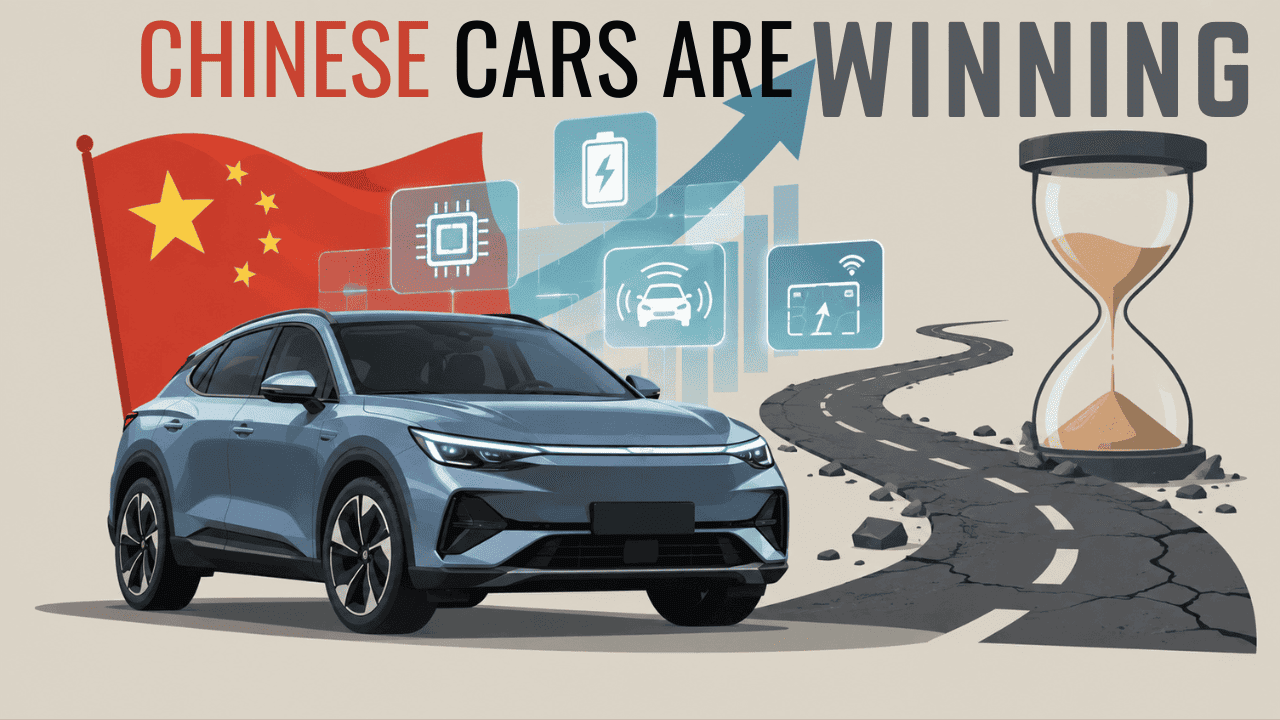
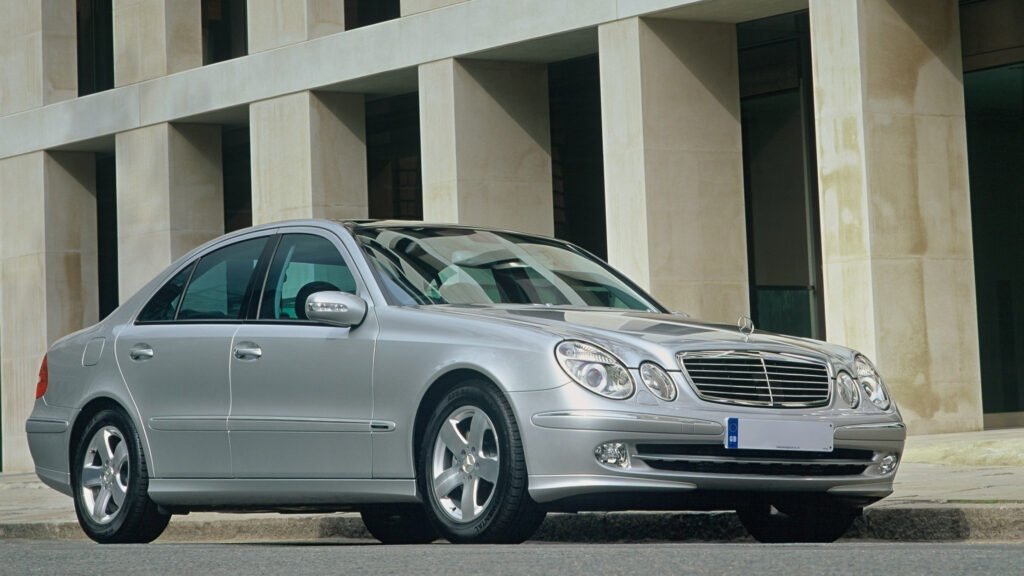
A few days ago, I found myself following a 2005 Mercedes-Benz E200. There was nothing exotic about it—it was simply an old W211 E-Class that had clearly been looked after. Yet more than twenty years after leaving the factory, the paint still had depth, the chrome still looked expensive and the car retained that unmistakable sense of substance Mercedes engineered into its products of that era.
It made me think about today’s Chinese cars. Walk around a new BYD, Zeekr or one of China’s increasingly sophisticated luxury vehicles and the progress is impossible to dismiss. Some offer battery, hybrid and electronic technology that can make established Japanese manufacturers look unusually conservative.
That old Mercedes raises the question specification sheets cannot answer: what will today’s remarkable Chinese cars feel like in 2046?
Not simply whether they still run, but whether the paint, interior, seals, suspension, screens, and electronics have aged gracefully—and whether parts and support still exist.
Charging speed, efficiency, and computing power measure progress when a car is new. Engineering maturity requires another test entirely: does the car get old well?
That is the unanswered question behind China’s automotive rise. Innovation and engineering maturity are related, but they are not the same achievement.
China Is No Longer Simply Catching Up
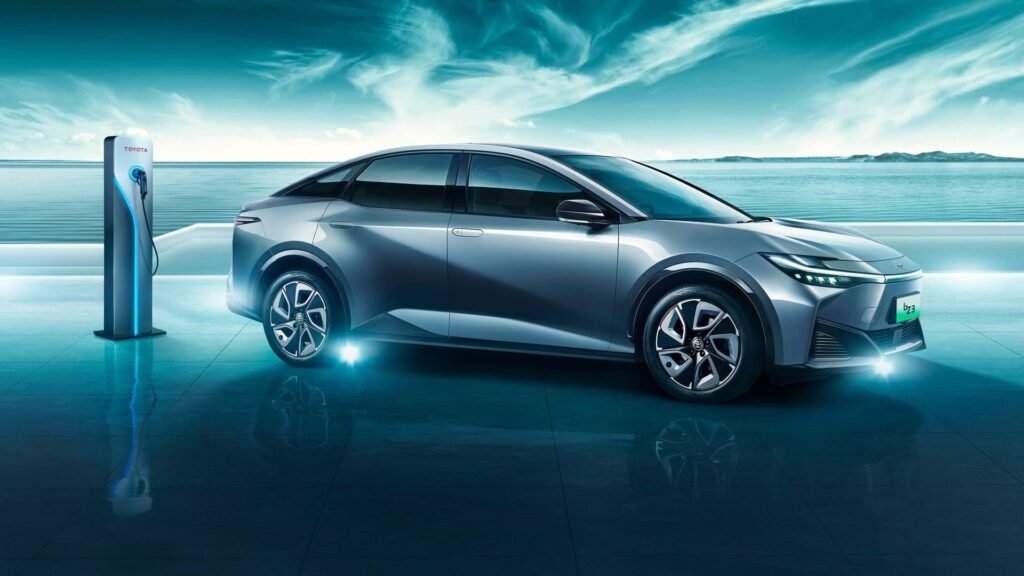
Dismissing Chinese automakers as copycats is increasingly outdated. China now has deep expertise in batteries, electronics, EV manufacturing, and software. Toyota’s China-market bZ3 illustrates the shift: Toyota worked with BYD and FAW Toyota, combining BYD’s electrification expertise with Toyota’s vehicle-development and manufacturing experience.
China certainly benefited from joint ventures and foreign talent, just as Japan and Korea once absorbed outside expertise. The difference today is that China has built its own engineering organizations, suppliers, battery industry, software ecosystem, and enormous domestic market. It is no longer simply importing automotive knowledge.
A Better Specification Doesn’t Prove a Better Car
Chinese automakers are pushing combustion efficiency remarkably far. BYD’s fifth-generation DM hybrid engine, for example, claims 46.06% thermal efficiency, with newer Chinese developments pushing even higher.
But efficiency doesn’t tell us what happens after 150,000 miles. Toyota’s less glamorous advantage is decades of hybrid durability data covering batteries, inverters, cooling systems, and aging.
A Chinese powertrain may already beat Toyota on one engineering metric while remaining less proven over time. That’s the difference between engineering performance and engineering maturity. Time is part of vehicle testing too.
But Haven’t Chinese Cars Already Been Proven in China?
Chinese automakers are hardly inexperienced. In J.D. Power’s 2026 China Initial Quality Study, domestic brands actually recorded fewer problems than international mass-market brands. Calling the entire industry “unproven” is therefore too simplistic.
What remains less proven is long-term aging. Millions of vehicles can generate enormous data quickly, but three years cannot reveal what happens to electronics, materials, suspension, software, and parts support after fifteen. J.D. Power’s 2026 dependability study reinforces why that distinction matters; our reliability ratings guide explains it further.
Give Chinese manufacturers credit for the experience they’ve earned—but don’t give a three-year-old platform ten years of evidence it hasn’t.
Early Chinese Cars Don’t Give Us the Answer Either
Judging a 2026 BYD or Geely by Chinese cars from twenty years ago would be like judging a modern Genesis by Hyundai’s earliest exports. The industry has changed too much, as we explored in Will Chinese Car Brands Repeat the Success of Hyundai and Kia?.

The Geely Emgrand EC7, produced from 2009, isn’t particularly old, yet some surviving examples can look remarkably tired compared with similarly used Japanese cars of the period. Faded or deteriorating paint, aging trim, rattles, and declining structural refinement.
That creates a reliability paradox: older Chinese cars are old enough to judge but no longer representative, while today’s far more advanced cars are representative but not old enough to judge. That evidence gap is the real uncertainty surrounding Chinese-car longevity.
Speed Is China’s Superpower—and Potential Weakness
Chinese automakers iterate extraordinarily quickly, revising batteries, electronics, software, and even complete vehicles faster than traditional development cycles. That’s a genuine advantage—but every new technology creates another validation problem.
Software must work reliably with hardware, driver-assistance systems must survive real-world conditions, and electrified powertrains must endure years of heat, aging, and imperfect maintenance. As mechanical reliability improves, infotainment, electronics, and driver-assistance problems increasingly become part of the reliability equation.
That isn’t uniquely Chinese. Cars everywhere are becoming software-defined machines. China may simply be reaching that future faster.

We’ve Been Impressed by New Cars Before
Automotive history suggests caution, not predictions of failure. Volkswagen’s early-2000s push upmarket produced unusually sophisticated mainstream cars, but some of that complexity became expensive as vehicles aged.
Hyundai and Kia offer a similar lesson: rapid improvements in design and refinement didn’t prevent later mechanical problems. That doesn’t mean Chinese manufacturers will repeat either history. It means showroom excellence doesn’t automatically prove long-term maturity.
Journalists evaluate new cars. Owners eventually evaluate old ones. Those are different tests.
Reliability Isn’t the Same as Aging Well
That old E200 highlights another distinction: mechanical reliability and graceful aging aren’t the same thing. Paint, plastics, leather, seals, switches, electronics, and corrosion protection can deteriorate even when the drivetrain keeps running.
One preserved W211 proves nothing, but it illustrates material engineering maturity—qualities almost invisible when a car is new but obvious twenty years later. They also contribute to the hidden cost of choosing the wrong car.
Chinese manufacturers will face the same test. A truly well-engineered car shouldn’t merely keep running; decades later, it should still feel built to last.
Safety Is No Longer a Good Reason to Dismiss Chinese Cars
Skepticism about the crashworthiness of some early Chinese cars was justified. Applying that reputation automatically to today’s models isn’t. Modern Chinese vehicles have demonstrated strong results in independent international crash testing, although performance still varies by model.
The rule is simple: test the product, not the passport. A Chinese car that performs well under credible independent testing deserves the same credit—and the same scrutiny when it doesn’t—as any Toyota, Volvo, or Mercedes-Benz.

The Bigger Risk May Be the Company Behind the Car
Long-term durability also depends on whether the manufacturer survives to support the car. China’s aggressive price war has accelerated innovation and lowered prices, but it has also squeezed automakers financially. Reuters reported rising debt and shrinking margins across many listed Chinese manufacturers, although companies such as BYD remained much healthier.
That matters with software-heavy EVs. A perfectly healthy battery is less reassuring if proprietary modules become unavailable, software support disappears, or the brand exits the market.
So vehicle reliability and manufacturer durability are connected. Established groups such as BYD, Geely, Chery, or SAIC shouldn’t automatically receive the same risk assessment as a small startup simply because both are Chinese.
So Have Chinese Cars Surpassed Toyota and Honda?
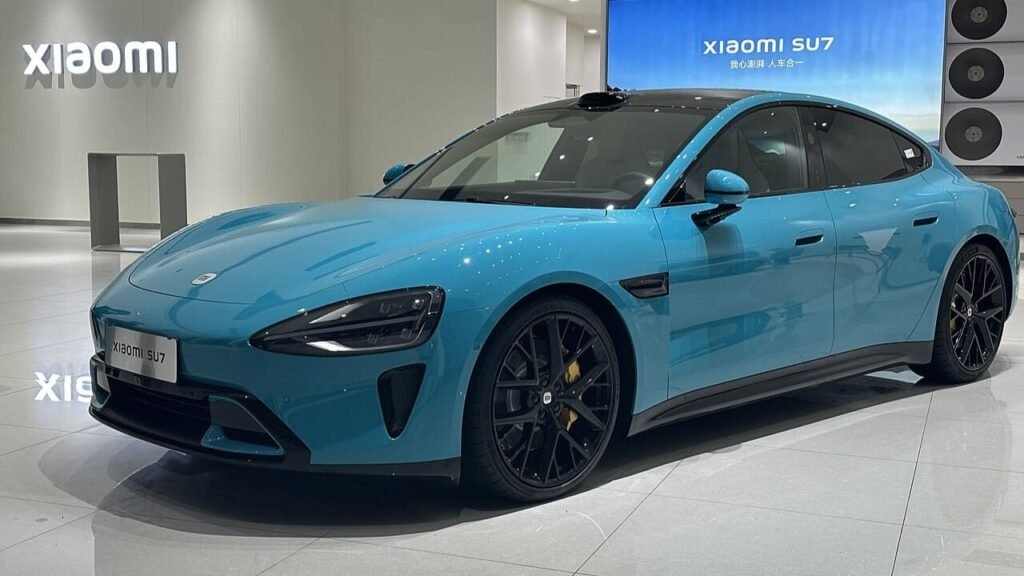
In batteries, electrification, electronics, and development speed, China’s strongest manufacturers may already lead in important areas. Xiaomi’s rapid transition from consumer electronics to a serious automaker—explored in our Xiaomi Playbook: How To Go From A Phone Maker To A Carmaker—shows how China’s mature EV supply chain can compress a process that once required decades of automotive experience.
But technological leadership isn’t the same as engineering maturity. Japan’s advantage remains decades of validation, manufacturing consistency, durability data, repairability, and ownership support; China’s next test is proving those qualities over ten or fifteen years. If it succeeds, Toyota and Honda won’t merely face cheaper or more innovative Chinese competitors. They’ll face equally mature engineering rivals.
The Real Test Begins When Today’s Cars Become Used Cars
China has already proved it can build impressive cars. The remaining question is narrower: will today’s batteries, electronics, materials, software, and hybrid systems remain dependable and repairable after the novelty disappears?
We won’t know from an auto show or a three-day road test. We’ll know when these cars reach 150,000 miles with aging batteries, faded materials, obsolete electronics, and expired warranties.
Then we’ll see whether they merely survived—or aged well. If China’s best manufacturers pass that test, they won’t simply have mastered automotive innovation. They’ll have mastered the harder task of making innovation last.
Frequently Asked Questions
Are Chinese cars already proven in China?
To a meaningful extent, yes. Major Chinese manufacturers have years of domestic production and enormous customer fleets behind them. What remains less established is the ten-to-twenty-year durability of many newer platforms, powertrains and electronic architectures.
Why can’t old Chinese cars tell us how today’s models will age?
Because the industry has changed too rapidly. Modern Chinese vehicles can use substantially different platforms, suppliers, manufacturing processes, batteries, software and powertrains. Early products provide historical context but are weak predictors of how today’s cars will perform after fifteen years.
Are Chinese cars more advanced than Japanese cars?
In some technologies, leading Chinese manufacturers can legitimately compete with or outperform established Japanese manufacturers. Overall engineering maturity also includes durability, manufacturing consistency, repairability, material aging, parts support and long-term ownership cost.
Are Chinese cars reliable?
There is no useful single answer. China’s manufacturers vary enormously. Recent quality data shows domestic brands closing gaps rapidly, but many of the newest EV and hybrid technologies naturally have less long-term aging evidence than mature systems from established manufacturers.
What is engineering maturity in a car?
Engineering maturity goes beyond impressive specifications or initial quality. It includes how consistently a vehicle is manufactured, how its mechanical and electronic systems survive long-term use, how its materials age, how easily it can be repaired and whether parts and technical support remain available years later.
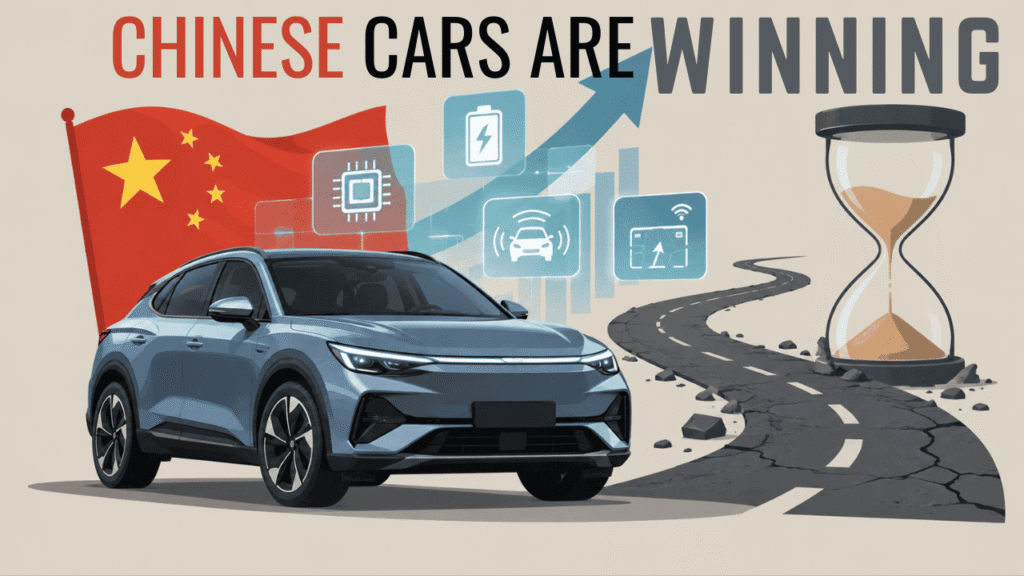
- Chinese Cars Are Winning the Technology Race—But Will They Last?
- 2024 Toyota Camry Reliability: Is It Toyota’s Smartest Buy?
- 2023 Toyota Camry Reliability: Is Paying More Really Worth It?

- 10 Most Reliable Used Cars in 2026: Specific Years to Buy

- 2022 Toyota Camry Reliability: Is It the Best Used Camry?
- Car Reliability Ratings Explained: Which Ones Can You Actually Trust?
*Disclaimer: This website provides automotive content for informational purposes only and should not be considered professional advice. While we strive for accuracy, we do not guarantee the reliability or suitability of any vehicle or product mentioned—always conduct your own research before making purchasing decisions. Additionally, some links on this site are affiliate links, meaning we may earn a commission if you make a purchase, at no extra cost to you.