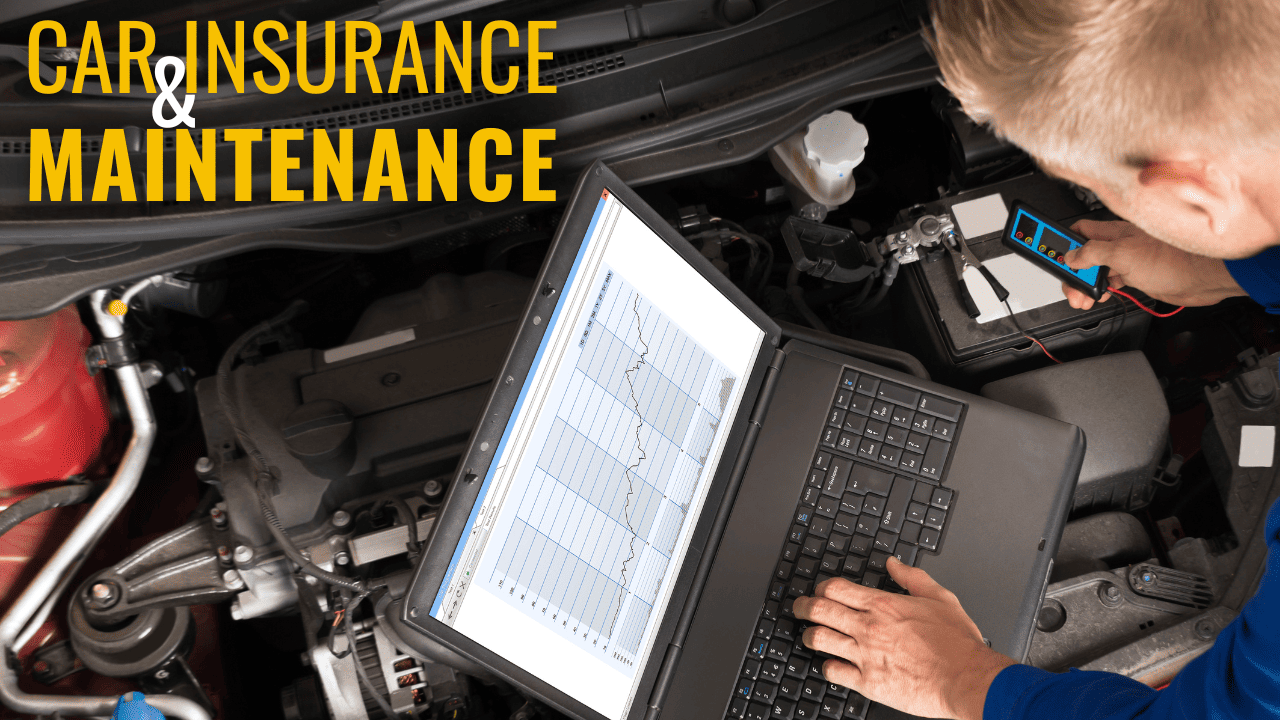
There are smart ways to reduce the cost of owning a car, and there are shortcuts that simply postpone the bill.
Skipping an oil change to save $80 is a poor trade if it contributes to a four-figure engine repair. Choosing the cheapest replacement tire regardless of quality isn’t much better. And where auto insurance is required, reducing the premium by accepting a deductible you couldn’t realistically afford after a crash can create a different financial problem.
The objective isn’t simply to spend less. It’s to identify which costs can safely be reduced and which ones protect you from much larger expenses later.
Insurance and maintenance are good examples of both.
First, a Note About Car Insurance
Auto-insurance requirements vary by jurisdiction. In the United States, liability insurance or another legally accepted form of financial responsibility is generally required, while New Hampshire remains an unusual exception where automobile insurance is not universally mandatory for every driver.
Even there, driving uninsured doesn’t eliminate financial responsibility for damage you cause, and some drivers can be required to provide proof of financial responsibility.
This article isn’t intended to persuade anyone to purchase insurance they aren’t required to carry. Where insurance is legally required, contractually required by a lender or lessor, or otherwise something you choose to maintain, however, there is little reason to pay more than necessary for equivalent protection.
The safest savings therefore come from reducing the price of appropriate coverage, rather than blindly reducing the coverage itself.
1. Compare Insurance Prices for the Car Before You Buy It
Insurance cost begins with the vehicle.
Two similarly priced cars don’t necessarily cost the same amount to insure. Insurers consider factors that can include the vehicle’s claims history, repair costs, theft exposure, safety characteristics and the cost of replacing it.
That’s why insurance should be part of your research before buying a car rather than something you investigate after signing the paperwork.
Get quotes for the exact vehicles on your shortlist using the same driver information, coverage limits and deductibles. Otherwise, you aren’t making a meaningful comparison.
This is especially worthwhile when comparing a mainstream model with a luxury or performance alternative. A used luxury vehicle may have depreciated to $30,000, but its bumpers, headlights, cameras, sensors and body components haven’t magically become economy-car parts.
Purchase price and repair cost are different things.
Our guide to choosing the right car for your budget and lifestyle explains why expenses beyond the purchase price should be considered before choosing the vehicle itself.
2. Shop Around Without Changing the Comparison
Insurance pricing can vary considerably among insurers because companies don’t all evaluate risk in exactly the same way.
That makes comparison shopping one of the cleanest ways to reduce premiums: you’re trying to pay less for comparable protection rather than removing protection simply to produce a cheaper quote.
Keep the variables consistent.
If Company A quotes a $1,000 deductible and Company B quotes $500, the cheaper premium doesn’t necessarily represent a better deal. Compare the same liability limits, deductibles and optional coverages wherever possible.
Also verify the information used for the quote. The National Association of Insurance Commissioners recommends checking details such as vehicle classification, drivers’ information and whether applicable discounts have actually been included.
3. Ask for Discounts You’re Already Entitled To
This is another relatively painless place to look for savings. Depending on the insurer and state, discounts may be available for multiple vehicles, driver-education programs, low annual mileage, certain vehicle safety or anti-theft equipment, good driving records or combining eligible policies.
Don’t assume they’re automatically applied. Ask what discounts exist, determine which ones you legitimately qualify for and verify them on the policy.
What I wouldn’t do is buy equipment or change your lifestyle purely to chase a tiny insurance discount without calculating whether the saving actually exceeds the cost.
4. Be Careful With the “Just Raise Your Deductible” Advice
Increasing a collision or comprehensive deductible can reduce the premium. That’s legitimate.
But it isn’t free money. You’re transferring more of the financial risk from the insurer to yourself.
If increasing a deductible from $500 to $1,500 saves $180 annually, you’re accepting another $1,000 of potential out-of-pocket expense to save $180 per year.
That could make perfect sense for someone with adequate emergency savings. It could be a terrible arrangement for someone who would struggle to produce $1,500 after an accident.
The National Association of Insurance Commissioners therefore recommends considering whether you can actually afford the larger deductible before making this change.
Choose a deductible you could realistically pay tomorrow, not simply the one that produces the lowest premium today.
5. Drive in a Way That Keeps You Out of the Expensive Risk Categories
Your driving record is one factor insurers may use when determining premiums. Accidents and moving violations can therefore have costs beyond repairing the car or paying a ticket. The solution isn’t complicated: safer driving can also be cheaper driving.
Hard acceleration and unnecessary speed increase fuel consumption and mechanical wear, while aggressive braking consumes tires and brakes more quickly. Avoiding those habits can reduce operating costs while also reducing the likelihood of the crashes and violations that can affect insurance pricing.
Some insurers offer usage-based or telematics programs that monitor driving behavior. These can save some drivers money, particularly low-mileage or consistently cautious drivers, but understand exactly what information is collected and how it can affect pricing before enrolling.
A discount isn’t automatically worth surrendering data you’re uncomfortable sharing.
6. Don’t Save Money by Skipping Maintenance
Now we get to the other half of the equation. One of the most expensive maintenance strategies is simply not maintaining the car.
Engine oil deteriorates. Tires wear. Brake pads become thinner. Coolant and other service fluids don’t remain new forever. Some engines use timing belts that must be replaced at specified intervals.
AAA notes that a typical oil change costing roughly $70–$120 can help prevent far more expensive engine repairs, while failing to rotate tires can cause premature wear that may force replacement of an otherwise usable set.
The principle is simple:
Preventive maintenance costs money because component failure usually costs more.
But that doesn’t mean accepting every service an advisor recommends.
7. Follow the Manufacturer’s Schedule, Not a Generic One
Your owner’s manual should be the starting point. Modern cars don’t all require the same oil-change interval, transmission service, coolant replacement, spark plugs or timing-belt maintenance. Some requirements also change depending on whether the vehicle operates under normal or severe conditions.
That makes generic rules such as “change your oil every 3,000 miles” increasingly unhelpful.
Know what your specific vehicle requires. Then keep records. This prevents two opposite—and expensive—mistakes: neglecting something that genuinely needs servicing and repeatedly paying for something that doesn’t.
When a repair shop recommends an additional service, there’s nothing wrong with asking:
- Why does it need to be done?
- Is it in the manufacturer’s maintenance schedule?
- What did the inspection or test find?
- What happens if I postpone it?
A good technician should be able to explain the recommendation.
8. Treat Tires as an Investment You Can Ruin
Tires are one of the easiest places to waste money through neglect. Incorrect inflation can increase wear and affect fuel consumption. Misalignment can destroy tread surprisingly quickly. Failure to rotate tires can produce uneven wear that forces you to replace the set earlier than necessary.
AAA recommends checking tire pressure roughly monthly or before a long trip and generally rotating tires around every 5,000–8,000 miles, depending on the vehicle, tires and usage.
Use the pressure specified by the vehicle manufacturer—normally found on the driver’s door-jamb label or in the owner’s manual—not the maximum pressure printed on the tire sidewall.
And if one tire is wearing dramatically faster than the others, don’t simply replace it.
Find out why. The real problem may be alignment, worn suspension components, incorrect inflation or previous damage.
9. Learn the DIY Jobs That Are Actually Worth Learning
You don’t need to become a mechanic to reduce maintenance expenses.
Checking tire pressure and tread depth, replacing many engine and cabin air filters, fitting wiper blades, replacing certain bulbs and checking appropriate fluid levels are well within the abilities of many owners.
The savings aren’t necessarily huge individually, but these jobs repeat throughout years of ownership.
There is an important boundary, though.
Don’t turn a $100 professional job into a $1,000 repair because a YouTube video made it look easy.
Brakes, high-voltage hybrid/EV systems, air-conditioning refrigerant systems, internal engine work and jobs requiring the vehicle to be safely lifted deserve particular caution. What qualifies as sensible DIY also depends heavily on your tools and mechanical experience.
The objective is to eliminate unnecessary labor costs, not professional expertise when it’s genuinely needed.
10. Get a Second Opinion on Expensive Repairs
If a shop tells you that your car needs $3,500 worth of work and the vehicle isn’t in immediate danger, don’t assume your only choices are paying the bill or ignoring the problem.
Ask for an itemized estimate.
Separate urgent safety repairs from maintenance and work that can reasonably wait. Then, where practical, obtain another diagnosis from a reputable independent repair facility.
This is particularly important when the proposed repair involves replacing an expensive assembly rather than diagnosing the failed component.
But don’t shop solely for the mechanic willing to tell you what you want to hear. Three shops identifying the same failing wheel bearing is very different from one recommending a $4,000 transmission while another finds a relatively minor issue.
You are comparing diagnoses, not just prices.
11. Don’t Assume OEM Is Always Necessary—or Aftermarket Is Always Cheaper
The old advice to “always use OEM parts” is too simplistic.
Some repairs genuinely benefit from original-equipment parts, particularly where calibration, fit, electronics or known aftermarket quality problems are involved. In other cases, a high-quality aftermarket component from the same supplier that manufactures parts for automakers may be perfectly sensible.
The opposite extreme is equally problematic.
The cheapest anonymous component online isn’t automatically a bargain if its poor fit or short lifespan means doing the job twice.
For an expensive repair, ask which brand of part will be installed, what warranty accompanies it and why the shop recommends it.
Value is cost divided by useful life, not simply the number at the bottom of today’s invoice.
12. Fix Small Problems Before They Recruit Other Parts
A minor mechanical problem doesn’t always remain minor.
A leaking cooling system can become an overheating engine. Worn brake pads can damage rotors. A damaged suspension component can accelerate tire wear. A weak battery or charging-system problem can eventually leave you stranded.
This doesn’t mean panicking over every squeak.
It means distinguishing between a cosmetic annoyance and a fault capable of causing secondary damage.
AAA describes this as one of the hidden costs of deferred maintenance: postponing required service or repairs can eventually produce reduced efficiency, breakdowns and substantially larger repair bills.
Early diagnosis is often cheaper than late repair.
13. Keep Maintenance Records—But for the Right Reason
Keep receipts and service records, whether they’re stored in a folder, spreadsheet, app or dealership account.
They help you avoid duplicate maintenance, identify what will be due next and provide evidence that the vehicle has been cared for when you eventually sell it.
What I wouldn’t tell you—as the previous version of this article did—is that ordinary maintenance records should be expected to reduce your insurance premium.
That’s not a standard insurance-pricing benefit.
The financial value of maintenance records is primarily in managing the vehicle correctly and supporting its condition and resale history.
14. The Cheapest Car to Maintain Often Starts With the Car You Buy
There is a limit to how much clever maintenance can compensate for an inherently expensive vehicle.
A complicated luxury SUV with adaptive suspension, huge wheels, expensive tires and tightly packaged turbocharged hardware may simply cost more to maintain than a conventional midsize sedan.
That doesn’t make the luxury SUV a bad car.
It makes the additional cost part of the purchase decision.
This is why our 10-year ownership-cost framework looks beyond the purchase price to depreciation, financing, fuel, insurance, scheduled maintenance, unexpected repairs, downtime and eventual resale value.
Sometimes the largest maintenance saving happens before you’ve bought the vehicle.
Where You Should Save—and Where You Shouldn’t
| Expense | Sensible way to save | False economy |
|---|---|---|
| Insurance | Compare equivalent quotes | Removing important protection purely for a cheaper premium |
| Deductible | Raise it if you can comfortably absorb it | Choosing a deductible you couldn’t afford after a claim |
| Discounts | Claim legitimate discounts | Spending more than the discount is worth |
| Oil changes | Follow the correct manufacturer interval | Extending intervals simply to avoid paying for service |
| Tires | Maintain pressure, rotation and alignment | Buying poor-quality tires or running worn ones |
| Repairs | Compare diagnoses and estimates | Ignoring a developing mechanical problem |
| Parts | Choose good OEM or reputable aftermarket parts appropriately | Automatically buying the cheapest component |
| DIY | Perform simple jobs safely | Attempting complex repairs beyond your equipment or ability |
| Maintenance records | Track services and avoid duplication | Paying for unnecessary services simply because a shop recommends them |
Final Verdict
Saving money on car ownership doesn’t mean spending as little as possible this month.
Where insurance is required or otherwise necessary, compare equivalent policies, use legitimate discounts, maintain a good driving record and choose deductibles according to the financial risk you can actually absorb. Reducing the price is preferable to blindly reducing the protection.
Maintenance works on much the same principle. Follow the manufacturer’s schedule, look after tires and fluids, learn straightforward DIY jobs, question unnecessary services and obtain another diagnosis before approving unusually expensive repairs.
But don’t confuse postponing a necessary expense with eliminating it.
The most effective cost-cutting decisions are the ones that leave the car just as safe and dependable—and leave you exposed to no more financial risk than you deliberately chose to accept.
- 10 Most Reliable Used Cars in 2026: Specific Years to Buy
- 2022 Toyota Camry Reliability: Is It the Best Used Camry?

- Car Reliability Ratings Explained: Which Ones Can You Actually Trust?
- 2021 Toyota Camry Reliability: Is This the Best XV70 Camry You Can Buy?

- The Hidden Cost of Buying the Wrong Car: A 10-Year Ownership Framework
- Which Honda CR-V Years Should You Avoid? Complete Buyer’s Guide

*Disclaimer: This website provides automotive content for informational purposes only and should not be considered professional advice. While we strive for accuracy, we do not guarantee the reliability or suitability of any vehicle or product mentioned—always conduct your own research before making purchasing decisions. Additionally, some links on this site are affiliate links, meaning we may earn a commission if you make a purchase, at no extra cost to you.