
You don’t need to become a mechanic to maintain a car properly. You need to understand what you can check yourself, what the manufacturer expects you to service, and which warning signs deserve immediate attention. Neglecting maintenance can shorten a vehicle’s life, but replacing fluids and parts simply because someone recommends them can waste just as much money.
The solution is simpler than most maintenance guides make it sound: start with the maintenance schedule for your exact vehicle, not a generic chart. It tells you what Toyota, Honda, Ford, or whichever manufacturer actually designed your car expects to be serviced—and when.
1. Start With the Manufacturer’s Maintenance Schedule
Forget universal rules such as “change the oil every 3,000 miles.” Modern vehicles don’t share one maintenance schedule. Oil, transmission-fluid and spark-plug intervals vary by engine, powertrain and manufacturer, while towing, dusty conditions, extensive idling or repeated short trips may trigger severe-service requirements.
Use the maintenance schedule for your exact model, year and powertrain as the baseline, then apply any manufacturer-specified adjustments for how you actually use the vehicle.
2. Check the Things That Can Warn You Early
Every few weeks and before long trips, check the tires, lights, visible fluids and underbody for leaks. The goal is to notice change, not diagnose it. Repeated coolant loss, recurring low tire pressure or a new fluid spot deserves investigation. Good maintenance starts with catching changes before they become failures.
3. Treat Tires as a Safety Item, Not Just a Replacement Expense
Check cold tire pressure against the driver’s door-jamb specification, not the maximum pressure on the tire sidewall. Inspect for cuts, bulges, cracking and uneven wear as well as tread depth. The 2/32-inch threshold is a minimum, not a guarantee of good wet-weather performance.
Uneven wear can indicate incorrect pressure, alignment or suspension problems. Rotate tires according to the vehicle and tire manufacturer’s recommendations.
4. Oil: Follow the Specification, Not Just the Interval
Engine oil requires the correct specification and the correct interval. Frequent changes don’t compensate for the wrong oil.
Follow the manufacturer’s grade and service schedule, but check the level between changes. Engines can leak or consume oil before the next service is due. If consumption suddenly increases, repeated topping-up manages the symptom—it doesn’t fix the cause.
5. Coolant Shouldn’t Routinely Disappear
Check coolant only when the engine is cold, using the manufacturer-specified coolant rather than relying on color. Repeated coolant loss requires investigation, and an overheating warning requires immediate attention. Continuing to drive an overheating engine can turn a minor cooling-system fault into major engine damage. Never open a pressurized cooling system while hot.
6. Brakes Tell You a Lot Before They Fail
Brake-pad and rotor life varies too widely for a universal replacement mileage. Inspect them and watch for changes in braking behavior.
Grinding, vibration, a soft pedal or increased pedal travel warrants diagnosis. Follow the manufacturer’s brake-fluid interval and specification rather than a generic schedule. Worn pads are normal maintenance. A sudden change in braking is not.
7. Battery Age Matters, but Condition Matters More
Battery life depends on climate, use and charging conditions, not a fixed age. Heat is particularly hard on batteries. As the battery ages, watch for slow cranking, repeated jump-starts or poor test results. Replace it with the correct type and specification, especially on start-stop or AGM-equipped vehicles.
8. Filters Are Simple—But Don’t Invent Replacement Intervals
Engine and cabin air-filter life depends heavily on operating conditions, particularly dust exposure. Inspect or replace them according to the manufacturer’s schedule and actual condition rather than a universal mileage interval. Dusty environments may require substantially more frequent service.
9. Transmission Maintenance Depends on the Transmission
Transmission-fluid requirements vary across automatics, CVTs, dual-clutch transmissions and manuals. Use the specified fluid, interval and service procedure, not a universal mileage or generic flush recommendation. Slipping, shuddering or harsh engagement isn’t a maintenance schedule issue—it requires diagnosis.
10. Spark Plugs and Timing Belts Are Scheduled Items—When Applicable
Replace spark plugs at the engine’s specified interval rather than waiting for misfires. If the engine uses a timing belt, follow its replacement schedule; failure can cause severe engine damage, particularly on interference engines. Timing chains generally don’t share the same routine replacement requirement. Know which system your engine uses before authorizing the work.
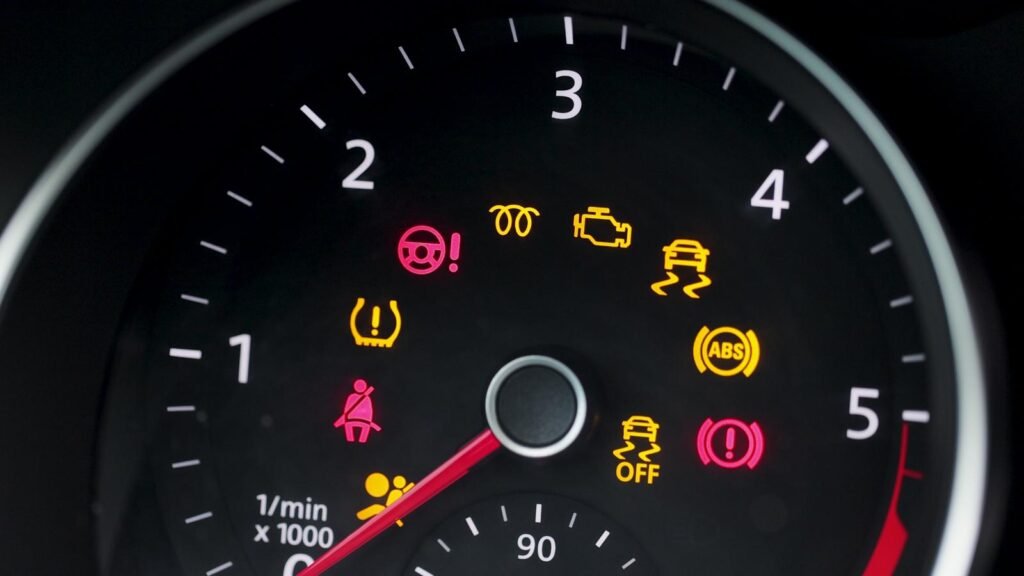
11. Learn Which Warning Lights Mean “Stop”
Not every dashboard light has the same urgency. That’s one of the most important things a beginner can learn. Here are the most common ones:
Oil-pressure warning
Don’t confuse this with an oil-change reminder. If the engine loses oil pressure while running, continuing to drive can cause severe engine damage. Safely stop and shut the engine down as soon as circumstances allow, then determine the cause.
Overheating warning
Treat serious overheating as urgent. Continuing to drive an overheating engine can turn a relatively manageable cooling-system problem into cylinder-head, head-gasket or engine damage.
Brake-system warning
A brake warning can have several causes, some safety-critical. Check the owner’s manual and don’t ignore a warning accompanied by changed braking behavior.
Flashing check-engine light
A flashing malfunction indicator can indicate a severe active misfire capable of damaging the catalytic converter. Reduce load and seek diagnosis promptly; if the engine is shaking badly or losing power, continuing to drive may not be appropriate.
Steady check-engine light
If the vehicle otherwise operates normally, this usually represents a different level of urgency from overheating or loss of oil pressure, it still needs diagnosis though.
The important lesson isn’t memorizing every dashboard symbol. It’s understanding that “service soon” and “stop before you destroy something” are not the same message.
12. Maintenance, Wear and Repairs Aren’t the Same Thing
Don’t confuse scheduled maintenance, wear items and repairs. Oil, filters and specified fluids are maintenance; tires and brake pads wear through normal use; failed components require repair. Brake pads at 60,000 miles don’t indicate poor reliability. A transmission failure at the same mileage is a very different event. Our Car Reliability Ratings Explained guide examines this distinction in more detail.
13. Don’t Automatically Approve the Entire Service-Desk Menu
Before approving additional service, ask whether it is manufacturer-required, justified by an inspection or test, or simply optional preventive work. An alignment, flush, additive or treatment may be appropriate when a specific condition supports it, but not merely because it appears in a service package. Ask what requirement or problem the service actually addresses.
A Beginner’s Maintenance Routine
You don’t need a spreadsheet containing 50 components. Use a simple system like this one:
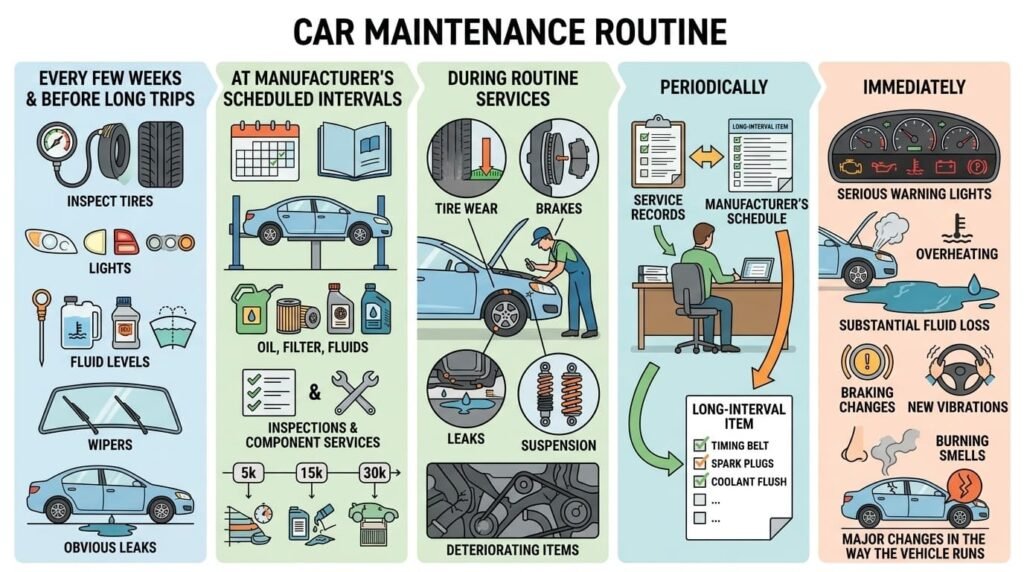
Every few weeks and before long trips: inspect tires, lights, visible fluid levels where appropriate, wipers and obvious leaks.
At the manufacturer’s scheduled intervals: perform the required oil, filter, fluid, inspection and component services.
During routine services: pay attention to tire wear, brakes, leaks, suspension condition and anything beginning to deteriorate.
Periodically: compare your service records with the manufacturer’s schedule so an important long-interval item isn’t forgotten.
Immediately: investigate serious warning lights, overheating, substantial fluid loss, braking changes, new vibrations, burning smells or major changes in the way the vehicle runs.
That covers far more useful ground than trying to memorize universal mileage numbers.
What About Hybrids and EVs?
Hybrids retain most combustion-engine maintenance, while EVs eliminate items such as engine oil and spark plugs but still require attention to tires, brakes, suspension, filters and thermal-management systems. Regenerative braking reduces friction-brake use; it doesn’t eliminate brake maintenance. Whatever the powertrain, follow its specific maintenance schedule.
Keep Records
Keep records of when, at what mileage and what work was performed. They prevent duplicate service, track upcoming maintenance and document the vehicle’s history. For used cars, 80,000 documented miles can be more reassuring than 60,000 miles with an unknown maintenance history.
Our What to Check Before Buying a Used Car guide covers how to identify deferred maintenance before purchase.
Final Thoughts
Good maintenance means neither replacing everything early nor waiting for failure. Follow the manufacturer’s schedule, monitor what you can, investigate meaningful changes and question unnecessary services.
Recognizing when normal behavior changes is often more valuable than memorizing generic maintenance intervals.
- Chinese Cars Are Winning the Technology Race—But Will They Last?

- 2024 Toyota Camry Reliability: Is It Toyota’s Smartest Buy?

- 2023 Toyota Camry Reliability: Is Paying More Really Worth It?

- 10 Most Reliable Used Cars in 2026: Specific Years to Buy

- 2022 Toyota Camry Reliability: Is It the Best Used Camry?

- Car Reliability Ratings Explained: Which Ones Can You Actually Trust?
*Disclaimer: This website provides automotive content for informational purposes only and should not be considered professional advice. While we strive for accuracy, we do not guarantee the reliability or suitability of any vehicle or product mentioned—always conduct your own research before making purchasing decisions. Additionally, some links on this site are affiliate links, meaning we may earn a commission if you make a purchase, at no extra cost to you.