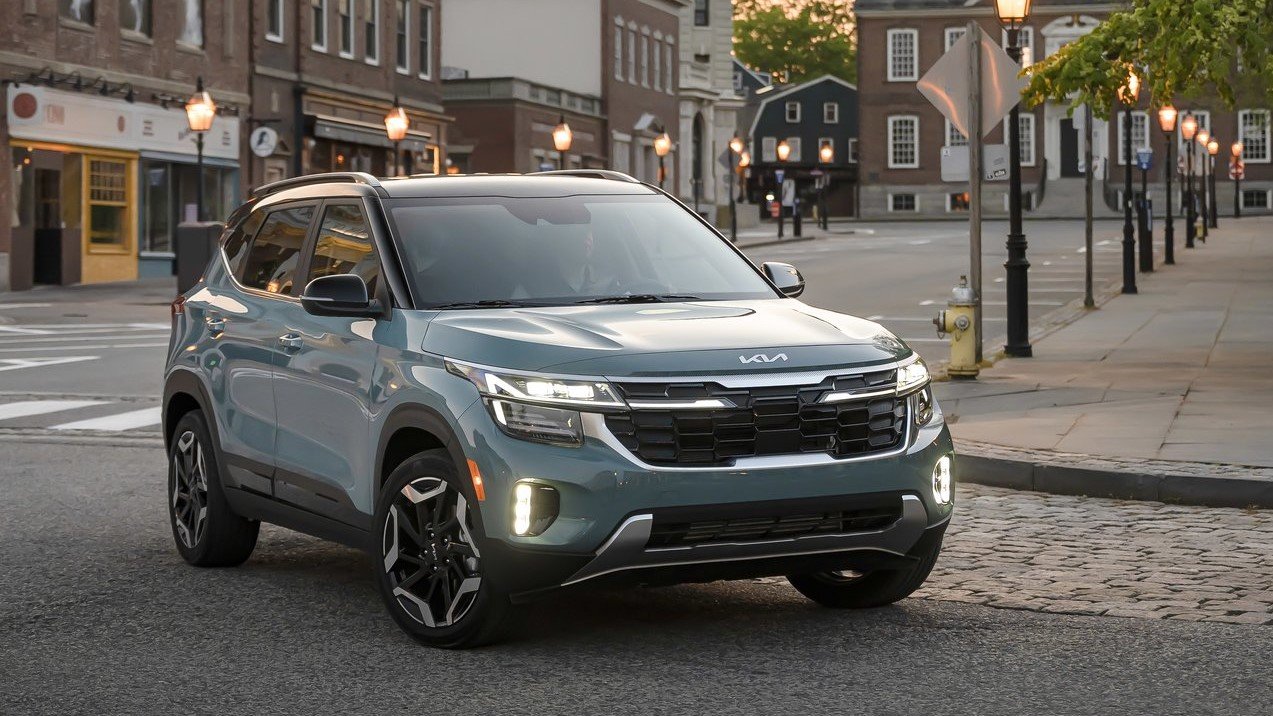
The 2025 Kia Seltos SX Turbo combines subcompact SUV practicality with a 190-hp turbocharged engine, eight-speed automatic, and standard all-wheel drive. Dual 10.25-inch displays, premium audio, and advanced driver assistance further strengthen its appeal.
However, the SX commands a substantial premium over lower trims, sacrifices fuel economy, and faces larger or more refined competitors at similar prices. The question isn’t whether the SX offers meaningful improvements over the standard Seltos, but whether its performance and equipment justify the additional cost.
2025 Kia Seltos SX Turbo: Specifications and Quick Verdict
| Specification | 2025 Kia Seltos SX Turbo |
|---|---|
| Engine | 1.6L turbocharged four-cylinder |
| Horsepower | 190 hp |
| Torque | 195 lb-ft |
| Transmission | Eight-speed automatic |
| Drivetrain | Standard AWD |
| Rear suspension | Independent multilink |
| Wheels | 18-inch alloy |
| EPA fuel economy | 24 city / 27 highway / 25 combined mpg |
| Cargo capacity | Approximately 27 cu. ft. behind rear seats |
| Starting MSRP | $31,190, excluding destination |
| Main competitors | Mazda CX-30 Turbo, Hyundai Kona, Subaru Crosstrek |
Our assessment: The SX Turbo justifies its premium through stronger highway performance and richer equipment, but buyers prioritizing fuel economy and everyday practicality will find better value in lower Seltos trims.
What Makes the Seltos SX Turbo Different?
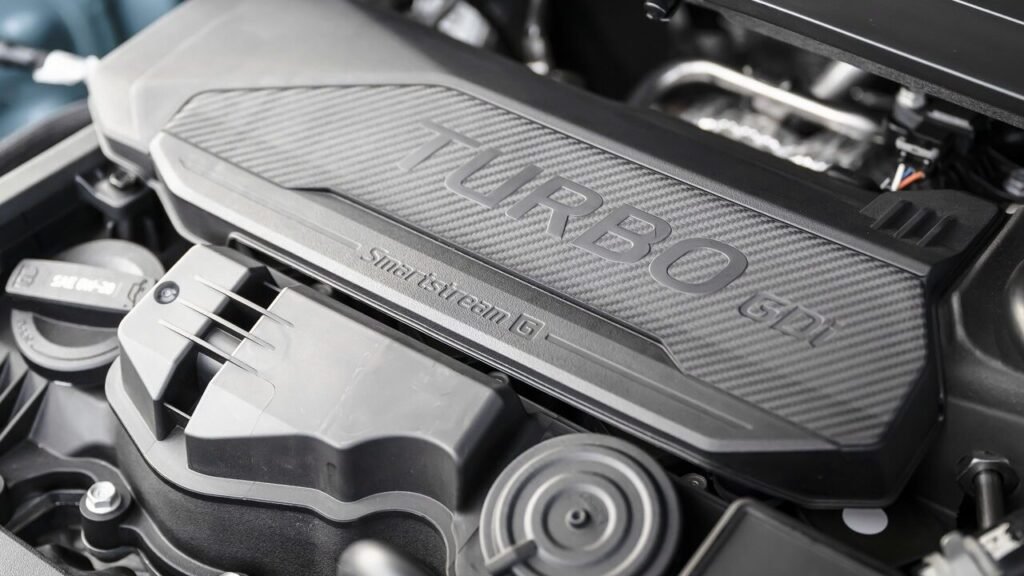
The SX Turbo’s biggest advantage over lower Seltos trims is mechanical. The standard 2.0-liter engine produces 146 hp and 132 lb-ft, paired with an IVT, while the SX’s 1.6-liter turbo delivers 190 hp and 195 lb-ft through a conventional eight-speed automatic.
| Feature | Seltos EX AWD | Seltos SX Turbo AWD |
|---|---|---|
| Engine | 2.0L naturally aspirated | 1.6L turbocharged |
| Horsepower | 146 hp | 190 hp |
| Torque | 132 lb-ft | 195 lb-ft |
| Transmission | IVT | Eight-speed automatic |
| Drivetrain | AWD | AWD |
| EPA combined economy | 29 mpg | 25 mpg |
| 2025 starting MSRP | $28,390 | $31,190 |
The additional 44 hp and 63 lb-ft transform highway performance. With peak torque available from just 1,600 rpm, the SX accelerates more effortlessly during overtaking, merging, and loaded driving, whereas the naturally aspirated engine requires higher revs. The SX also adds Highway Driving Assist, navigation-based cruise control, Bose audio, and LED projector headlights, but the powertrain delivers its most meaningful improvement.
Performance: Quick Enough to Challenge Larger SUVs
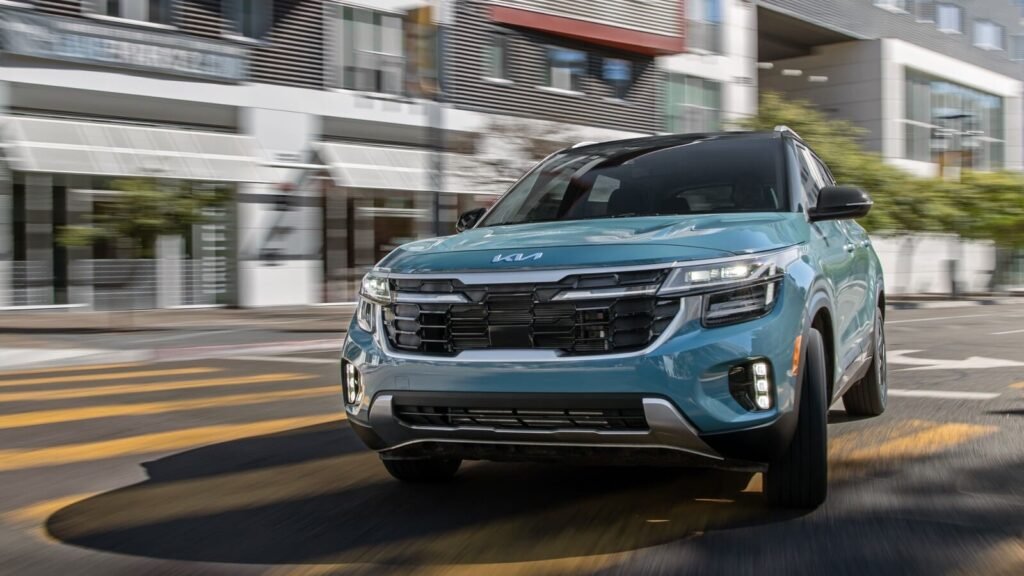
The Seltos SX Turbo delivers unusually strong performance for a subcompact crossover. Car and Driver recorded 0–60 mph in 6.9 seconds for the mechanically similar 2024 model, putting it within reach of some more expensive compact SUVs. More importantly, its strong low-rpm torque provides a substantial advantage over the standard 2.0-liter Seltos, making highway merging, overtaking, and hill climbing easier without frequent high-rpm acceleration.
Is the Seltos SX Turbo Sporty?
Despite its strong acceleration, the SX Turbo prioritizes everyday comfort over sporty handling. Its independent rear suspension improves composure on uneven roads, while standard AWD enhances traction in slippery conditions.
However, the Mazda CX-30 offers sharper steering and better body control. The Seltos’ performance advantage lies in effortless acceleration rather than cornering precision.
Advantages
- Strong midrange torque.
- Quick acceleration for the segment.
- Confident highway merging and overtaking.
Disadvantages
- Not especially engaging through corners.
- Engine performance exceeds the chassis’s sporting ambitions.
- Fuel economy suffers compared with the standard engine.
Why the Eight-Speed Automatic Matters
One of the refreshed Seltos Turbo’s most meaningful improvements is replacing the previous seven-speed dual-clutch transmission (DCT) with an eight-speed torque-converter automatic.
Although the DCT delivered quick shifts, its friction clutches could produce hesitation or uneven engagement during crawling traffic, parking, and hill starts. The newer automatic’s fluid coupling generally provides smoother low-speed operation while retaining responsive acceleration and relaxed highway cruising.
The trade-off is potentially slower shift response than a well-calibrated DCT. However, for everyday driving, the eight-speed automatic may be a more valuable improvement than the engine’s additional horsepower, delivering greater refinement without sacrificing the turbocharged Seltos’ performance advantage.
AWD Capability: Useful Traction, Not Off-Road Performance
The Seltos SX’s standard AWD system distributes torque between the axles as traction conditions change, while its multilink rear suspension provides more sophisticated wheel control than the torsion-beam setup found on certain FWD trims. Together with strong low-rpm torque, AWD improves acceleration on slippery surfaces. However, AWD does not improve tire grip when braking or cornering, making appropriate winter tires essential.
The Seltos’ ground clearance, tires, and underbody protection favor paved roads and occasional light trails rather than demanding off-road conditions. Buyers regularly encountering rough terrain or deep snow may find the Subaru Crosstrek more suitable. Ultimately, the SX is an all-weather road crossover, not a dedicated off-road vehicle.
Fuel Economy: The Cost of Extra Performance
The SX Turbo’s performance comes with a measurable efficiency penalty. Its EPA-estimated 25 mpg combined trails the EX AWD’s 29 mpg, adding approximately $215 annually in fuel costs at 12,000 miles and $3.25 per gallon.
| Annual fuel cost | EX AWD | SX Turbo AWD |
|---|---|---|
| Combined economy | 29 mpg | 25 mpg |
| Fuel consumption at 12,000 miles | 414 gallons | 480 gallons |
| Annual fuel expense | $1,345 | $1,560 |
The SX also starts at $31,190 versus $28,390 for the EX AWD, a $2,800 premium before destination and options. Including five years of additional fuel consumption brings the difference to approximately $3,875, excluding insurance, depreciation, and maintenance. The SX’s premium makes sense for drivers who regularly exploit its stronger performance. For primarily urban driving, the EX AWD offers better value.

Interior Quality, Technology, and Practicality
The Seltos SX Turbo offers a well-equipped cabin featuring dual 10.25-inch displays, an eight-speaker Bose audio system, heated front seats, wireless charging, and a power-adjustable driver’s seat. Ventilated front seats, a sunroof, and Digital Key are optional, so buyers should verify the equipment fitted to each vehicle rather than assume every SX includes these features.
Interior Space
Its space-efficient design and accommodating rear seat make it more practical than some similarly sized crossovers.
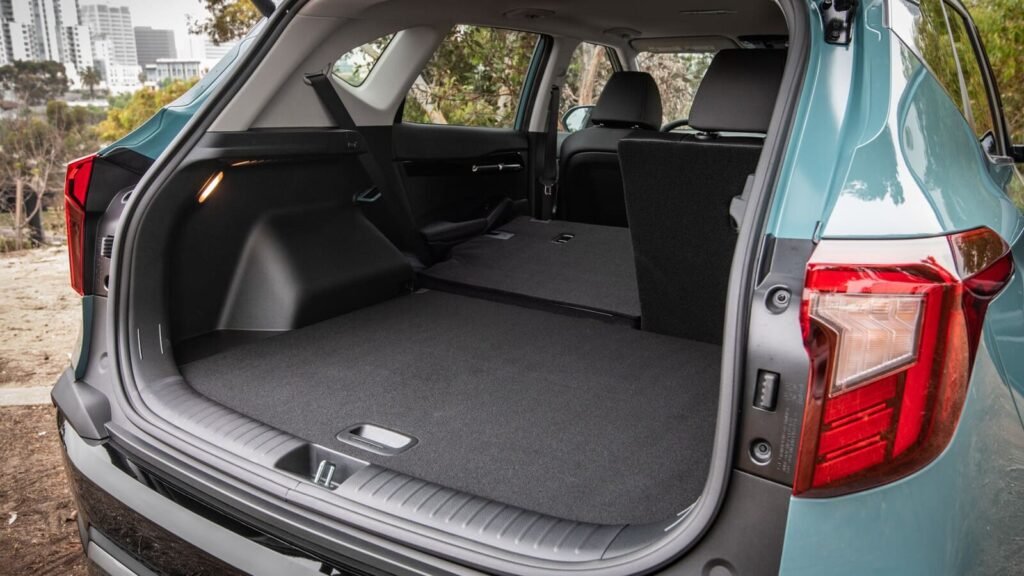
Despite its compact dimensions, the Seltos offers approximately 27 cubic feet of cargo space, expanding to 63 cubic feet with the rear seats folded.
However, hard cabin plastics and noticeable highway road noise reveal its mainstream origins. The SX’s additional technology improves perceived quality without matching the material refinement or sound insulation of some larger compact SUVs.
Advantages
- Excellent technology content.
- Useful cargo capacity.
- Good passenger space for the segment.
- Strong equipment-to-price ratio.
Disadvantages
- Some inexpensive interior materials.
- Highway refinement trails more expensive compact SUVs.
- Several desirable comfort features require an optional package.
Safety and Crash-Test Results: An Important Weakness
The 2025 Kia Seltos offers extensive driver-assistance technology, but its IIHS crash-test results reveal important limitations.
| IIHS evaluation | 2025 Seltos rating |
|---|---|
| Small-overlap frontal crash | Good |
| Updated moderate-overlap frontal crash | Acceptable |
| Updated side-impact test | Marginal |
| Front crash prevention: vehicle-to-vehicle 2.0 | Poor |
| Front crash prevention: pedestrian | Acceptable |
| Headlights | Vary by configuration |
It performed well in the small-overlap frontal test, but earned a Marginal rating in the updated side-impact test, reflecting weaknesses in structural performance and occupant protection. Its Acceptable rating in the updated moderate-overlap frontal test also indicates room for improvement, particularly in rear-passenger protection. These results distinguish the Seltos’ generous safety equipment from its actual crashworthiness, an important consideration when comparing it with higher-rated competitors.
Driver-Assistance Technology
The Seltos SX includes forward collision avoidance, blind-spot monitoring, lane-keeping assistance, and Highway Driving Assist. However, extensive safety equipment does not guarantee superior performance in independent testing.
Under the IIHS’s more demanding 2.0 protocol, the Seltos’ standard vehicle-to-vehicle front crash-prevention system earned a Poor rating, while pedestrian crash prevention received an Acceptable rating. The newer vehicle test includes motorcycle targets and higher-speed approaches, exposing limitations that simpler assessments may miss.
Our assessment: The SX offers generous safety technology, but its mixed IIHS results warrant comparison with higher-rated competitors, particularly for buyers prioritizing collision avoidance and occupant protection.
Reliability: Is the Turbocharged Seltos a Good Long-Term Bet?
The refreshed Seltos SX pairs its 1.6-liter turbocharged direct-injection engine with a conventional eight-speed automatic, eliminating the low-speed engagement characteristics of the previous dual-clutch transmission. However, improved refinement does not establish greater long-term durability.
Compared with the naturally aspirated 2.0-liter engine, the turbo introduces additional thermal demands and potential repair exposure involving its turbocharger, associated plumbing, and fuel-injection hardware. These differences do not establish that the SX is unreliable, but they introduce mechanical complexity that buyers should consider alongside its performance advantage.
What Does the Evidence Tell Us?
The refreshed SX’s 1.6-liter turbo and eight-speed automatic have a relatively limited long-term ownership record, making definitive reliability claims premature. Problems associated with the previous seven-speed DCT or unrelated Kia and Hyundai engines should not be attributed to this powertrain without supporting evidence. Used buyers should check transmission engagement, engine fault codes, cooling-system condition, and outstanding service campaigns.
Kia’s U.S. warranty provides 5-year/60,000-mile basic coverage and 10-year/100,000-mile powertrain coverage for qualifying original owners. However, full powertrain coverage generally does not transfer to subsequent private owners, making warranty eligibility worth verifying.
Our assessment: The SX offers an appealing mechanical package, but its long-term durability remains less established than that of some naturally aspirated alternatives. The standard 2.0-liter Seltos is mechanically simpler, though simplicity alone does not guarantee reliability.
Seltos SX Turbo vs. Mazda CX-30 Turbo and Hyundai Kona
The SX Turbo becomes more difficult to recommend when compared with similarly priced alternatives. Its strongest competitors emphasize different qualities.
Mazda CX-30 Turbo: Better Driving Refinement
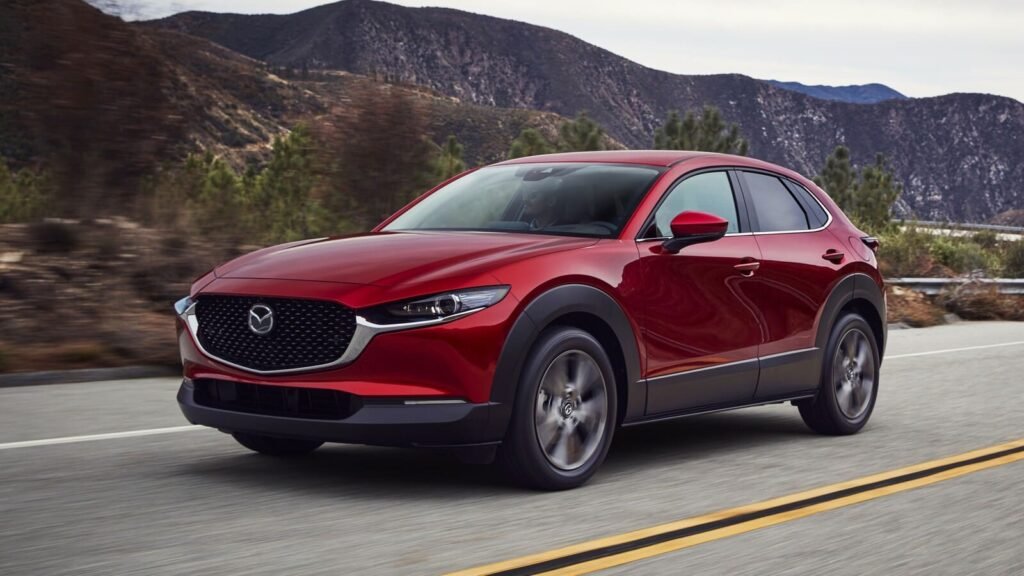
The Mazda CX-30 Turbo delivers substantially more torque, sharper handling, and a more refined interior, making it the stronger choice for driving enjoyment and premium feel. However, the Seltos SX offers greater rear-seat and cargo space, making it more practical for passengers and everyday use.
Hyundai Kona: A More Modern Alternative
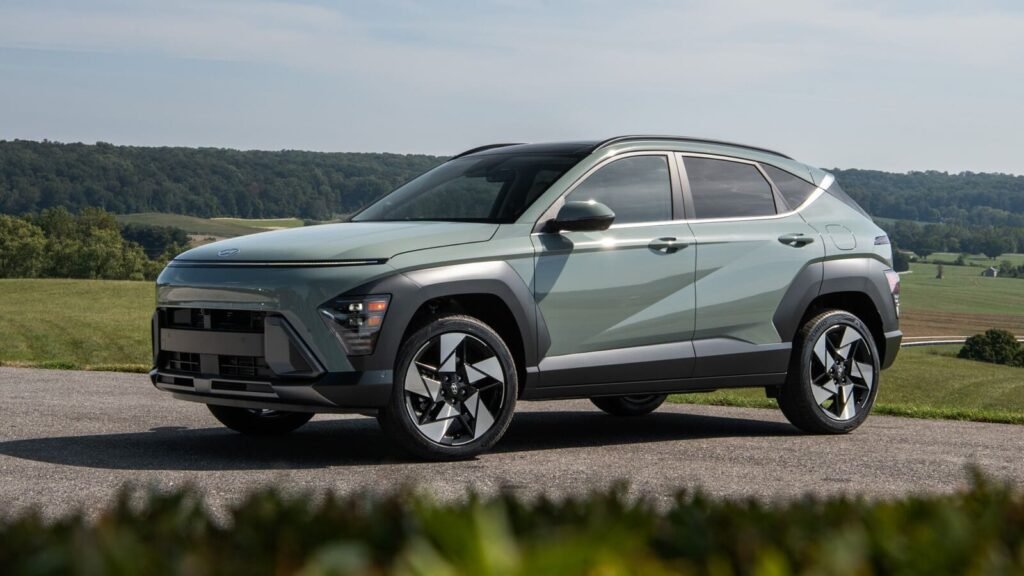
The Hyundai Kona offers bolder styling and a more modern cabin, while the Seltos SX Turbo counters with stronger acceleration than the Kona’s standard engine and standard AWD. The better choice depends on equipment, pricing, and driving preferences.
Subaru Crosstrek: Better for Rougher Conditions
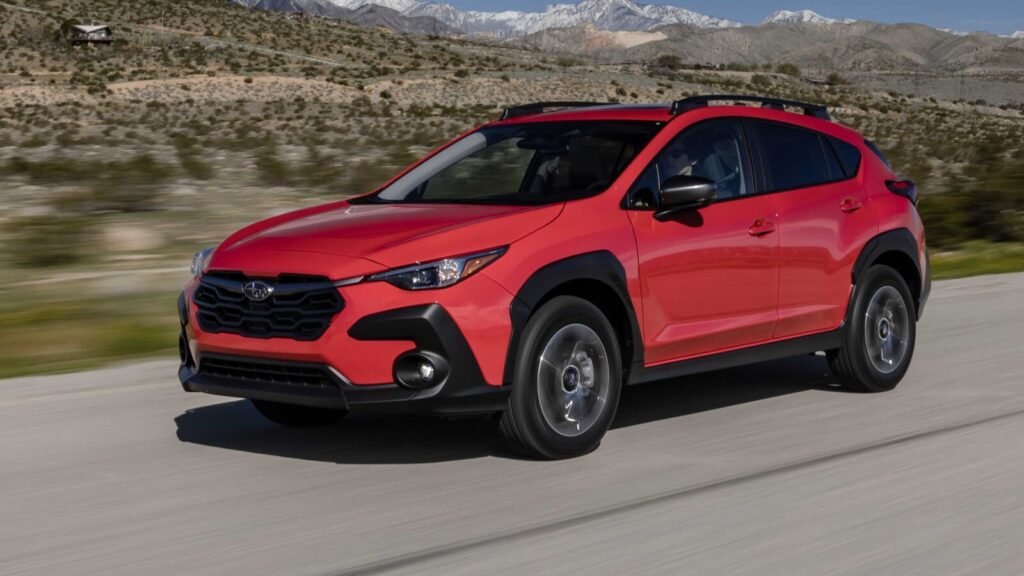
The Subaru Crosstrek offers greater ground clearance and rough-road capability, while the Seltos SX Turbo delivers substantially stronger acceleration. Choose the Subaru for challenging terrain and the Kia for highway performance.
For more detail, see our Subaru Crosstrek review and AWD capability analysis.
Is the Seltos SX Turbo Worth the Premium Over the EX?
The EX AWD delivers most of the Seltos’ practical advantages, including generous interior space, modern technology, and everyday versatility, while costing $2,800 less at 2025 MSRP and offering better fuel economy.
The SX justifies its premium with stronger acceleration, a conventional eight-speed automatic, and additional safety and comfort features. These upgrades particularly benefit drivers who frequently merge, overtake, or travel at highway speeds. For most buyers, the EX AWD is the better value; the SX is worth the premium when performance and equipment take priority.
Choose the SX Turbo If:
You prioritize acceleration, highway performance, and premium technology. Its eight-speed automatic also offers a more refined driving experience than the standard IVT.
Choose the EX AWD If:
You value fuel economy, practicality, and lower ownership costs. The EX delivers most of the Seltos’ everyday benefits without the turbocharged engine’s price premium.
Consider the X-Line If:
You want the same 190-hp turbocharged engine, eight-speed automatic, and standard AWD without paying for every SX feature. At $29,390, the 2025 X-Line costs $1,800 less than the SX, although it sacrifices some lighting, audio, seating, and driver-assistance equipment.
Our pick: The X-Line offers arguably the strongest performance-to-price ratio in the Seltos lineup, provided its reduced equipment meets your needs.
Final Verdict: Should You Buy the Kia Seltos SX Turbo?
The 2025 Kia Seltos SX Turbo successfully combines strong performance with everyday practicality. Its 190-hp engine delivers responsive acceleration, while the eight-speed automatic improves low-speed refinement over the previous dual-clutch transmission. A spacious cabin, generous technology, and standard AWD strengthen its appeal.
However, 25-mpg combined fuel economy, modest interior refinement, and mixed IIHS safety results prevent it from being an unquestionable class leader. More importantly, Kia offers compelling alternatives within the same lineup. The X-Line delivers identical turbocharged performance for $1,800 less, while the EX AWD offers better efficiency and most of the Seltos’ practical advantages.
Our verdict: Choose the SX for its combination of performance and premium equipment. Otherwise, the X-Line represents better turbocharged value, while the EX AWD remains the more economical choice.
- Chinese Cars Are Winning the Technology Race—But Will They Last?

- 2024 Toyota Camry Reliability: Is It Toyota’s Smartest Buy?
- 2023 Toyota Camry Reliability: Is Paying More Really Worth It?
- 10 Most Reliable Used Cars in 2026: Specific Years to Buy

- 2022 Toyota Camry Reliability: Is It the Best Used Camry?
- Car Reliability Ratings Explained: Which Ones Can You Actually Trust?
*Disclaimer: This website provides automotive content for informational purposes only and should not be considered professional advice. While we strive for accuracy, we do not guarantee the reliability or suitability of any vehicle or product mentioned—always conduct your own research before making purchasing decisions. Additionally, some links on this site are affiliate links, meaning we may earn a commission if you make a purchase, at no extra cost to you.