
The 2024 Subaru Crosstrek is a first-year redesign, which normally deserves extra caution in the used market. But there is an important difference: Subaru redesigned the vehicle without replacing its familiar naturally aspirated boxer-engine/CVT formula with an entirely new powertrain.
That doesn’t make the 2024 Crosstrek automatically reliable. It does mean buyers have more historical context than they would with a completely new engine and transmission.
For most used buyers, the 2024 Crosstrek is a sensible prospect—but condition, build date and maintenance history matter more than Subaru’s reputation alone.
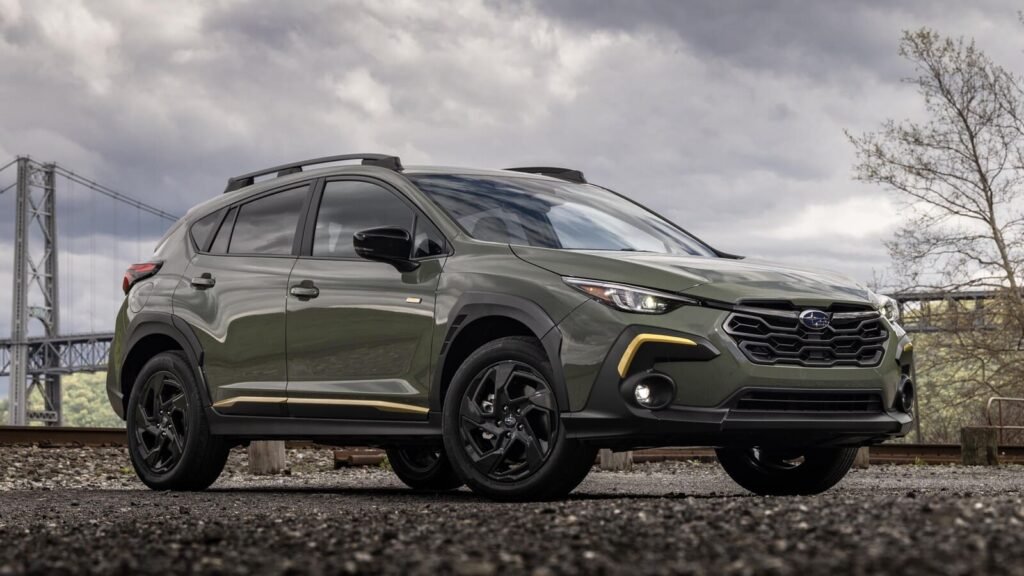
2024 Crosstrek: What You’re Actually Buying
| Version | Engine | Output | Drivetrain | Best reason to choose it |
|---|---|---|---|---|
| Base / Premium | 2.0L boxer | 152 hp / 145 lb-ft | CVT, AWD | Lower purchase price |
| Sport / Limited | 2.5L boxer | 182 hp / 178 lb-ft | CVT, AWD | Stronger performance |
| Wilderness | 2.5L boxer | 182 hp / 178 lb-ft | CVT, AWD | Extra off-road capability |
The redesign retained two naturally aspirated four-cylinder engines rather than introducing a new turbocharged powertrain. Subaru also updated the Lineartronic CVT, while Symmetrical AWD remained standard.
That’s important for reliability analysis: new generation does not necessarily mean entirely unproven mechanicals.
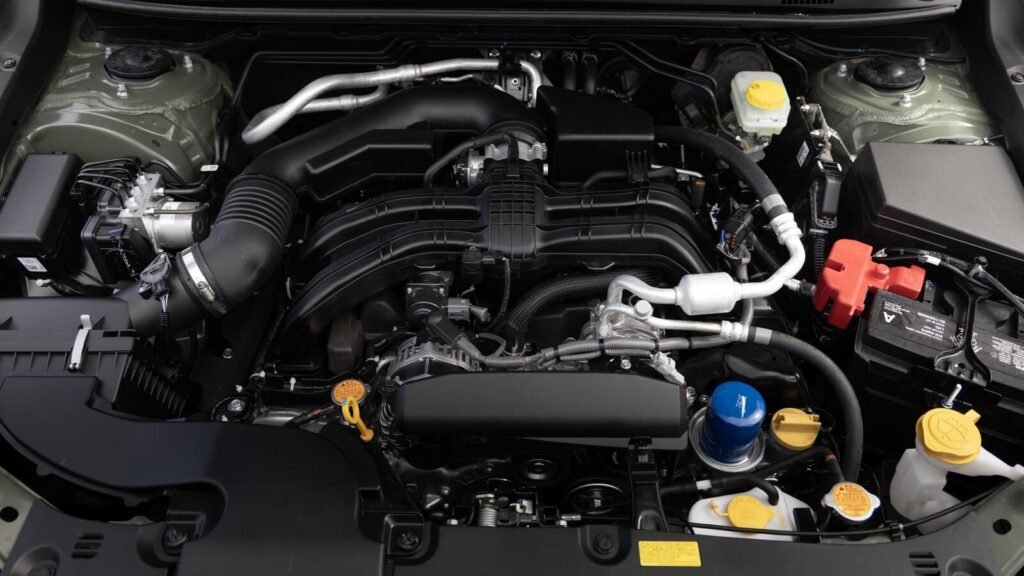
2.0L or 2.5L: Which Is the Better Reliability Bet?
There isn’t strong evidence that should push a used buyer toward one engine purely for reliability. The 2.0-liter makes 152 hp; the 2.5-liter raises that to 182 hp and 178 lb-ft. Both are naturally aspirated, direct-injected boxer fours and avoid the additional hardware of turbocharging.
The 2.5L’s advantage is therefore less about reliability than usability. Thirty additional horsepower is meaningful in a Crosstrek, particularly when merging, passing or carrying passengers and luggage.
Don’t buy the 2.0L because someone says it is automatically more reliable. Buy it if its lower price compensates for its weaker performance. For many used buyers, a well-priced Sport with the 2.5L may be the sweet spot.
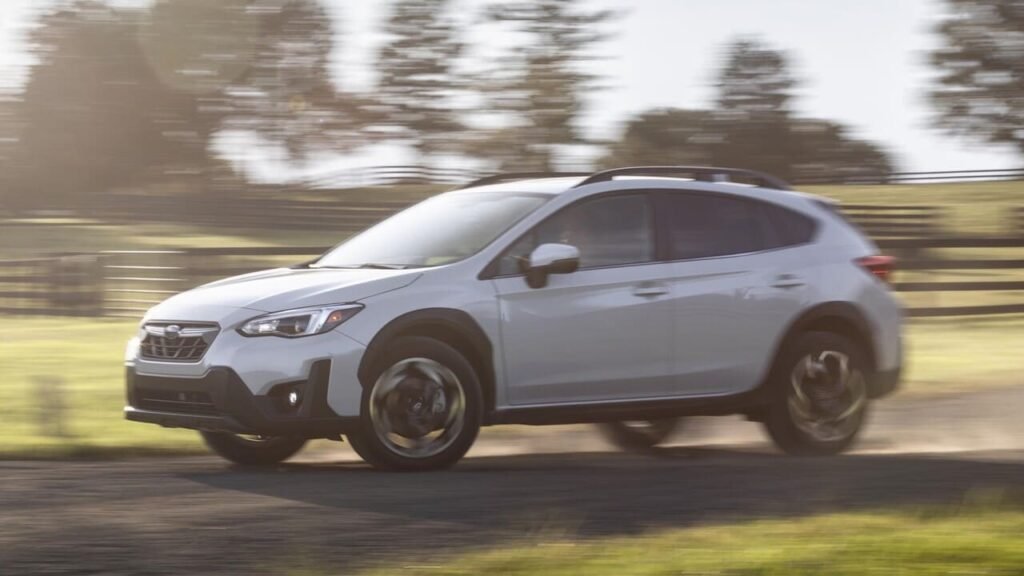
What About the CVT?
Subaru CVTs have accumulated enough internet history that almost any Crosstrek reliability discussion eventually reaches the transmission. But older CVT complaints shouldn’t automatically be projected onto a 2024 vehicle. The 2024 uses an updated Lineartronic CVT. What matters when buying used is how the actual transmission behaves.
| Check | What you want |
|---|---|
| Drive/Reverse engagement | Prompt, smooth engagement |
| Low-speed driving | No abnormal shuddering or severe hesitation |
| Acceleration | Smooth power delivery without warning lights |
| Noise | No unusual persistent whining or bearing noise |
| Diagnostic scan | No relevant stored transmission/drivetrain faults |
One important point: high or sustained engine rpm under hard acceleration isn’t automatically CVT “slipping.” A CVT can deliberately hold the engine near an efficient or powerful rpm while continuously changing its ratio. Judge abnormal behavior, not behavior that merely feels different from a conventional automatic.
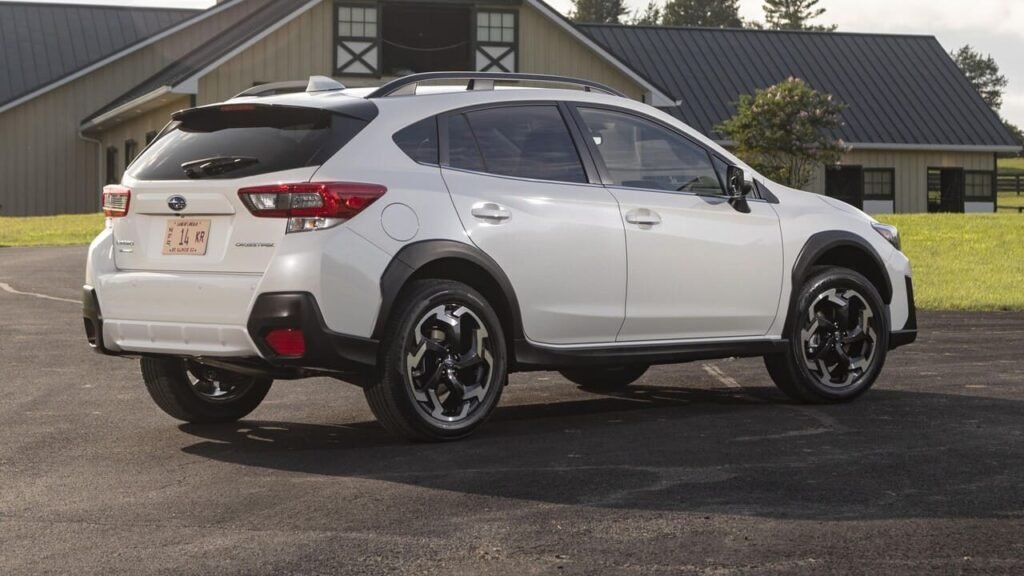
Don’t Blame the 2024 for Every Old Crosstrek Problem
Older Crosstreks have generated discussions about oil consumption, batteries, wheel bearings, CVTs and other problems. They are useful historical context, but poor evidence if applied indiscriminately. Different model years use different components, revisions and software.
This is the opposite of what we see with some vehicles whose redesign introduces an entirely unfamiliar powertrain. The 2024 Crosstrek combines new-generation structure and electronics with evolved mechanical hardware.
That reduces some uncertainty. It doesn’t eliminate first-year-redesign risk. The areas I’d watch particularly closely are therefore not only the engine and transmission, but infotainment, cameras, EyeSight functions, switches and other electronics introduced or revised with the new generation.
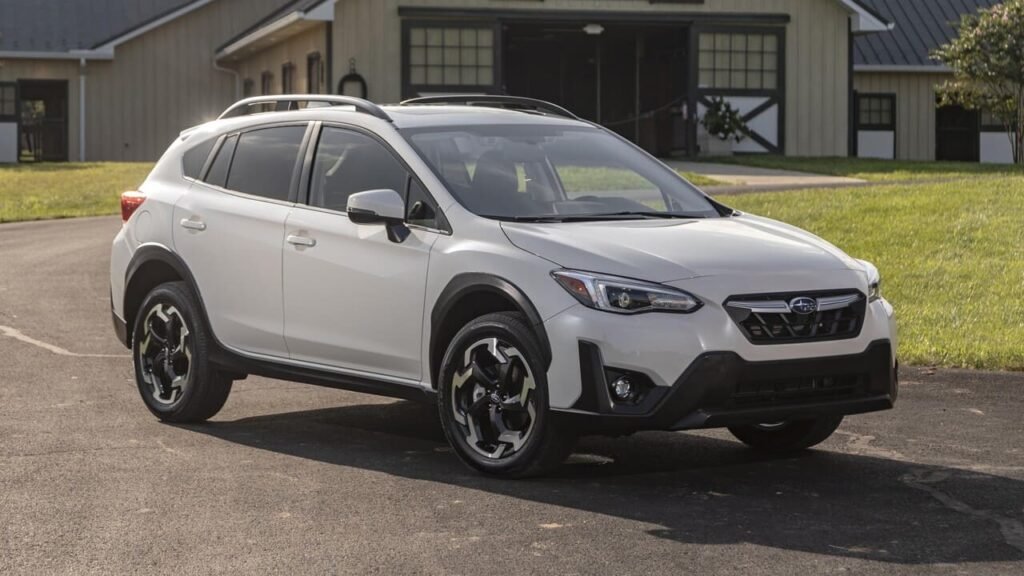
One Detail Most Used Buyers Will Miss: Build Date
If you’re comparing two 2024 Crosstreks, check the certification label on the driver’s door jamb. IIHS says Subaru modified the rear seatbelts on Crosstreks built after February 2024 to improve rear-passenger protection in its updated moderate-overlap crash test.
Even the modified version earned only Marginal overall in that tougher test, despite Good driver protection. The 2024 also received Acceptable in IIHS’s updated side test and Good in the small-overlap tests.
| IIHS evaluation | 2024 Crosstrek result |
|---|---|
| Small overlap front | Good |
| Original moderate overlap | Good |
| Updated moderate overlap* | Marginal |
| Updated side test | Acceptable |
| Pedestrian crash prevention | Good |
*Updated moderate-overlap rating applies to vehicles built after February 2024 with revised rear seatbelts. For buyers regularly carrying children or adults in the rear, I’d prefer a post-February-2024 build when otherwise comparable vehicles are available. That’s a more useful distinction than simply saying “Subarus are safe.”
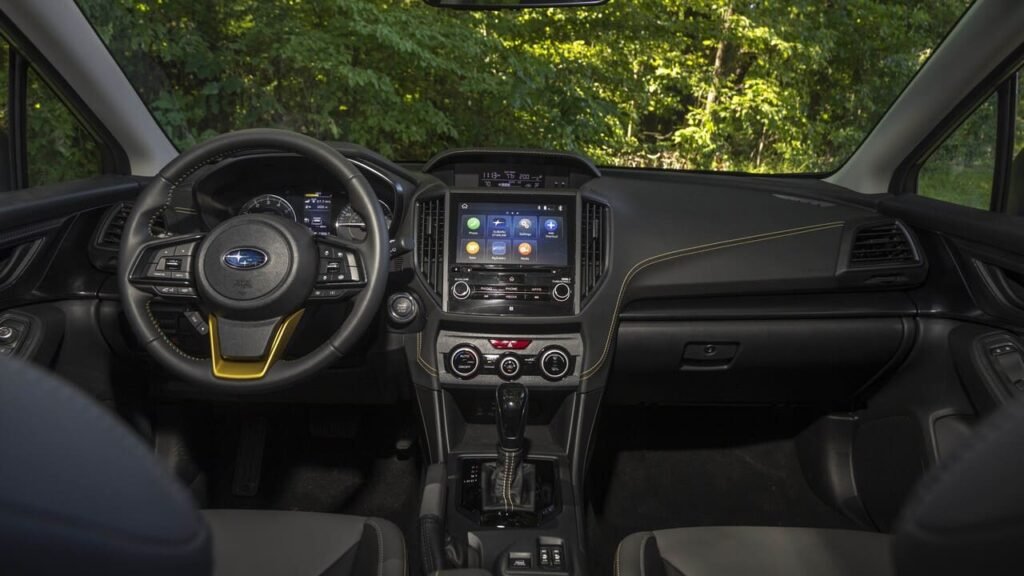
What I’d Check Before Buying
The inspection can remain straightforward, confirm scheduled maintenance, check the VIN for outstanding recalls, scan every control module for stored faults and test EyeSight, cameras, infotainment and driver-assistance systems. Drive the car from cold and pay particular attention to CVT behavior, wheel-bearing noise, vibration and warning lights.
Because AWD vehicles are sensitive to substantial differences in tire circumference, also inspect all four tires. A car wearing mismatched tires or dramatically different tread depths deserves additional investigation.
Wilderness models deserve an underbody inspection because their extra ground clearance and off-road equipment make actual trail use more likely. For the complete process, use our used-car inspection checklist.
Is the 2024 Subaru Crosstrek Reliable?
The 2024 Crosstrek has a promising formula for long-term ownership: naturally aspirated engines, familiar powertrain architecture and no requirement for buyers to accept a complicated turbo or hybrid system simply to get AWD. But “promising” isn’t the same as proven.
It remains the first year of a redesigned generation, and there isn’t enough long-term evidence yet to declare it exceptionally durable. The better conclusion is narrower: the 2024 Crosstrek gives used buyers fewer mechanical reasons for concern than its first-year-redesign status might suggest.
Choose the 2.0L or 2.5L based primarily on price and performance rather than unsupported reliability assumptions, inspect the CVT instead of fearing it by reputation, and—when two otherwise similar cars are available—pay attention to that February 2024 build-date change. Those details tell you considerably more than a generic reliability score ever will.
If you liked this post, you might want to check out our article titled “Best Crossovers With Best MPG: Top Picks for 2025.”
Feel free to dive into our site for in-depth car reviews, easy buying guides, and the latest updates from the auto world. There’s a ton of info to keep you in the loop, so take a look around and don’t forget to bookmark our homepage for the next time you want to catch up!
- Chinese Cars Are Winning the Technology Race—But Will They Last?
- 2024 Toyota Camry Reliability: Is It Toyota’s Smartest Buy?
- 2023 Toyota Camry Reliability: Is Paying More Really Worth It?
- 10 Most Reliable Used Cars in 2026: Specific Years to Buy
- 2022 Toyota Camry Reliability: Is It the Best Used Camry?
- Car Reliability Ratings Explained: Which Ones Can You Actually Trust?
*Disclaimer: This website provides automotive content for informational purposes only and should not be considered professional advice. While we strive for accuracy, we do not guarantee the reliability or suitability of any vehicle or product mentioned—always conduct your own research before making purchasing decisions. Additionally, some links on this site are affiliate links, meaning we may earn a commission if you make a purchase, at no extra cost to you.