

Ask most drivers whether German or Japanese cars are more reliable, and Japan will probably win the reputation contest. Historically, that reputation is well earned: Toyota, Lexus, and Honda have accumulated strong reliability records across generations, while German premium cars became associated with sophisticated engineering that could become expensive with age.
But the modern picture is more nuanced. Consumer Reports currently places Lexus, Subaru, Toyota, and Honda among its strongest brands for new-car reliability—with BMW close behind in fifth.
That changes the question. Germany has already demonstrated that it can engineer highly reliable cars. The harder challenge is delivering that reliability consistently while retaining the performance, complexity, and technology German premium cars are expected to offer.
| Evidence | What It Suggests |
|---|---|
| New-car reliability | Japanese brands still dominate the top |
| BMW’s current performance | German cars can achieve excellent reliability |
| 5–10-year reliability | Japan retains a stronger advantage |
| Extreme longevity | Toyota/Lexus/Honda remain particularly strong |
| Maintenance cost | Separate issue—German premium cars usually cost more |
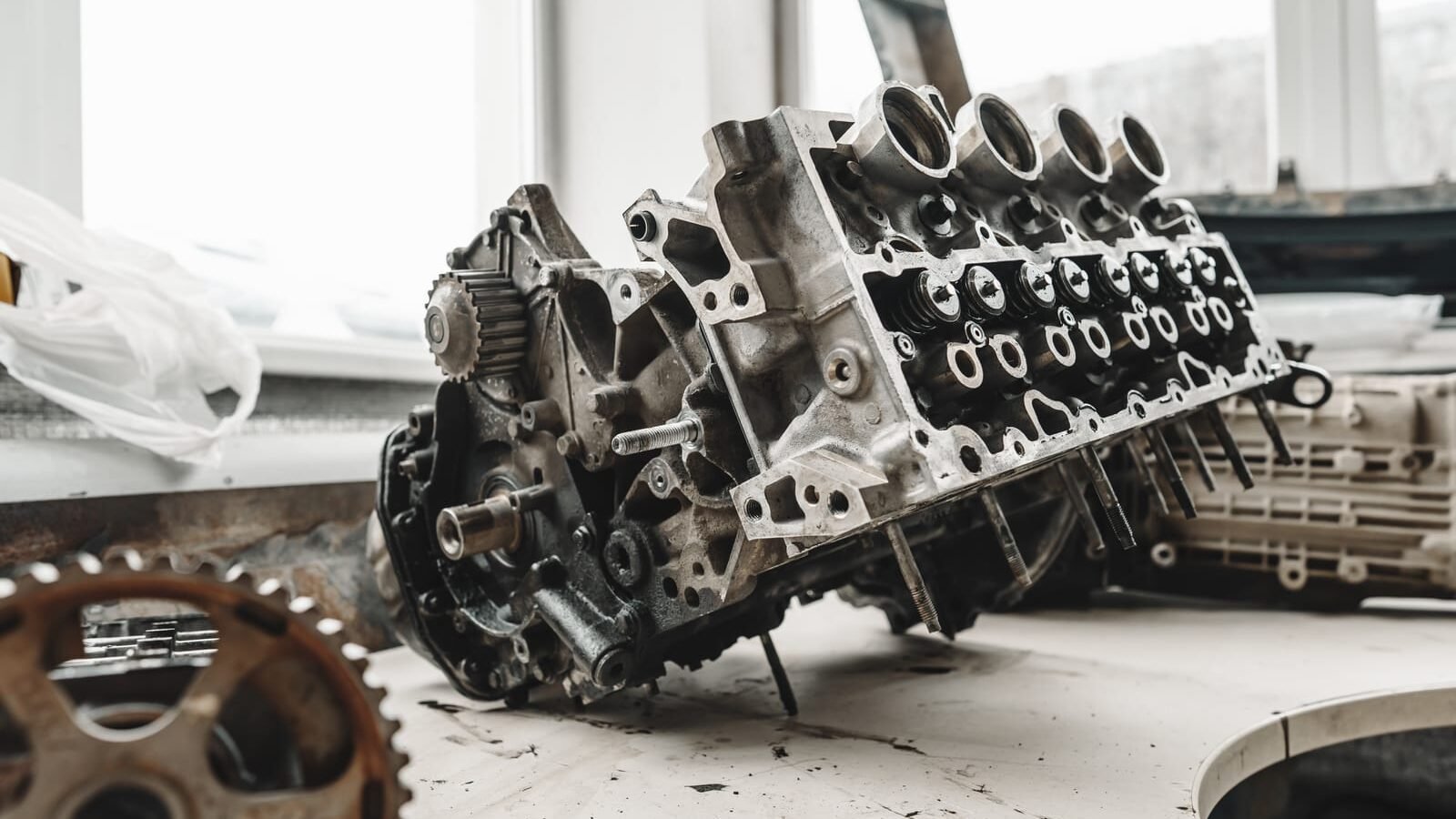
Reliability Isn’t the Same as Maintenance Cost
This distinction matters. Imagine two cars each suffer one significant failure over five years. One costs $600 to repair; the other $2,500. Their failure frequency is identical, yet their owners may describe their reliability very differently.
Real-world reliability therefore has several dimensions:
failure frequency → severity → repair cost → downtime → owner perception
Most discussions compress all five into one word. German premium cars are particularly vulnerable to that simplification because complex suspension, dense powertrain packaging, sophisticated electronics, and expensive components can make an otherwise infrequent failure costly.
A BMW can therefore be statistically reliable yet expensive to own. We explore that distinction more deeply in our guide to German vs. Japanese car maintenance.
Japan’s Real Advantage Is Consistency
Toyota’s reliability reputation is hardly surprising anymore. More impressive is how often Japanese manufacturers reproduce strong results across multiple brands. Consumer Reports’ current predicted-reliability leaders include Lexus, Subaru, Toyota, and Honda in the first four positions.
The pattern persists with age. CR’s separate analysis of 5- to 10-year-old vehicles places Lexus and Toyota first and second, while Mazda, Honda, and Acura also perform strongly.
That concentration reveals the more important point. Japan’s reliability advantage is better described as consistency rather than exclusivity. Japanese manufacturers aren’t the only companies capable of engineering highly reliable vehicles. They simply achieve it across an unusually broad portion of their industry.
BMW Shows Why the German Stereotype Is Outdated
BMW is perhaps the strongest counterexample to the idea that sophisticated German cars are inherently unreliable. Consumer Reports currently ranks BMW fifth for predicted reliability, immediately behind Honda—without BMW turning its vehicles into mechanically simple appliances.
Modern BMWs still combine turbocharging, complex emissions systems, AWD, adaptive chassis hardware, extensive electronics, and increasingly software-defined vehicle systems. The lesson isn’t that complexity no longer matters. It’s that mature complexity can work extremely well.
BMW’s modular engines and shared vehicle architectures have now accumulated years of production experience. Field failures expose weaknesses, suppliers revise components, calibrations improve, and lessons migrate across models. Complexity becomes less risky when engineering knowledge compounds faster than new complexity is introduced.
Toyota’s hybrids demonstrate the same principle from Japan: sophisticated technology, given enough volume and iteration, can become proven technology.
Technology Maturity Matters More Than Nationality
This may be the most useful way to understand modern reliability. Every new engineering system begins with assumptions; production turns those assumptions into evidence.
Millions of real-world miles generate warranty claims, dealer repairs, manufacturing data, and operating conditions development testing cannot perfectly reproduce. Engineers feed those lessons back into components, suppliers, manufacturing processes, and calibration.
The relationship is simple:
production volume + time + iteration = engineering maturity
That’s why first-year redesigns deserve additional scrutiny regardless of badge. Even Toyota can stumble when enough new hardware arrives simultaneously, while a sophisticated German powertrain with years of production behind it can become the more conservative choice.
Technical complexity matters—but accumulated engineering knowledge can matter more.
The better question isn’t:
Is German technology too complicated?
It’s:
How mature is this particular technology?
Luxury Complexity Distorts the Comparison
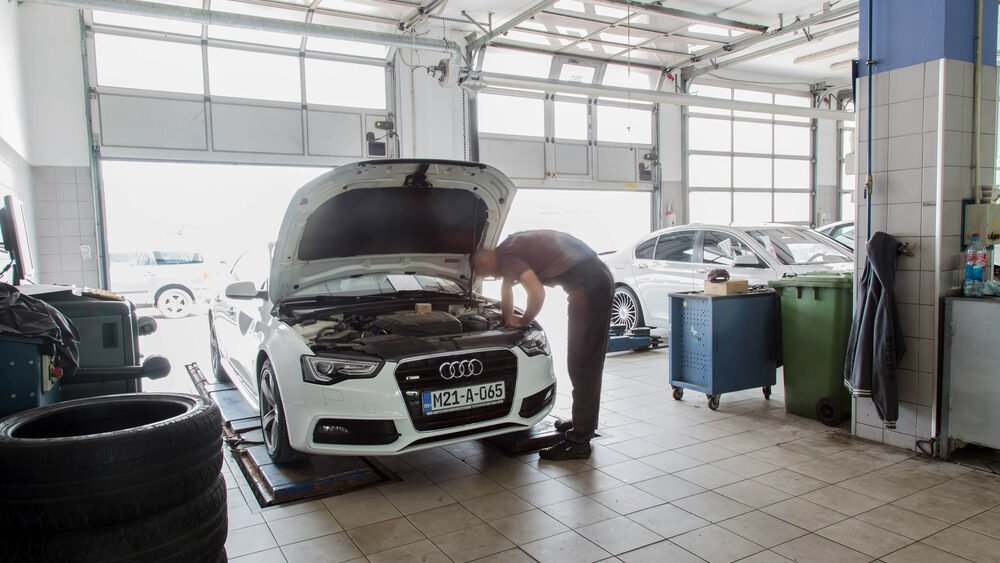
There is a methodological problem with many Germany-versus-Japan reliability comparisons: Germany’s major U.S. brands—BMW, Mercedes-Benz, Audi, and Porsche—are disproportionately premium manufacturers, while Japan sells enormous volumes of mainstream Toyotas, Hondas, Mazdas, Subarus, and Nissans.
So a supposedly national comparison often becomes premium vehicle versus mainstream vehicle. Those are fundamentally different engineering assignments.
An S-Class may combine air suspension, rear-wheel steering, powered comfort systems, extensive ADAS, multiple displays, and a high-output drivetrain. A Corolla doesn’t. If the S-Class records more problems, that doesn’t automatically demonstrate inferior German engineering; every additional system introduces another potential failure mode.
Meaningful comparisons should therefore control for vehicle class and complexity: BMW 3 Series vs. Lexus IS, not Mercedes-Benz S-Class vs. Toyota Corolla.
Software Is Changing What “Reliable” Means
Mechanical durability is no longer the entire reliability story. J.D. Power’s 2026 U.S. Vehicle Dependability Study recorded 204 problems per 100 vehicles after three years, the highest level since the study was redesigned in 2022. Yet the largest problem category wasn’t engines or transmissions—it was infotainment, at 56.7 PP100.
Connectivity, displays, software, and electronic features increasingly determine whether owners experience a vehicle as dependable. Premium models recorded 217 PP100 versus 200 for mass-market vehicles, reinforcing the complexity problem.
A car can therefore be mechanically excellent while delivering a mediocre dependability experience because its digital systems repeatedly frustrate the owner. Reliability is increasingly a systems-integration discipline, not merely a mechanical-durability contest.
Germany and Japan now face that challenge equally.
Where Japan Still Has the Strongest Case: Aging
BMW’s current results weaken the old German-reliability stereotype. They don’t erase Japan’s stronger long-term evidence. As the measurement window expands from new vehicles to five, ten, or fifteen years, Toyota, Lexus, and Honda become particularly difficult benchmarks.
Extreme-mileage studies reinforce that pattern, with Toyota and Lexus especially prominent among vehicles reaching 250,000 miles. We examine that evidence in Why Do Japanese Cars Last So Long?.
That’s important because three-year dependability and fifteen-year durability are different engineering tests. Rubber hardens, cooling systems accumulate thousands of heat cycles, suspension joints wear, electrical connectors endure moisture and temperature variation, and plastics become brittle.
The longer the timeline, the more completely the vehicle—not merely its powertrain—is tested. Germany has demonstrated that it can match Japan in short-term reliability. Japan still has the deeper body of evidence for long-term durability.

Don’t Buy a Country—Buy a Configuration
None of this means a Toyota is automatically reliable or a Mercedes automatically troublesome. Modern reliability analysis needs to work at a much more precise level:
generation → model year → engine → transmission → drivetrain → major options
A first-year Toyota introducing a completely new powertrain may carry more uncertainty than a mature BMW entering its sixth production year. Likewise, two versions of the same German luxury SUV can present dramatically different ownership risk if one uses conventional suspension and a proven six-cylinder, while the other adds air suspension, a V8, 48V electrification, and active chassis hardware.
Reliability doesn’t belong to a badge. It belongs to a specific engineering configuration at a specific point in its development cycle.
So, Are Japanese Cars Still More Reliable Than German Cars?
As a group, yes. Japanese manufacturers still demonstrate greater reliability consistency, particularly as vehicles age, with Toyota, Lexus, and Honda remaining exceptionally difficult benchmarks.
But the blanket claim that German cars are unreliable is increasingly indefensible. BMW’s current reliability performance demonstrates why, while Porsche’s strong showing in J.D. Power’s latest dependability study provides another example. Sophisticated, powerful vehicles can be highly dependable when their underlying systems receive enough validation, production volume, field experience, and iterative refinement.
The old argument was often framed as German complexity versus Japanese simplicity. Modern cars make that distinction increasingly obsolete. The more useful divide is immature complexity versus mature complexity.
If you liked this post, you might want to check out our article called “Japanese vs. Korean Cars: Which One Is The Most Reliable?” There’s lots more on our site with in-depth car reviews, handy buying tips, and the latest news in the industry. You’ll find plenty of info—so feel free to explore, and remember to save our home page to your bookmarks for updates later on!
- Chinese Cars Are Winning the Technology Race—But Will They Last?

- 2024 Toyota Camry Reliability: Is It Toyota’s Smartest Buy?
- 2023 Toyota Camry Reliability: Is Paying More Really Worth It?

- 10 Most Reliable Used Cars in 2026: Specific Years to Buy

- 2022 Toyota Camry Reliability: Is It the Best Used Camry?

- Car Reliability Ratings Explained: Which Ones Can You Actually Trust?
*Disclaimer: This website provides automotive content for informational purposes only and should not be considered professional advice. While we strive for accuracy, we do not guarantee the reliability or suitability of any vehicle or product mentioned—always conduct your own research before making purchasing decisions. Additionally, some links on this site are affiliate links, meaning we may earn a commission if you make a purchase, at no extra cost to you.