
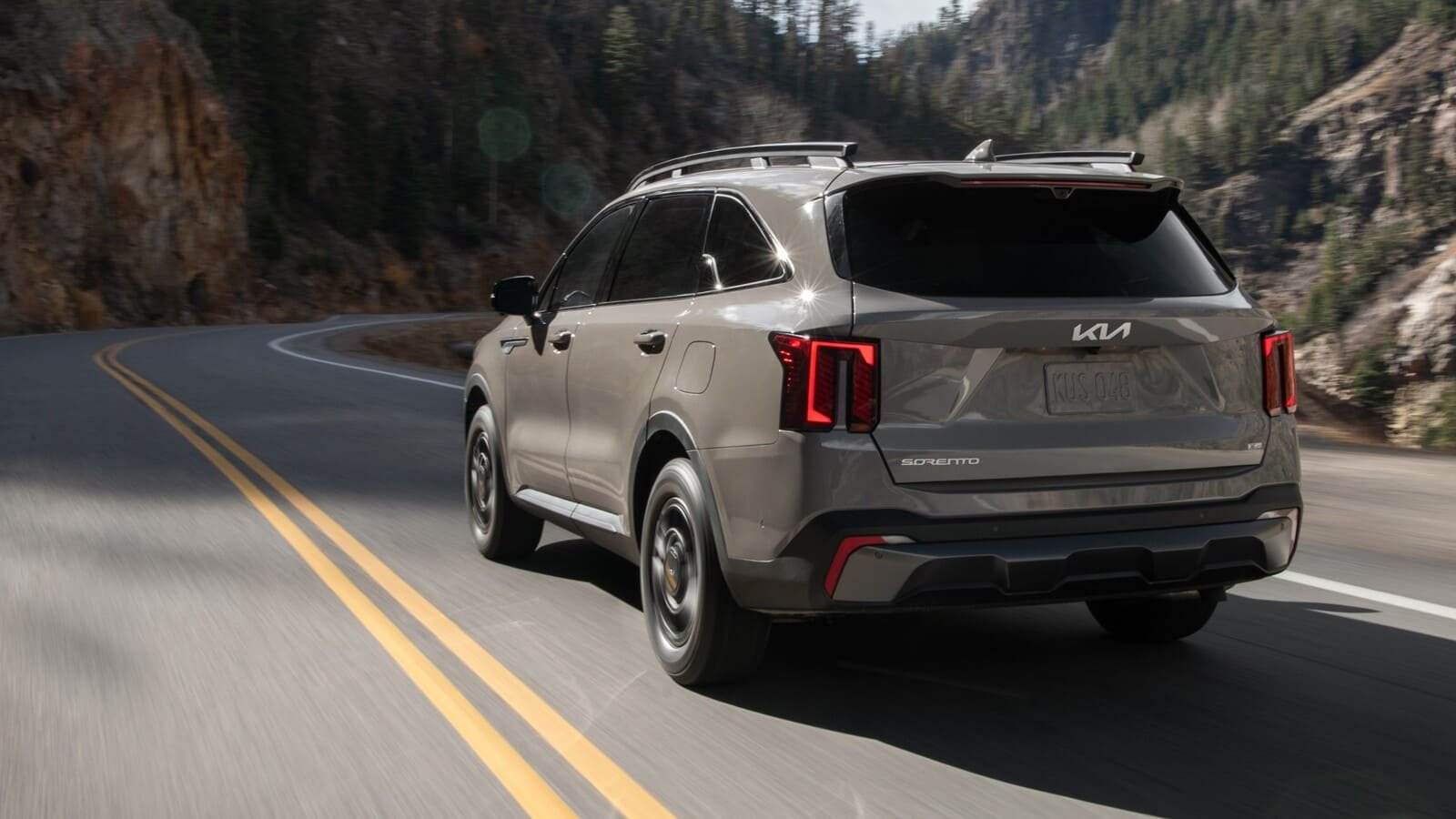
For fuel-efficient midsize SUVs in 2026, hybrids set the benchmark. The Kia Sorento Hybrid reaches 37 mpg combined in its most efficient configuration, with the Grand Highlander Hybrid, Santa Fe Hybrid, and Highlander Hybrid close behind.
But MPG alone shouldn’t decide the purchase. The Grand Highlander offers more useful three-row space, Toyota brings extensive hybrid experience, and plug-in hybrids only deliver their full advantage when owners charge regularly.
So the better question isn’t which SUV gets the highest MPG? It’s which efficient midsize SUV best fits how you’ll actually use it?
Quick Answer: Our Best MPG Midsize SUV Picks
| SUV | Best For | EPA Combined MPG* | Seats |
|---|---|---|---|
| Kia Sorento Hybrid | Maximum conventional-hybrid MPG | 37 | 6 |
| Toyota Grand Highlander Hybrid | Families needing more room | 36 | Up to 8 |
| Hyundai Santa Fe Hybrid | Value and distinctive packaging | 36 | 7 |
| Toyota Highlander Hybrid | Proven hybrid engineering | ~35–36 | Up to 8 |
| Hyundai Palisade Hybrid | Larger, more premium family SUV | Up to 34 | Up to 8 |
My picks in 30 seconds
Best MPG: Kia Sorento Hybrid
Best family all-rounder: Toyota Grand Highlander Hybrid
Best proven hybrid choice: Toyota Highlander Hybrid
Best value alternative: Hyundai Santa Fe Hybrid
Best if you want something larger: Hyundai Palisade Hybrid
Now let’s look at why.
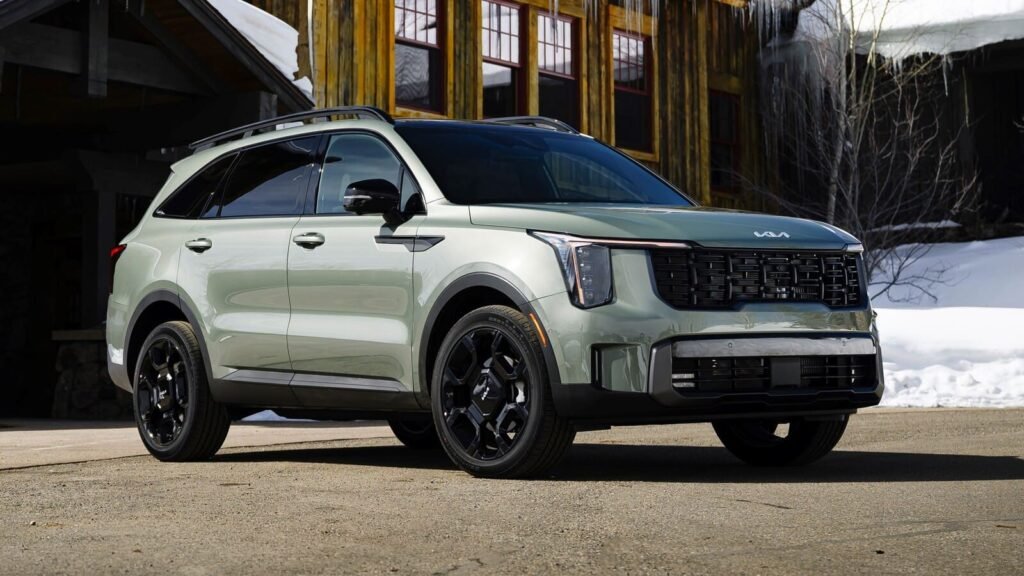
1. Kia Sorento Hybrid — Best for Maximum MPG
The Sorento Hybrid combines excellent fuel economy with three-row flexibility, helped by its relatively compact size. Its turbo-hybrid system uses a conventional six-speed automatic, so it feels more like a traditional automatic than Toyota’s power-split hybrids.
The compromise is third-row space. It’s useful for occasional passengers, but adults or older children won’t find it as comfortable as a larger three-row SUV.
Best reason to buy it: You need occasional third-row seating without sacrificing the efficiency of a much smaller crossover.
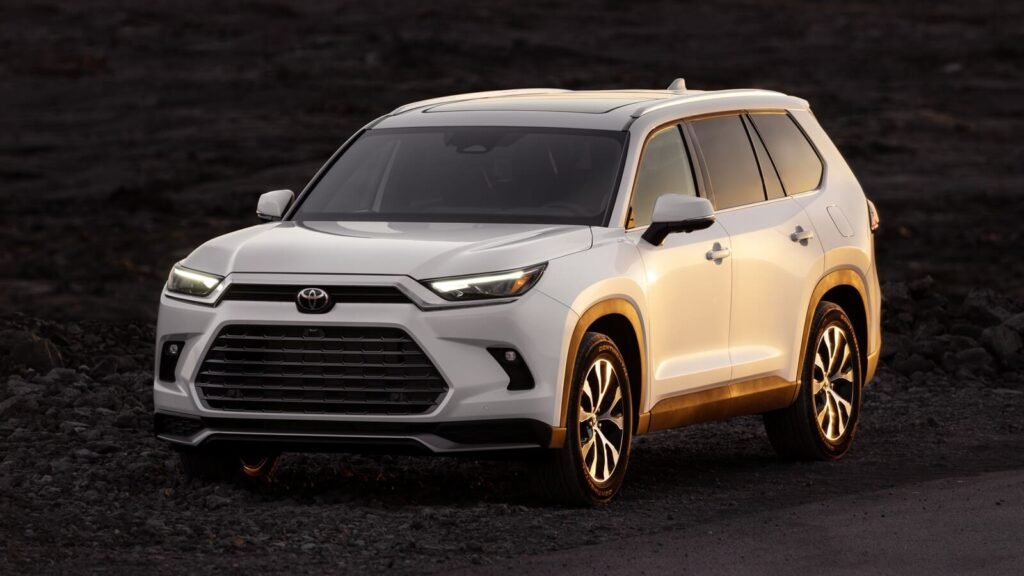
2. Toyota Grand Highlander Hybrid — Best Family All-Rounder
For many families, the Grand Highlander Hybrid is the sweet spot between three-row space and fuel economy. Its standard hybrid system is particularly effective in suburban stop-and-go driving, where regenerative braking and electric assistance can reduce fuel consumption without requiring plug-in charging.
Don’t confuse it with the more powerful Hybrid MAX, which prioritizes performance and uses more fuel.
Best reason to buy it: You genuinely need adult-friendly three-row space without accepting full-size-SUV fuel consumption.

3. Hyundai Santa Fe Hybrid — Best Value Alternative
The Santa Fe Hybrid combines strong fuel economy with unusually practical, boxy packaging. Like the Sorento, it pairs a turbocharged gasoline engine and electric motor with a conventional automatic, giving it a different driving character from Toyota’s power-split hybrids.
The 2026 model reaches up to 36 mpg combined with FWD, but AWD versions are less efficient—an important distinction when comparing advertised MPG.
Best reason to buy it: You want efficient three-row versatility and useful interior space without moving to a substantially larger SUV.

4. Toyota Highlander Hybrid — Best for Proven Hybrid Engineering
The Highlander Hybrid isn’t the newest or roomiest option, but its strength is maturity. Toyota has spent decades refining its power-split hybrid architecture, making this a good example of why complexity doesn’t automatically mean poor reliability.
Choose the Grand Highlander if third-row and cargo space matter most. The regular Highlander makes more sense when you don’t need that extra size.
Best reason to buy it: You want strong fuel economy from a well-established hybrid system without moving to a larger three-row SUV.
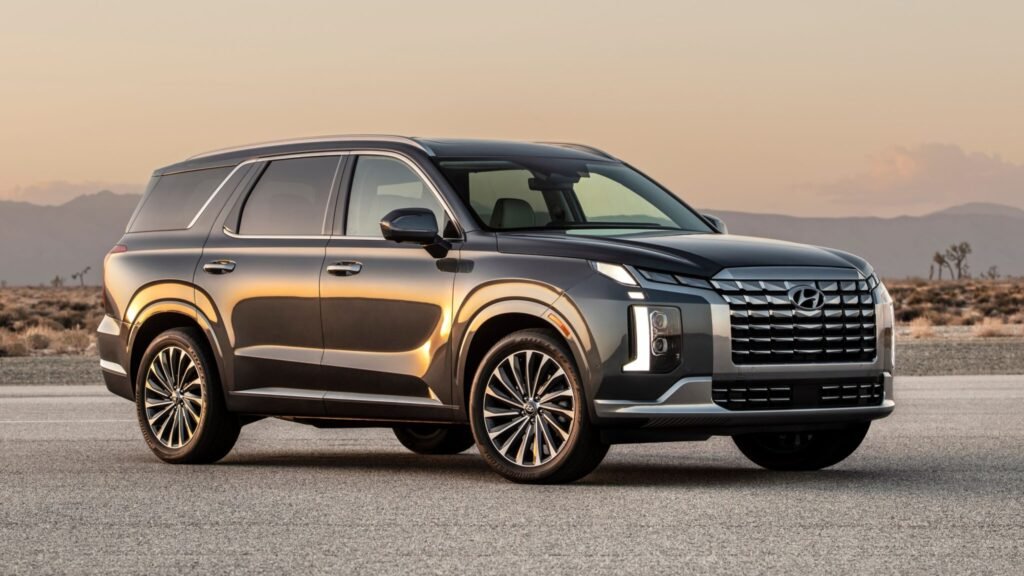
5. Hyundai Palisade Hybrid — Best Larger Alternative
The Palisade Hybrid brings hybrid efficiency to a larger, more family-focused three-row SUV. Its MPG may trail the smaller Sorento Hybrid, but that’s partly the price of additional passenger space, cargo capacity, and comfort.
That’s why MPG rankings need context. A smaller 37-mpg SUV isn’t the better choice if it can’t accommodate your family comfortably.
Best reason to buy it: You need genuine three-row family space and comfort while still benefiting from hybrid fuel savings.
Why Similar MPG Can Hide Very Different Engineering
Toyota and Hyundai/Kia reach similar efficiency through different hybrid architectures. Toyota generally uses a power-split system without a conventional stepped automatic, while Hyundai and Kia pair their electric motors with multi-speed automatic transmissions.
The difference is noticeable. Toyota hybrids can hold the engine at a sustained rpm during hard acceleration, while Hyundai/Kia systems provide familiar gear changes.
Neither approach is inherently better. Reliability and efficiency depend on how well the engine, motors, battery, transmission, cooling, and software work as one system.
Does 36 MPG Actually Save Much Money?
This is the calculation many buyers skip. Suppose you’re comparing two otherwise suitable SUVs:
| 36 MPG Hybrid | 30 MPG SUV | |
|---|---|---|
| Annual driving | 12,000 miles | 12,000 miles |
| Gasoline used | 333 gallons | 400 gallons |
| Fuel at $3.25/gal | ~$1,083 | ~$1,300 |
| Annual difference | ~$217 saved | — |
Saving $217 every year is useful. But suppose the hybrid costs $4,000 more after comparing actual transaction prices. Fuel savings alone would require more than 18 years to recover that difference under these assumptions.
Now change the comparison from 25 mpg to 36 mpg: The 25-mpg SUV consumes about 480 gallons annually, costing roughly $1,560. The 36-mpg hybrid therefore saves approximately $477 per year. Suddenly the economics look considerably stronger. This is why you should never ask only:
“What’s the MPG?”
Ask:
“What am I paying to get that MPG compared with the vehicle I would otherwise buy?”
Our hybrid fuel-savings guide explores this calculation in more detail.
What About Plug-In Hybrid Midsize SUVs?
PHEVs make the most sense when you charge regularly and complete much of your daily driving within the electric range. Without convenient charging, the larger battery and higher purchase price can become harder to justify.
Also, don’t compare MPGe directly with MPG. MPGe is an energy-equivalent efficiency measure; your actual savings depend on electricity prices, gasoline prices, charging frequency, and daily mileage.
Practical rule: reliable home charging and short daily trips favor a PHEV. Otherwise, start by comparing conventional hybrids.
Don’t Forget Wheels and AWD
The advertised MPG may not apply to your configuration. AWD, larger wheels, different tires, and heavier trims can all reduce fuel economy, sometimes by several MPG.
Over years of ownership, that difference adds up. Always check the EPA rating for the exact drivetrain and trim you’re buying, not just the model name.
Verify U.S. figures through the EPA’s FuelEconomy.gov database.
Which Fuel-Efficient Midsize SUV Would I Buy?
For maximum MPG, I’d start with the Kia Sorento Hybrid. For genuine three-row family space, I’d favor the Grand Highlander Hybrid, while the Highlander Hybrid remains attractive for buyers prioritizing a mature hybrid track record. If even more passenger space and comfort matter, the Palisade Hybrid deserves consideration.
But don’t buy on MPG alone. Compare purchase price, exact EPA rating, annual mileage, depreciation, insurance, and the space you actually need. The smartest efficient SUV isn’t necessarily the one that uses the least fuel. It’s the one that lowers your total ownership cost without making you pay for capability you don’t need.
If safety matters as much as fuel economy, our guide to the safest midsize SUVs compares leading models using independent safety evidence.
For more reliability analysis, comparisons, and practical buying guides, explore the latest articles on the TopCarList homepage.
- Chinese Cars Are Winning the Technology Race—But Will They Last?
- 2024 Toyota Camry Reliability: Is It Toyota’s Smartest Buy?
- 2023 Toyota Camry Reliability: Is Paying More Really Worth It?
- 10 Most Reliable Used Cars in 2026: Specific Years to Buy
- 2022 Toyota Camry Reliability: Is It the Best Used Camry?
- Car Reliability Ratings Explained: Which Ones Can You Actually Trust?
*Disclaimer: This website provides automotive content for informational purposes only and should not be considered professional advice. While we strive for accuracy, we do not guarantee the reliability or suitability of any vehicle or product mentioned—always conduct your own research before making purchasing decisions. Additionally, some links on this site are affiliate links, meaning we may earn a commission if you make a purchase, at no extra cost to you.
**Discover how much you can save by choosing a fuel-efficient SUV over a less efficient model—click here to learn more.