
Choosing the safest midsize SUV sounds simple: find the model with the highest safety rating and buy it. Modern crash testing makes the answer more complicated.
An SUV can protect the driver extremely well yet perform less convincingly for a rear passenger. Another may have excellent crashworthiness but weaker headlights or collision-avoidance performance. And an older Top Safety Pick+ award is not necessarily equivalent to one earned under today’s tougher requirements.
So rather than declaring one SUV universally “safest,” we looked for models showing consistently strong performance across the latest IIHS evaluations, with particular attention to crashworthiness, rear-seat protection and crash avoidance.
What Does “Safest” Actually Mean?
IIHS’s 2026 Top Safety Pick+ requirements provide a useful starting point. To earn the award, a vehicle needs Good ratings in the small-overlap front, updated moderate-overlap front and updated side tests. It also needs Acceptable or Good headlights, Good pedestrian crash prevention and at least Acceptable performance in the newer vehicle-to-vehicle front crash-prevention evaluation.
That updated moderate-overlap test is particularly useful for families because it evaluates protection for a second-row passenger as well as the driver.
This is why simply counting airbags or driver-assistance features tells us relatively little.
Having automatic emergency braking is not the same as demonstrating that it performs well in independent testing.
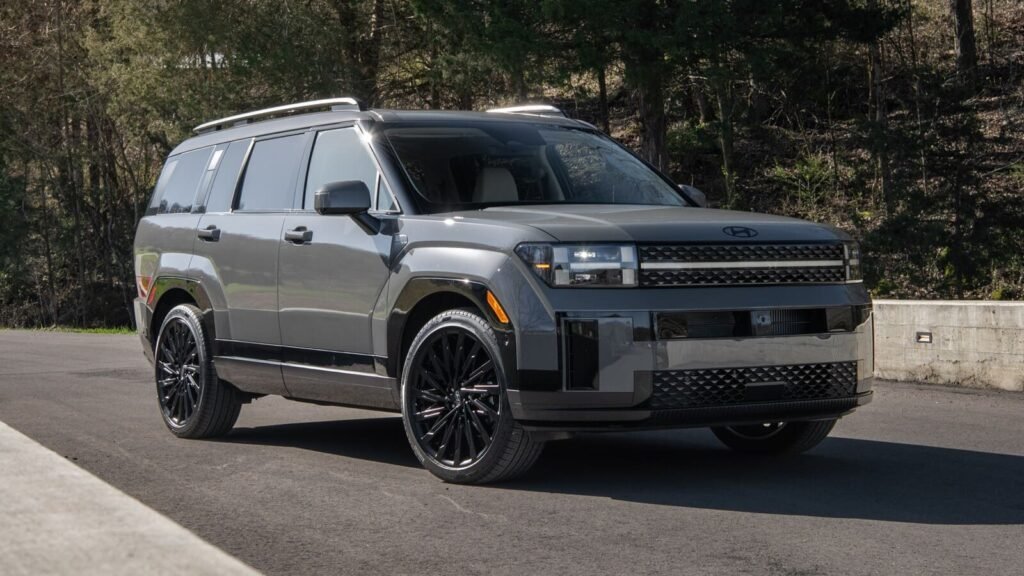
Hyundai Santa Fe: Particularly Strong Across the Board
The 2026 Hyundai Santa Fe earns IIHS Top Safety Pick+ and records Good overall ratings in the small-overlap front, updated moderate-overlap front and updated side tests.
Its standard front crash-prevention systems also earn Good ratings for both pedestrian and vehicle-to-vehicle performance.
There is one qualification worth knowing: the Good updated moderate-overlap result applies to 2025 models built after November 2024 and 2026 models after Hyundai modified the rear seat belts to improve rear-occupant protection.
That manufacturing-date distinction is exactly why buyers should look beyond the award badge when shopping used.
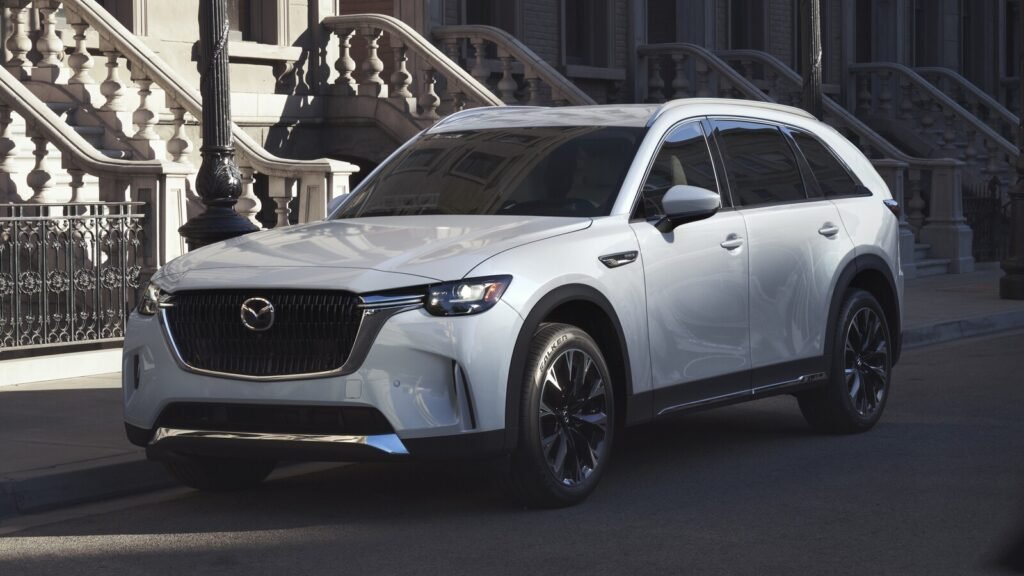
Mazda CX-90: Strong Protection in a Larger Three-Row Package
The 2026 Mazda CX-90 also earns Top Safety Pick+, making it one of the stronger choices for buyers who need three rows.
Its vehicle-to-vehicle automatic emergency braking earns an Acceptable rating rather than Good, but the details are useful: in IIHS testing it avoided collisions with passenger-car and motorcycle targets at several lower test speeds, although performance weakened in the highest-speed scenarios.
Pedestrian crash prevention earns Good. The CX-90 is therefore a good example of why we prefer looking at individual tests rather than simply declaring a vehicle “safe” because it carries an award.
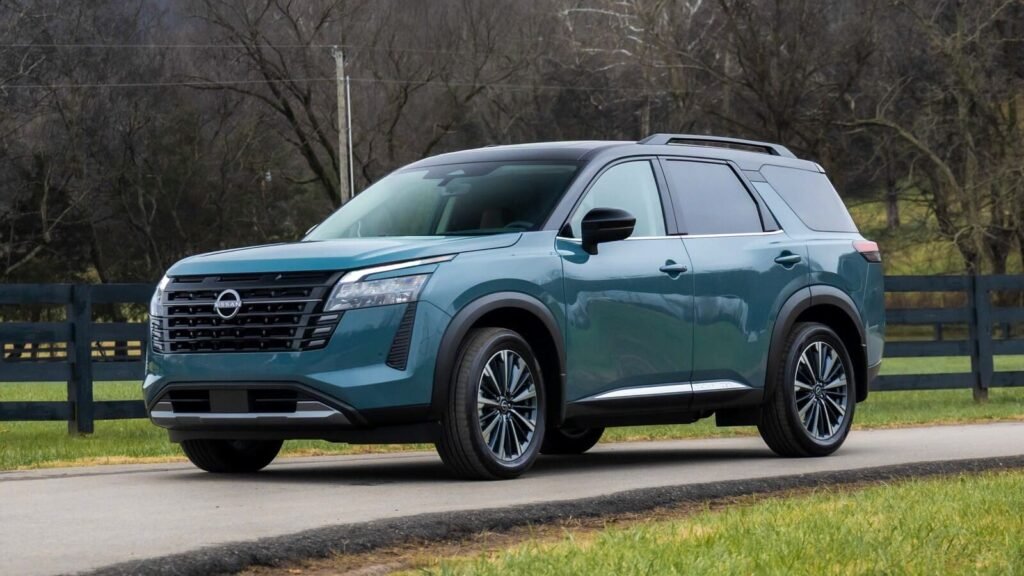
Nissan Pathfinder: A Strong Conventional Family-SUV Choice
The 2026 Nissan Pathfinder also qualifies for Top Safety Pick+.
That makes it particularly relevant for families who want a conventional three-row midsize SUV rather than an EV or a more expensive premium-oriented model.
Its presence on the current list also illustrates why safety guides need regular updating. Crash tests evolve, manufacturers modify vehicles, and models that once led their class can be overtaken as testing becomes more demanding.
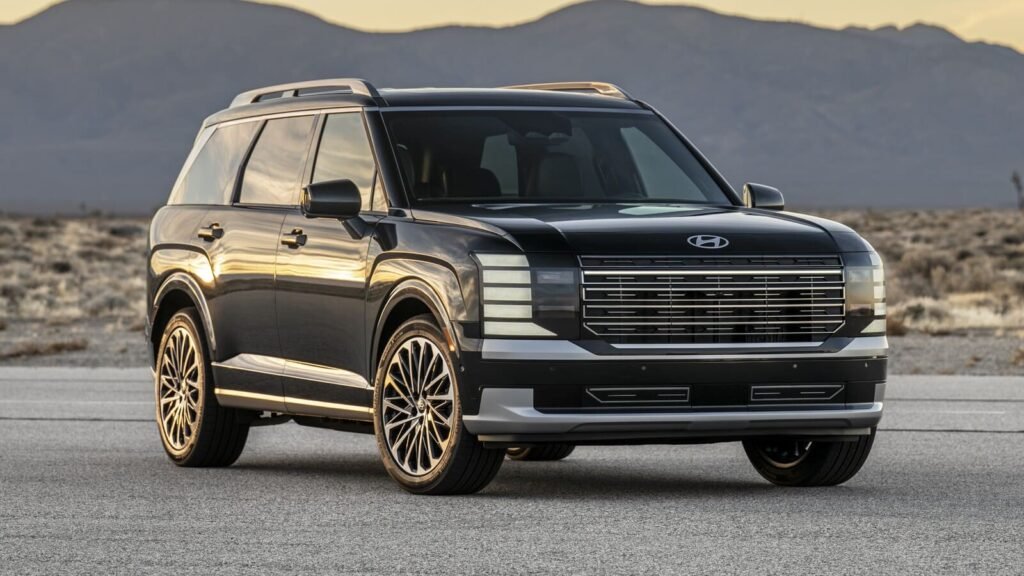
Hyundai Palisade: Excellent Results, but Check the Build Date
The redesigned 2026 Hyundai Palisade earns Top Safety Pick+, but only for vehicles built after November 2025.
That qualification matters as manufacturers sometimes make structural, restraint-system or software changes during a model year. Two vehicles wearing the same model-year badge can therefore have different eligibility for an IIHS award.
If safety is the reason you are choosing a particular used vehicle, check whether IIHS specifies a production-date cutoff rather than assuming every example qualifies.
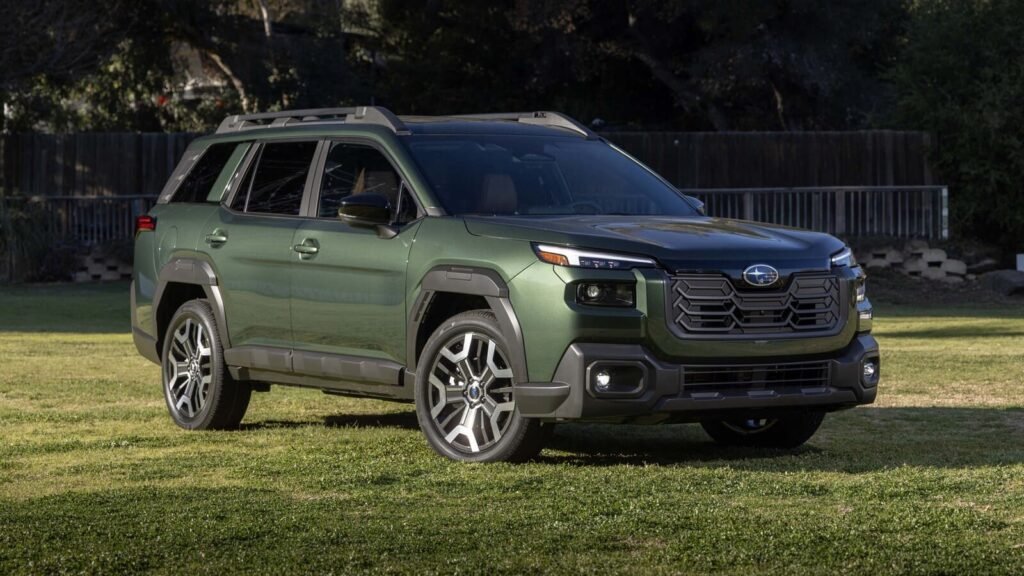
Subaru Outback: Still a Safety Standout
The 2026 Subaru Outback also appears among IIHS’s Top Safety Pick+ midsize SUVs.
Its inclusion is useful because the Outback serves a somewhat different buyer from a three-row Palisade or Pathfinder. It provides a lower, wagon-like alternative for families that don’t actually need seven seats.
That raises an overlooked point about safety shopping: don’t buy more vehicle than your family requires simply because larger SUVs dominate safety lists.
Vehicle size matters in real-world crash protection, but seating requirements, visibility, maneuverability and how the vehicle will actually be used matter too.
What About the Honda Pilot and Ford Explorer?
Both remain credible family SUVs, but the latest results show why we shouldn’t automatically place familiar names at the top.
The 2026 Pilot records Good results in several areas, including its headlights and pedestrian crash-prevention system, but its updated moderate-overlap front rating is Acceptable, preventing it from joining the Top Safety Pick+ group under the current criteria.
The 2026 Ford Explorer earns Top Safety Pick, with Good crashworthiness results, Good headlights and Good pedestrian crash prevention. That is still strong performance, but it doesn’t currently carry the higher Top Safety Pick+ designation.
Neither result makes these SUVs “unsafe.” It simply means other models currently satisfy a broader set of IIHS’s most demanding award requirements.
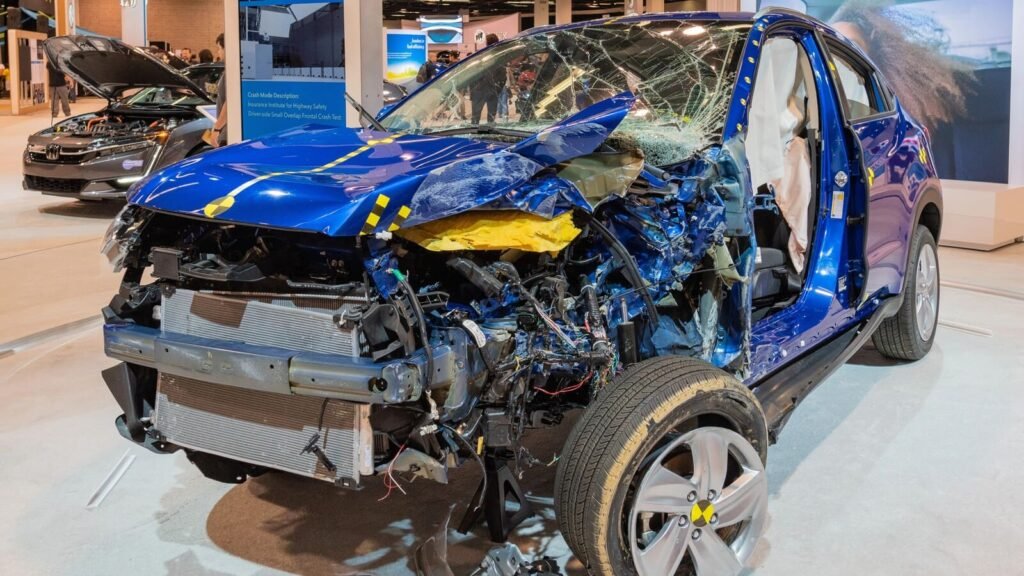
IIHS and NHTSA Don’t Measure Exactly the Same Thing
Buyers should also avoid treating IIHS and NHTSA ratings as interchangeable scores. Both provide valuable safety information, but they use different crash configurations, procedures and rating systems. A five-star NHTSA rating and an IIHS Top Safety Pick+ award therefore tell you different things about a vehicle.
Use them together rather than trying to decide which organization has the “correct” score. And remember that crash-test results apply to specific model years—and sometimes specific production dates.
What Should Families Prioritize?
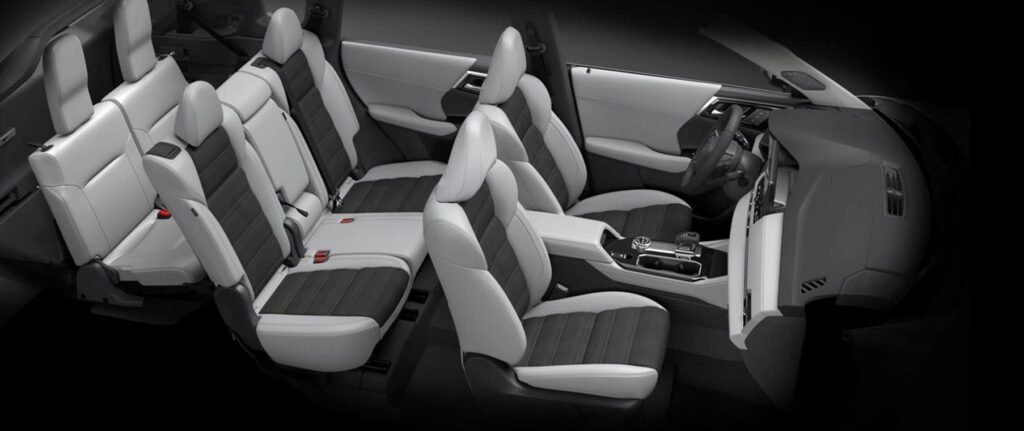
For a family SUV, I would pay particular attention to rear-passenger protection. Children eventually outgrow child seats, teenagers sit in the second and third rows, and adults frequently travel in the back of family vehicles.
Historically, improvements in front-seat protection moved faster than equivalent improvements for rear occupants, which is one reason IIHS strengthened its moderate-overlap evaluation.
Also examine headlights and automatic emergency braking rather than simply checking whether those features are fitted. And don’t overlook tires. AWD may help a vehicle accelerate on slippery surfaces, but it cannot compensate for tires that cannot generate enough grip when braking or turning.
So Which Midsize SUVs Stand Out?
The latest IIHS testing gives shoppers several particularly strong choices, including the Hyundai Santa Fe, Mazda CX-90, Nissan Pathfinder, qualifying Hyundai Palisade models and Subaru Outback.
But there isn’t one midsize SUV that can reasonably be declared safest in every possible accident. The more useful strategy is to choose a vehicle that performs consistently across the tests most relevant to your family—and then investigate the details behind the award.
The safest badge is useful. The test results behind it are more important.
If you found this post helpful, you might also like “Top 10 Longest-Lasting SUVs You Can Buy Today | Ultimate Guide.” Be sure to explore other sections of our site for in-depth car reviews, expert buying guides, and the latest industry insights. There’s plenty to keep you informed! Take a look around, and don’t forget to bookmark us for future updates.
- Chinese Cars Are Winning the Technology Race—But Will They Last?
- 2024 Toyota Camry Reliability: Is It Toyota’s Smartest Buy?
- 2023 Toyota Camry Reliability: Is Paying More Really Worth It?
- 10 Most Reliable Used Cars in 2026: Specific Years to Buy
- 2022 Toyota Camry Reliability: Is It the Best Used Camry?
- Car Reliability Ratings Explained: Which Ones Can You Actually Trust?
*Disclaimer: This website provides automotive content for informational purposes only and should not be considered professional advice. While we strive for accuracy, we do not guarantee the reliability or suitability of any vehicle or product mentioned—always conduct your own research before making purchasing decisions. Additionally, some links on this site are affiliate links, meaning we may earn a commission if you make a purchase, at no extra cost to you.