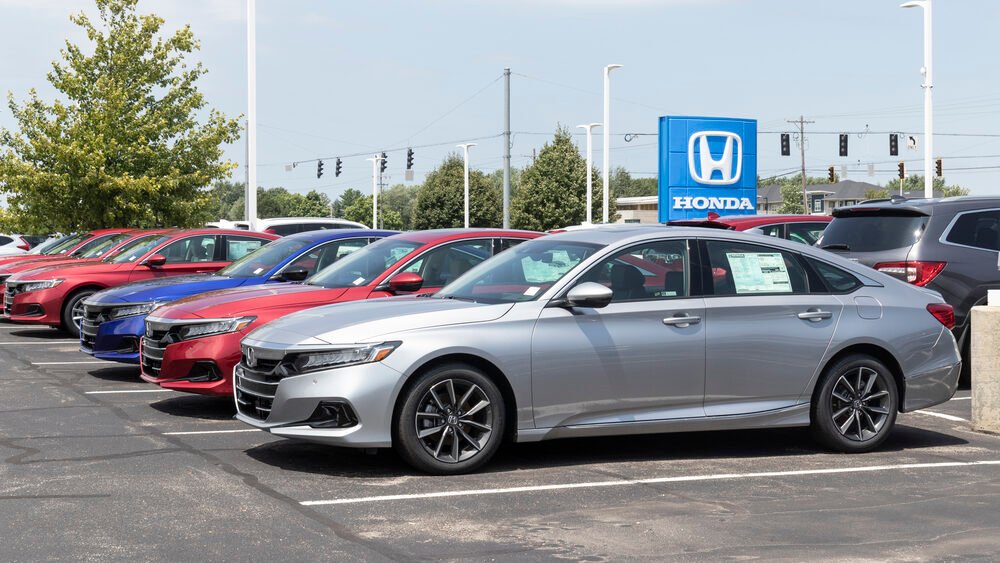
The global automotive landscape is more competitive than ever, but Japanese carmakers continue to stand out as leaders in reliability, efficiency, and longevity. Sure, American and European brands have their own unique strengths like performance, luxury rides, stylish designs, and cool innovations, but Japanese brands always seem to come out on top in customer satisfaction and industry rankings.
So what’s the secret behind their lasting appeal? Let’s take a look at the key reasons and product strategies that keep Japanese automakers leading the pack and why car owners everywhere love them so much.
A Brief Look at Global Market Perceptions
Early Success and Expanding Influence
Back in the 70s and 80s, Japanese car manufacturers really started making their mark in Western markets. They built a name for themselves thanks to great fuel efficiency and reliable engines. With oil crises hitting and tastes changing, people found that Japanese cars offered cheaper and longer-lasting options compared to the bigger American and European models. Eventually, their reputation changed from being just budget-friendly to top-tier models especially as Japanese brands kept making bigger cars and moving into new market areas. This helped Japan become a major player in the automotive world.
Ever-Increasing Consumer Demand
Fast-forward to today, and Japanese models still dominate many best-seller lists across multiple segments—from compact cars (e.g., Toyota Corolla) to midsize SUVs (e.g., Honda CR-V) and pickup trucks (e.g., Toyota Tacoma). Even in luxury niches, Lexus (Toyota’s premium division) competes strongly with European giants like Mercedes-Benz and BMW, often surpassing them in reliability rankings and overall customer satisfaction.
Foundational Strength: Quality Control
Continuous Improvement
One big reason why Japanese brands do so well is their focus on continuous improvement. This idea has automakers improving each model little by little every year. They stick to tried-and-true methods and carefully test everything to spot any mechanical or electronic issues. As time goes on, these small tweaks add up, making cars that are really reliable and easy to use.
The Toyota Production System
The Toyota Production System or TPS brought some really innovative ways to make cars like lean production and the Andon cord. This allows workers on the front lines to stop the assembly line right away if they see any issues. With this kind of real-time quality check, the chances of big problems reaching customers go way down. It’s set a high bar that other car makers around the world have been trying to match.
Comparisons With American and European Brands
Below is a comparison table showcasing select models and data from Consumer Reports on reliability scores, along with estimated annual maintenance costs from YourMechanic.
Brand & Model
Region
CR Reliability Score (2023)
Est. Annual Maintenance Cost
Key Strengths
Toyota RAV4
Japanese
4/5
$420–$500
Low running costs, advanced safety
Honda Accord
Japanese
4/5
$450–$500
Balanced performance, durability
Ford Escape
American
3/5
$500–$650
Roomy interior, decent tech
Chevrolet Malibu
American
2–3/5
$550–$700
Comfort, safety features
BMW 3-Series
European
1–2/5
$800–$1,000
Performance, luxury ride
Volkswagen Passat
European
2–3/5
$550–$700
Solid handling, refined interior
Key Observations:
Japanese models (RAV4, Accord) typically score higher in reliability compared to many American and European competitors.
Maintenance costs for Japanese vehicles generally remain moderate, reflecting ease of service and widespread parts availability.
American and European cars can excel in specific niches (e.g., performance or luxury) but often lag behind in consistent reliability.
Technology and Innovation: Measured Progress vs. Rapid Change
Emphasis on Practical Tech
Japanese automakers are careful about rolling out new technologies. Instead of rushing complex features that could compromise reliability, they test thoroughly to ensure long-term stability. Toyota’s pioneering hybrid system in the Prius, for instance, underwent extensive validation before reaching production, resulting in one of the most dependable hybrid cars globally.
American and European Tech Leadership
While U.S. brands excel in large trucks, muscle cars, and cutting-edge EVs (e.g., Tesla’s rapid innovations), they sometimes face reliability issues when adopting advanced electronics or software too quickly. European manufacturers offer sophisticated safety systems and performance tuning but can experience high maintenance costs due to intricate engineering. Japanese brands tend to strike a balance—offering competitive technology without sacrificing the reliability they’re known for.
Cultural Components: Monozukuri and Enduring Reputations
Monozukuri (The Art of Making Things)
Along with Kaizen, Japan’s mindset of Monozukuri instills a sense of craftsmanship in every stage of production. This means every component—from bolts to engine blocks—undergoes rigorous quality checks. It’s a level of detail that resonates with consumers who want cars built to last, not just impress in a showroom.
Brand Trust and Consistent Performance
The trustworthiness of Japanese vehicles goes beyond a single model or year; it’s a consistent brand-wide reputation. For instance, owners of Honda Civics or Toyota Camrys often remain loyal, citing the minimal downtime and repair costs they’ve experienced over years—or even decades—of ownership. This loyalty feeds back into brand recognition, reinforcing the idea that “Japanese equals reliable.”
Global Market Implications and Future Outlook
Steady Sales and Expanding Segments
Toyota, Honda, and Nissan frequently appear on global top-seller lists, buoyed by strong demand in North America and regions like Southeast Asia. Models like the Corolla or CR-V maintain a universal appeal, blending affordability, comfort, and durability. In contrast, some American and European models are more specialized or premium-focused, limiting their overall market share.
Electrification and Autonomous Tech
As the automotive world shifts toward electrification, Japanese brands are adapting with a measured approach. Toyota continues to refine its hybrid and plug-in hybrid lineups and invests heavily in solid-state battery research. Nissan pioneered mass-market EVs with the Leaf, while Honda develops unique hybrid powertrains for core models. Although Tesla and some European luxury brands currently push boundaries on fully electric vehicles, Japanese companies are poised to deliver stable and reliable EV solutions for the mainstream market.
Final Thoughts
Japanese cars are super popular all around the world, and that’s because of a bunch of smart practices in how they make them and design them. For instance, they have this idea called Kaizen which helps keep production lines running smoothly and spotting any major issues before they become problems. Plus, there’s the Monozukuri culture that makes sure every little part of the car is up to snuff. This means owners can rely on their vehicles for years.
Now, while American car brands love to push the envelope with new ideas and European brands are known for their fancy rides, Japanese manufacturers really shine when it comes to providing solid, dependable options that drivers love. In a time when trust is key, Japanese car brands stand out, and car lovers everywhere totally agree.
If you liked this post, you should check out our article “German, Japanese & Korean Cars: Wonder how they compare?” and make sure to explore other parts of our site. Whether you want detailed car reviews, helpful buying tips, or the latest news in the auto world, we’ve got loads of stuff to keep you in the loop. So take a look around and don’t forget to bookmark our homepage for updates down the road!
*Disclaimer: This website provides automotive content for informational purposes only and should not be considered professional advice. While we strive for accuracy, we do not guarantee the reliability or suitability of any vehicle or product mentioned—always conduct your own research before making purchasing decisions. Additionally, some links on this site are affiliate links, meaning we may earn a commission if you make a purchase, at no extra cost to you.
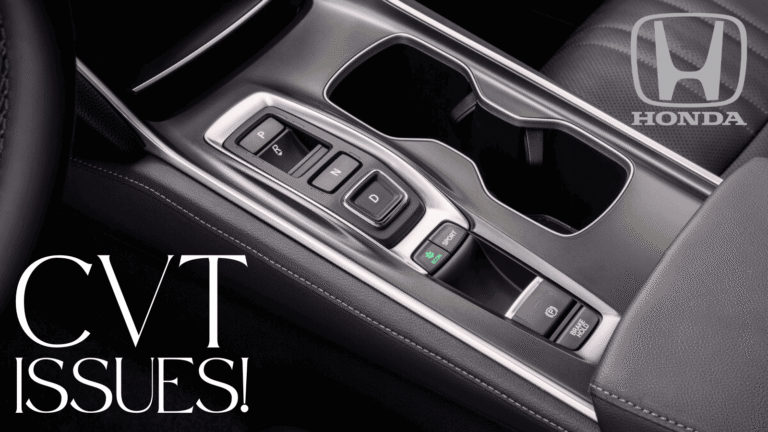
When you think of Honda, the first thing that comes to mind is probably reliability, right? Just like when you’re looking to buy any trusted Japanese car, you want something that gives you peace of mind and lasts for a while. Sure, you might miss out on that thrill you get from driving a German or Italian car, but honestly, it’s usually worth it. Now, let’s dive into CVTs, which stands for continuously variable transmissions. Honda has really embraced CVTs in models like the Civic, Accord, CR-V, and HR-V because they help get better fuel economy and a nice smooth drive from smaller engines.
Now here’s the thing: CVTs work a bit differently when it comes to mechanics and heat, and that can lead to different issues and maintenance needs. Luckily, Honda’s CVTs usually hold up better than some of the notorious ones out there. If you’ve heard the not-so-great things about Nissan’s CVTs and all the bad press they’ve gotten, you might think all CVTs are a headache. But honestly, Honda’s version has received praise from car enthusiasts and reviewers alike for being smooth and more fuel-efficient than Nissan’s, which can feel like you’re driving on a bouncy rubber band.
However, Honda’s CVTs can be a little tricky. If you treat them well with the right fluid, keep them cool, and stick to regular maintenance, which many people and shops didn’t realize at first, they can last a long time. But if you ignore them or give them a rough time, like overheating them or using the wrong fluid, some Honda models and years may run into issues like shuddering, delays in engagement, slipping, or even worse, needing a costly rebuild. That’s definitely not what you want from a ride you expect to be dependable.
This article will break down the common problems, easy fixes, realistic costs, and how Honda’s CVTs stack up against others. You’ll get simple advice so you can confidently own a Honda CVT without the hassle.
Shuddering / judder at low speeds or during acceleration.
Overheating — often in hot climates or after heavy duty (towing, mountain roads).
Hesitation or delayed acceleration (sometimes called “slip”).
Strange noises (whine/grind) from the transmission under load.
Fluid leaks (seals, cooler lines).
Electronic gremlins — limp mode or stored codes that need software updates.
Premature belt or pulley wear in severe or early cases.
Keep in mind that many of these symptoms can overlap. For example, an overheating CVT often leads to juddering as the fluid degrades, and a slipping CVT might also produce surges and noises. If you experience one or more of these warning signs, it’s wise to have the transmission inspected. Ignoring symptoms can lead to more severe damage – such as complete failure – which we’ll discuss later.
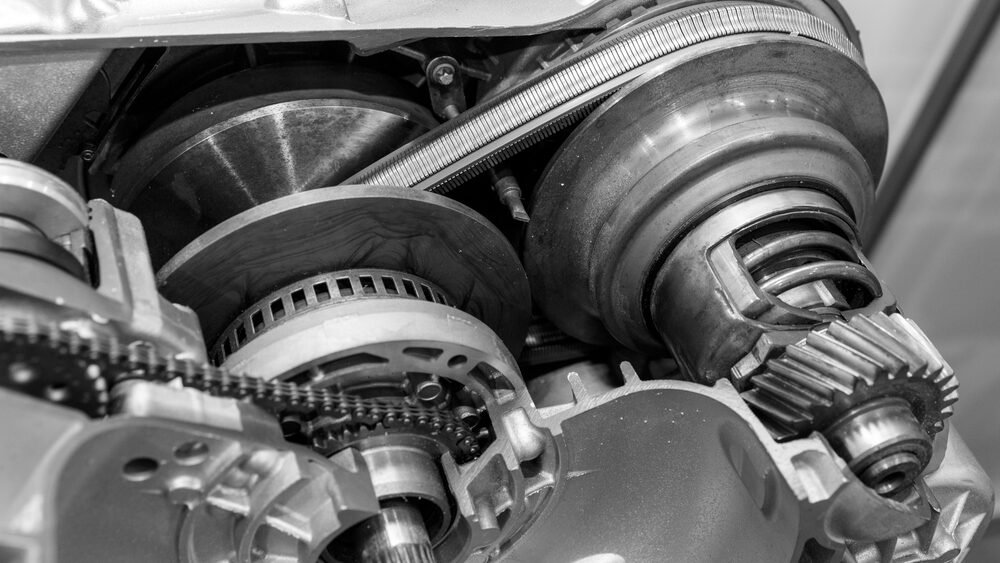
A CVT is essentially a gearbox using a belt (or chain) that rides between variable-diameter pulleys. That design is superb for continuous, efficient gearing — until thermal and friction limits are exceeded. Understanding why these issues occur is key to solving them. Honda CVT problems usually boil down to a few root causes: mechanical design limitations, software/calibration errors, and premature wear due to fluid breakdown or maintenance issues.
Heat is the common enemy. CVT fluid breaks down at high temreperature. Degraded fluid loses lubrication and hydraulic behavior, which causes belt slippage, judder and eventual component wear. Many Honda CVT failures trace back to overheated/burned fluid.
Contaminated or old fluid behaves badly. Unlike torque-converter automatics, CVTs are sensitive to the exact fluid chemistry. Use Honda-specified fluid (HCF-2 or the specified ATF-DW1 where listed) — wrong fluid accelerates failure.
Heavy loads & towing accelerate wear. A CVT designed for commuter duties can overheat under towing or prolonged mountainous driving.
Software and valve-body control matter. Modern CVTs use electronic control strategies; a software update or TSB sometimes fixes judder/shift-management issues without mechanical work. Honda has issued TSBs and service bulletins addressing CVT behavior.
Understanding these causes helps in addressing them. Honda has taken steps to correct many of these issues (as we’ll cover next), but knowing why they happen empowers owners to take preventative action – like changing fluid more often if you drive in severe conditions, or getting recalls done promptly to update flawed software.
Models With Notable CVT Issues
Honda has been using CVT transmissions in many of its models for about twenty years now. Some of these years are more known for having issues with the CVT because they were among the first to use the tech or had certain flaws. Here are a few of the key models and the years they had problems.
2001–2005 Civic (HX Coupe, Civic Hybrid) and 2000–2006 Insight: These were Honda’s first forays into CVTs in North America. Common issues were start clutch judder (a shudder when taking off from a stop) and acceleration slipping.
2013–2015 Accord (4-Cylinder Models): The 2013 and 2014 models had some teething problems. There was no major recall, but expect premature CVT failures around the 100k–150k mile mark.
2014–2015 Civic: The 2014 Civic (with the 1.8L engine) and the early 2015 Civics are known for the recall we discussed – the CVT software flaw that could cause the drive pulley shaft to break.
2015 Fit (Jazz): Its transmission is essentially the same CVT unit as the 2014–15 Civic, so the drive pulley shaft issue and software update apply.
2015 CR-V: The CR-V switched to a CVT for 2015 (paired with the 2.4L engine). This model year gained notoriety for a different issue – vibration problems. Many 2015 CR-V owners complained about significant vibrations at idle (in Drive, when stopped) and at certain speeds (~1,500–2,000 RPM).
2016–2018 Civic (10th Generation): The 2016 redesign of the Civic brought a new 2.0L engine with CVT and a 1.5L turbo with CVT. They are generally more reliable. However, this generation did face a different notable issue: the parking/roll-away problem that was subject of the 2018 class-action lawsuit. The CVT itself wasn’t breaking; rather, the complaint was that the car could roll even when “Parked” if the electronic parking brake hadn’t engaged.
2016–2020 HR-V: Owners of 2016–2018 HR-Vs started reporting CVT failures (often around 70k–90k miles) where the vehicle would lose drive or not move in gear. These were traced to premature belt deterioration – essentially the CVT belt and pulleys wearing out faster than expected.
Other Models: Most other Honda models that use CVTs (like the Honda City, Grace, Freed – in overseas markets – and newer models like the 2019+ Insight hybrid eCVT, etc.) each have their own nuances, but the ones above are the primary ones U.S. owners have noted. The 2023 Accord and CR-V hybrids had a recall for a manufacturing defect in the hybrid eCVT’s motor/rotor – again, a specific case. Overall, Honda’s later implementations of CVT (post-2018) show far fewer drama. It’s the transitional years (early adopters and new generation launches) that had the most notable issues.
If your Honda is in one of those “notable” groups above, no need to freak out – especially if it’s been regularly maintained or already had repairs done from a recall. Just keep an eye on the trouble spots. If you’re looking to buy a used one, make sure to check the service history and give it a good once-over.
Taking good care of your Honda CVT and driving it the right way can really help it last longer and avoid a bunch of issues. Unlike some may think Honda CVTs don’t just run forever without maintenance – they need attention just like any other type of transmission. Here are some friendly tips to keep your Honda CVT in great shape:
Software update / TSB remedy (free if in warranty). Always check with the dealer for PCM/TCU updates — sometimes the fix is a reflash. If you have hesitation/judder, this is the first clinic check.
CVT fluid and filter service (the no-brainer). Changing to fresh, Honda-approved fluid and replacing the filter (if serviceable) often cures judder and restores hydraulic control. Honda recommends specific intervals — early CVT problems improved a lot once owners and shops started doing timely changes. Many independent pros recommend 25–30k mile intervals for long life.
Transmission cooler upgrades / improved cooling routing. For owners in hot climates or towing, installing a larger external cooler or rerouting can reduce fluid temps dramatically and extend life. This prevents repeated fluid breakdown.
Valve-body or solenoid repair / replacement. If software + fluid didn’t fix it and codes point to hydraulic problems, solenoids/valve-body work may be needed. These are mid-range shop jobs.
Belt, pulley or clutch pack replacement / rebuild. This is major mechanical work and can be costly; sometimes replacement with a reman or replacement CVT is the most economical long-term route. RepairPal’s transmission replacement averages give a useful reference for headline costs.
So to sum it up just remember that getting a CVT back on track usually starts with the basics check the fluid and software. Most of the time just handling these two things can clear up common problems like slipping or jerking. If you’re after a bit more reliability or performance you might want to check out aftermarket options like improved cooling and some adjustments.
What You’ll Likely Pay
Fluid + filter service / TCU reflash: $150–$600 (dealer often higher; independent shops lower). This is the first, cheap step and often resolves symptoms.
Valve-body/solenoid work: $800–$2,500 depending on parts & labor.
Reman CVT replacement / rebuild: $3,500–$7,000+ (RepairPal/industry averages for transmission replacement cluster in mid-$5k–$6k). CVTs can run on the higher end because they’re often replaced as a sealed assembly.
Bottom line: catch it early (fluid/flash) and you’ll probably spend a few hundred. Wait until mechanical wear sets in and you’re in thousands.
Honda CVT vs Rivals
Here’s a simple summary comparing reliability and ownership risk. Just a quick takeaway: Honda’s CVTs aren’t the worst out there (Nissan’s have an even rougher rep), and when it comes to independent reliability scores, Toyota usually comes out on top.
Trait / metric
Honda CVT
Nissan CVT (Jatco)
Toyota CVT (Direct-Shift & others)
Subaru Lineartronic
Public failure reputation
Mixed — judder/heat cases common but many long-lived examples.
High-profile failure history; many consumer complaints & warranty claims. Often cited as worst CVT offender.
Generally better reliability; Toyota tunes CVTs conservatively and often ranks higher in CR/J.D. Power for transmission reliability.
Mixed — durable but some early Lineartronic units had issues; Subaru improved over generations.
Typical fix-first-step
Fluid change + TCU reflash
Fluid & mechanical repair; sometimes early replacement
25–30k miles (many pros recommend 25k) — Honda OEM often states service intervals; follow TSBs.
20–30k (tight attention recommended)
30k–60k (Toyota tends to be more forgiving)
30k (check model)
Relative repair cost risk
Moderate
High (historically)
Lower–moderate
Moderate
Caveat: across any brand, model year and usage pattern matter more than the make alone. A well-maintained Nissan CVT can outlive a neglected Toyota or Honda, and vice versa.
Honda Acknowledgments
Honda has been pretty good about tackling the CVT issues that have popped up. They’ve put out service bulletins and even extended inspection and warranty coverage in a few cases. For instance, if you have an HR-V, some model years now have coverage for CVT belt problems that lasts up to 7 years or 150,000 miles.
This shows that they’ve noticed the problem and are taking steps to fix it. They’re doing things like updating software (often through recalls or service campaigns), making changes to parts or fluid, and offering customers extra support like warranty extensions and goodwill repairs.
If you own a model that might be affected, make sure to keep an eye out for any recalls or TSBs for your vehicle. These fixes can really help with CVT reliability, so checking your VIN for coverage is a good idea:
Book a dealer visit and request software updates / TSB checks. Get confirmation in writing.
Do an immediate CVT fluid service with Honda-specified fluid (HCF-2 / ATF-DW1 as per your TSB). Keep receipts. Many shops recommend 25k-mile intervals for longevity.
Fit a transmission cooler if you live in a hot climate or tow often — this reduces the heat cycles that break down fluid.
Watch symptoms: judder, strange noises, lost acceleration — act fast. Early intervention often saves thousands.
Don’t Use non-specified ATF or “universal” fluids — CVTs are chemistry-sensitive and the wrong fluid causes harm fast. Don’t ignore warning lights.
If you’re buying one:
Ask for documented CVT service history (fluid change dates, software work). If none, discount the price or walk. A missing CVT fluid service history is a big red flag.
Have a PPI that includes a CVT-specific check: road test at various speeds, scan for codes, and ask the mechanic to watch for judder.
Check for open recalls/TSBs and whether recalls were completed; dealers will fix open safety recalls for free.
FAQ
Below we answer some of the most common questions Honda owners have about CVT transmission issues, maintenance costs, and what to expect in terms of longevity and reliability.
Q: What are the common problems with Honda CVT transmissions? A: The most frequently reported Honda CVT problems include shuddering or juddering during acceleration, delayed response or hesitation when hitting the gas, the transmission slipping (engine revs unpredictably), overheating issues, and in worst cases complete transmission failure.
Q: Did Honda ever recall or fix these CVT issues? A: Yes, Honda has taken action on known CVT problems. The biggest move was a 2015 recall covering 2014–15 Civics and 2015 Fits to update the transmission software (preventing pulley shaft breakage). That recall likely prevented many failures (it addressed a major safety concern of possible wheel lock-up). Honda also issued service bulletins and warranty extensions instead of recalls for other issues.
Q: How long can I expect a Honda CVT to last? A: When properly maintained, a Honda CVT can last a long time – often well over 100,000 miles before any major issues. There are plenty of examples of Honda CVTs going 150,000, 200,000 miles or more.
Q: Should I be afraid to buy a Honda with a CVT? A: In general, no – you shouldn’t be afraid. Honda has refined its CVTs to the point that by the late 2010s, they are well-regarded in terms of reliability.
Q: Are Honda CVTs unreliable overall? A: No — Honda CVTs are mixed. Many owners get 150k+ trouble-free miles with proper service. But CVTs are less tolerant of overheating and wrong fluids than conventional automatics, so they require attention.
Q: Will a fluid change fix my judder? A: Often yes — if the underlying problem is degraded fluid or varnish. If the belt/pulleys are already damaged, it won’t be enough. Start with the fluid/filter and software check.
Q: How long do Honda CVTs last? A: With recommended maintenance and temperate use, many last well past 100k miles. But failure risks rise with neglected service and high thermal loading.
Q: How much will a full CVT replacement cost? A: Expect roughly $3,500–$7,000+ in the US depending on model, whether you choose reman vs new, and labor rates.
Conclusion
To wrap it all up, don’t freak out. Just be smart about it. Honda’s CVTs aren’t perfect, but they do have their perks. They give you smooth acceleration and help with fuel economy making Hondas nice to drive for everyday use. They’re also pretty easy to handle if you keep up with some basic maintenance. If you see any warning signs, don’t wait—get the CVT checked out right away. Stick to Honda’s maintenance schedule, and if you drive hard, change the fluid a bit more often. Keep your car’s software updated with any CVT fixes and avoid letting it overheat. Basically, treat the CVT like it matters: keep it cool and clean with fresh fluid. Do all this, and you’ll enjoy better fuel efficiency and a smooth ride—without the constant worry. It should last you a good while too.
Now for anyone thinking about buying a used Honda with a CVT, do a bit of research on the model year. If it’s one of the “problem years” we talked about, make sure the necessary recalls or fixes were done, or that the car has been looked after regularly. Millions of these cars on the road have happy owners. But remember that a neglected CVT can be costly to fix, so it’s smart to check the fluid condition when you’re doing a pre-purchase review.
The CVT is here to stick around because of its efficiency benefits, and Honda has done a pretty good job with it. Just keep in mind that CVTs brought a bit of a learning curve when it comes to maintenance and had their share of issues, especially in the early days. If you find a used Honda CVT with a questionable service history or showing signs of trouble, it’s best to steer clear.
Finally, happy driving, and may your Honda CVT keep running smoothly for many years to come!
If you found this post useful you might want to check out “Why Are Japanese Cars So Reliable and Known for their Longevity?” Don’t forget to look around our site for other stuff like detailed car reviews expert buying guides and the latest updates from the industry. There’s a lot to keep you in the loop! Be sure to take a peek and remember to bookmark us for future updates.
*Disclaimer: This website provides automotive content for informational purposes only and should not be considered professional advice. While we strive for accuracy, we do not guarantee the reliability or suitability of any vehicle or product mentioned—always conduct your own research before making purchasing decisions. Additionally, some links on this site are affiliate links, meaning we may earn a commission if you make a purchase, at no extra cost to you.
Car reliability comparisons remain a staple of automotive journalism, consumer decision-making, and industry reputation. Yet, the methods and frameworks used to assess vehicle reliability are far from uniform. A reliability survey that focuses on one-year-old or three-year-old cars can produce results that differ significantly from what drivers experience over a longer period. Meanwhile, the weighting of electronic or minor cosmetic issues can skew overall reliability scores as much as major mechanical failures, which is counterintuitive for many consumers. Additionally, reliability surveys often vary by region—Europe vs. the U.S.—due to differences in powertrains, driver habits, and regulations.
In this 2,800-word deep dive, we’ll explore why reliability comparisons aren’t always what most people assume. We’ll examine the intricacies of short-term vs. long-term studies, how issues should be weighted, and why European data can contrast sharply with American data. Drawing on research from Consumer Reports, J.D. Power, ADAC (Germany), and WhatCar? (UK), we’ll unravel the complexities that shape car reliability surveys.
When glancing at a reliability ranking—whether from Consumer Reports, J.D. Power, or a European agency—most consumers assume these numbers provide an absolute truth about how dependable a car is. However, hidden behind these scores are differences in sample size, question framing, and the length of time the survey covers. A brand that ranks well after one year may plummet once the vehicles reach three or five years old. Conversely, certain cars with poor short-term ratings may prove bulletproof in the long run.
Why does this matter? Because the longevity of major components like the engine, transmission, and hybrid systems typically unfolds after tens of thousands of miles—well beyond the first 12 months. Understanding the time span and focus of each survey is essential for gleaning accurate insights into a vehicle’s true reliability.
Short-Term vs. Long-Term Reliability: Why Duration Matters
One-Year-Old Cars: A Snapshot, Not the Whole Story
Surveys that measure reliability in one-year-old cars—often referred to as Initial Quality or short-term dependability—emphasize how well a vehicle is built right out of the factory. J.D. Power’s Initial Quality Study (IQS) is a prime example, focusing on the number of problems reported per 100 vehicles (PP100) in the first 90 days.
While helpful for gauging manufacturing consistency, one-year data can obscure potential long-term flaws. Certain vehicles with well-sorted assembly lines may excel in initial quality but develop mechanical or electrical gremlins once major components age.
Three-Year-Old Cars: More Insight, Yet Still Limited
When vehicles approach the three-year mark, issues like premature brake wear, minor oil leaks, or transmission software glitches begin to surface. This time frame offers better insight than one-year studies because it covers a typical lease term. However, major components—like diesel particulate filters, turbochargers, or high-voltage hybrid batteries—may only fail after four or five years.
Hence, even a three-year study remains incomplete for predicting engine or gearbox longevity, especially for more complex systems in diesel or hybrid vehicles.
Five Years and Beyond: True Longevity
To truly capture an engine’s durability, electronic system resilience, and real maintenance costs, vehicles must be evaluated at five years or beyond. This is where Consumer Reports excels, often amassing data on vehicles up to a decade old. By comparing reliability scores for older cars, we see which brands or models maintain durability vs. those that degrade rapidly.
Weighting Different Types of Problems
Major vs. Minor Issues
One of the biggest pitfalls in reliability comparisons is treating all issues equally. A glitchy infotainment system can register the same “problem” score as a failing transmission. For consumers, these are vastly different levels of inconvenience and cost.
Consumer Reports typically distinguishes between problem areas, but other surveys may lump them all together:
Engine & Transmission Failures: High repair costs, safety implications.
Electronic & Infotainment Glitches: Annoying but often cheaper to fix.
Body & Trim Issues: Cosmetic or minor inconveniences.
Why Weighted Scoring Matters
If a survey doesn’t weight major mechanical failures more heavily than minor electronics, the results can paint a misleading picture. This is particularly crucial for European vs. U.S. data, where diesels and manuals in Europe might face different “major” issues than American automatics.
Regional Differences: Europe vs. the U.S.
Diesel & Manual Dominance in Europe
European consumers historically favor diesel engines for better mileage and torque. Additionally, manual transmissions are widespread. The reliability or failure points of a diesel manual car differ from a gasoline automatic vehicle sold in the U.S. Common diesel-specific issues, such as DPF (Diesel Particulate Filter) blockages, might not appear in American surveys.
Gasoline & Automatic in the U.S.
U.S. drivers typically opt for gasoline engines and automatic transmissions. The reliability studies here often highlight automatic gearbox issues, torque converter failures, or cylinder deactivation complexities—none of which might appear in a European context.
Survey Methods: ADAC & What Car? vs. J.D. Power & Consumer Reports
ADAC (Germany): Focuses on roadside assistance call-outs, providing insight into sudden breakdowns, but not necessarily long-term durability.
What Car? (UK): Surveys owners on the severity and cost of repairs, often capturing data from diesel/manual cars.
J.D. Power (U.S.): Short-term (IQS) and longer-term (Vehicle Dependability Study) for American powertrains.
Consumer Reports (U.S.): Combines short and long-term data, weighting problem areas differently.
Because these organizations measure different markets with varied powertrains, their results can’t be compared apples-to-apples.
Case Studies: ADAC, What Car?, J.D. Power, and Consumer Reports
ADAC Roadside Assistance Data
ADAC is Germany’s largest automobile club. Their reliability rankings often penalize cars that suffer from on-road breakdowns, focusing on immediate failure points like electrical or battery issues. Diesel cars might be more prone to roadside stops if filters clog, skewing results.
What Car? Reliability Survey
Based in the UK, What Car? surveys owners on the cost, frequency, and severity of repairs. Because the UK has a balanced mix of diesel and gasoline vehicles, plus manual transmissions, the data may differ drastically from American findings. A brand with excellent diesel engines might score high in the UK but appear average in the U.S., where those diesel engines are either unavailable or less prevalent.
These capture the U.S. market’s preference for gas-powered automatics and place significant emphasis on infotainment woes (common in American cars with advanced multimedia systems).
Consumer Reports: A Holistic Approach
Consumer Reports stands out for collecting data on vehicles of various ages—some up to 10+ years. They factor in the difference between major (engine, transmission) and minor (trim, electronics) issues. Because CR covers older vehicles, it offers a more authentic glimpse into long-term reliability.
Influence of Powertrain Variations
Diesel Complexities
European diesel engines come with systems like EGR (Exhaust Gas Recirculation) and DPF. If surveys don’t isolate these components, diesel cars could appear less reliable. Meanwhile, the U.S. diesel lineup is smaller, focusing on full-size trucks and select SUVs.
Hybrid & Electric Vehicles
Hybrids often rank high in reliability because their smaller gasoline engines face less stress. However, battery replacement costs can overshadow savings if they fail after warranty. EVs reduce mechanical complexities (no transmissions, fewer fluids) but introduce battery degradation concerns, which might not show up in short-term surveys.
Manual vs. Automatic
Manual gearboxes, common in Europe, are mechanically simpler but require skill to operate without undue clutch wear. Automatics, especially CVTs or dual-clutch systems, can be more prone to software or mechanical breakdowns. This leads to divergent reliability data across continents.
Survey Methodologies: Are They All Credible?
Sample Size & Response Rates
Large sample sizes yield more accurate results. However, surveys reliant on voluntary respondents risk non-response bias, meaning only extremely satisfied or dissatisfied owners respond.
Sponsorship & Bias
Some surveys are manufacturer-sponsored or re-purposed for marketing. Watch for disclaimers about who funds the study, as that can shape which metrics are emphasized.
Weighted Trouble Spots
As mentioned, weighting major vs. minor issues drastically alters results. Surveys not transparent about weighting may misrepresent real reliability.
Cultural and Driving Habit Differences
Commutes & Road Conditions
Europe: Frequent short trips, dense cities, and well-maintained roads. Diesel engines excel in highway cruising but struggle with short, stop-and-go commutes that clog DPF filters.
U.S.: Longer highway commutes, varied road conditions, often more extreme temperatures in certain regions.
Maintenance Culture
European drivers may be more disciplined in annual servicing due to stricter MOT (Ministry of Transport) tests. Meanwhile, some American owners stretch intervals, impacting reliability data. This cultural difference can tilt survey outcomes.
Hybrid, Electric, and Diesel: The Future of Reliability Comparisons
As the auto industry shifts to electrification, reliability discussions must expand to cover:
Battery Longevity: Lithium-ion degradation, software issues, and charging infrastructure.
Complex Hybrid Systems: Inverter, eCVT, and additional cooling loops.
Diesel’s Decline: With many brands phasing out diesel in favor of hybrid or electric, diesel reliability data might become less relevant.
Moving forward, major surveys like Consumer Reports and ADAC will have to refine their categories for EV-specific issues (e.g., charging port malfunctions, range sensor inaccuracies).
When to Trust a Reliability Survey
Despite their limitations, reliability surveys can be useful if you:
Check the Survey’s Scope: Short-term or long-term? Gas or diesel focus?
Look at Sample Sizes: Larger samples generally mean more accurate results.
Evaluate Weighted Problem Areas: Are major mechanical failures weighed more than minor cosmetic flaws?
Consider Multiple Sources: If both ADAC and Consumer Reports rank a model poorly, it’s likely not reliable in any region.
Expert Tips for Consumers
Prioritize Long-Term Data: Surveys that track cars for 5+ years reveal more about serious mechanical issues.
Distinguish Minor vs. Major Problems: Understand whether a brand’s “problems” revolve around squeaky trim or catastrophic engine failures.
Account for Your Driving Environment: If you’re in Europe, a diesel manual’s reliability data is more relevant than U.S. automatic results.
Scan Multiple Surveys: Cross-check JD Power’s three-year study with Consumer Reports’ older data and ADAC’s breakdown stats.
Identify Recurring Themes: If multiple surveys cite transmission failures on a particular model, it’s a red flag.
Conclusion: A More Nuanced Approach
The question “Which car brand is the most reliable?” rarely has a one-size-fits-all answer. Reliability results hinge on survey duration (1-year vs. 3-year vs. 5+ year), weighting of different types of problems, and regional variations in engine and transmission setups. As a consumer, you must dig deeper than headline rankings to understand why certain models score well or poorly. A brand might top European surveys for a diesel variant that isn’t even sold in the U.S., or an American brand could appear worse overseas due to local emissions and road conditions.
In the end, reliability comparisons should be guides, not final verdicts. Pair them with your personal needs, driving style, and location to find a car that will truly stand the test of time.
If you enjoyed this post, you might also like our article, “German, Japanese & Korean Cars: Wonder How They Compare?” Be sure to explore more of our site for detailed car reviews, expert buying guides, and the latest industry insights. We’ve got plenty of content to keep you informed, so take a look around and don’t forget to bookmark us for future updates!
*Disclaimer: This website provides automotive content for informational purposes only and should not be considered professional advice. While we strive for accuracy, we do not guarantee the reliability or suitability of any vehicle or product mentioned—always conduct your own research before making purchasing decisions. Additionally, some links on this site are affiliate links, meaning we may earn a commission if you make a purchase, at no extra cost to you.
Japanese and American auto manufacturers have long competed on the global stage—each with distinct advantages and historical milestones. While American brands like Ford, Chevrolet, and Tesla are known for their pioneering spirit and powerful engines, Japanese automakers including Toyota, Honda, and Nissan consistently lead in global reliability rankings and manufacturing efficiency.
This article explores the key factors that position Japanese cars at the forefront of quality and innovation, comparing them to their American counterparts and explaining why many buyers worldwide gravitate toward Japanese brands for a dependable driving experience.
Historical Milestones and Global Presence
American Industry Roots
The U.S. automotive industry boasts a storied past, beginning with Henry Ford’s introduction of the moving assembly line in 1913, which revolutionized mass car production. Brands like Chevrolet and Dodge emerged in the early 20th century, turning the United States into a hub of automotive innovation for decades.
Japan’s Post-War Renaissance
Meanwhile, Japan’s rise to automotive prominence can be traced back to the post-WWII economic rebound. Companies such as Toyota adopted the Kaizen philosophy—continuous improvement in manufacturing processes—to deliver reliable, cost-effective cars. By the 1970s, Japanese compacts like the Toyota Corolla and Honda Civic found global success when fuel efficiency became a prime concern during oil crises. Their reputation for reliability and durability was cemented, eventually edging out many American rivals in key international markets.
The Lean Manufacturing Edge
Toyota Production System (TPS)
Japanese automakers are famous for lean manufacturing principles, particularly the Toyota Production System. This approach emphasizes waste reduction, real-time quality checks (e.g., the Andon cord), and tight supplier relationships. Over time, the TPS model influenced other automakers worldwide—including some American brands—but Toyota’s methodical refinement has kept it a benchmark for efficiency and product consistency.
American Assembly Lines
Ford’s assembly line concept revolutionized mass production. However, U.S. automakers sometimes prioritize speed-to-market or new technology integration over iterative refinement of existing parts. This approach can lead to higher defect rates and recalls when designs or features are rushed to meet market demands. While many American manufacturers continue to modernize their processes, they occasionally lag behind Japanese competitors in consistent quality control and total cost management.
Consistent Reliability and Long-Term Value
Data-Driven Reliability
Multiple studies underscore Japan’s edge in reliability. For instance, Consumer Reports regularly ranks Toyota, Honda, and Subaru near the top, while American manufacturers can vary widely depending on the model. Additionally, J.D. Power surveys reveal that Honda and Toyota often achieve better-than-average dependability, reflecting fewer mechanical or electronic faults during the ownership period.
Resale Value
Japanese cars also command high resale prices. Models like the Toyota Camry and Honda CR-V consistently hold their value longer than many U.S. counterparts. This resilience can be attributed to rock-solid build quality, a widespread perception of durability, and lower long-term operating costs. While certain American vehicles, like some Ford F-Series trucks, also perform well in resale, the overall consistency often favors Japanese nameplates.
Innovation and Technology Approaches
Measured vs. Radical Innovation
Contrary to the myth that Japanese carmakers lag behind in innovation, brands like Honda introduced VTEC engines for enhanced power and efficiency back in the late 1980s, while Toyota pioneered mass-market hybrid technology with the Prius in 1997. Japanese companies tend to roll out innovative technologies in a deliberate, incremental manner, ensuring each advancement is thoroughly tested before reaching consumers.
American Boldness and Rapid Rollouts
American automakers thrive in areas of bold design and cutting-edge features—Tesla’s leading role in electric vehicles is a prime example. However, rapid rollouts sometimes result in quality control or reliability concerns. For instance, new electronic or driver-assist systems may face software glitches in early model years if not tested extensively. In contrast, Japanese brands often refine technology behind the scenes, launching more polished versions to minimize consumer risk.
Case Studies: Toyota and Honda vs. Ford and GM
Below is a comparison table highlighting reliability scores and estimated maintenance costs for select models. Data is sourced from Consumer Reports for reliability and YourMechanic for annual maintenance estimates.
Model
Origin
CR Reliability Score (2023)
Est. Annual Maintenance Cost
Notable Strengths
Toyota Camry
Japan
5/5
$400–$480
Exceptional dependability, resale value
Honda Accord
Japan
4/5
$450–$500
Balanced performance, fuel efficiency
Ford Fusion
U.S.
3/5
$500–$650
Comfortable ride, hybrid options
Chevrolet Malibu
U.S.
2–3/5
$550–$700
Good safety features, decent handling
Observations:
Toyota and Honda models consistently earn top marks for reliability, typically incurring lower annual maintenance costs.
Ford and GM (Chevrolet) sedans compete effectively in design and features but may require more frequent servicing.
The data suggests Japanese vehicles are more likely to maintain peak condition over extended ownership periods.
Cultural Commitment to Quality
Monozukuri and Kaizen
Beyond lean manufacturing, Japan’s automotive success partly stems from “Monozukuri,” translating to the spirit of craftsmanship. Engineers and assembly-line workers alike take pride in producing vehicles with near-flawless fit and finish. This commitment extends from the simplest component up to complex hybrid or electric powertrains.
American Brand Loyalty and Competition
American automakers maintain a strong presence in pickup trucks and muscle cars. Ford’s F-Series, Chevrolet’s Silverado, and Dodge’s Ram lead U.S. sales charts, offering big engines and robust towing capabilities. Yet, brand loyalty in these segments often revolves around tradition and patriotic preference, rather than raw reliability data. When comparing consistent reliability across an entire lineup, Japanese manufacturers generally come out on top.
The Road Ahead
Electrification and Autonomous Tech
Japanese automakers are far from complacent. Toyota invests heavily in solid-state battery research, and Honda plans to expand its electric and hybrid lines, illustrating a readiness to adapt in the face of evolving consumer tastes. Meanwhile, American companies like Tesla spearhead disruptive innovation, pushing the market toward electrification at a breakneck pace. The balance of “cautious, proven improvement” vs. “revolutionary leaps” persists, and time will tell which method resonates more strongly with global consumers.
Lessons for the Future
If American brands take deeper inspiration from Japanese manufacturing philosophies—particularly real-time quality checks and incremental technology rollouts—they could close the gap in consumer trust regarding reliability. Conversely, Japanese automakers should continue exploring bold technologies to maintain their competitiveness against rapidly evolving companies like Tesla.
Conclusion
While American manufacturers have historically led the charge in conceptual innovation, muscle cars, and powerful trucks, Japanese automakers consistently shine in the arenas of reliability, build quality, and measured technological improvements. The Toyota Production System, Kaizen philosophy, and conservative engine designs help reduce defects and streamline long-term maintenance, giving Japanese cars an edge in global rankings. U.S. companies, although capable of dramatic breakthroughs, often sacrifice consistency for quick market entries—a trade-off that can hamper their overall reliability scores.
In an ever-changing automotive landscape, Japanese brands remain influential forces, demonstrating that steady, iterative improvements can create cars that truly last. If quality, lower operating costs, and peace of mind rank high on your priority list, Japanese automakers continue to present a highly compelling option.
If you liked this post, you might want to check out “German vs Japanese Car Maintenance: Which One Is Better?”. Don’t forget to explore other parts of our site for detailed car reviews, helpful buying guides, and the newest info from the industry. There’s a lot to keep you in the loop! Take a look around and remember to bookmark us for updates later on.
*Disclaimer: This website provides automotive content for informational purposes only and should not be considered professional advice. While we strive for accuracy, we do not guarantee the reliability or suitability of any vehicle or product mentioned—always conduct your own research before making purchasing decisions. Additionally, some links on this site are affiliate links, meaning we may earn a commission if you make a purchase, at no extra cost to you.
When people talk about car reliability you often hear names like Toyota, Honda, Nissan, Mazda, and Subaru pop up. These brands usually score high on global reliability lists like Consumer Reports and there are countless stories from owners who’ve racked up serious mileage. They’ve built this almost legendary reputation for being long-lasting, solid, and not breaking the bank when it comes to upkeep. This has helped them gain a strong name for lasting way longer than most cars out there. But are they really the most reliable brands or are we just clinging to old perceptions that might be a bit over the top? Let’s dive in a bit more to see what makes these cars so tough, check how they compare to other brands, and see if Japanese cars really do deserve all that hype.
Origins of the Reliability Reputation
Post-War Focus on Efficiency and Quality
Following World War II, Japan’s industrial strategy prioritized rebuilding through efficient manufacturing and sustainable designs. Toyota, for example, pioneered the Kaizen philosophy of continuous improvement, which involved making small, incremental changes to enhance product quality. This approach influenced not only Toyota but also other Japanese automakers, fostering a deeply ingrained culture of quality control and risk reduction.
Early Entrants in the Global Market
By the 1970s, Japanese automakers were exporting lightweight, fuel-efficient cars that excelled during global fuel crises. Nissan’s Datsun models gained popularity for their affordability and reliability, while Honda’s Civic and Toyota’s Corolla soon became worldwide bestsellers. Their early track records for enduring mechanical stress and delivering high MPG set an industry benchmark for reliability.
Performance in Reliability Rankings
Below is a comparison table showcasing select Japanese brands and their typical Consumer Reports (CR) reliability scores, alongside a few global competitors for perspective. Maintenance cost estimates come from aggregated data via YourMechanic and manufacturer guidelines.
Brand
CR Reliability Score (2023)
Est. Annual Maintenance Cost
Notable Models
Toyota
5/5
$400–$500
Camry, RAV4, Prius
Honda
4/5
$450–$550
Accord, CR-V, Civic
Mazda
4/5
$400–$550
Mazda3, CX-5, MX-5 Miata
Subaru
4/5
$420–$560
Outback, Forester, Crosstrek
BMW
1–2/5 (Model Dependent)
$800–$1,000
3-Series, 5-Series
Ford
2–3/5 (Model Dependent)
$500–$700
Fusion, Escape
Key Insights
Toyota and other Japanese brands generally occupy the upper tier of reliability surveys, boasting fewer serious mechanical or electronic flaws.
While certain American or European models also achieve good ratings, brand-wide consistency is often stronger among Japanese automakers.
Maintenance costs for Japanese vehicles remain comparatively moderate, reflecting easier parts availability and simpler engineering.
Why Japanese Cars Stand Out (Manufacturing Principles and Lean Production)
1. Real-Time Quality Checks and Quality Control
Japanese car makers like Toyota and Honda embrace philosophies such as “Kaizen” which means continuous improvement and “Monozukuri” which stands for craftsmanship. These philosophies focus on paying close attention to every little detail and doing thorough quality checks at each step of the manufacturing process. A key feature of Toyota’s Production System is the Andon cord which lets assembly line workers stop the process if they spot a quality problem. This quick action helps cut down on the chances of defects getting to customers. Over the years, a lot of other Japanese companies have taken on similar approaches, helping create a mindset that aims for zero defects.
2. Simplicity in Design and Proven Technology
Japanese car makers usually take their time when it comes to rolling out new tech. They like to make sure every new feature is really tested before everyone starts using it. Unlike some high-end or sporty brands that go for flashy changes, most Japanese companies stick with what works and make small updates to their designs. Instead of throwing in wild new parts every year, they focus on improving the engines and transmissions they already have, which helps avoid major reliability issues. Brands like Toyota and Honda have a history of choosing naturally aspirated engines and traditional automatic transmissions. This keeps things simple and helps avoid the problems that can crop up with German cars that use turbocharged engines and dual-clutch gearboxes.
3. Superior Material Quality and Durability
Materials and components used in Japanese vehicles are selected for long-term durability. Honda’s engines often feature forged components instead of cheaper cast parts, enhancing strength and longevity. Toyota, meanwhile, meticulously tests corrosion resistance, ensuring cars withstand harsh climates without premature deterioration.
4. Cost-Effective Maintenance and Easy Parts Availability
Because of their wide reach and large networks of dealers, keeping Japanese cars running is pretty easy and affordable. You can find common parts without a hassle and they don’t cost a lot. This is a big win compared to European cars which usually need special and pricey parts for repairs.
5. Engine Durability
Japanese automakers frequently fine-tune their engines across multiple generations, mastering their architecture over time. Toyota’s 2.5-liter inline-4, for instance, has roots dating back decades, undergoing incremental improvements for power and fuel efficiency without compromising reliability.
6. Low Failure Rates
Because of strict testing and refinement, Japanese cars experience fewer catastrophic failures like major transmission breakdowns or widespread engine recalls. Subaru, while once plagued by head gasket issues, has largely resolved these problems in modern models, reinforcing its place in the top reliability brackets.
7. Resale Value and Perceived Quality
Strong resale values also underscore the market’s confidence in Japanese engineering. According to Kelley Blue Book, models like Toyota Tacoma and Honda CR-V command higher trade-in prices than many of their rivals, supporting the idea that these brands provide a long service life with minimal hassles.
Counterpoints and Evolving Competition
Korean Brands on the Rise
Hyundai and Kia have made tremendous strides in recent years, often rivaling Honda or Mazda in reliability studies. Their 10-year/100,000-mile warranty coverage boosts consumer confidence, suggesting Japanese automakers are no longer the only option for trouble-free ownership.
European Luxury
While some German manufacturers lag in mass reliability rankings, certain models—particularly those with simplified powertrains—can match Japanese dependability under vigilant maintenance. Moreover, high-end luxury buyers may prioritize performance and advanced features over raw reliability.
The Role of Maintenance
Regardless of brand, owner upkeep plays a critical role. Regular oil changes, timely tire rotations, and using OEM-quality parts can prolong vehicle life across the board. Neglecting basics on a Honda or Toyota can lead to the same mechanical woes common to all automakers.
Real-World Longevity Stories
Japanese brands have numerous real-world stories that substantiate their reputation. For instance, Toyota vehicles frequently surpass 250,000 miles without major mechanical issues, while Hondas and Subarus are known for similar feats. In contrast, German vehicles, despite their engineering prestige, often experience electronic and mechanical issues earlier in their lifecycles, typically around the 80,000-100,000 mile mark.
A Case for Japanese Dominance
While German brands are renowned for superior driving dynamics, cutting-edge technology, and premium luxury, these attributes often come at the cost of complexity and potential reliability issues. Japanese manufacturers, by prioritizing proven, durable designs and rigorous quality control, deliver vehicles that excel at daily usability and longevity, often becoming family heirlooms or high-mileage warriors.
Verdict: Are Japanese Cars the Most Reliable?
Yes, Japanese automakers have become virtually synonymous with reliability. They really focus on Kaizen which is all about making things better little by little. Plus, they are careful when it comes to adopting new technologies. This combination has given them a solid reputation for building cars that last. Reports from consumers, stories about old taxis still running strong, and high resale values all add to the idea that Japanese cars are at the top of the reliability game.
But let’s not forget that reliability isn’t just a Japanese thing. Korean brands are getting better and better, and there are also reliable models from Europe and America if they are taken care of properly. Overall though, the way Japanese automakers approach building cars—with careful quality checks and steady improvements—makes brands like Toyota, Honda, Mazda, Subaru, and Nissan stand out as the go-to choices for anyone looking for long-lasting car satisfaction.
Key Takeaways
Decades of Consistency: Japanese car brands rely on proven manufacturing principles, cultivating reliability over numerous generations.
High Resale Values: Strong secondary-market demand reflects public perception of Japanese cars as enduring investments.
Global Competition: Hyundai, Kia, and some European marques increasingly offer vehicles with comparable reliability, intensifying competition.
Owner Maintenance Matters: Even the most reliable car requires consistent care to reach its full potential lifespan.
In the end, while no single region can claim a monopoly on reliability, the evidence overwhelmingly supports that Japanese brands continue to excel in producing cars that run smoothly decade after decade—with minimal fuss and a high degree of owner satisfaction.
If you found this post helpful, you might also enjoy our article, “Will Chinese Automakers Repeat the Success of Koreans?” Be sure to explore our site for detailed car reviews, expert buying tips, and the latest industry insights. We’ve got plenty of content to keep you informed, so take a look around—and don’t forget to bookmark our homepage for future updates!
*Disclaimer: This website provides automotive content for informational purposes only and should not be considered professional advice. While we strive for accuracy, we do not guarantee the reliability or suitability of any vehicle or product mentioned—always conduct your own research before making purchasing decisions. Additionally, some links on this site are affiliate links, meaning we may earn a commission if you make a purchase, at no extra cost to you.
Reliability is often the deciding factor for car buyers seeking peace of mind and low ownership costs. In the Japanese automotive landscape, Toyota and Honda stand out as leading brands with reputations built on dependable engineering, strong resale value, and high owner satisfaction.
But which one truly offers the better track record for reliability? Below is a data-driven analysis comparing Toyota and Honda across various metrics—ranging from historical context to modern engineering approaches—helping you discover which brand deserves the top spot for long-term dependability.
Historical Perspective: Two Titans of Reliability
Toyota’s Reliability Legacy
Toyota’s reputation for building reliable cars dates back to the 1970s, a time when the global market was shifting its focus to fuel efficiency and long-term durability. Models like the Corolla and Camry swiftly became benchmarks in their respective segments, bolstered by the company’s dedication to Kaizen (continuous improvement) and lean manufacturing practices. Over the decades, Toyota has refined its powertrains gradually, focusing on longevity rather than aggressive innovation.
Honda’s Rise to Prominence
Honda, initially well-known for its motorcycles, quickly gained a foothold in the passenger car market through models like the Civic and Accord in the early 1970s. By emphasizing efficient, well-engineered engines (e.g., its pioneering VTEC technology), Honda cemented its status as a reliability champion. The brand’s designs often blend performance and practicality, appealing to drivers who want both spirited driving and long-term dependability.
Manufacturing Philosophy and Engineering Ethos
Toyota: Conservative Powertrains and Lean Production
Toyota relies on tried-and-tested powertrain components for extended periods, making only incremental refinements to ensure consistency and reduce mechanical risks. This conservative approach means fewer radical shifts that could introduce new reliability problems. Toyota’s global production system also prioritizes minimal waste, strong supplier relationships, and real-time quality checks (like the Andon cord system) to address issues immediately.
Honda: Innovative Yet Balanced
Honda’s focus on engine technology stands out. By evolving its VTEC systems across successive generations, it achieves a fine balance between performance and reliability. Unlike some competitors that rapidly adopt unproven tech, Honda experiments cautiously, thereby maintaining its track record for robust powertrains.
Key Comparisons: Reliability Scores and Maintenance Costs
Below is a comparison table citing data from Consumer Reports and average estimated maintenance costs from aggregated sources like YourMechanic.
Model
Brand
CR Reliability Score (2023)
Est. Annual Maintenance Cost
Notable Strengths
Toyota Camry
Toyota
5/5
$400–$480
Strong resale, proven reliability
Toyota RAV4
Toyota
4/5
$420–$500
Practical, durable AWD options
Honda Accord
Honda
4/5
$450–$500
Balanced engine, efficient design
Honda CR-V
Honda
4/5
$430–$520
Great gas mileage, spacious interior
Key Observations
Both Toyota and Honda models maintain top reliability scores, frequently near the 4/5 or 5/5 range.
Maintenance costs for the two brands remain quite similar, though Toyota occasionally edges out Honda in certain segments.
Consumer Reports consistently places the Camry and CR-V at or near the top of their respective categories for long-term dependability.
Engineering Nuances: Powertrain and Technology
Engine Reliability
Toyota: Known for conservative engine designs that often run reliably past 200,000 miles. Hybrids like the Prius have earned stellar longevity reputations, with many crossing 300,000 miles on original batteries.
Honda: Emphasizes refined engine technologies, including i-VTEC and Earth Dreams powertrains that balance power and fuel economy. Numerous owners report Accords and Civics surpassing 250,000 miles with minimal major repairs.
Electronics and Software
Toyota: Tends to adopt a restrained approach with infotainment and driver-assist features, which some critics argue lags behind competitors. However, fewer advanced software features often mean fewer electronic failures.
Honda: Generally includes user-friendly infotainment systems and advanced driver-assistance tech (e.g., Honda Sensing). While software bugs occasionally occur, overall stability remains strong.
After-Sales Support and Service Networks
Parts Availability and Mechanic Familiarity
Both Toyota and Honda enjoy extensive global networks, making spare parts widely available and relatively affordable. Mechanics worldwide are adept at repairing these brands, thanks to their popularity and predictable design. Any difference in parts pricing or service complexity is usually small and model-specific rather than brand-wide.
Warranty Coverage
Toyota: Offers a standard 3-year/36,000-mile limited warranty and a 5-year/60,000-mile powertrain warranty. Hybrid components often carry extended coverage of up to 8 years/100,000 miles (in the U.S.).
Honda: Mirrors a similar warranty structure (3-year/36,000-mile limited and 5-year/60,000-mile powertrain). Honda also offers extended warranties at an additional cost, comparable to Toyota’s extended service contracts.
Real-World Anecdotes and Case Studies
Toyota Camry as a Taxi and Fleet Favorite
Many taxi operators and ride-share drivers gravitate toward the Toyota Camry for its lower operating costs and near-bulletproof engine reliability. Stories of 300,000-mile Camrys on original engines and transmissions are common in owner forums and fleet case studies.
Honda Civics Crossing 200,000 Miles with Ease
Honda Civics, especially models from the late 1990s and early 2000s, are notorious for surpassing 200,000 miles while retaining smooth performance. On CivicX Forums, numerous modern-generation Civics also report minimal mechanical issues, bolstering Honda’s dependable reputation.
Resale Value and Long-Term Ownership Costs
High Resale Value
Both Toyota and Honda top used-car value charts. The Kelley Blue Book consistently rates Toyota and Honda models at or near the top of each segment for resale. This retention is particularly visible in the small and mid-size sedan classes, where used Honda Accords and Toyota Camrys command a premium.
Depreciation Differences
While both brands maintain strong resale, Toyota vehicles often hold their value slightly better, thanks to an entrenched global perception of “unbreakable” reliability. Honda is a close second, but the gap can widen for models where Toyota has historically dominated, such as the RAV4 in the compact SUV market.
Insurance and Maintenance
Since insurance companies review reliability and repair costs, both Toyota and Honda enjoy generally moderate insurance rates. Maintenance is also straightforward: a well-maintained Corolla or Civic typically requires minimal unscheduled service visits, enhancing overall ownership satisfaction.
Pros and Cons of Each Brand
Toyota
Pros
Consistent top-tier reliability across multiple decades
Strong resale value in nearly every segment
Conservative engineering that often means fewer mechanical failures
Less daring design, sometimes considered bland or outdated by enthusiasts
Infotainment systems can lag behind in terms of features and user interface
Some models may command a higher purchase price due to strong brand perception
Honda
Pros
Innovative engine tech (VTEC) and well-balanced performance
High marks for interior ergonomics and user-friendly layouts
Respected reliability that rivals Toyota in most segments
Slightly sportier ride quality in certain models (Accord, Civic)
Cons
Lower brand loyalty in the hybrid segment when compared to Toyota’s pioneering stance
Limited availability of advanced AWD systems (compared to Toyota or Subaru)
Occasional software bugs in infotainment, though usually addressed via updates
Here’s another perspective on this comparison from our YouTube channel:
The Final Verdict: Which Is More Reliable?
When it comes to reliability, Toyota and Honda are virtually neck-and-neck. Both consistently secure top spots in consumer surveys and third-party reliability rankings, featuring robust powertrains and straightforward maintenance schedules. However, Toyota edges slightly ahead in a few areas, such as depreciation rates and the global perception of unwavering durability, especially for their hybrid models.
That being said, Honda admirers often highlight the brand’s innovative engine technology and engaging driving dynamics. Ultimately, the best choice hinges on personal preference—if you want rock-solid familiarity and a proven hybrid system, Toyota might fit best. If you prefer a touch more performance flair in your daily commute, Honda can be equally rewarding while retaining superb reliability.
Key Takeaways
Close Race: Toyota and Honda both lead the industry in reliability, with minimal difference in maintenance costs.
Hybrid Leadership: Toyota’s extensive hybrid lineup generally outperforms competitors in long-term dependability.
Sporty Touch: Honda offers slightly more spirited driving, courtesy of its engine technology and chassis tuning.
Resale and Depreciation: Toyota usually retains value marginally better, although Honda’s resale remains very high.
Choosing between Toyota and Honda often boils down to nuances in driving experience, design preferences, and feature sets. Whichever route you take, you’ll be investing in a car known for decades of reliable service—a testament to the solid reputation both brands have painstakingly built.
If you enjoyed this post, you might also like our article, “Top 10 Longest Lasting SUVs You Can Buy Today.” Explore our site for in-depth car reviews, expert buying advice, and the latest industry news. Feel free to look around, and don’t forget to bookmark our homepage for future updates!
*Disclaimer: This website provides automotive content for informational purposes only and should not be considered professional advice. While we strive for accuracy, we do not guarantee the reliability or suitability of any vehicle or product mentioned—always conduct your own research before making purchasing decisions. Additionally, some links on this site are affiliate links, meaning we may earn a commission if you make a purchase, at no extra cost to you.
For years now, car enthusiasts and regular drivers have been going back and forth over which country is the champ when it comes to reliable cars: Germany or Japan. German brands like BMW, Mercedes-Benz, and Audi are famous for their cutting-edge engineering, luxury interiors, and exciting performance.
On the other hand, you’ve got Japanese names like Toyota, Honda, and Nissan that are praised for their long-lasting powertrains, cost-effective maintenance and easy-to-manage upkeep. This post takes a look at both sides of the debate—busting some myths and laying out real facts—so we know which brand really stands out in keeping your ride reliable for the long haul.
Mercedes-Benz produced what many consider the first true automobile in 1886, and Germany has maintained a reputation for high-quality engineering ever since. Brands like BMW and Audi represent precision and performance, often pushing the envelope in driving dynamics. For a long time, German vehicles set the standard in luxury and innovation, turning heads with advanced safety features and refined interiors.
Japan’s Rise to Reliability Fame
Japanese automakers rose to global prominence in the 1970s when surging fuel costs and changing consumer attitudes positioned efficient, durable cars at a premium. Toyota’s Corolla and Honda’s Civic quickly grabbed market share, winning over buyers with excellent fuel economy, lower maintenance costs, and reliability that persisted across high mileage. Over time, Japanese brands cultivated an almost mythic status for building “bulletproof” cars that outlast the competition.
Manufacturing Philosophies: Where They Differ
German Focus: Engineering Prowess and Performance
Germany’s automotive industry is grounded in a desire for precision and performance. Carmakers often invest heavily in research and development to introduce cutting-edge technologies—turbocharging, direct injection, and advanced infotainment systems. These innovations can sometimes introduce complex components, which potentially increase the risk of mechanical or software glitches if not perfectly refined.
Lean vs. Complex Systems
While German factories often employ lean production methods, the quest for refined performance can lead to multiple mechanical subsystems. For example, a turbocharged BMW engine may have more intricate cooling and intake setups than a naturally aspirated Toyota engine. Although these complexities can boost driving thrill and efficiency, they may also heighten the need for specialized maintenance.
Japanese Approach: Kaizen and Sustainability
Japanese automakers heavily emphasize Kaizen—the art of continuous improvement in design and manufacturing. This philosophy yields incremental refinements to existing powertrains, prioritizing simplicity, proven reliability, and minimal risk. Companies like Honda are renowned for reusing core engine architectures across multiple generations, making each iteration more reliable. As a result, many Japanese vehicles exhibit fewer mechanical surprises over a ten-year ownership period.
Reliability Data: What the Numbers Say
Below is a comparison table summarizing recent data from Consumer Reports and J.D. Power for popular German and Japanese models. Maintenance costs are estimated using aggregated data from YourMechanic and brand-specific service schedules.
Model
Origin
CR Reliability Score (2023)
Est. Annual Maintenance Cost
Notable Factors
BMW 3-Series
Germany
1/5
$800–$1,000
Excellent driving dynamics, complex turbos
Mercedes-Benz C-Class
Germany
2/5
$900–$1,200
Luxurious cabin, premium features
Audi A4
Germany
3/5
$700–$900
Upscale tech, quattro AWD performance
Toyota Camry
Japan
5/5
$400–$480
Proven reliability, high resale value
Honda Accord
Japan
4/5
$450–$500
Balanced performance, strong engine
Mazda6
Japan
4/5
$400–$500
Sporty handling, simpler powertrains
Key Observations
Japanese models (Toyota Camry, Honda Accord) generally hold higher reliability scores and lower maintenance expenses.
German luxury sedans (BMW 3-Series, Mercedes C-Class) offer unparalleled performance and interior quality but can demand pricey upkeep.
Some Audi models show moderate improvements in reliability; however, turbocharged setups remain more maintenance-intensive than many Japanese powertrains.
Ownership Costs and Maintenance Realities
Parts Availability and Mechanic Expertise
German Cars: Often require specialized parts that can be costly and may need to be ordered from Europe. Not all local mechanics are familiar with the complex engineering, leading to higher labor fees.
Japanese Cars: Benefit from a global network of parts suppliers and widespread mechanic training, resulting in quicker repairs and more stable service costs.
Electronic and Software Systems
Luxury German cars usually come packed with high-tech gadgets and infotainment systems. We’re talking about everything from digital dashboards to fancy driver-assistance features. These tech upgrades make driving a lot more enjoyable but can also lead to a few more things that could go wrong. Plus, sometimes getting software updates for these upscale German rides means a trip to the dealership. On the flip side, Japanese car makers are jumping on the tech bandwagon too, but their setups often have straightforward designs and somehow they managed to make them more reliable and have less hassle with connections.
Long-Term Longevity
People chatting on places like BMW Forum and Honda-Tech show something interesting: if you take good care of a German luxury sedan, it can easily go over 200,000 miles without too many issues. The catch is that you might end up spending more on repairs overall. On the flip side, Japanese cars often hit these high mileages (and even more) without running into as many pricy problems, which really showcases the durability of Japanese engineering principles.
Real-World Stories and Case Studies
The “Million-Mile” Mercedes Taxis
Some older Mercedes-Benz diesel cars, like the W123 and W124 E-Class models, are famous for hitting crazy high mileages. You’ll often see these running as taxis in places like Europe and Africa. They really show off the magic of German engineering where simple diesel engines and solid build quality come together. But these days, modern Mercedes-Benz cars are a bit more complicated with turbochargers and electronic systems that can need a bit more care and demand higher upkeep.
Honda’s Legendary VTEC Engines
On the Japanese front, there are plenty of stories about Honda Civics and Accords racking up over 300,000 miles without needing big repairs on the powertrain. Honda’s knack for tweaking the same engine design year after year tends to lead to fewer unexpected breakdowns. Plus, their VTEC tech is often seen as both durable and high-performing.
Toyota vs. BMW Collaboration
Interestingly, Toyota and BMW teamed up on the new Supra (based heavily on BMW’s Z4 platform). Early feedback suggests the Supra has picked up some of BMW’s sporty handling, plus Toyota’s strict testing processes. This partnership shows that some great engineering can come from working together, but we’ll have to keep an eye on the long-term reliability stats.
Warranty Coverage and Resale Value
Warranty Comparison
German Premium Warranties: Typically 4-year/50,000-mile coverage on new luxury models. Extended warranties are available at a premium cost.
Japanese Standard Warranties: Often 3-year/36,000-mile basic warranties with 5-year/60,000-mile powertrain coverage, but owners frequently report fewer major failures even after warranty expiration.
Depreciation and Resale
Luxury German cars tend to lose value quicker than Japanese ones that are about the same age. For example a 3-year-old BMW 5-Series usually costs much less than half of what it originally sold for. On the flip side, a Toyota Camry or Honda CR-V keeps more of its value over those three years. This difference partly shows how much people trust Japanese cars to be reliable in the long run.
Pros and Cons: German vs. Japanese
German Automakers
Pros
Outstanding driving dynamics, handling, and performance
Luxurious interiors and cutting-edge features
Heritage of engineering excellence
Cons
Complex mechanical and electronic systems can be expensive to maintain
Rapid depreciation, especially beyond initial warranty coverage
Specialized repairs may require dealership-only service
Japanese Automakers
Pros
Generally higher reliability ratings and lower maintenance costs
Strong resale value due to broad consumer trust
Simplified powertrains and electronics, reducing long-term failure risks
Cons
Conservative design approach can be less exciting for performance enthusiasts
Shorter warranty periods (though often not as critical due to fewer mechanical failures)
Fewer high-end luxury or performance options at the same level of prestige
The Verdict
The idea that “German cars are unreliable” or “Japanese cars have no performance edge” really misses the bigger picture. Let’s break this down a bit:
Engineering Differences: German cars can be super exciting to drive thanks to their engineering but that also means they can be a bit complex which means more time in the shop.
Design Philosophy: Japan’s way of doing things focuses on small improvements over time for better reliability. On the flip side, Germany is all about creating the best driving experiences which can lead to more advanced systems that might not always be sturdy.
Reliability Stats: Both German and Japanese cars offer plenty of reliable options. You’ve got classic Mercedes diesels and modern Toyota hybrids that can both rack up over 300,000 miles. What’s often more important is that Japanese cars usually come with lower repair costs and less time in the mechanic’s hands.
At the end of the day, “reliability” depends on a bunch of things like how well the owner takes care of the car, where it’s driven, and how it’s built. German cars can definitely be reliable if you’re okay with spending a little more on upkeep, while Japanese cars usually give you a safer choice with fewer costly surprises.
Key Takeaways
Innovation vs. Longevity: German cars are known for fancy features and great performance, but they can come with higher repair costs.
Consumer Trust: Japanese brands are the go-to for budget-minded drivers who want a car that won’t let them down over time.
Depreciation: German luxury rides lose their value quicker while Japanese cars usually hold onto their resale prices better.
Maintenance Strategy: If you stay on top of regular service, you can make either option last for a long, long time.
If you’re into the excitement of cool engineering and the latest tech, a German ride might be worth the extra cash for maintenance. But if you want to save on gas and drive a car that runs smoothly for years, you’d probably be better off with a Japanese brand.
If you liked this post, you might want to check out our article called “Japanese vs. Korean Cars: Which One Is The Most Reliable?” There’s lots more on our site with in-depth car reviews, handy buying tips, and the latest news in the industry. You’ll find plenty of info—so feel free to explore, and remember to save our home page to your bookmarks for updates later on!
*Disclaimer: This website provides automotive content for informational purposes only and should not be considered professional advice. While we strive for accuracy, we do not guarantee the reliability or suitability of any vehicle or product mentioned—always conduct your own research before making purchasing decisions. Additionally, some links on this site are affiliate links, meaning we may earn a commission if you make a purchase, at no extra cost to you.
When you think about Japanese vs. Korean cars, there’s so much to appreciate about both sides. Japanese brands like Toyota, Honda, and Nissan have a strong track record for building cars that last and can easily hit over 200,000 miles. On the other hand, Korean brands like Hyundai and Kia are stepping up their game with awesome warranties and quality that’s really getting better.
Let’s take a close look at how these two car powerhouses compare when it comes to longevity, ownership costs, and overall quality.
Historical Backdrop and Brand Evolution
Japanese Early Dominance
Japanese vehicles entered Western markets heavily in the 1970s, especially when fuel efficiency and reliability became top priorities during global fuel crises. Toyota’s Corolla and Honda’s Civic soon gained a reputation for running reliably for hundreds of thousands of miles with minimal mechanical issues. By the 1980s and 1990s, this reliability-first engineering philosophy elevated Japanese brands to the top of automotive dependability rankings, as documented by long-standing organizations like Consumer Reports and J.D. Power.
Korea’s Rapid Rise
Korean manufacturers such as Hyundai and Kia initially focused on affordability, offering budget-friendly alternatives to Japanese compacts. Over time, these brands made strategic moves: recruiting top engineers, enhancing manufacturing processes, and extending warranties (often 10-year/100,000-mile powertrain coverage). By the late 2000s, Hyundai and Kia models began appearing in mainstream reliability surveys with respectable scores—occasionally rivaling their Japanese counterparts.
Manufacturing Philosophies and Design Ethos
Japanese Approach: Kaizen and Conservative Engineering
Japanese carmakers emphasize Kaizen, a principle of continuous improvement, often integrating tried-and-tested powertrain components rather than radically changing designs with each model cycle. This conservative approach—particularly in engine design—means fewer unforeseen issues over the long haul. Honda’s longstanding use of VTEC or Toyota’s incremental refinement of their 2.5L inline-4 engines illustrate how consistency fosters reliability.
Korean Strategy: Innovation and Adaptation
Korean brands, once seen as underdogs, have embraced rapid innovation. They are quick to adopt new technologies, from turbocharging to dual-clutch transmissions, balancing performance with efficiency. Hyundai’s Smartstream engines, for instance, embody a push toward modern engineering solutions. While early adoptions can introduce reliability risks, recent data indicates that Hyundai and Kia have honed their processes, producing vehicles that increasingly compete with Japanese reliability over the long term.
Comparing Key Models and Their Longevity
Below is a comparison table referencing Consumer Reports reliability ratings and typical warranty details for popular sedans from both Japanese and Korean manufacturers. Maintenance cost estimates derive from aggregated data at YourMechanic and various automaker sites.
Model
Origin
CR Reliability Score (2023)
Typical Warranty
Est. Annual Maintenance Cost
Toyota Camry
Japanese
5/5
3 yr/36,000 mi (basic), 5 yr/60,000 mi (powertrain)
$400–$480
Honda Accord
Japanese
4/5
3 yr/36,000 mi (basic), 5 yr/60,000 mi (powertrain)
$450–$500
Hyundai Sonata
Korean
3/5
5 yr/60,000 mi (basic), 10 yr/100,000 mi (powertrain)
$380–$460
Kia K5 (Optima)
Korean
3/5
5 yr/60,000 mi (basic), 10 yr/100,000 mi (powertrain)
$400–$480
Nissan Altima
Japanese
3/5
3 yr/36,000 mi (basic), 5 yr/60,000 mi (powertrain)
$450–$550
Key Observations:
Toyota Camry and Honda Accord consistently top reliability lists, aligning with years of real-world data showing they can surpass 200,000 miles with fewer major repairs.
Hyundai and Kia models, although slightly lower in reliability scores, offer some of the best warranty packages in the industry.
Maintenance Costs for Korean sedans remain comparable to Japanese rivals, though historically, sourcing parts for Hyundai/Kia could sometimes be more challenging in certain markets. That gap has narrowed significantly.
Engineering Factors Influencing Longevity
Conservative Powertrains vs. Cutting-Edge Designs
Japanese car makers usually pick engines and transmissions that have been tweaked over many generations which helps limit design issues. On the flip side, Korean brands tend to jump into new powertrain technologies more eagerly. This can really help them with fuel efficiency and performance but there’s also a chance that things could be bumpy if the tech is still in its early stages.
Material Quality and Manufacturing Rigor
Many Japanese companies stick to strict supplier partnerships and have tough quality checks in-house. For example, Honda’s engine plants are known for their tiny micrometer measurements at important spots during setup. At the same time, Hyundai’s big plant in Ulsan, South Korea, one of the largest in the world, has made huge strides with investments in automation and quality control, helping to close any previous quality gaps.
Software and Electronics
These days, advanced driver-assistance systems, or ADAS, and user-friendly infotainment systems are a must in new cars. Both Japanese and Korean automakers are always working to improve these electronic features. Toyota’s Safety Sense and Hyundai’s SmartSense are responses to what consumers want in terms of safety. Although sometimes new software has its quirks, regular updates sent over the air and thorough testing usually keep these systems reliable over time.
Real-World Mileage and Case Studies
Toyota Hybrid Systems Passing the 300,000 Mile Mark
There are loads of stories about Toyota Prius models going over 300,000 miles on their original hybrid batteries, which shows how Toyota’s careful and precise approach to advanced powertrains pays off. An article from iSeeCars show Toyota cars making a strong showing in “Longest-Lasting Cars” research, linking their durability to smart design and solid supply chain management.
Hyundai Taxis and Ride-Share Fleets
In places like Southeast Asia and the Middle East, you’ll find a lot of Hyundai and Kia models being used as taxis or for ride-sharing. Owners often mention that these cars last well past 150,000 miles, especially when they stick to factory-recommended maintenance. This real-world experience showcases how far Korean brands have come in making their engines, transmissions, and overall quality better.
Owner Forums and Maintenance Records
Online communities like Drive Accord, Toyota Nation, and Hyundai Forums are packed with stories of cars hitting over 200,000 miles. While it’s important to back up these stories with data, these forums show that both Japanese and Korean cars can go the distance when they’re kept well.
Cost of Ownership and Warranty Impact
Warranty Coverage as a Game-Changer
Korean car makers have really changed how folks think about warranties by offering 10-year/100,000-mile coverage on powertrains. This has cut down the worry of dealing with major drivetrain issues. On the other hand, Japanese brands usually stick to a shorter warranty of 5 years/60,000 miles, but their cars have a reputation for less breakdowns. For anyone who’s unsure about how reliable a car will be in the long run, those extended warranties from Hyundai and Kia can make a big difference.
Maintenance and Parts Availability
Japanese Models: You can find a ton of aftermarket parts and options from the original makers, plus there are plenty of skilled mechanics around.
Korean Models: They’ve built up a strong network over the last ten years, and parts are mostly easy to get. However, some specialized repairs, especially for turbo or hybrid models, might still need a dealership visit.
Depreciation and Resale Value
Traditionally, Japanese cars like the Toyota Tacoma or Honda CR-V hold their value better, thanks to brand loyalty and a solid track record. Korean cars are catching up but tend to lose value a bit faster in some areas. Still, that gap is shrinking, especially for popular models like the Kia Telluride and Hyundai Palisade in the SUV crowd.
Pros and Cons of Each Approach
Japanese Automakers
Pros
They’ve got a solid history of reliability.
Higher resale values are pretty common.
Reliable and well-tested engines.
They offer a wide network for service and parts.
Cons
Their warranty coverage is shorter compared to Korean rivals.
They’re not always the first to jump on the latest tech (depends on the model).
Prices can be higher initially in some categories.
Korean Automakers
Pros
They provide longer warranties with their 10-year/100,000-mile powertrain coverage.
They’re known for moving quickly with new designs and tech.
They offer competitive pricing for the features you get.
Their build quality has gotten better and reliability gaps are narrowing.
Cons
They’ve historically lost value faster but things are getting better.
Some performance versions might need servicing that only dealers can do.
Reliability stats for their newer models are still being figured out.
Recommendations and Final Thoughts
Both Japanese and Korean car makers deliver a lot when it comes to reliability for daily use and long-term ownership. Japanese brands have that reliable reputation, always making steady improvements while sticking to tried-and-true designs that help you avoid surprise mechanical issues. At the same time, Korean brands are stepping up with better warranties and pricing along with great advances in build quality.
If you’re all about long-lasting cars, you can’t go wrong with classic Japanese favorites like the Toyota Camry, Toyota Corolla, Honda Accord, and certain Subaru models. But if you’re into cool tech, longer warranties, or sleek designs, Hyundai’s Sonata or Kia’s K5 are definitely worth a look.
In the end, both sides cater to different needs for car buyers. The smartest move is to look at real-life experiences, see what other owners are saying, and definitely take some test drives. If you keep up with your car’s maintenance, no matter where it comes from, it should easily last you over ten years.
Key Takeaways
Tried-and-True vs. Fast Innovation: Japanese brands stick to proven designs, while Korean ones innovate quickly and back it up with solid warranties to give you peace of mind.
Parts Availability: Both have strong global service networks, though Japanese parts are a bit easier to find in most areas.
Resale Values: Generally, Japanese cars hold onto their value better; Korean models are improving but still have some catching up to do.
Warranty Edge: The Korean 10-year/100,000-mile warranty really cuts down financial worries for owners looking to keep their car long-term.
No matter which way you lean, keeping up with routine maintenance can make your vehicle last longer. Historically, Japanese brands have the upper hand when it comes to long-term reliability, but Korean makers are proving they can deliver just as well nowadays. It’s definitely an exciting time for car shoppers to check out options from both sides.
If you found this post helpful, you might also like our article, “German vs. Japanese Car Maintenance: Which Is Better?” Be sure to explore more of our site for in-depth car reviews, expert buying guides, and the latest industry insights. There’s plenty to keep you informed—take a look around, and don’t forget to bookmark us for future updates!
*Disclaimer: This website provides automotive content for informational purposes only and should not be considered professional advice. While we strive for accuracy, we do not guarantee the reliability or suitability of any vehicle or product mentioned—always conduct your own research before making purchasing decisions. Additionally, some links on this site are affiliate links, meaning we may earn a commission if you make a purchase, at no extra cost to you.
The talk about German and Japanese car maintenance has been happening among car lovers for a long time. Both countries are known for making great cars but their different ways of engineering lead to different experiences when it comes to reliability and costs over time.
Even though each has its own strengths, how you take care of your car can really change how you’ll feel about it down the road.
Let’s take a closer look at what it takes to maintain German and Japanese vehicles. We’ll talk about costs, how reliable they are, how easy it is to get parts, and what types of services are available.
Engineering and Maintenance Philosophies: Precision vs. Practicality
Before getting into the details, it’s important to know that maintenance covers a lot of ground. It includes regular things like oil changes and tire rotations, plus repairs like replacing brakes or working on the transmission. Don’t forget software updates for the newer cars too.
When it comes to taking care of vehicles, the way German and Japanese companies do things can be pretty different. This often comes from their own engineering styles and the kinds of customers they’re aiming for.
German Engineering: The Pursuit of Precision and Performance
German manufacturers such as BMW, Mercedes-Benz, Audi, and Porsche are renowned for their commitment to precision engineering. This applies even to mainstream brands like Volkswagen.
Their vehicles are often designed with cutting-edge technology, intricate mechatronics, and performance-driven enhancements. However, these advancements come at a cost:
High System Complexity: German cars integrate advanced powertrains, electronic control systems, and sophisticated suspension geometries. Features like variable valve timing (VANOS in BMWs), air suspension (Mercedes AIRMATIC), and dual-clutch transmissions (DSG in Audi/VW) require specialized maintenance.
Material and Manufacturing Standards: German automakers use high-strength steel, aluminum, and in some cases, carbon fiber for chassis components. While this improves performance and weight reduction, it complicates repairs and increases replacement part costs.
Proprietary Diagnostic Tools: Maintenance of German vehicles often requires manufacturer-specific diagnostic tools such as VCDS (for Volkswagen/Audi) and ISTA (for BMW). These proprietary systems make independent repairs challenging and necessitate dealership visits.
Stricter Maintenance Intervals: Many German vehicles follow condition-based service (CBS) schedules, which use sensors to determine when maintenance is needed. This approach, while technologically sophisticated, leads to unpredictable service costs.
Japanese Engineering: Simplicity, Efficiency, and Longevity
Japanese manufacturers like Toyota, Honda, Nissan, and Subaru focus on engineering vehicles with practicality and longevity in mind. This is reflected in their approach to maintenance:
Simplified Mechanical Design: Japanese cars prioritize reliability by avoiding unnecessary complexity. Their naturally aspirated engines, durable transmissions (e.g., Honda’s CVT and Toyota’s Aisin automatic), and conventional suspension setups reduce failure points.
Cost-Effective Manufacturing: Japanese automakers emphasize mass production efficiency, using robust yet affordable materials. Cast-iron engine blocks, conventional steel chassis components, and standardized electronic architectures make repairs simpler and more affordable.
Widespread Part Availability: Japanese vehicles are designed with parts interchangeability in mind, allowing for broader compatibility with aftermarket components. This dramatically reduces the cost and downtime associated with repairs.
Predictable Maintenance Cycles: Unlike German vehicles, Japanese cars adhere to fixed maintenance intervals, making servicing schedules predictable and less expensive over time.
Maintenance Differences: OEM vs. Aftermarket Parts, Labor, and Specialization
OEM Part Availability
German Cars: Due to proprietary engineering, OEM parts for German cars are significantly more expensive. A simple brake pad replacement on a BMW or Mercedes-Benz may cost double that of a Toyota or Honda.
Japanese Cars: OEM parts for Japanese vehicles are relatively inexpensive, and aftermarket alternatives are widely available, reducing maintenance costs without compromising performance.
Labor and Repair Specialization
German Cars: The need for factory-trained technicians, manufacturer-specific tools, and specialized knowledge increases labor rates. A standard engine diagnostic on a BMW or Audi often requires proprietary software and a skilled technician, making even minor repairs expensive.
Japanese Cars: Due to their straightforward design, most general mechanics can service Japanese vehicles, reducing labor costs. Fewer specialty tools are required, allowing for competitive pricing in repair shops.
Long-Term Ownership Costs
Studies consistently show that long-term maintenance costs are lower for Japanese vehicles. According to RepairPal and Consumer Reports, German luxury vehicles have an average annual maintenance cost of $1,000–$1,200, whereas Japanese cars average $400–$600. The disparity stems from:
Greater failure rates in German cars due to complex subsystems (e.g., electronic malfunctions, turbocharger failures).
Lower parts and labor costs for Japanese cars due to simplified architecture and supply chain efficiencies.
Reliability and Longevity: Statistical Comparisons
According to J.D. Power and the Annual Consumer Reports Auto Reliability Study:
Toyota and Lexus consistently rank at the top for dependability, with vehicles like the Toyota Corolla and Lexus ES often exceeding 250,000 miles with minimal issues.
German manufacturers rank lower in long-term reliability due to complex components that require frequent servicing (e.g., Mercedes-Benz air suspensions, BMW cooling systems).
Depreciation rates are higher for German cars due to expensive long-term maintenance, whereas Japanese vehicles retain value due to their reputation for reliability.
Common Maintenance Issues: German vs. Japanese Cars
Head Gasket Issues: Subaru’s boxer engines occasionally suffer from head gasket failures but are well-documented and manageable.
Environmental Impact: Hybrid and Electrification Trends
Japanese Leadership in Hybrids: Toyota pioneered hybrid technology with the Prius and continues to dominate with models like the RAV4 Hybrid and Lexus RX Hybrid. Their efficient, low-maintenance hybrid systems contrast with German plug-in hybrids (PHEVs), which often require more complex servicing.
German Push for EVs: Brands like BMW (iX series), Audi (e-tron), and Mercedes-Benz (EQ lineup) are heavily investing in electrification. However, early adopters have reported software glitches and high battery replacement costs.
Total Lifecycle Sustainability: Toyota’s hybrid batteries tend to last longer with minimal degradation, whereas German EVs have faced issues with thermal management and charging infrastructure reliance.
Conclusion: Which Maintenance Philosophy is Superior?
When it comes down to it, choosing between German and Japanese cars is really about what kind of ownership experience you’re looking for and how satisfied you want to be in the long run.
If you’re all about engineering and how a car drives, German cars are top-notch. They offer amazing performance and exciting driving experiences along with the latest tech. But just a heads up, they can come with high maintenance costs, so you’ll need to be ready for that and might have to rely on specialized service centers.
On the flip side, if you want something reliable and easier to own without breaking the bank, Japanese cars are the way to go. They provide a smoother and less stressful ownership experience, especially if you’re in the market for a dependable daily driver.
German car makers are all about pushing technology to its limits, which is cool, but that complexity can lead to those higher maintenance bills. Meanwhile, Japanese brands focus on being efficient and dependable, which helps keep costs down in the long run.
So it really boils down to what you want: high-end engineering or affordability over time. Knowing what you value will really help you in your car ownership journey.
Be sure to explore the rest of our site for in-depth car reviews, expert buying guides, and the latest industry insights. There’s plenty more to discover, so take a look around—and don’t forget to bookmark us for future updates!
*Disclaimer: This website provides automotive content for informational purposes only and should not be considered professional advice. While we strive for accuracy, we do not guarantee the reliability or suitability of any vehicle or product mentioned—always conduct your own research before making purchasing decisions. Additionally, some links on this site are affiliate links, meaning we may earn a commission if you make a purchase, at no extra cost to you.
So why are we talking about Korean and Japanese cars? Well, over the years these two have truly changed the car game worldwide showing they can hang when it comes to reliability affordability and fresh ideas.
Japanese car makers obviously got started way earlier. Because of that early jump they’ve earned a rep for being economical efficient and dependable. On the other hand Korean brands had a pretty modest beginning. But they closely watched the Japanese and learned from them like eager students especially after the 1997 Asian financial crisis. They really upped their game fast investing a lot in research and development better engineering and giving good prices along with some bold marketing to hype their killer warranties to attract buyers. It’s no surprise that their hard work paid off big time. They started growing stronger and stronger to the point that some buyers are now caught in the middle trying to choose between Korean or Japanese brands. So are they really equal? Have the Koreans caught up to their teachers?
Let’s take a look at what makes Korean and Japanese cars so reliable and what they’re really worth when it’s time to sell.
Automotive reliability is a vehicle’s likelihood to operate without unexpected failures over time and mileage. It combines failure frequency, severity, and time-to-failure with repair cost and downtime to judge real-world dependability. Measured via owner surveys, warranty and repair claims, recall data, and fleet/durability testing, reliability highlights how often cars need fixes and how disruptive those fixes are.
Japanese Automakers: The Gold Standard in Longevity
For a long time now, Japanese car makers have been known for their reliability, with Toyota and Honda really leading the pack. Other brands like Mazda and Subaru aren’t too far behind either and have earned a strong reputation as well. They focus on using high-quality materials and keep a close watch on production standards, making sure their cars go through some tough testing. Nissan is kind of an exception here though, as it’s seen some ups and downs since the early 2000s when Renault took over and started changing things up. But the good news is that recent data shows they’re getting back on track.
Take Toyota for instance. Since it started back in 1937, it has made a name for itself by producing vehicles that are not only simple but also super durable. Models like the Camry, Corolla, and RAV4 keep selling like hotcakes worldwide thanks to their reliability and fuel efficiency. Toyota uses something called the Toyota Production System, which is all about streamlining the process and reducing waste. Honda’s got a similar approach, really digging into their engineering and putting their cars through a lot of durability tests before they hit the market.
When it comes to reliability ratings, both Toyota and Honda are always at the top of the list in consumer reports and long-term dependability studies from sources like J.D. Power and Consumer Reports. Their vehicles often hit that 200,000-mile mark with just a few hiccups along the way.
Korean Automakers: The Rapid Ascent
Hyundai and Kia used to be seen as just budget options compared to Japanese cars But man have they changed Over the last twenty years Hyundai Motor Group has poured a ton of money into research building fancy manufacturing plants and bringing in some of the best engineers and designers from big names like BMW and Mercedes-Benz
Now Hyundai and Kia are right up there with the Japanese brands when it comes to durability Their models like the Hyundai Tucson and Kia Telluride have scored really high in long-term reliability studies And that awesome 10-year/100,000-mile warranty really helps buyers feel good about what they’re getting
The two major Korean car brands in the US are Hyundai and Kia. They’ve made a name for themselves around the world. Hyundai started way back in 1967, while Kia got into the car manufacturing in 1974 and was acquired by Hyundai in 1998. They really hit their stride by offering cars loaded with features at prices that won’t break the bank. If you’re wondering what sets Kia and Hyundai apart, keep in mind that Hyundai leans more towards comfort while Kia has a sportier edge.
You’ll often find their models equipped with larger screens, added comfort features, and plenty of driver-assist tools as standard, all at a lower starting price compared to other brands. To show you what I mean, let’s take a quick look at the 2024 Kia Telluride (LX) and the 2024 Toyota Highlander (LE). They’re both in that three-row SUV category, but the Kia offers more tech and a longer warranty at a better price. This just goes to show that not all the best deals come from Toyota or Honda.
Item
2024 Kia Telluride LX
2024 Toyota Highlander LE
Starting MSRP (base FWD)
$36,190.
$39,270 (LE).
Infotainment screen
12.3-inch touchscreen standard (Apple CarPlay/Android Auto, 6 speakers).
8.0-inch touchscreen standard (wireless CarPlay/Android Auto on higher trims).
Heated front seats (standard?)
Yes — heated front seats listed as standard on LX.
No — heated front seats are added on XLE; not standard on LE.
Climate control
3-zone automatic climate control standard.
3-zone automatic climate control standard.
Driver-assist suite (standard)
Kia DriveWise features: forward-collision, blind-spot warnings, lane-keep aids and more standard across trims.
Toyota Safety Sense 2.5+ standard (pre-collision, lane tracing, BSM/RCW available on LE).
Seating capacity
8 passengers (3-row).
8 passengers (3-row).
Warranty (new vehicle)
5 yr / 60k basic; 10 yr / 100k powertrain (first owner). Strong advantage.
3 yr / 36k basic; 5 yr / 60k powertrain; includes 2-yr complimentary maintenance on many 2024 Highlander offers.
Bottom line: on a like-for-like base trim comparison the Telluride LX typically undercuts the Highlander LE by a few thousand dollars while arriving with a larger factory touchscreen, heated front seats, a full set of driver-assist features and a far longer powertrain warranty — concrete indicators that Korean brands bundle more standard kit to lure buyers who might otherwise default to Toyota or other Japanese makers like Honda and Mazda. (Caveat: option packages and dealer incentives shift effective price; always compare dealer-invoice builds for the exact spec you plan to buy.)
Consumer Ratings: How Do Korean and Japanese Cars Compare?
Let’s take a look at how the Toyota RAV4 and Kia Sorento compare based on what owners and experts are saying. checking Consumer Reports data which combines feedback from car owners with results from their tests to give us a good idea of how reliable a car is and how satisfied owners are. For the 2020 models, there’s a noticeable difference: the 2020 Toyota RAV4 is rated as more reliable and owners seem to be happier with it compared to the 2020 Kia Sorento.
Metric (Consumer Reports)
2020 Kia Sorento
2020 Toyota RAV4
Predicted reliability (CR)
Poor — 1 / 5 (predicted reliability very low).
Average — 3 / 5 (moderate predicted reliability).
Owner / consumer satisfaction (CR)
Below-average (owners less likely to repurchase vs class leaders).
CR flagged notable reliability concerns for the 2020 Sorento in its predicted-reliability data. Recommend targeting later Sorento years or V6 trims if worried.
CR’s 2020 RAV4 is generally recommended for buyers seeking dependability, though specific trims (e.g., some hybrids) have variant issues—check trim-level CR notes.
While that doesn’t mean every Sorento will fail of course as later Sorento years and specific powertrains improved. Still, looking at CR’s aggregate owner-survey–based metrics are a good, independent signal that Toyota generally tends to have better reliability in the used market compared to Korean brands.
Safety Features: Who Leads the Industry?
Both Korean and Japanese automakers prioritize safety, integrating Advanced Driver Assistance Systems (ADAS) across their lineups. Features like adaptive cruise control, lane-keeping assist, and automatic emergency braking are now standard across most models.
However, Japanese brands tend to have slightly higher safety ratings, largely due to Toyota and Honda’s long-standing leadership in crash safety research and implementation. That said, Hyundai and Kia have made notable strides, with models like the Hyundai Palisade and Kia Telluride achieving IIHS Top Safety Pick+ ratings.
Test / Measure
2024 Kia Sorento
2024 Toyota RAV4
IIHS — Small overlap front (driver)
Good (G).
Good (G).
IIHS — Moderate overlap front (original)
Good (G).
Good (G).
IIHS — Side (updated)
Good (G).
Acceptable / Good depending on exact trim; generally Good in IIHS summary.
IIHS — Front crash prevention (vehicle-to-vehicle)
Good (G)
Acceptable (A)
IIHS — Front crash prevention (pedestrian)
Good (G).
Good (G).
IIHS — Headlights (all trims)
Acceptable (A)
Good (G)
IIHS — Child-seat anchors / seat-belt reminders
Acceptable / Good (4 rear LATCH positions depending on trim.
Good / + (additional LATCH positions noted.
IIHS award status (2024)
Top Safety Pick (TSP)
Top Safety Pick (TSP)
NHTSA — Overall star rating (5-star system)
~4 stars overall
5 stars overall
The Sorento earned Good while the RAV4 earned Marginal on updated moderate overlap in some trims)
Both SUVs do really well in today’s safety tests but they have some small differences. The IIHS results show that the 2024 Sorento gets high marks for crash protection and has a strong crash avoidance system. The 2024 RAV4 does great in crash tests too but falls just a bit short on some of the avoidance and headlight measurements that IIHS uses to hand out its awards. The NHTSA star ratings, which go up to five stars, also place the RAV4 at the top while the Sorento gets really solid ratings but they’re not always the same. You can check the sources below the table for more details.
Maintenance & Repair Costs: Which Is More Affordable?
RepairPal’s average costs show that the RAV4 is about 20% cheaper to repair each year compared to the Sorento, which is a big deal if you’re trying to stick to a budget. The average annual repair cost for a 2024 Kia Sorento is $533, while the Toyota RAV4 comes in at $429 a year. Now, Edmunds has a different way of crunching numbers called the True Cost to Own, and they also found that the RAV4 has lower maintenance costs over five years compared to the Kia Sorento. This backs up the idea that Toyota usually has better running costs and resale value.
One reason for this is that Japanese cars tend to have lower maintenance costs because parts are easy to find and there are plenty of skilled mechanics. Toyota is well-known for creating engines that don’t need much work outside of normal checkups. On the flip side, Korean car makers often make up for higher service costs by offering longer warranties and more standard features. Just keep in mind to consider the warranty details when you’re making a decision, and we’ll touch on that later in this article.
Fuel Efficiency: Who Does It Better?
Japanese car makers like Toyota are really leading the way when it comes to fuel efficiency, thanks to their innovative hybrid tech. Take the Toyota Prius, for example; it’s still considered the best in hybrid fuel economy. Honda’s Earth Dreams Technology also gives top-notch fuel efficiency across various categories.
Model
Powertrain
EPA city / highway / combined
2024 Kia Sorento (base)
Gasoline 2.5L (FWD typical)
23 city / 31 hwy / 26 combined.
2024 Kia Sorento (Hybrid)
Hybrid (non-PHEV)
≈39 city / 35 hwy (reported EPA-ish figures for hybrid Sorento).
2024 Toyota RAV4 (base)
Gasoline 2.5L (FWD typical)
27 city / 35 hwy / 30 combined.
2024 Toyota RAV4 (Hybrid)
Hybrid (Toyota Hybrid System)
41 city / 38 hwy / 39 combined.
If we compare the 2024 Toyota RAV4 with the 2024 Kia Sorento, the RAV4 is a bit better on gas models. Both brands’ hybrid versions are top performers too, with the RAV4 Hybrid getting just a little better EPA ratings than the Sorento Hybrid. That said, the Korean brands are really closing the gap, especially in the electric vehicle space. The Hyundai Ioniq 6, for instance, offers an impressive eMPG of around 361 miles and boasts a higher EPA range/MPGe than Toyota’s bZ4X, putting it in a strong competitive position alongside Honda’s Prologue.
Resale Value: Which Cars Hold Their Value Best?
Let’s take a look as an example at the resale values over the past three years for the Kia Sorento and Toyota RAV4 from the model years 2015 to 2020 and see how much these cars have lost in value. These two cars had pretty similar starting prices when they were new, the 2020 Kia Sorento for instance was approximately $27,990 while for the RAV the (MSRP) started around $28,525 for the base LE model. The numbers below are averages from Kelley Blue Book, they show the resale value and the percentage of depreciation over three years. It’s worth noting that things like trim level, mileage, overall condition, and where you live can change what you might get for them slightly, but overall this comparison gives you a solid idea of the trend.
Year
Kia Sorento — KBB current resale / 3-yr % ↓
Toyota RAV4 — KBB current resale / 3-yr % ↓
2015
$5,665 — 41%.
$9,883 — 28%.
2016
$7,128 — 41%.
$12,156 — 25%.
2017
$7,486 — 48%.
$12,512 — 32%.
2018
$7,948 — 50%.
$13,415 — 34%.
2019
$9,396 — 52%.
$16,469 — 30%.
2020
$12,061 — 44%.
$18,809 — 26%.
Trim options, hybrid or gas model, mileage, accident history and local demand can change actual offers slightly.
As we can see above, the RAV4 is consistently pulling in way higher resale prices and showing a lot less depreciation compared to the Sorento of the same year. The 5-year summaries from CarEdge tell a similar story: the Sorento sees more depreciation in that time compared to the RAV4, with numbers like 57% for the Sorento and 31% for the RAV4.
The main reason for this gap lies in Toyota’s strong reputation for reliability and overall demand in the market, which keeps their residual values up. Therefor, although Kia offers good warranty and features at the start, it doesn’t quite hold up when it comes to resale value compared to Toyota. The same can be said for Honda CR-V and Subaru Forester compared to the Kia Sorento and its Hyundai sibling, the Santa Fe. So, we can definitely say that Japanese car brands usually do better than Korean ones when it comes to resale value.
Final Verdict: Korean vs. Japanese Cars
Japanese Cars: Pros & Cons
Pros
Cons
Proven long-term reliability
More conservative styling
Higher resale value
fewer cutting-edge tech features
Industry-leading fuel efficiency
–
Korean Cars: Pros & Cons
Pros
Cons
Advanced tech and modern design
Less reliability ratings
Industry-best warranty coverage
Slightly higher depreciation
Competitive pricing and value-packed features
–
In the end, both Korean and Japanese car makers have really found their strengths and are making a name for themselves in the global market. If you’re looking for cars that last, you can’t go wrong with Japanese brands. But if you want cool designs, the latest tech, and a great warranty, Korean brands really give you a lot for your money. It really comes down to this: How important is long-lasting reliability to you when you’re deciding what to buy? Or maybe you should think about how long you plan to keep your car before it starts having issues now and then.
If you found this post interesting, you might also enjoy our article, “Chinese Car Reliability vs. European Brands: How Do They Compare?” Dive into more of our site for expert car reviews, detailed buying guides, and the latest industry insights. There’s plenty to explore—take a look around and bookmark us for future updates!
*Disclaimer: This website provides automotive content for informational purposes only and should not be considered professional advice. While we strive for accuracy, we do not guarantee the reliability or suitability of any vehicle or product mentioned—always conduct your own research before making purchasing decisions. Additionally, some links on this site are affiliate links, meaning we may earn a commission if you make a purchase, at no extra cost to you.