
Honda has used CVTs in millions of Civics, Accords, CR-Vs and HR-Vs, yet owner experiences range from trouble-free high-mileage cars to expensive failures. The reason is simple: “Honda CVT” isn’t one transmission—different generations, applications and calibrations have different records, including some affected by recalls, software updates or warranty extensions.
So, are Honda CVTs reliable? Generally, yes—but used buyers need to judge the specific model, transmission and model year, not Honda CVTs as a whole.
There Is No Single “Honda CVT”
A CVT uses variable ratios rather than fixed gears, helping the engine stay near its most efficient operating range. But Honda CVT reliability is application-specific: a 2014 Civic, 2018 HR-V and newer CR-V should not inherit one another’s reputations, because Honda’s documented CVT problems have been concentrated in particular models and years.
| Application | Documented Concern | Used-Buyer View |
|---|---|---|
| 2014–2015 Civic CVT | Drive-pulley shaft recall on affected vehicles | Verify recall completion |
| 2015 Fit CVT | Same pulley-shaft campaign on affected vehicles | Verify recall completion |
| 2016–2020 HR-V CVT | Premature drive-belt deterioration concern | Requires extra scrutiny |
| Other Honda CVTs | Don’t automatically inherit those faults | Research exact model/year |
This is why internet statements such as “Honda CVTs fail” aren’t particularly useful. The evidence is more specific.
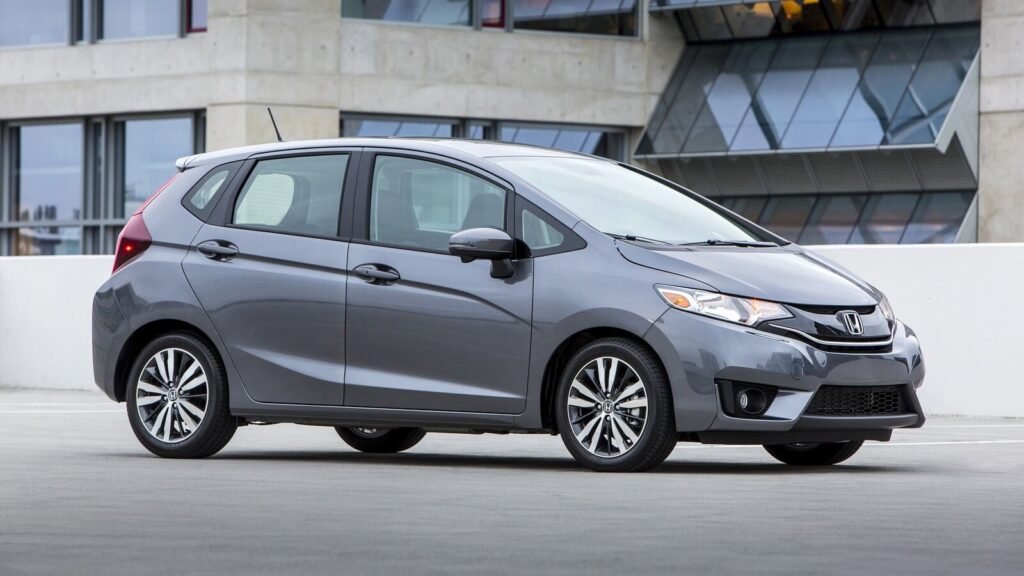
2014–2015 Civic and 2015 Fit: The Pulley-Shaft Recall
One of Honda’s clearest documented CVT problems was NHTSA recall 15V-574, covering 143,676 2014–2015 Civics and 2015 Fits. Honda found that software settings could overstress a potentially insufficiently hardened drive-pulley shaft, causing damage that could lead to loss of acceleration or front-wheel lockup.
The remedy was a software update, so these cars aren’t automatic avoids. The buyer takeaway is simpler: check the VIN and confirm the recall was completed—a known defect with a documented fix is very different from an unresolved transmission problem.

2016–2020 HR-V: The Honda CVT I Would Inspect More Carefully
The 2016–2020 HR-V CVT deserves more caution than a typical used Honda. Honda issued a product update after finding the original software could fail to detect conditions leading to premature drive-belt deterioration, which could eventually cause belt failure and, rarely, loss of motive power.
Honda updated the software, introduced an inspection procedure and extended affected CVT coverage to 7 years/150,000 miles. For used buyers, that makes the checklist clear: run the VIN, verify the update, review CVT service history and have the transmission evaluated before buying.
Don’t Project HR-V Problems Onto Every Honda CVT
This is where reliability discussions frequently go wrong. A manufacturer experiences a legitimate problem with one transmission application.
The internet remembers:
Honda CVTs are bad.
Transmission reliability depends on the hardware, vehicle weight, engine torque, calibration, cooling, software and engineering revisions within a specific application. A 2016–2020 HR-V problem therefore doesn’t condemn a later Civic or CR-V, just as a properly completed recall shouldn’t permanently condemn an older Honda—reliability belongs to the engineering generation, not the CVT label.
CVT Fluid Matters—but Don’t Invent a Universal 30,000-Mile Rule
Online advice often recommends changing Honda CVT fluid every 25,000–30,000 miles, but Honda’s guidance is more specific. Fluid replacement appears as Maintenance Minder sub-item 3, while a 25,000-mile interval applies to certain severe operating conditions, such as prolonged low-speed mountain driving.
The better rule is to follow the Maintenance Minder and severe-service guidance for your exact Honda, using only the specified CVT fluid. Fluid properties are part of how the belt-and-pulley system controls friction and transfers torque, so this isn’t a good place to substitute a generic “compatible” fluid.
A Symptom Is Not a Diagnosis
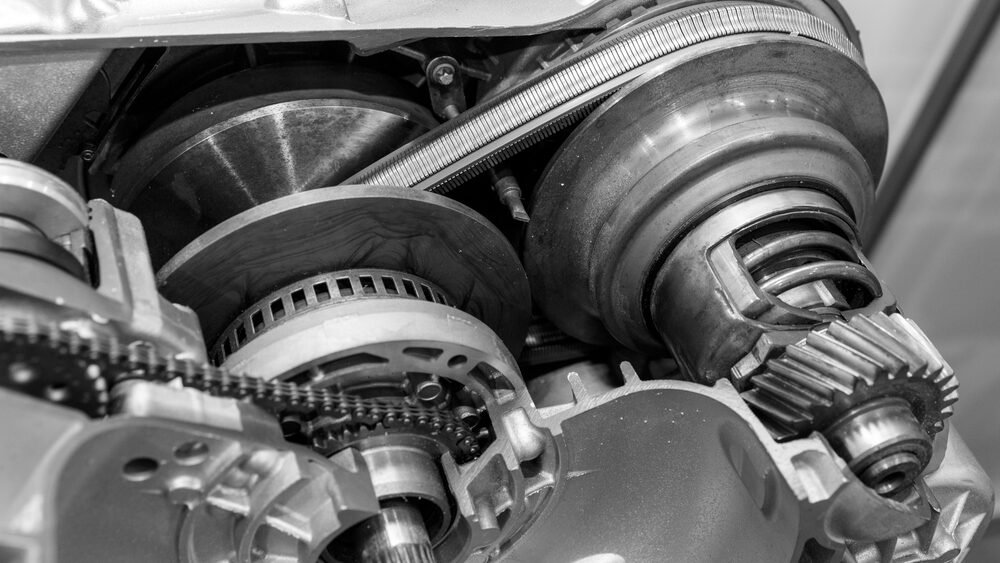
CVTs also have a perception problem: under hard acceleration, they can hold the engine at a relatively constant rpm while road speed rises, unlike a conventional automatic shifting through fixed gears. That sustained engine speed may feel like transmission slip, but it is often normal CVT operation.
Conversely, genuinely abnormal behavior shouldn’t be dismissed as:
That’s just how CVTs feel.
| Symptom | What a Buyer Should Do |
|---|---|
| Judder or strong vibration | Diagnose it; don’t assume fluid will cure it |
| Delayed engagement into Drive/Reverse | Investigate before purchase |
| Unusual whine or grinding | Compare with a known-good vehicle and diagnose |
| Transmission warning/DTC | Perform a proper module scan |
| Metal contamination in fluid/pan | Potential internal-wear warning |
| Recall/campaign in VIN history | Verify repair completion |
The key distinction is simple: a symptom is evidence, not a diagnosis. A fluid change may be proper maintenance, but it won’t repair a CVT with mechanical damage.
Don’t Confuse Honda Hybrids With Conventional Belt CVTs
Honda’s hybrid eCVT isn’t simply another belt-and-pulley CVT. The Civic Hybrid, Accord Hybrid and CR-V Hybrid use Honda’s two-motor hybrid architecture, with electric propulsion and fundamentally different hardware, so conventional Honda CVT problems shouldn’t be applied to them automatically—similar driving behavior doesn’t mean identical failure mechanisms.
What I Would Check Before Buying a Used Honda CVT
Start with service history, confirming the correct transmission fluid and required maintenance were used, then test-drive the car from cold and check Drive/Reverse engagement, acceleration, vibration, hesitation, unusual noises and warning messages.
Follow with a diagnostic scan for stored or pending transmission codes, and for the 2014–2015 Civic, 2015 Fit and 2016–2020 HR-V, check the VIN for applicable campaigns—recall and update eligibility is VIN-specific.
And if the vehicle shows suspicious transmission behavior, don’t buy it because the seller promises:
It probably just needs fluid.
Diagnose first as CVT replacement is too expensive for guesswork.
Should You Avoid Used Hondas With CVTs?
Absolutely not. Just avoid the wrong Honda CVT—not Honda CVTs as a category.
Honda has had legitimate trouble spots: the 2014–2015 Civic and 2015 Fit pulley-shaft recall was real, and the 2016–2020 HR-V belt-deterioration concern was serious enough to trigger an update, inspection procedure and extended coverage. But those problems don’t automatically belong to every Civic, Accord, CR-V or HR-V with a CVT.
For used buyers, four questions matter more than the letters CVT: Which transmission? Which model year? Were the campaigns completed? Was it serviced correctly?
The last thing you want to do is buying a Honda Civic with unknown history and a seller saying:
“Transmission fluid? I thought it was lifetime.”
Honda Acknowledgments
Honda hasn’t ignored its documented CVT problems. For affected 2016–2020 HR-Vs, it issued updated software and a CVT inspection procedure, then extended coverage for premature belt deterioration to 7 years or 150,000 miles, whichever came first; transmissions that failed the prescribed inspection could be replaced under the campaign.
That doesn’t make every HR-V problematic—or every repair still covered today. It means used buyers should check the VIN for applicable campaigns and verify that the required updates and inspections were completed, rather than judging the transmission by reputation alone.
If you found this useful, read our guide to Why Japanese Cars Are So Reliable and Known for Their Longevity next. You can also explore TopCarList for more reliability analysis, buying guides and practical ownership advice, and bookmark the site for future updates.
- Chinese Cars Are Winning the Technology Race—But Will They Last?

- 2024 Toyota Camry Reliability: Is It Toyota’s Smartest Buy?
- 2023 Toyota Camry Reliability: Is Paying More Really Worth It?

- 10 Most Reliable Used Cars in 2026: Specific Years to Buy

- 2022 Toyota Camry Reliability: Is It the Best Used Camry?

- Car Reliability Ratings Explained: Which Ones Can You Actually Trust?
*Disclaimer: This website provides automotive content for informational purposes only and should not be considered professional advice. While we strive for accuracy, we do not guarantee the reliability or suitability of any vehicle or product mentioned—always conduct your own research before making purchasing decisions. Additionally, some links on this site are affiliate links, meaning we may earn a commission if you make a purchase, at no extra cost to you.