
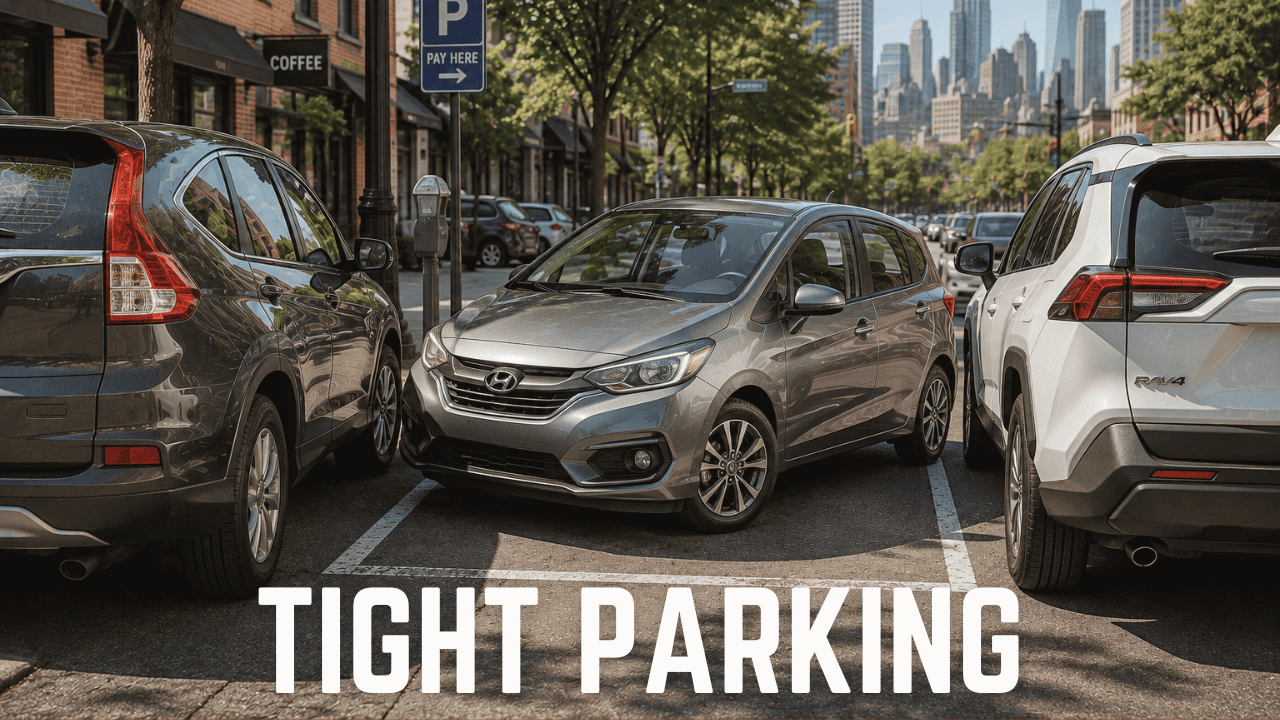
Buying the smallest car you can find isn’t necessarily the answer to city driving. A good urban car needs to be short enough for tight parking spaces, but it also needs good outward visibility, a manageable turning circle, sensible fuel consumption, and enough interior space that you don’t regret the purchase every time you leave downtown.
That distinction matters in the U.S., where many excellent European and Japanese city cars aren’t sold. Rather than recommending tiny cars Americans can’t realistically buy, these are some of the strongest new and used choices actually available to U.S. buyers.
What Actually Makes a Car Good in the City?
Overall length is the first number worth checking. Taking 15 or 20 inches out of a vehicle can turn an impossible parallel-parking space into a usable one.
But length alone doesn’t tell the whole story.
A tight turning circle makes U-turns, parking garages, and narrow streets considerably easier. Width matters when squeezing between concrete pillars. Upright seating and large windows help the driver judge the corners of the car, while a backup camera, parking sensors, and especially a 360-degree camera can compensate for increasingly thick pillars and high beltlines.
Then there is the powertrain. Stop-and-go driving is exactly where hybrids are most efficient, while a conventional gasoline engine can still make sense for drivers wanting a lower purchase price and mechanical simplicity.
With those priorities in mind, these cars stand out.
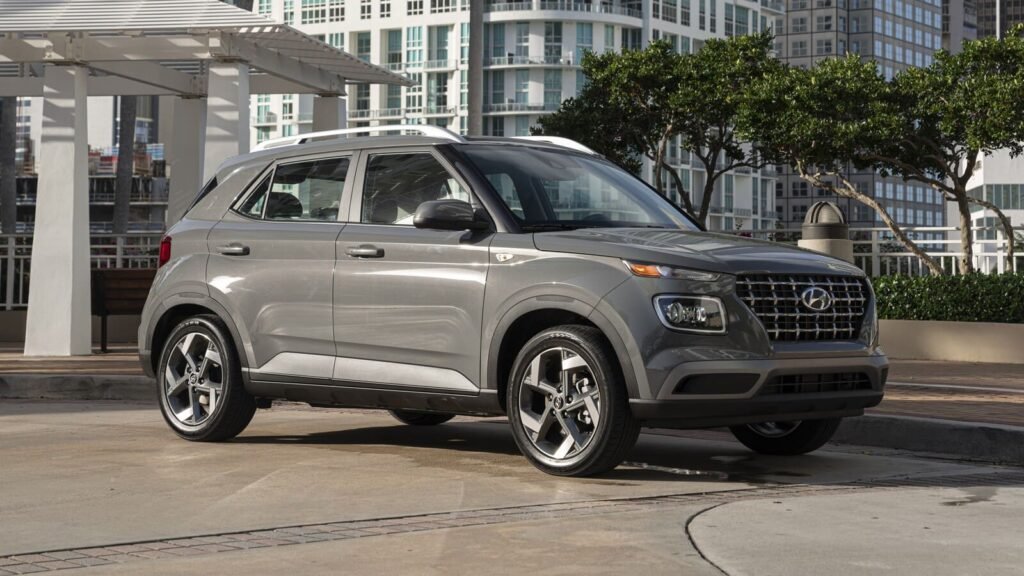
1. Hyundai Venue — Best for Extremely Tight Parking
The Hyundai Venue demonstrates why dimensions matter more than the SUV badge.
At just 159.1 inches long and 69.7 inches wide, the 2026 Venue occupies substantially less road than most modern crossovers. Hyundai also lists 18.7 cubic feet of cargo space behind the rear seats, so its small footprint doesn’t make it useless for groceries or everyday errands. EPA estimates are 29 mpg city and 33 highway.
Its biggest advantage, however, is simply knowing where the vehicle ends. The Venue’s upright seating position and boxy proportions are better suited to urban maneuvering than many longer, more dramatically styled crossovers.
There are compromises. With only 121 horsepower, this isn’t the choice for someone wanting effortless highway acceleration, and the rear seat is considerably tighter than those in larger compact SUVs.
Best for: Drivers who want crossover seating in one of the smallest footprints available in America.
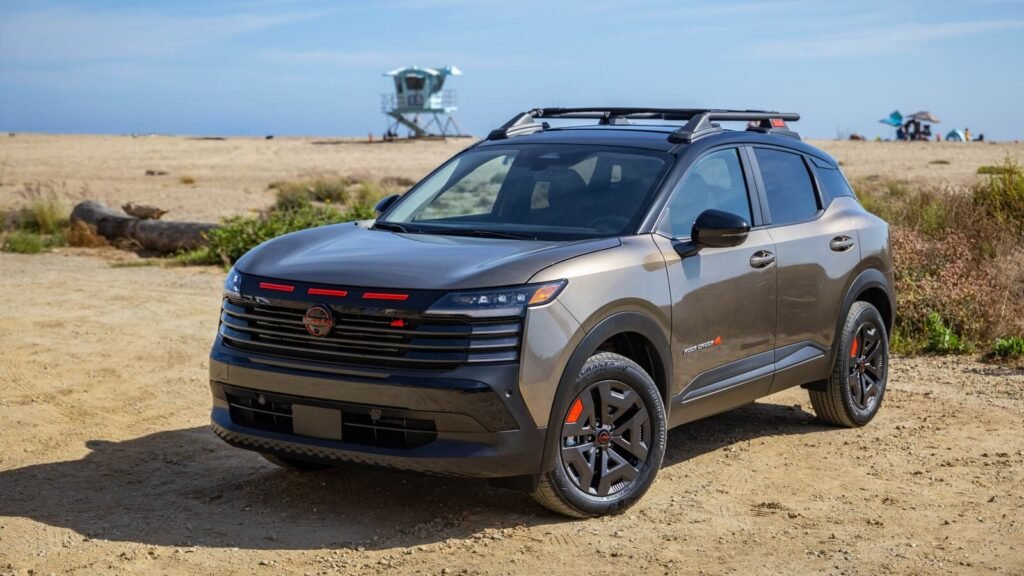
2. Nissan Kicks — Best Small Crossover All-Rounder
Need more room than the Venue without graduating to a conventional compact SUV? The Nissan Kicks makes a strong argument.
The current Kicks measures 171.9 inches long and 70.9 inches wide, with a 34.1-foot turning diameter. Front-wheel-drive versions return an EPA-estimated 28 mpg city and 35 highway. Nissan also lists as much as 30 cubic feet of cargo capacity depending on configuration.
More important for crowded environments, Nissan offers its Intelligent Around View Monitor on upper trims. A 360-degree view is genuinely useful when positioning a car beside curbs, pillars, motorcycles, or other vehicles; it isn’t merely another specification to advertise.
The Kicks is larger than the Venue, but that additional length buys useful passenger and cargo space without making it cumbersome.
Best for: Buyers who need one vehicle for downtown driving, shopping, passengers, and occasional longer trips.
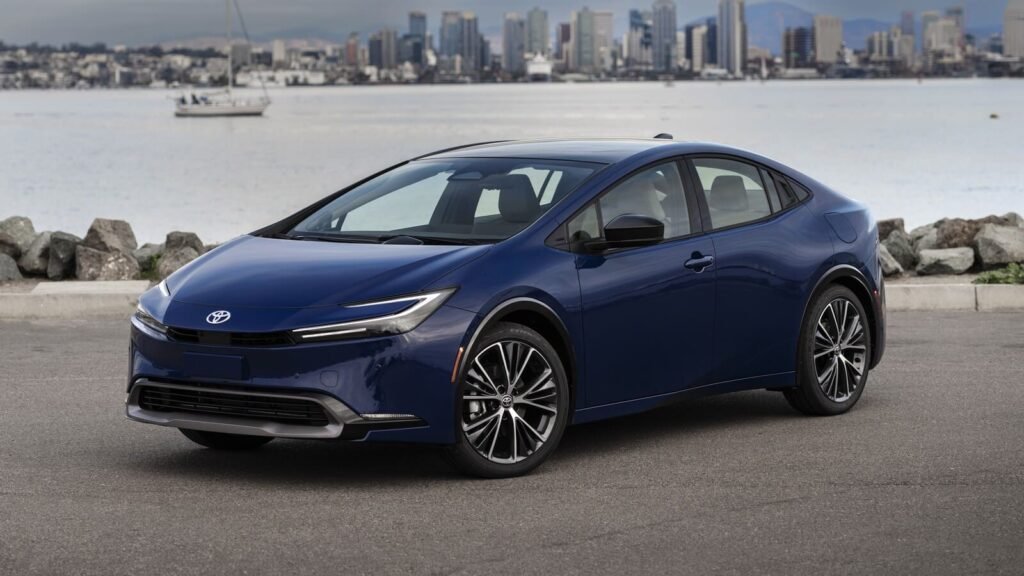
3. Toyota Prius — Best City Car for High-Mileage Drivers
The Prius isn’t particularly tiny anymore. At roughly 181 inches long, it requires noticeably more parking space than a Venue or Kicks.
So why include it?
Because city driving isn’t exclusively about parking.
The Prius hybrid powertrain is exceptionally well suited to repeated acceleration, deceleration, and low-speed operation. Toyota lists a turning circle in roughly the mid-30-foot range depending on configuration, which is impressive for a car of this length. Its liftback body also provides substantially more utility than a conventional sedan trunk.
For someone covering thousands of urban miles each year—rideshare work is an obvious example—the Prius can make more sense than choosing a shorter vehicle purely because it’s easier to park. Fuel savings accumulate every mile the vehicle is moving.
That illustrates an important principle: the best city car depends on which part of city driving causes you the most expense or frustration.
For more on how fuel costs compound over years of ownership, see our 10-year ownership framework.
Best for: High-mileage urban commuters who prioritize efficiency over the smallest possible footprint.
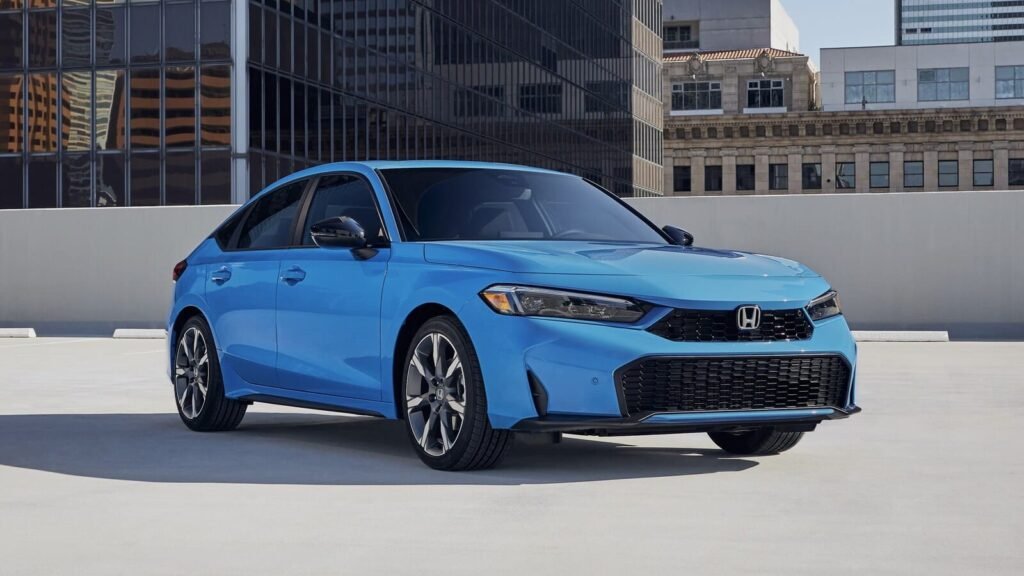
4. Honda Civic Hatchback Hybrid — Best City Car That Doesn’t Feel Like One
The Civic Hatchback is 179 inches long, so calling it tiny would be misleading. Its 38.1-foot turning diameter is also wider than the Prius or Kicks.
Yet it earns its place because it solves a different problem: many people need a city-friendly car Monday through Friday without wanting a specialized city car for everything else.
The 2026 Civic Sport Hybrid and Sport Touring Hybrid are EPA-rated at 50 mpg city, 45 highway and 48 combined, while producing 200 total system horsepower. Behind the rear seats is 24.5 cubic feet of cargo capacity.
That combination is difficult to dismiss. It gives you excellent urban efficiency and hatchback utility without sacrificing highway performance or making the car feel underpowered outside town.
The downside is straightforward: if your primary concern is squeezing into the smallest available parking space, the Venue and Kicks are easier tools.
Best for: Someone who spends the week commuting through the city but wants a genuinely capable all-purpose car.
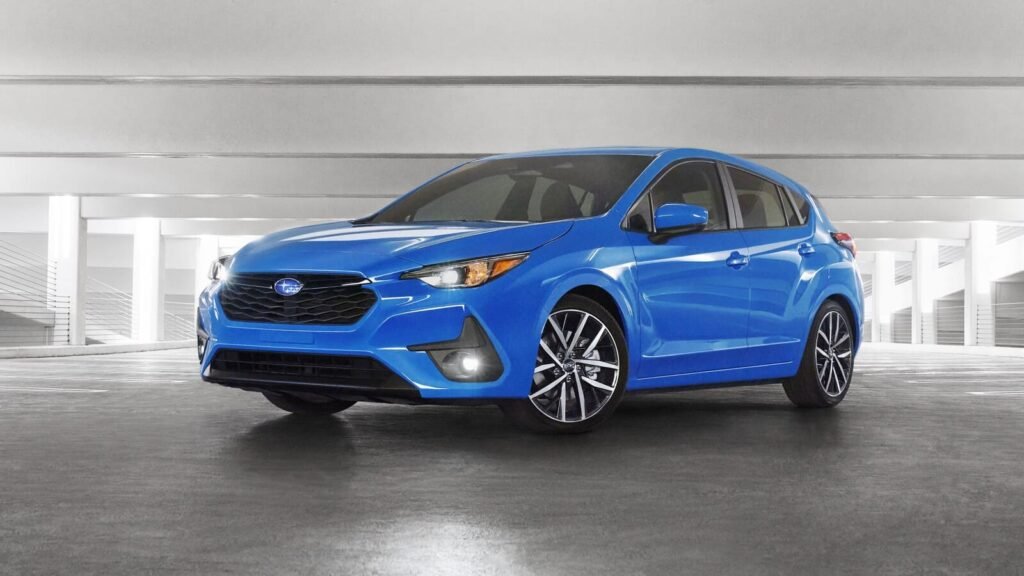
5. Subaru Impreza — Best for Snowy Cities
Not every city has the same problem.
In places such as Minneapolis, Buffalo, Denver, or Boston, winter traction can matter more than saving another six inches of parking space. That’s where the Subaru Impreza becomes interesting.
The 2026 Impreza is 176.2 inches long and 70.1 inches wide, while providing standard all-wheel drive and a hatchback body with 20.4 cubic feet of cargo capacity. Subaru quotes fuel economy as high as 33 mpg highway.
The standard AWD system adds capability that most small front-wheel-drive city cars don’t offer. The tradeoff is that an Impreza isn’t as exceptionally compact as a Venue, nor as efficient as a Prius or Civic Hybrid.
For a driver regularly dealing with snow-covered urban streets, however, that compromise can be entirely reasonable.
Best for: Northern-city drivers who value AWD and practicality more than maximum fuel economy.
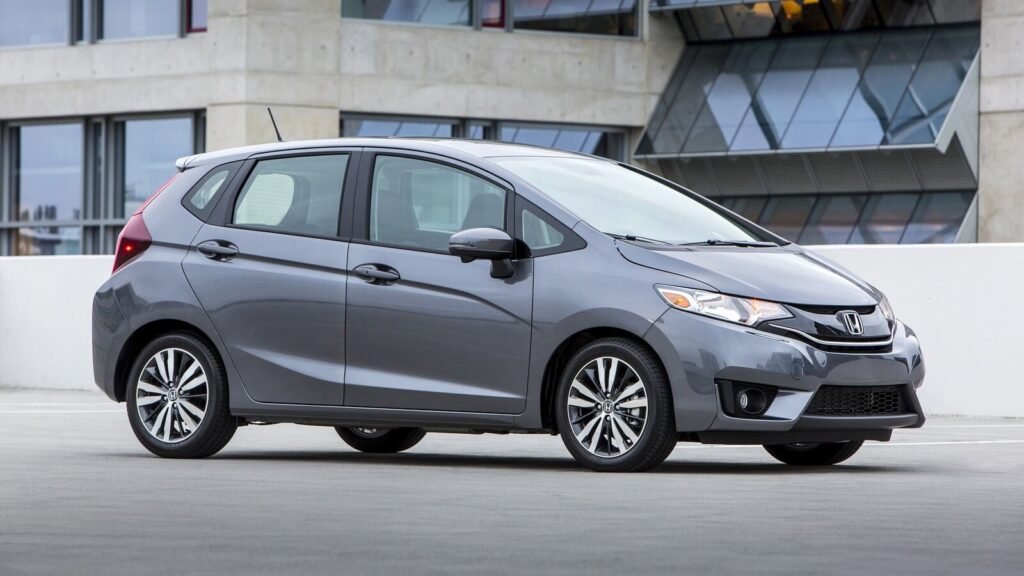
6. Honda Fit — Best Used Urban Car
There is an unfortunate reality in the American market: some of the best true city cars have disappeared.
The Honda Fit is one of them.
Honda stopped selling the Fit in the U.S. after the 2020 model year, but a well-maintained used example remains unusually well suited to urban life. It is less than 162 inches long, yet Honda’s clever interior packaging and foldable Magic Seat system allow it to carry objects that look impossible from outside.
The Fit is also narrow, easy to place in traffic, economical, and mechanically straightforward compared with many newer vehicles.
Age now matters more than reputation, though. A used Fit should be evaluated on maintenance history, accident damage, condition, mileage, and pre-purchase inspection rather than purchased simply because Hondas have a good name.
If your budget is below new-car territory, our guide to daily drivers under $20,000 covers several other used alternatives.
Best for: Used-car shoppers who prioritize maximum space from minimum exterior dimensions.
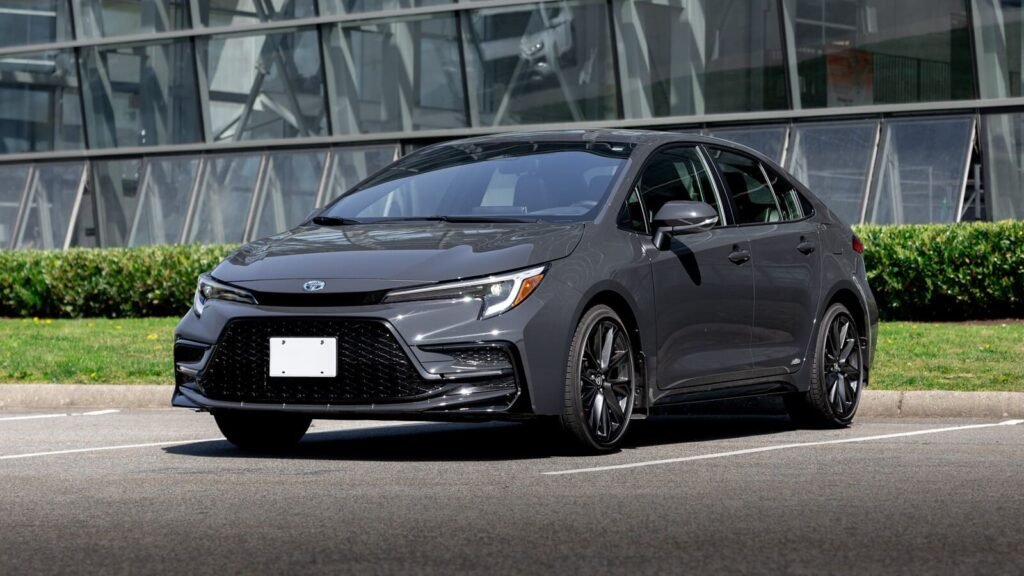
7. Toyota Corolla Hybrid — Best Conservative Choice
The Corolla Hybrid isn’t the smallest or most exciting vehicle here. That’s precisely why it deserves consideration.
For buyers who want an efficient urban commuter without moving into a crossover or paying for features they don’t need, the Corolla Hybrid provides a conventional compact-sedan solution. Its hybrid system is particularly advantageous in stop-and-go traffic, while Toyota’s widespread dealer network and parts availability strengthen the long-term ownership case.
Its sedan body is less versatile than a Civic Hatchback, and drivers who routinely parallel park in extremely tight neighborhoods may still prefer something shorter.
But city ownership involves more than today’s parking space. Maintenance, depreciation, fuel consumption, parts availability, and eventual resale all matter. That’s why the cheapest or smallest vehicle isn’t automatically the cheapest vehicle to own.
Best for: Buyers who want an efficient, low-drama commuter they can keep for many years.
Which One Should You Actually Buy?
| If your priority is… | Best choice |
|---|---|
| Tightest parking spaces | Hyundai Venue |
| Small crossover versatility | Nissan Kicks |
| Maximum urban fuel efficiency | Toyota Prius |
| Best all-around city/highway car | Honda Civic Hatchback Hybrid |
| Snow and winter driving | Subaru Impreza |
| Affordable used city car | Honda Fit |
| Conservative long-term ownership | Toyota Corolla Hybrid |
The important distinction is that there isn’t one universally best city car.
If you live in an older neighborhood where parking spaces are scarce, exterior length may dominate the decision. If you commute 20,000 miles a year through congestion, hybrid efficiency can matter considerably more. If you live in a snowy northern city, AWD may justify accepting slightly worse fuel economy.
That’s why specifications should be interpreted rather than simply ranked.
Final Verdict
For pure maneuverability, the Hyundai Venue is difficult to beat because it combines a genuinely short 159.1-inch body with the seating position and practicality of a small crossover. The Nissan Kicks is the better compromise when you need more passenger and cargo room.
Drivers covering substantial urban mileage should look harder at the Toyota Prius, while the Honda Civic Hatchback Hybrid is arguably the strongest choice for someone who wants one car to handle both dense city commuting and longer highway trips.
And if you’re shopping used, don’t overlook the Honda Fit simply because it has disappeared from new-car showrooms. It represents something increasingly rare in America: a car engineered to provide a surprisingly useful interior without becoming physically large.
Ultimately, the best car for city driving isn’t simply the smallest one. It’s the car that takes up the least space without forcing you to sacrifice the things you actually need a car to do.
- 10 Most Reliable Used Cars in 2026: Specific Years to Buy
- 2022 Toyota Camry Reliability: Is It the Best Used Camry?
- Car Reliability Ratings Explained: Which Ones Can You Actually Trust?
- 2021 Toyota Camry Reliability: Is This the Best XV70 Camry You Can Buy?
- The Hidden Cost of Buying the Wrong Car: A 10-Year Ownership Framework
- Which Honda CR-V Years Should You Avoid? Complete Buyer’s Guide
*Disclaimer: This website provides automotive content for informational purposes only and should not be considered professional advice. While we strive for accuracy, we do not guarantee the reliability or suitability of any vehicle or product mentioned—always conduct your own research before making purchasing decisions. Additionally, some links on this site are affiliate links, meaning we may earn a commission if you make a purchase, at no extra cost to you.