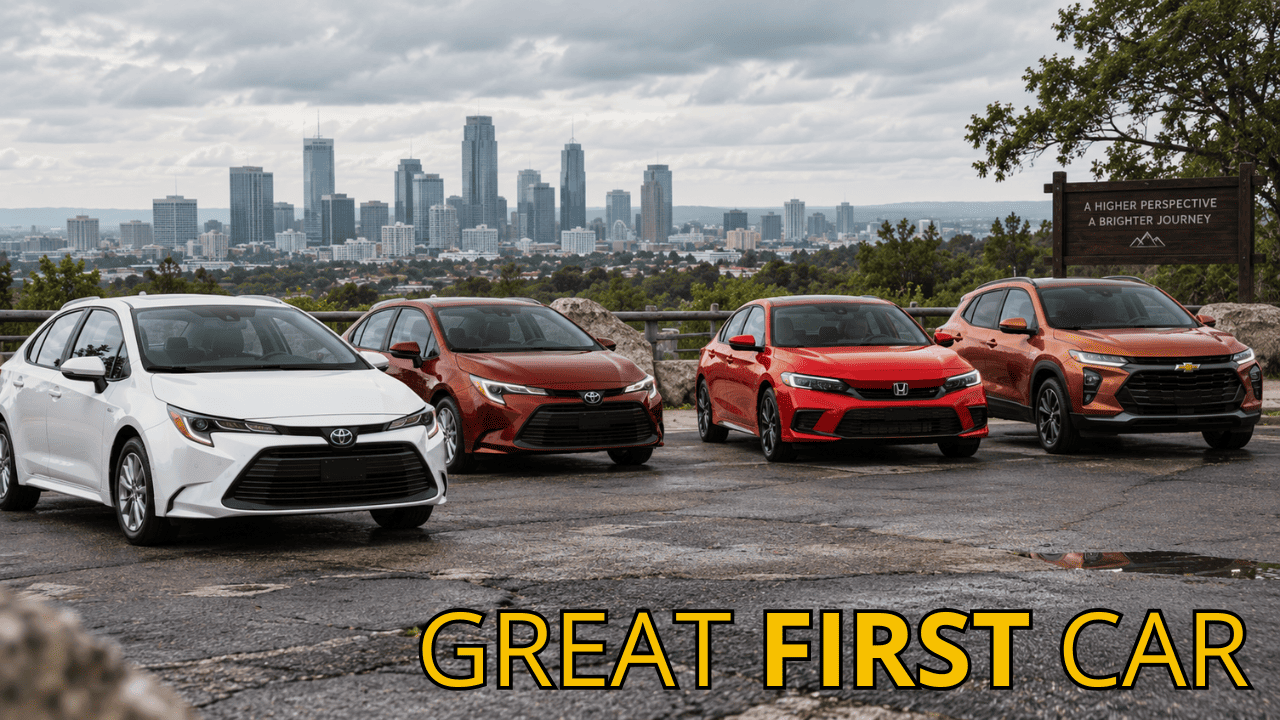
A Great First Car isn’t simply the cheapest one you can afford; it should also be affordable to insure, fuel, maintain and occasionally make beginner mistakes with. We therefore favor manageable cars with predictable costs, good visibility, useful safety technology and enough capability to keep for years—rather than unnecessary power, expensive wheels, aging luxury-car complexity or a loan stretched beyond what makes financial sense.
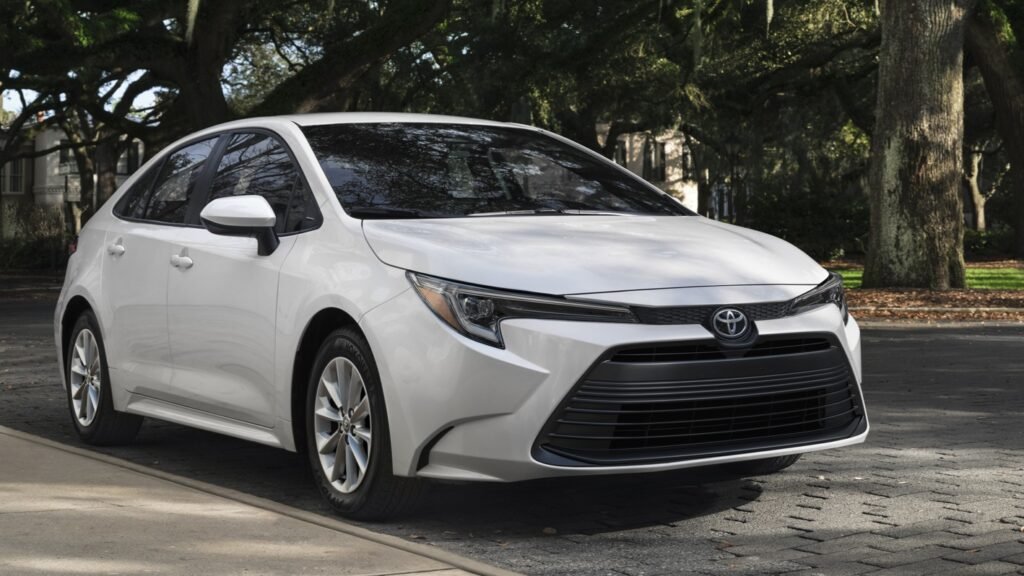
1. 2026 Toyota Corolla LE — Best New Car for First-Time Buyers
Starting MSRP: $23,125 | 32 city / 41 highway mpg
The Corolla LE isn’t here because it’s exciting. The Corolla LE works because Toyota hasn’t hidden the essentials higher up the range. For $23,125, you get 16-inch wheels, 32/41-mpg economy, blind-spot monitoring with rear cross-traffic alert and Toyota Safety Sense 3.0.
That’s almost exactly how we’d configure a first car. The smaller wheels mean more tire sidewall and cheaper replacements than the 18-inch wheels fitted to the SE and XSE, while the LE already has the safety equipment that matters. Spending more mostly makes the Corolla nicer rather than fundamentally better at being a first car.
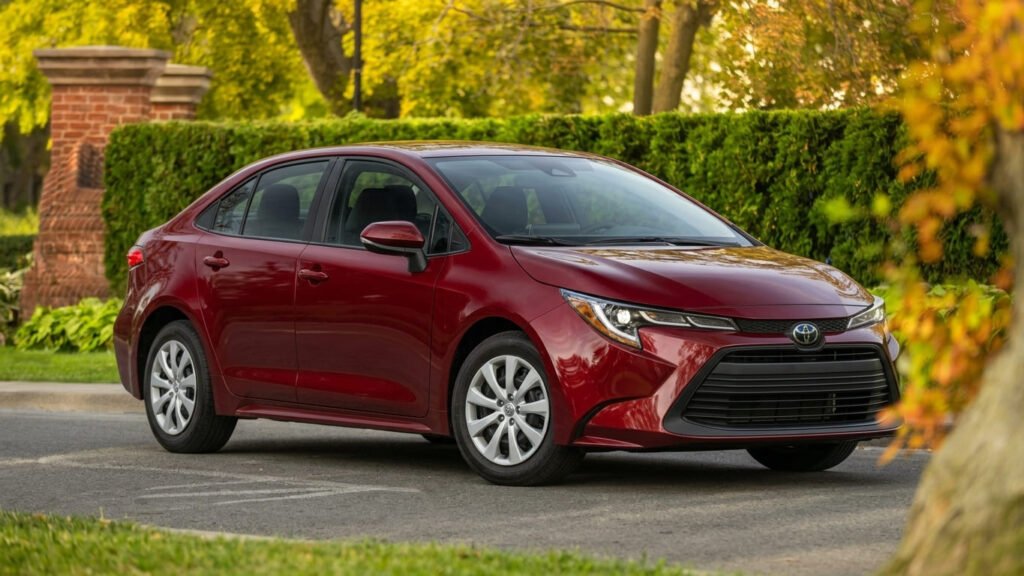
2. 2022 Toyota Corolla LE — Best Used First Car
Typical current retail range: roughly $15,000–$20,000 depending on condition and trim
If $23,000-plus is uncomfortable, we’d rather move four years backward than stretch a loan forward.
The 2022 Corolla LE still gives a new driver standard Toyota Safety Sense 2.0, including automatic emergency braking and adaptive cruise control. IIHS rated its standard vehicle-to-vehicle front-crash-prevention system Superior, while qualifying cars built after November 2021 earned Top Safety Pick+.
The advantage over buying a much older $10,000 car is simple: you’re saving meaningful money versus new without necessarily giving up modern driver-assistance technology or moving into an elderly vehicle. We’d still choose the cleanest documented example over the one with the lowest odometer reading.
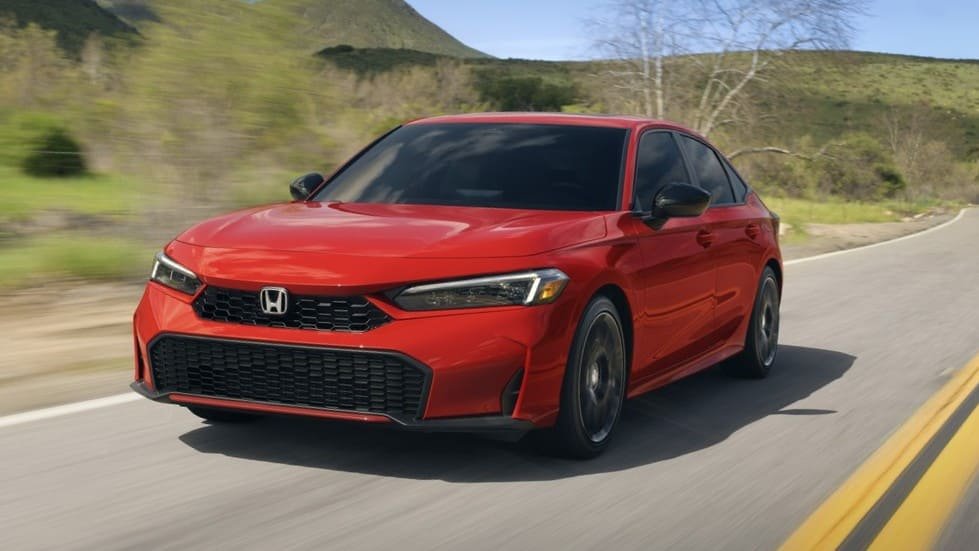
3. 2026 Honda Civic LX — Best First Car You’ll Be Less Likely to Outgrow
Starting MSRP: $24,695
The Civic costs slightly more than the Corolla, but we’d consider paying the difference if you expect to keep your first car for many years.
The LX already has the sensible specification: 150-hp naturally aspirated 2.0-liter engine, 16-inch wheels, automatic climate control, adaptive cruise control, lane-keeping assistance and automatic emergency braking.
We wouldn’t automatically spend another $2,000 on the Sport. Its 18-inch wheels look better but give a first-time owner more expensive tires and less protection against pothole damage. The LX retains what makes the Civic appealing—a roomy, mature compact that doesn’t feel like temporary transportation.
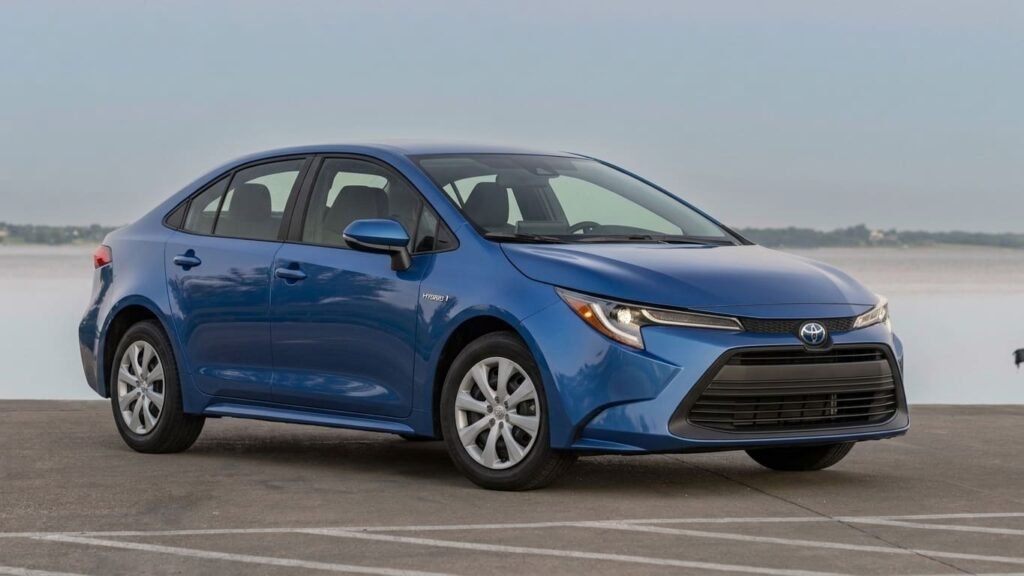
4. 2026 Toyota Corolla Hybrid LE — Best for a First-Time Buyer Who Drives a Lot
Starting MSRP: $24,975 | 53 city / 46 highway mpg
The Corolla Hybrid LE costs just $1,850 more than the gasoline LE but moves from 32/41 mpg to 53/46 mpg.
That doesn’t automatically make it the better buy. Someone driving 5,000 miles annually may take a long time to recover the premium. For a student or young worker commuting 15,000–20,000 miles per year, however, we’d run the numbers carefully because the additional purchase price is relatively small compared with the potential fuel savings.
It also gives a first-time owner hybrid efficiency without learning anything new about charging: fill it with gasoline and drive it normally.
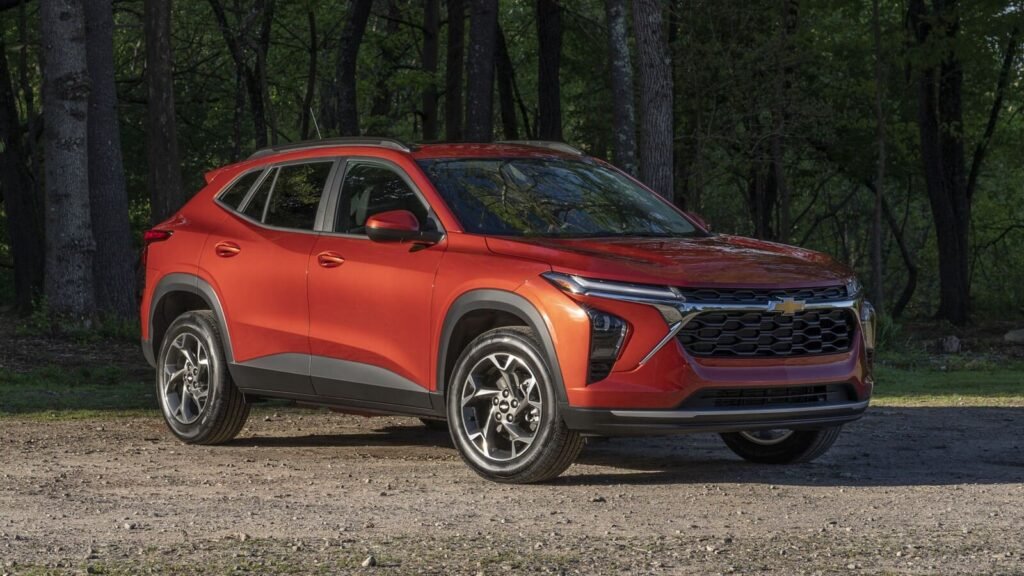
5. 2026 Chevrolet Trax LS — Best First SUV
Starting MSRP: $21,700 | 30 mpg combined
A first-time buyer doesn’t automatically need an SUV, and we’d resist paying thousands more simply to sit higher.
The Trax is interesting because it offers crossover space without becoming a large, powerful or particularly complicated vehicle. Its 137-hp 1.2-liter turbo engine drives only the front wheels, and EPA combined economy is about 30 mpg.
Those limitations actually fit the assignment. A first vehicle doesn’t need serious off-road ability or 300 horsepower; it needs to carry people and their belongings without becoming cumbersome or expensive to operate.
If a Corolla or Civic gives you enough room, we’d still take the sedan. If you genuinely need crossover packaging, the Trax is where we’d start looking.
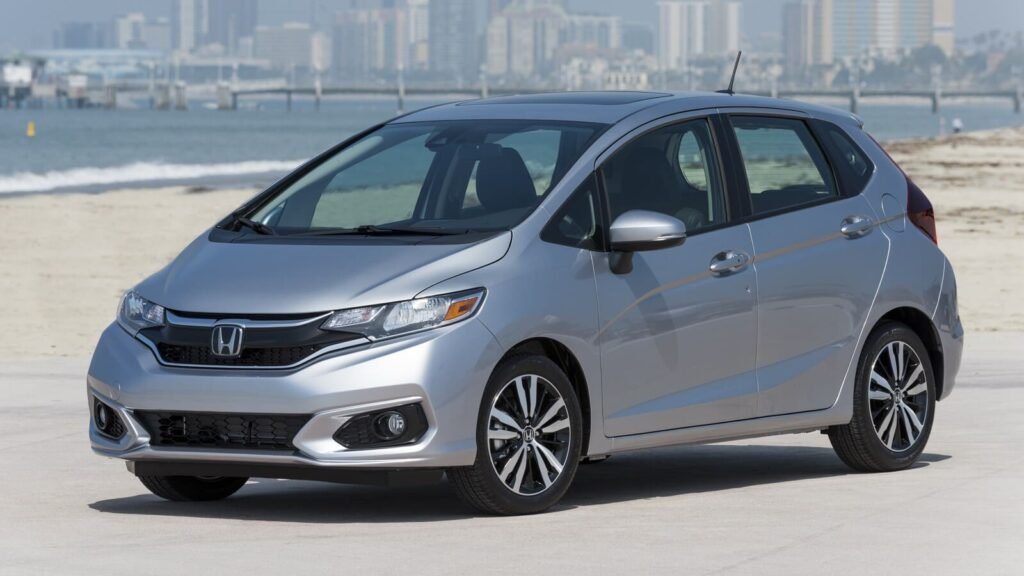
6. 2020 Honda Fit EX — Best First Car for College and City Life
The Fit solves a problem most small cars don’t: it is genuinely tiny outside without being nearly as restrictive inside.
Honda’s Magic Seat can reconfigure the rear cabin for tall, long or bulky cargo, which makes the Fit unusually useful for moving between college, apartments and work. The EX also matters specifically because Honda Sensing was standard, adding automatic emergency braking, adaptive cruise control, lane-keeping assistance and road-departure mitigation.
Its weakness is highway refinement. The Fit is an older small car and isn’t as quiet or substantial as a Civic. But for crowded parking lots and urban driving, we’d accept that trade.
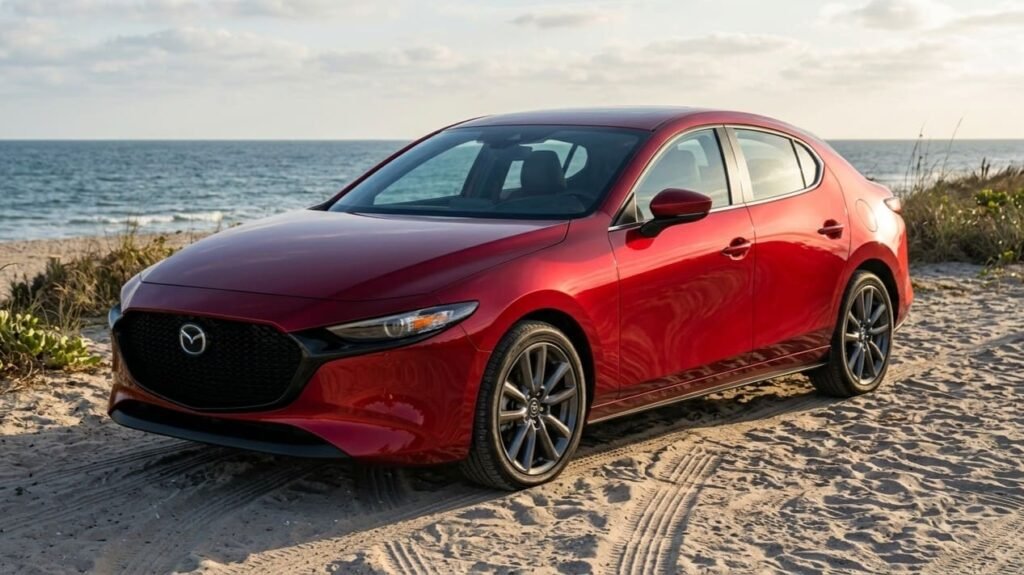
7. 2021 Mazda3 2.5 S — Best If You Actually Enjoy Driving
A sensible first car doesn’t have to feel like an appliance.
The Mazda3 gives us a way to add some personality without jumping to an old luxury car or a high-performance model. Its naturally aspirated 2.5-liter engine has considerably more power than many economy-car alternatives, while the cabin and driving position feel more expensive than its used-car price suggests.
The trade-off is packaging. Rear-seat space and outward visibility aren’t as strong as the Civic’s, so we’d choose the Honda for someone regularly carrying passengers.
But for one or two people, a clean Mazda3 provides the enjoyment that often tempts first-time buyers toward much riskier purchases.
Which One Should You Choose?
| If you need… | Start with… |
|---|---|
| A new car with minimal complications | 2026 Corolla LE |
| A lower purchase price | 2022 Corolla LE |
| Something you’ll want to keep | 2026 Civic LX |
| Maximum commuting efficiency | 2026 Corolla Hybrid LE |
| SUV practicality | 2026 Trax LS |
| Easy parking and flexible cargo space | 2020 Fit EX |
| Something enjoyable to drive | 2021 Mazda3 2.5 S |
The table isn’t a ranking. Start with the car matching your actual use, then compare individual examples and ownership costs.
Your First Car Has Four Prices
Your first-car budget should cover insurance**, fuel, tires and maintenance, not simply the purchase price or maximum loan you qualify for. That’s also why we generally avoid performance trims: spending another $2,000 on extra power and larger wheels can keep costing you through higher insurance, fuel consumption and replacement-tire prices long after you’ve left the dealership.
What About an EV?
An EV can be an excellent first car if you can reliably charge at home or work., but without that, we’d hesitate. A cheap EV that requires repeated trips to public chargers can be considerably less convenient than an ordinary Corolla. Charging circumstances matter enough that we’ve treated this separately in our Best Electric Cars for Beginners in 2026 guide rather than inserting an EV here simply to make the list look current.
New or Used?
Neither new nor used automatically offers better value: new gives you full warranty coverage and known history, while used can reduce depreciation and the amount you need to finance. Compare the actual price gap—a three-year-old car discounted only slightly may not justify its mileage and reduced warranty, while a substantial saving can make used compelling; our New vs. Used Cars: Which Option Saves You More Money? guide explains the calculation.
Final Verdict
For most first-time new-car buyers, we’d start with the 2026 Corolla LE; on a tighter budget, a clean 2022 Corolla LE makes more sense. Priorities can change that quickly: Corolla Hybrid for long commutes, Civic for a car worth keeping, Trax for crossover space, Fit for city life, and Mazda3 when driving enjoyment matters.
Your first car doesn’t need to impress anyone. It needs to be easy to buy, affordable to keep, and difficult to regret.
- Chinese Cars Are Winning the Technology Race—But Will They Last?
- 2024 Toyota Camry Reliability: Is It Toyota’s Smartest Buy?
- 2023 Toyota Camry Reliability: Is Paying More Really Worth It?
- 10 Most Reliable Used Cars in 2026: Specific Years to Buy
- 2022 Toyota Camry Reliability: Is It the Best Used Camry?
- Car Reliability Ratings Explained: Which Ones Can You Actually Trust?
*Disclaimer: This website provides automotive content for informational purposes only and should not be considered professional advice. While we strive for accuracy, we do not guarantee the reliability or suitability of any vehicle or product mentioned—always conduct your own research before making purchasing decisions. Additionally, some links on this site are affiliate links, meaning we may earn a commission if you make a purchase, at no extra cost to you.
** Unless you reside in New Hampshire, which is the only U.S. state that does not legally require drivers to carry traditional auto insurance.