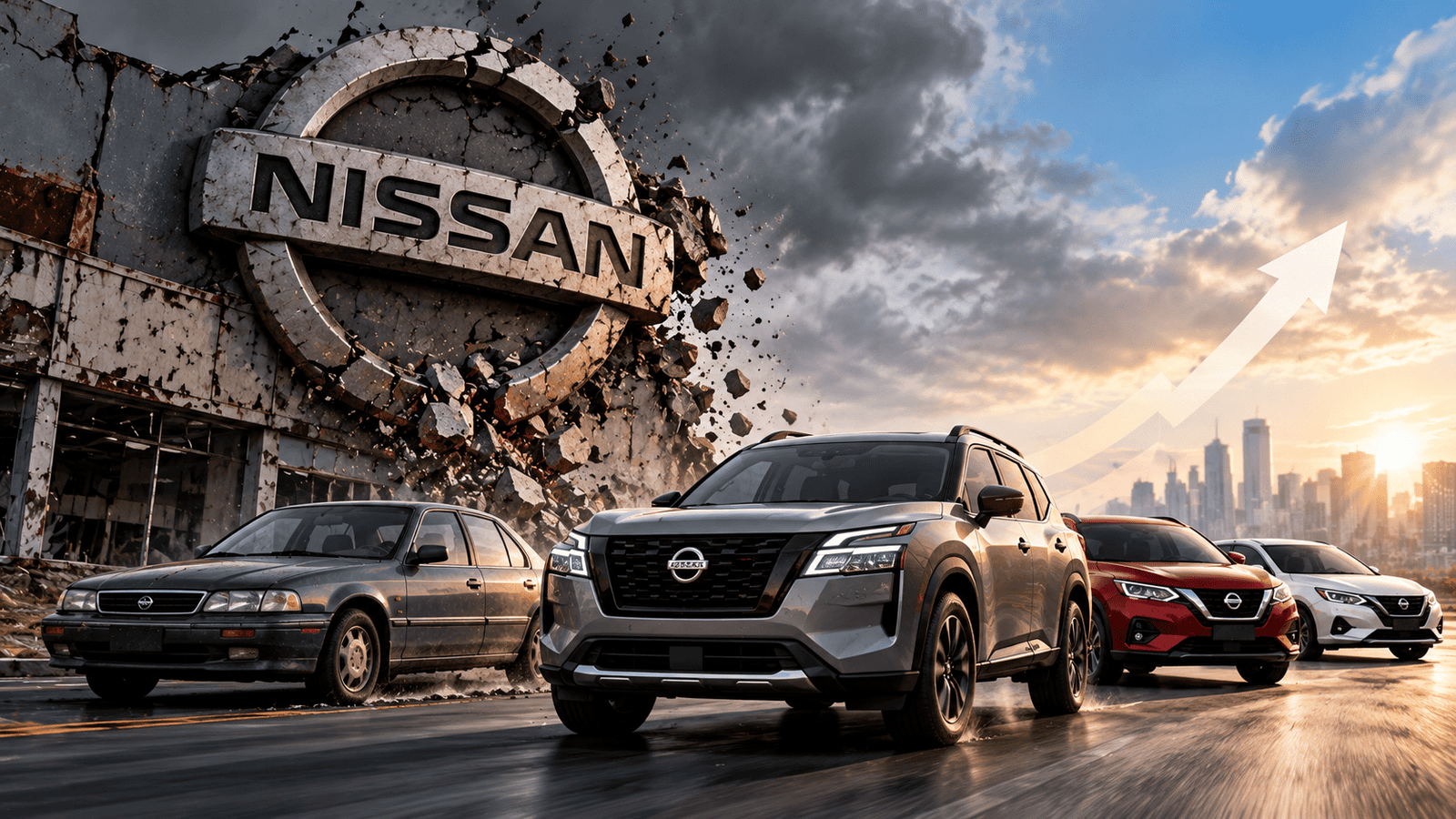
Nissan built its reputation on durable vehicles such as the Maxima, Pathfinder, Patrol, and Z cars. Today, recurring CVT failures and inconsistent powertrain durability contrast with respected engines, proven platforms, and improving results in some dependability studies.
What changed wasn’t Nissan’s engineering capability, but its consistency. Financial restructuring, aggressive technology adoption, and uneven execution created a widening reliability gap between its strongest and weakest models.
Was Nissan Really More Reliable in the Past?
Nissan’s historical reputation wasn’t imaginary, although nostalgia can exaggerate the durability of older vehicles. The D21 Hardbody, early Pathfinders, and Patrol generations established Nissan’s reputation for robust drivetrains and mechanical durability. Yet its engineering strengths extended beyond simplicity.
The VQ-series V6, particularly the VQ35DE, combined performance, refinement, and longevity across models including the Maxima, 350Z, and Infiniti G35. Nissan’s longitudinal FM platform likewise demonstrated sophisticated weight distribution and suspension engineering.
These vehicles weren’t faultless; certain applications suffered timing-chain, cooling-system, and transmission problems. Nevertheless, their core mechanical architectures earned credibility through years of proven service.
Nissan’s historical strength wasn’t technological simplicity, but engineering sophistication supported by demonstrated durability.
The Financial Crisis That Changed Nissan
Facing heavy debt and declining competitiveness, Nissan entered its Renault alliance in 1999. Carlos Ghosn’s Nissan Revival Plan reduced purchasing costs, improved manufacturing efficiency, and restored profitability.
However, directly blaming restructuring for later reliability problems oversimplifies the evidence. The 350Z, Infiniti G35, and continued development of the VQ engine family demonstrated Nissan’s engineering strength during this period.
Cost reduction doesn’t inherently compromise durability; standardization and supplier coordination can improve consistency. Reliability suffers when component validation, engineering margins, or manufacturing controls prove inadequate.
Nissan’s restructuring restored financial competitiveness, but profitability and long-term mechanical durability remained separate engineering and management challenges.
How CVTs Damaged Nissan’s Reliability Reputation
Few technologies have influenced Nissan’s modern reputation as strongly as the continuously variable transmission. Nissan adopted CVTs extensively because they offered a compelling combination of fuel efficiency, smooth acceleration, and manufacturing advantages.
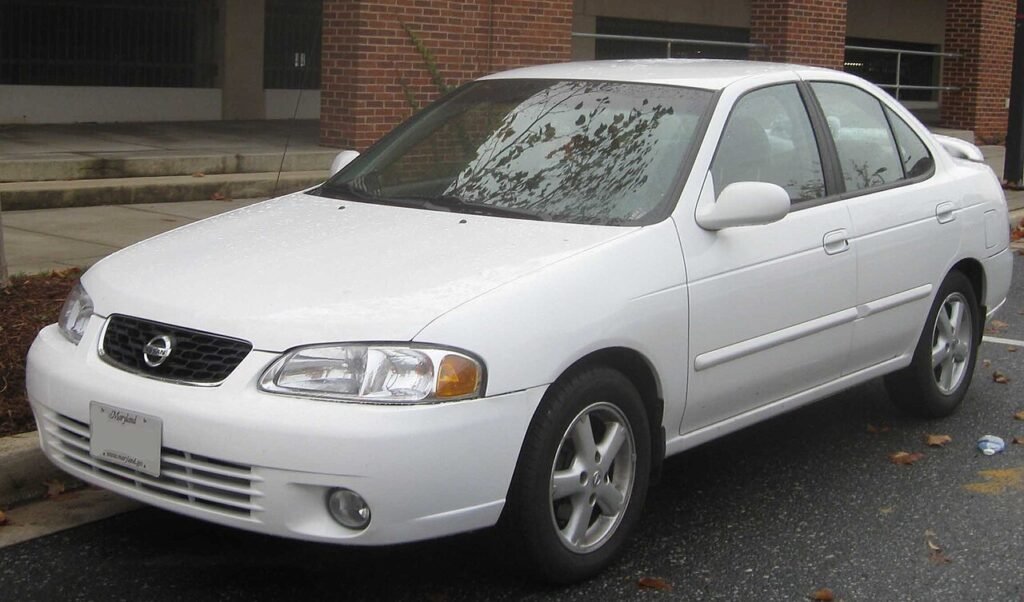
The fifth generation Nissan Sentra hit the roads from 2000 to 2006, a time often thought of as Nissan’s golden age before Carlos Ghosn came in and changed things up. This model’s known for its solid reputation and dependable history.
Unlike a conventional automatic, which uses fixed gear ratios, a belt- or chain-type CVT varies its effective ratio through adjustable pulleys. This allows the engine to operate closer to an efficient speed across different driving conditions. However, the architecture creates demanding mechanical requirements.
Why Certain Nissan CVTs Failed
Conventional CVTs transmit torque through a steel belt or chain between variable-diameter pulleys, requiring substantial hydraulic clamping pressure. High contact stresses make cooling, lubrication, bearing durability, and hydraulic control critical. Insufficient thermal or mechanical margins can accelerate wear.
Certain older Nissan CVTs developed recurring juddering, noise, acceleration problems, and premature failures, prompting warranty extensions and class-action settlements. One U.S. settlement covered qualifying 2017–2018 Altimas and 2018–2019 Sentras, Versas, and Versa Notes. Nissan denied the allegations, and the settlement did not establish universal failure.
The problem was specific transmission applications, not CVT technology itself. Other manufacturers have achieved reliable conventional CVT designs, while Toyota’s hybrid eCVT uses an entirely different planetary power-split architecture.
Our manual vs. automatic transmission comparison examines these engineering differences.
Why Nissan’s Problems Extended Beyond CVTs
The CVT controversy became the most recognizable symbol of Nissan’s reliability difficulties, but it wasn’t the only issue. Nissan also introduced sophisticated engine technologies intended to improve efficiency without sacrificing performance. One of the most ambitious examples was its variable-compression turbocharged engine.
The VC-Turbo: Innovation Meets Durability Challenges
Nissan’s VC-Turbo uses a multi-link mechanism to vary piston top-dead-center position and compression ratio, improving efficiency under lighter loads while accommodating higher turbocharger boost. This sophistication introduces additional mechanical loads, moving components, and lubrication demands.
Certain applications subsequently faced serious reliability concerns. A 2025 recall covered approximately 443,900 Nissan and Infiniti vehicles over potential engine-bearing failures. In February 2026, another recall affected approximately 323,900 2023–2025 Rogues with the 1.5-liter VC-Turbo, citing oil-temperature and degradation concerns that could damage bearings.
Neither recall establishes variable compression as the underlying cause. The documented issues involve bearing defects and lubrication-related conditions, illustrating why supporting systems and durability validation matter as much as the innovation itself.
Nissan’s VC-Turbo remains an engineering achievement, but technological sophistication and long-term reliability are separate measures of success.
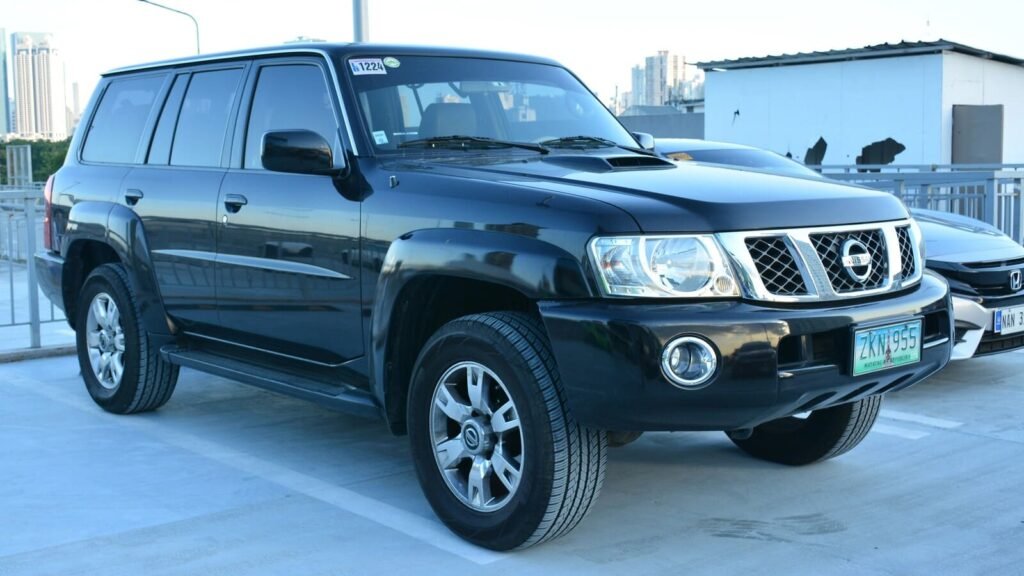
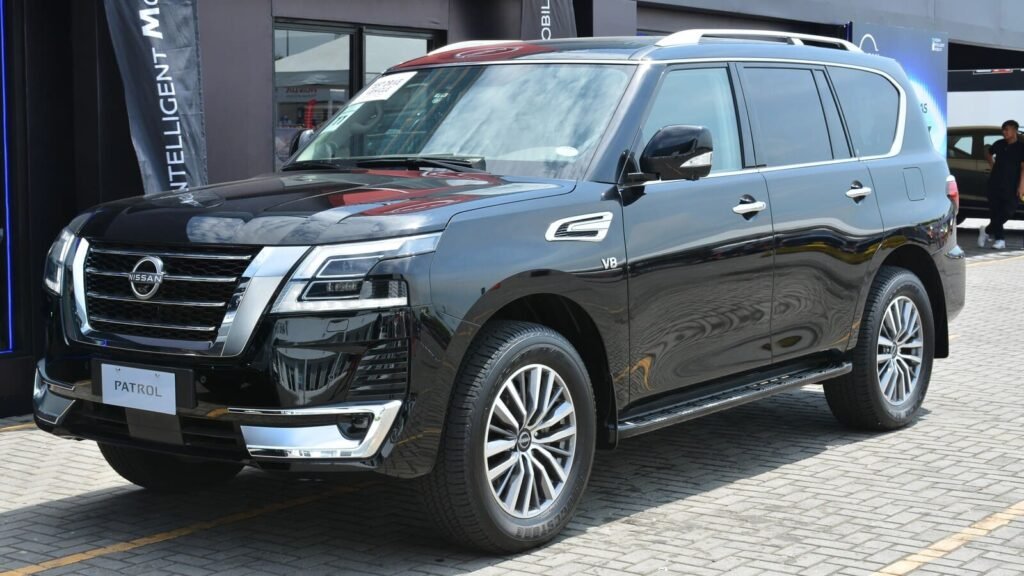
Patrol Y61 vs Y62: Did Nissan Abandon Its Durability Philosophy?
The Nissan Patrol provides an interesting illustration of how the company’s engineering priorities evolved. The Y61 Patrol, introduced in 1997, retained a traditional heavy-duty architecture with solid front and rear axles. Its suspension geometry, drivetrain layout, and established engine options made it particularly suitable for demanding off-road conditions.
The Y62 Patrol, introduced in 2010, represented a different approach. It adopted independent suspension, a more sophisticated V8 powertrain, and greater emphasis on refinement, on-road performance, and passenger comfort.
| Engineering characteristic | Patrol Y61 | Patrol Y62 |
|---|---|---|
| Primary emphasis | Heavy-duty off-road capability | Performance, comfort, and capability |
| Suspension | Solid front and rear axles | Independent suspension |
| Engine philosophy | Established gasoline and diesel options | More sophisticated gasoline V8 |
| Mechanical complexity | Generally lower | Generally higher |
| Ownership implications | Robust traditional hardware | More complex supporting systems |
The Y61 Patrol prioritized heavy-duty construction, suspension articulation, and field repairability. The Y62 retained substantial off-road capability while introducing greater refinement, independent suspension, and more sophisticated chassis systems.
Its Hydraulic Body Motion Control, where fitted, is not conventional air suspension, and independent suspension doesn’t inherently compromise reliability.
The Y61 prioritized rugged simplicity; the Y62 balanced off-road capability with luxury-SUV comfort and handling. Their differences reflect evolving engineering priorities, not evidence that Nissan abandoned durability.
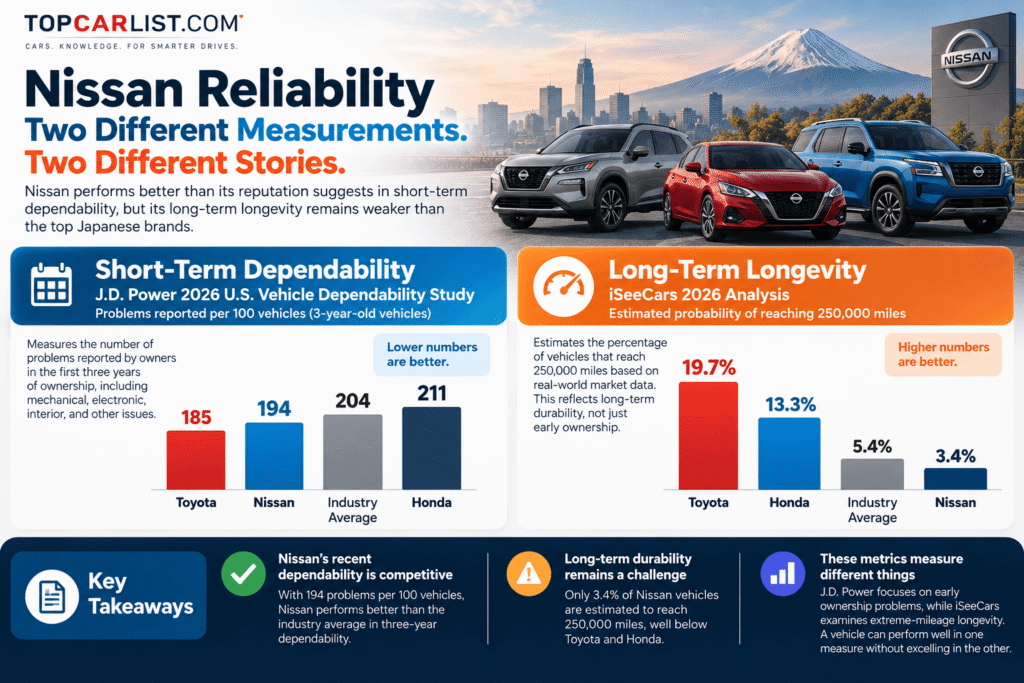
What the Latest Nissan Reliability Ratings Actually Show
The 2026 J.D. Power U.S. Vehicle Dependability Study recorded 194 problems per 100 Nissan vehicles, outperforming the industry average of 204 and Honda’s 211, though trailing Toyota’s 185.
These results challenge Nissan’s reputation for poor reliability, but require context. J.D. Power measures owner-reported problems in three-year-old vehicles, including electronics, infotainment, and mechanical issues—not the likelihood of an engine or transmission reaching 200,000 miles.
Nissan’s recent dependability performance is stronger than its reputation suggests, but extreme-mileage longevity requires separate evidence.
The 2026 iSeeCars analysis estimated the probability of vehicles reaching 250,000 miles as follows:
| Manufacturer | Estimated probability of reaching 250,000 miles |
|---|---|
| Toyota | 19.7% |
| Honda | 13.3% |
| Industry average | 5.4% |
| Nissan | 3.4% |
Nissan’s estimated 3.4% likelihood of reaching 250,000 miles doesn’t represent a mechanical survival limit. Such estimates reflect observed vehicle populations, influenced by usage, ownership decisions, and model mix.
Nissan’s respectable three-year dependability and weaker extreme-mileage performance aren’t contradictory. Short-term problem rates and exceptional longevity measure different aspects of reliability. Our Car Reliability Ratings Explained guide examines these distinctions.
Can Nissan Rebuild Its Reliability Reputation?
Nissan’s improving dependability results suggest that older CVT failures no longer define its entire lineup. However, restoring long-term confidence requires consistent powertrain durability across successive model generations.
CVT refinements, improved thermal management, component validation, and manufacturing controls are important, but laboratory results cannot replace years of real-world evidence, particularly for newer engine technologies.
Corporate restructuring adds uncertainty. Nissan’s proposed integration with Honda ended in February 2025, while its subsequent Re:Nissan recovery plan targets profitability, manufacturing efficiency, and product competitiveness. Neither organizational changes nor cost reductions guarantee better reliability.
Nissan’s recovery will be established by the long-term durability of its newer engines and transmissions—not restructuring announcements or short-term survey improvements.
Final Verdict: What Really Happened to Nissan Reliability?
Nissan’s reliability history cannot be reduced to a single failed technology or management decision. The company’s financial restructuring helped restore its competitiveness and supported the development of several excellent vehicles.
At the same time, certain CVT applications developed expensive recurring failures, while newer technologies such as the VC-Turbo introduced additional durability challenges. These problems damaged consumer confidence because they affected components that are expensive to repair and essential to a vehicle’s continued operation.
Yet Nissan has continued producing capable engines, sophisticated platforms, and competitive vehicles. Its 2026 dependability results also demonstrate that the brand isn’t uniformly unreliable. The central issue is consistency.
Toyota’s reputation has been built largely on delivering predictable durability across a broad range of models and generations. Nissan has demonstrated comparable engineering competence in selected applications but hasn’t achieved the same consistency across its portfolio.
Our Toyota vs. Nissan comparison examines how those differences affect long-term ownership. Nissan didn’t lose its ability to engineer excellent cars. It lost some of the consistency that made buyers confident almost any Nissan would be a dependable choice.
Its recent dependability performance offers reasons for optimism, but restoring its long-term reputation will require years of convincing results from newer vehicles. That is the real challenge facing Nissan—not proving that it can innovate, but proving that its innovations can last.
- Chinese Cars Are Winning the Technology Race—But Will They Last?
- 2024 Toyota Camry Reliability: Is It Toyota’s Smartest Buy?
- 2023 Toyota Camry Reliability: Is Paying More Really Worth It?
- 10 Most Reliable Used Cars in 2026: Specific Years to Buy
- 2022 Toyota Camry Reliability: Is It the Best Used Camry?
- Car Reliability Ratings Explained: Which Ones Can You Actually Trust?
*Disclaimer: This website provides automotive content for informational purposes only and should not be considered professional advice. While we strive for accuracy, we do not guarantee the reliability or suitability of any vehicle or product mentioned—always conduct your own research before making purchasing decisions. Additionally, some links on this site are affiliate links, meaning we may earn a commission if you make a purchase, at no extra cost to you.