

The 2025 Subaru Crosstrek distinguishes itself through standard AWD, generous ground clearance, and a boxer-engine layout rather than class-leading efficiency or refinement. Its longitudinally arranged drivetrain and traction-focused engineering provide genuine advantages on slippery or uneven surfaces, while the Wilderness trim adds meaningful off-road capability.
However, modest acceleration, an unengaging CVT, and comparatively high fuel consumption limit its appeal. The question is whether these mechanical advantages justify the compromises—or whether a more conventional small crossover offers better value for everyday driving.
2025 Subaru Crosstrek Specifications
The third-generation Crosstrek, introduced for 2024, carries over into 2025 with an important change: the Premium trim now receives the more powerful 2.5-liter engine.
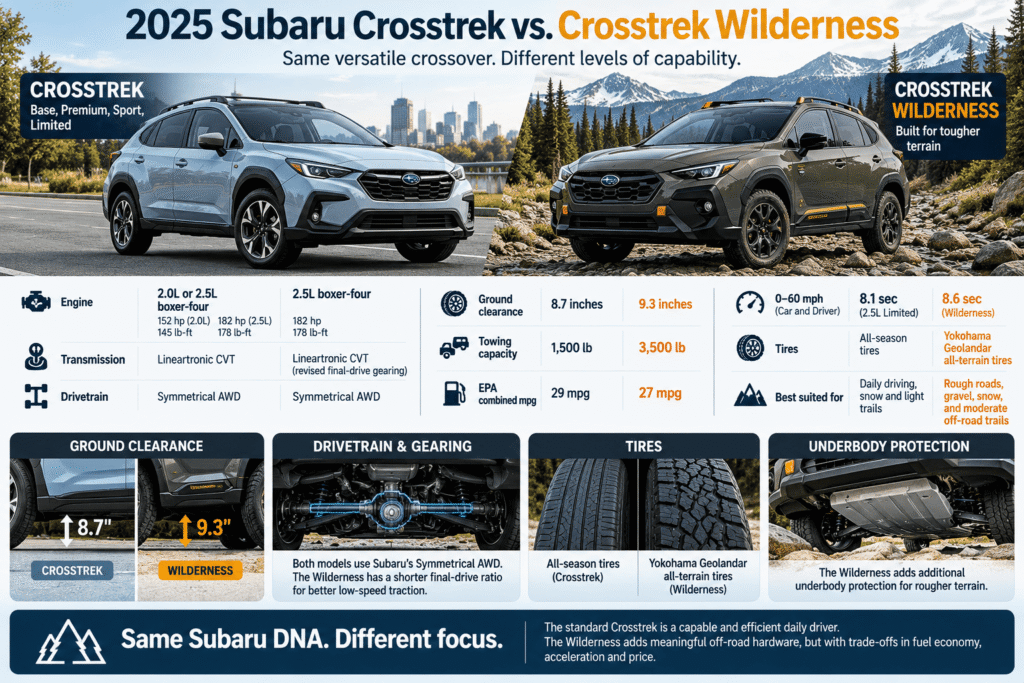
| Specification | 2.0L Crosstrek | 2.5L Crosstrek | Wilderness |
|---|---|---|---|
| Engine | 2.0L boxer-four | 2.5L boxer-four | 2.5L boxer-four |
| Horsepower | 152 hp | 182 hp | 182 hp |
| Torque | 145 lb-ft | 178 lb-ft | 178 lb-ft |
| Transmission | CVT | CVT | CVT with revised gearing |
| Drivetrain | AWD | AWD | AWD |
| Ground clearance | 8.7 inches | 8.7 inches | 9.3 inches |
| EPA combined economy | 29 mpg | 29 mpg | 27 mpg |
| Maximum towing capacity | 1,500 lb | 1,500 lb | 3,500 lb |
The 2.0-liter engine is limited to the base trim. Premium, Sport, Limited, and Wilderness models receive the 2.5-liter engine, making the stronger powertrain accessible without requiring expensive equipment packages.
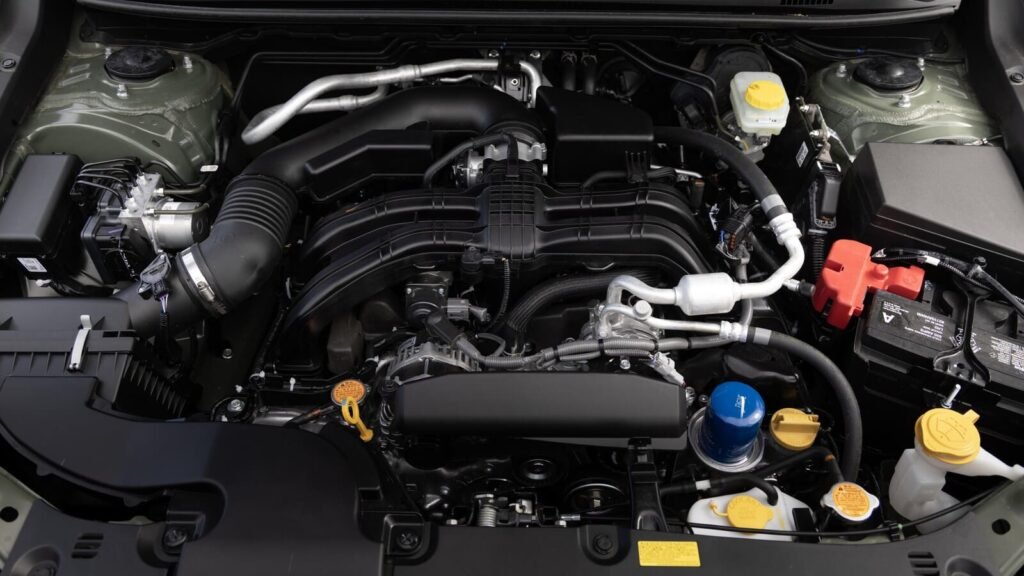
Boxer Engines: Does Subaru’s Layout Make a Difference?
Subaru’s horizontally opposed four-cylinder engine places its cylinders on either side of the crankshaft, creating a low-profile layout with inherent cancellation of certain reciprocating forces.
Its lower mounting position can benefit vehicle dynamics, but suspension geometry, tires, weight distribution, and chassis rigidity remain equally important. Engine refinement also depends on combustion characteristics, mounting, and drivetrain calibration.
The configuration introduces maintenance compromises, particularly reduced access to laterally positioned spark plugs and cylinder heads. The boxer engine offers genuine engineering advantages, but neither superior handling nor long-term reliability follows automatically from its layout.
2.0L vs. 2.5L: The Performance Difference Matters
The 152-hp 2.0-liter Crosstrek struggles with highway merging, overtaking, and steep grades. Car and Driver recorded 9.5 seconds to 60 mph, compared with approximately 8.1 seconds for the 182-hp 2.5-liter. The larger engine also produces 178 lb-ft of torque versus 145 lb-ft, reducing the need for high engine speeds during acceleration.
Crucially, both conventional powertrains achieve an EPA-estimated 29 mpg combined. The 2.5-liter is the stronger choice for most buyers, delivering substantially better acceleration and flexibility without a meaningful fuel-economy penalty.
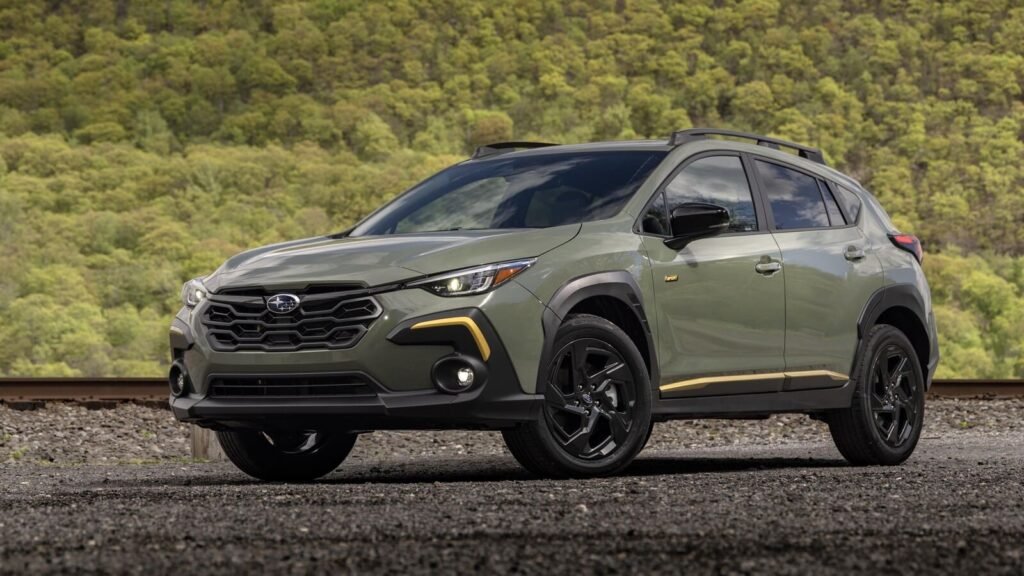
Symmetrical AWD: More Than a Marketing Name?
Every 2025 Crosstrek features Subaru’s Symmetrical AWD, built around a longitudinal powertrain rather than the transverse layout common among small crossovers. Electronically controlled torque distribution responds to changing traction, supported by stability and individual-wheel traction controls. However, drivetrain symmetry alone does not guarantee superior traction; AWD calibration, available wheel torque, and tire grip are more decisive.
The Crosstrek’s practical advantage comes from combining this drivetrain with generous ground clearance and suspension tuning suited to uneven surfaces.
Where AWD Actually Helps
The Crosstrek’s standard AWD improves traction on snow, gravel, wet grass, and loose dirt by distributing torque between the axles to limit wheelspin. However, AWD primarily improves acceleration and forward traction, not braking or cornering grip. A FWD vehicle on proper winter tires can outperform an AWD crossover on unsuitable all-season tires in those conditions.
Subaru’s AWD is a genuine advantage on variable surfaces, but tire selection ultimately determines how effectively that traction can be used.
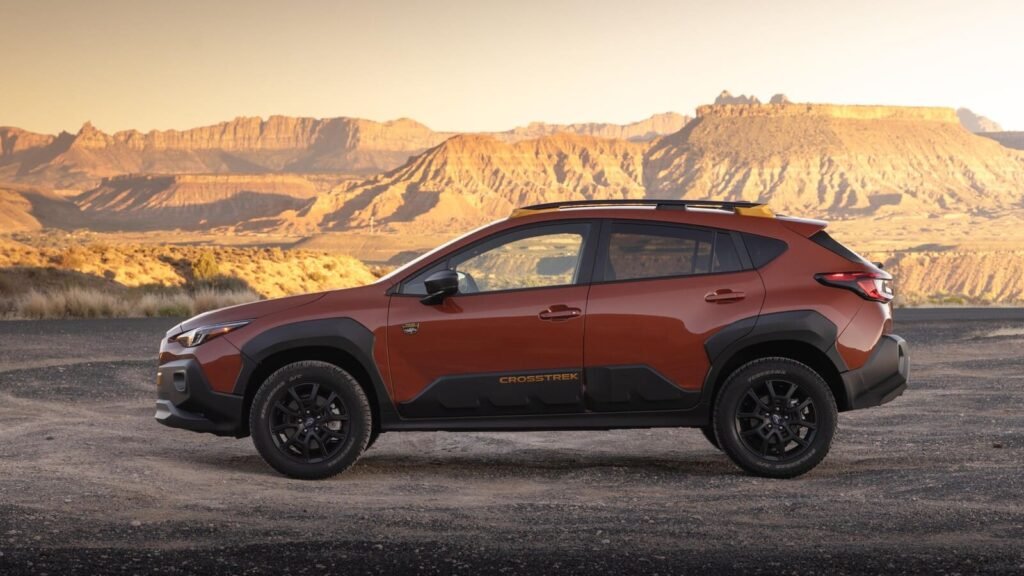
Crosstrek Wilderness: Genuine Off-Road Engineering
The Crosstrek Wilderness introduces genuine mechanical upgrades beyond cosmetic cladding. Ground clearance increases from 8.7 to 9.3 inches, complemented by Yokohama Geolandar all-terrain tires, revised suspension, and additional underbody protection.
A shorter final-drive ratio increases wheel torque at low speeds, improving control and climbing ability on loose or uneven surfaces. Revised front and rear bodywork also improves obstacle clearance. These modifications provide meaningful off-road advantages, although their value depends on the terrain regularly encountered.
Ground Clearance Isn’t Everything
Ground clearance alone does not determine off-road capability. Approach, departure, and breakover angles govern obstacle clearance, while suspension articulation and traction-control calibration influence progress when individual wheels lose traction.
The Crosstrek Wilderness improves several of these characteristics but retains independent suspension, unibody construction, and a CVT without low-range gearing. It is therefore well suited to rough access roads, snow, gravel, and moderate trails, but less capable on demanding rock-crawling routes or terrain involving repeated underbody impacts.
The Wilderness Trade-Off
The Wilderness’s additional capability comes at a measurable cost. Car and Driver recorded 8.6 seconds to 60 mph, versus 8.1 seconds for the 2.5-liter Limited. Its all-terrain tires and shorter gearing also reduce highway efficiency. In Car and Driver’s 75-mph test, the Wilderness achieved 27 mpg versus 35 mpg, equivalent to approximately $330 in additional annual fuel costs at 12,000 highway miles and $3.25 per gallon.
Combined with its higher purchase price, the Wilderness makes sense for buyers who regularly exploit its off-road capability, rather than those primarily driving on pavement.
Ride Quality, Handling, and Highway Refinement
The Crosstrek’s compliant suspension and generous travel absorb damaged pavement and uneven terrain effectively, while predictable steering provides reassuring highway stability. However, it lacks the Mazda CX-30’s steering precision and responsiveness. The 2.5-liter engine improves acceleration, but the CVT’s tendency to sustain high engine speeds under load limits driving refinement.
Highway wind and road noise remain noticeable despite the third-generation model’s improved structural rigidity and insulation.
The Wilderness introduces further compromises: its all-terrain tires improve off-road traction but can increase road noise and reduce steering precision. For predominantly paved-road driving, the conventional Crosstrek offers the better balance of comfort, handling, and refinement.
Interior, Technology, and Practicality
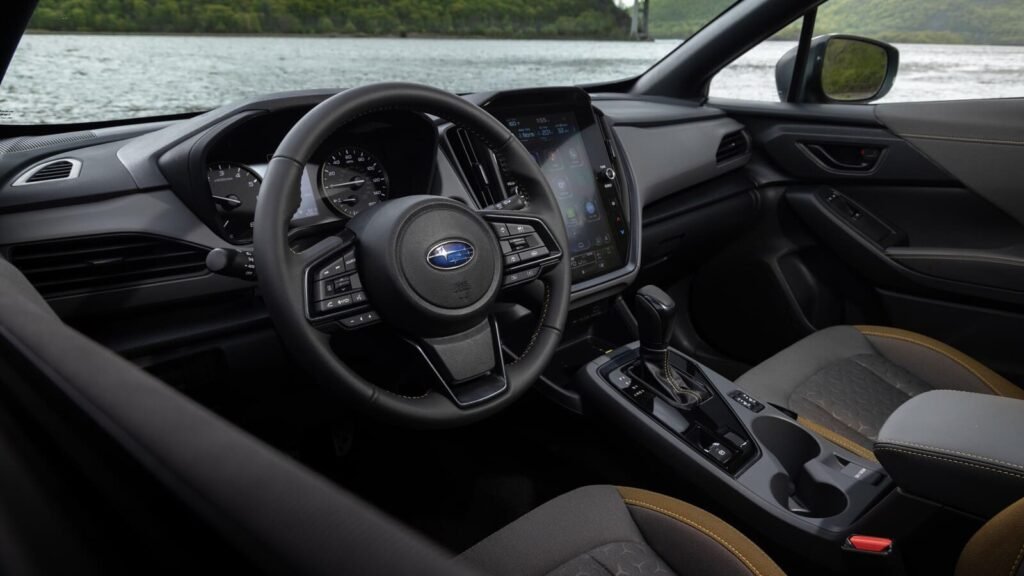
The Crosstrek prioritizes durability, practicality, and outward visibility over luxury. Its upright seating position and generous glass area provide better sightlines than many more aggressively styled crossovers. Most trims feature an 11.6-inch vertical touchscreen, while the base model retains dual 7-inch displays. The larger system integrates vehicle settings, climate controls, and wireless Apple CarPlay and Android Auto.
Although modern, the touchscreen-dependent climate controls are less convenient than dedicated physical switches, particularly while driving.
Passenger and Cargo Space
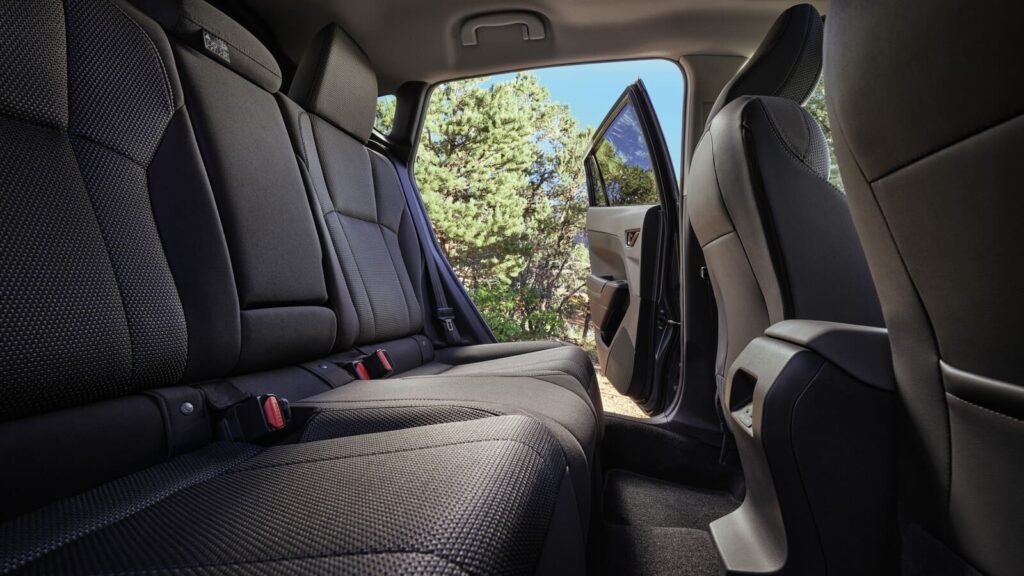
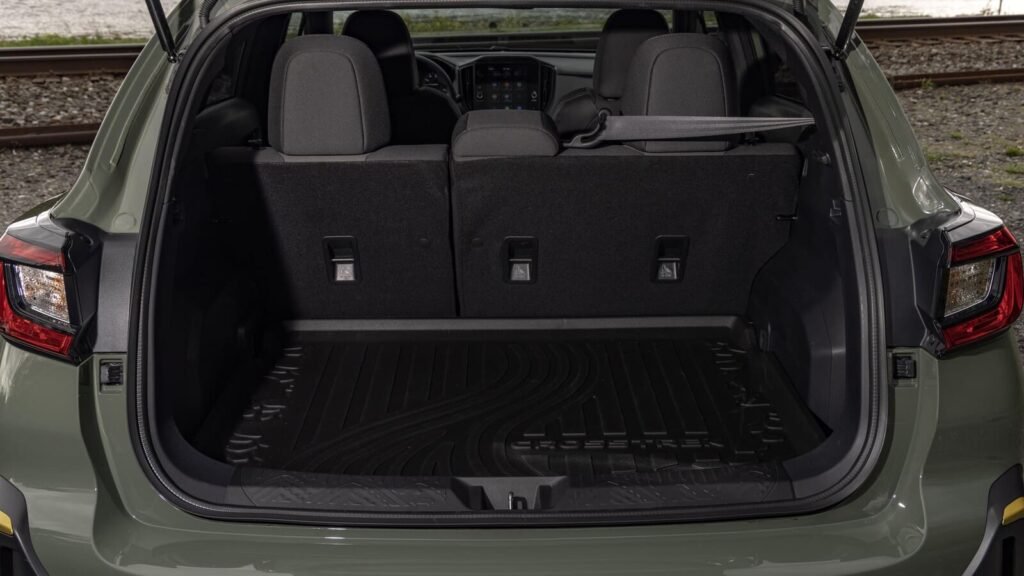
The Crosstrek seats five, although rear-seat space is better suited to shorter journeys than extended travel with adults. Cargo capacity measures 19.9 cubic feet behind the rear seats and 54.7 cubic feet with them folded, increasing marginally to 20.0 and 54.9 cubic feet in the Wilderness.
These figures trail larger compact SUVs such as the Honda CR-V, but the Crosstrek’s shorter body improves urban maneuverability and parking convenience. Its packaging particularly suits individuals and smaller households prioritizing all-weather capability over maximum passenger and cargo space.
Safety and Driver Assistance
The 2025 Crosstrek includes Subaru’s EyeSight system, providing adaptive cruise control, automatic emergency braking, and lane-departure prevention. Blind-spot monitoring and rear automatic braking are available on selected trims.
In IIHS testing, the Crosstrek earned Good in small-overlap frontal protection, Marginal in the updated moderate-overlap test, and Acceptable in the updated side-impact evaluation. Its standard pedestrian crash-prevention system also received a Good rating.
The updated moderate-overlap test places greater emphasis on rear-occupant protection, exposing weaknesses that older procedures could overlook. The Crosstrek offers comprehensive standard driver assistance, but its crash-test performance is not uniformly class-leading under current IIHS standards.
Reliability and Ownership Costs
The third-generation Crosstrek retains familiar Subaru mechanical architecture, including naturally aspirated boxer engines, a continuously variable transmission, and standard AWD. These systems have extensive production histories, but their durability depends on the specific generation, component revisions, and operating conditions.
The CVT deserves particular attention because its repair costs can be substantial if major internal components fail. However, the transmission’s design alone does not establish that the 2025 model is unreliable. Similarly, Subaru’s boxer engines should not be judged exclusively by problems associated with much older engine families.
The more relevant concerns involve documented issues affecting the current generation, maintenance requirements, and the availability of reliable model-specific ownership data. Standard AWD also introduces additional drivetrain components compared with a basic front-wheel-drive crossover, although it provides capability that many buyers specifically value.
Our Subaru Crosstrek Reliability Analysis examines these ownership considerations in greater detail.
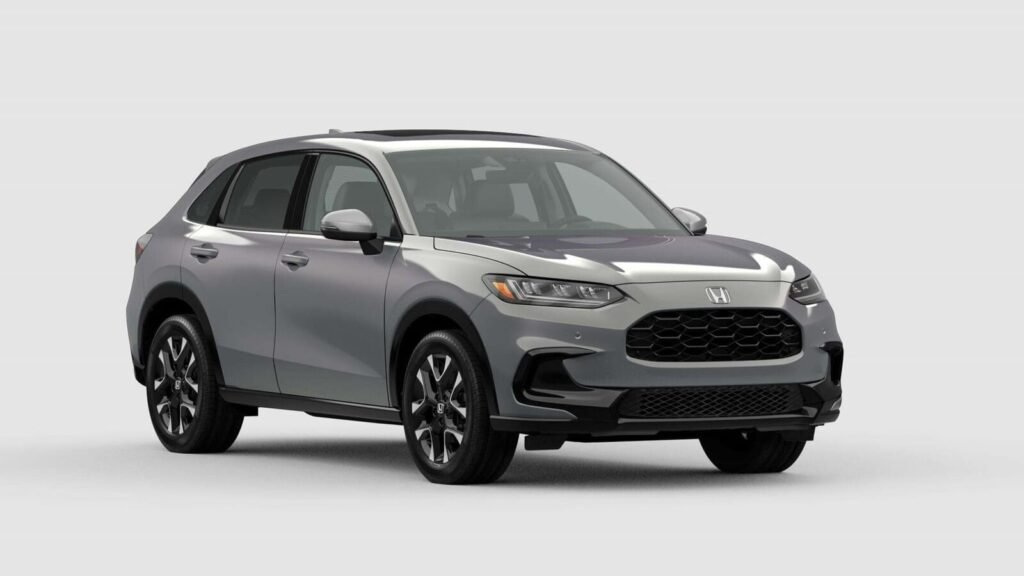
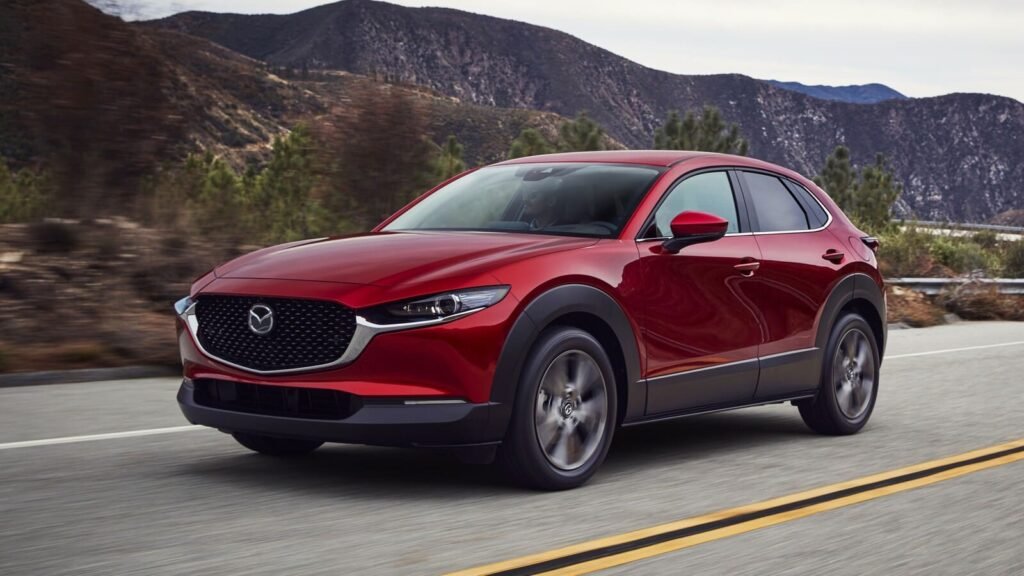
Subaru Crosstrek vs. Toyota Corolla Cross, Honda HR-V, and Mazda CX-30
The Crosstrek’s value becomes clearer when compared with its closest alternatives.
| Model | Main advantage | Main limitation |
|---|---|---|
| Subaru Crosstrek | Standard AWD, clearance, rough-road capability | Modest acceleration and cargo capacity |
| Toyota Corolla Cross | Efficiency and available hybrid powertrain | Less ground clearance and trail-oriented capability |
| Honda HR-V | Interior packaging and everyday usability | Modest engine performance |
| Mazda CX-30 | Handling, refinement, and available turbocharged performance | Tight rear seating and limited cargo space |
Toyota Corolla Cross: The Efficiency Alternative
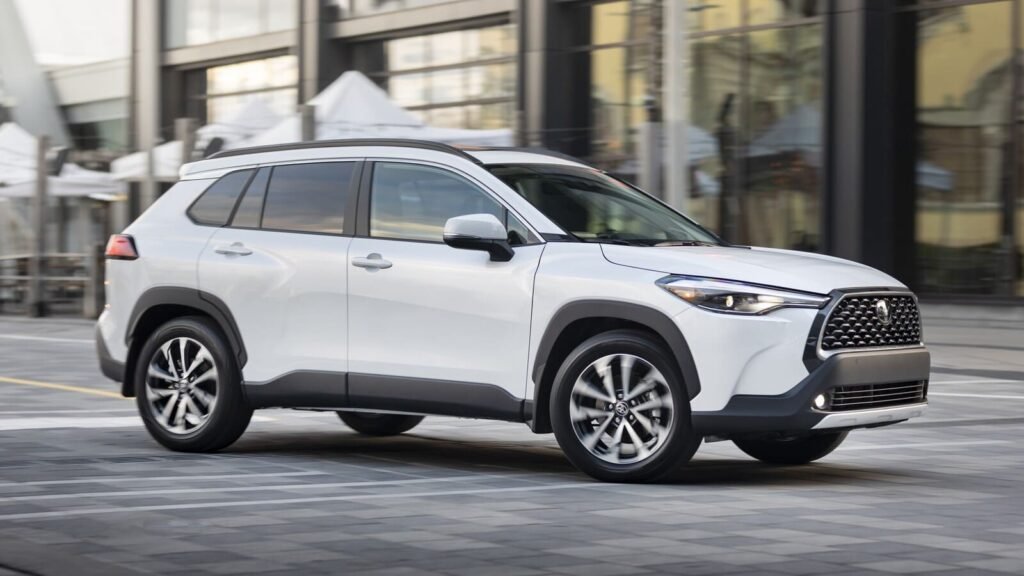
The Corolla Cross is a compelling alternative for buyers prioritizing fuel economy and conventional compact-SUV practicality. Its available hybrid powertrain offers substantially better efficiency than the gasoline Crosstrek, particularly in urban driving.
However, the Toyota’s lower ground clearance and less trail-oriented suspension make it a different proposition for drivers regularly encountering rough roads.
Honda HR-V: Better Everyday Packaging
The HR-V emphasizes passenger accommodation, interior usability, and predictable road manners. Its 2.0-liter engine produces 158 horsepower, making it broadly comparable to the base Crosstrek in performance. However, Honda’s packaging provides a more spacious everyday environment, while Subaru’s standard AWD and greater clearance establish a clearer advantage on challenging surfaces.
Mazda CX-30: The Driver’s Choice
The CX-30 offers more precise handling, stronger available performance, and a more sophisticated interior presentation. Its standard 2.5-liter engine also produces more power than the Crosstrek’s naturally aspirated alternatives.
However, the Mazda’s rear seating and cargo capacity are relatively restricted, while its lower ground clearance limits its suitability for rougher terrain. The Crosstrek’s strongest competitive advantage is not outright performance, efficiency, or interior space. It is the combination of compact dimensions, standard AWD, and useful rough-road capability.
Which 2025 Subaru Crosstrek Should You Buy?
Best Overall: Crosstrek Premium
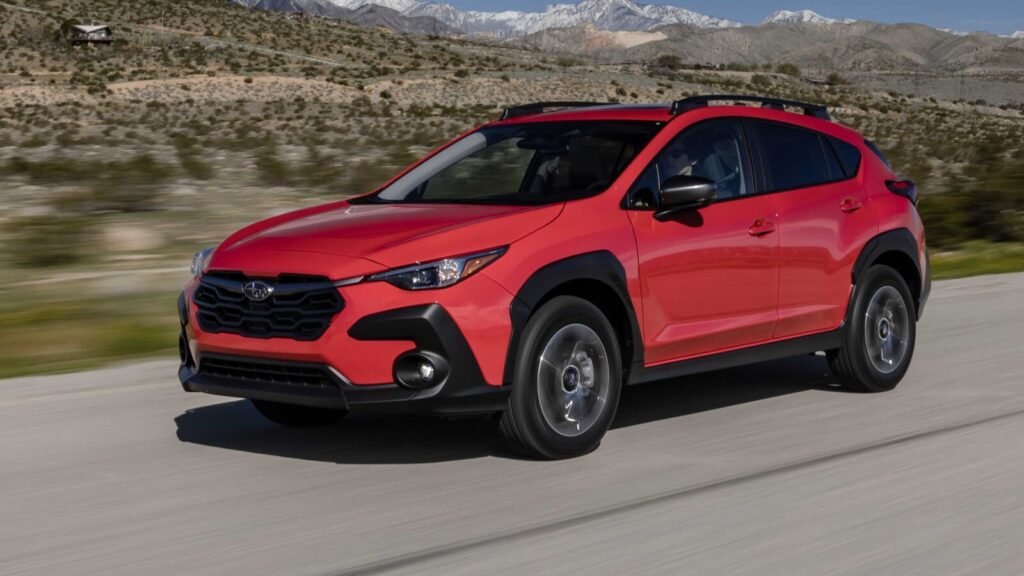
The Premium offers the best balance of price and performance, combining the 2.5-liter engine with Subaru’s core AWD capability, but lacks the comfort and convenience features of higher trims.
Best for Comfort and Equipment: Crosstrek Limited
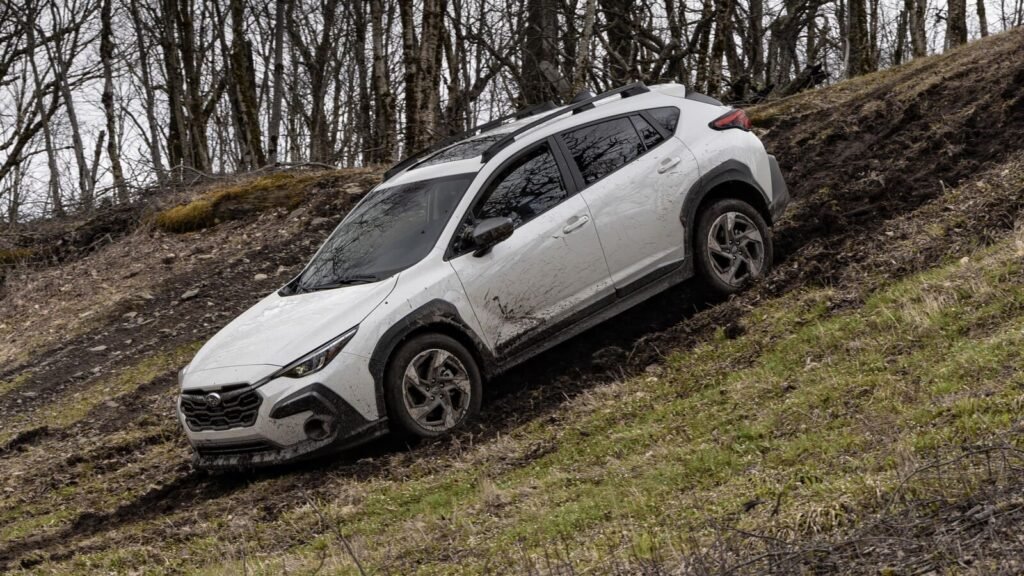
The Crosstrek Limited offers upgraded interior materials and additional comfort features, but its higher price brings no performance advantage over the Premium or Sport.
Best for Rough Roads: Crosstrek Wilderness
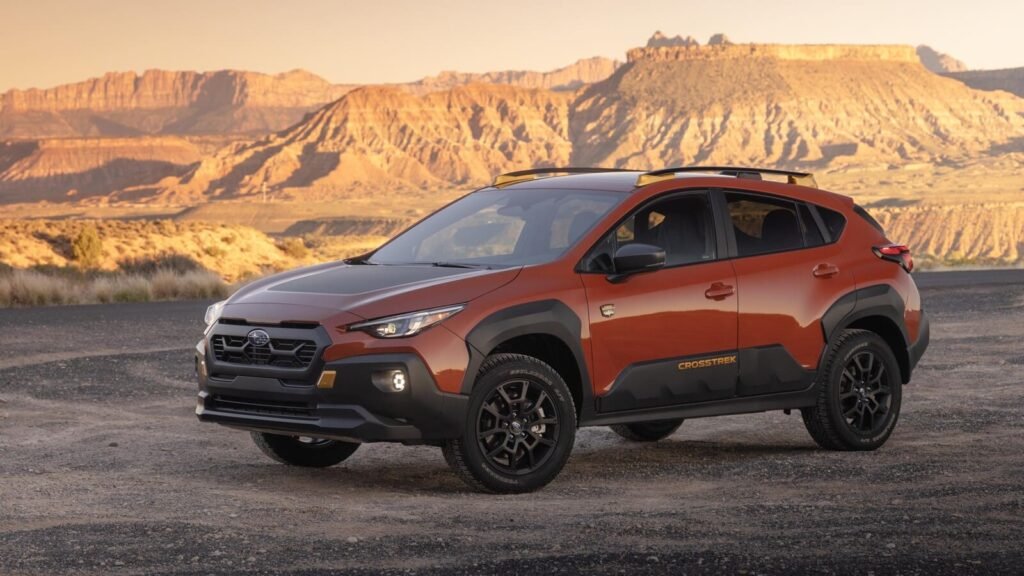
The Crosstrek Wilderness offers greater off-road capability through increased ground clearance, all-terrain tires, and shorter gearing, but sacrifices fuel efficiency and highway refinement.
Best Budget Choice: Base Crosstrek
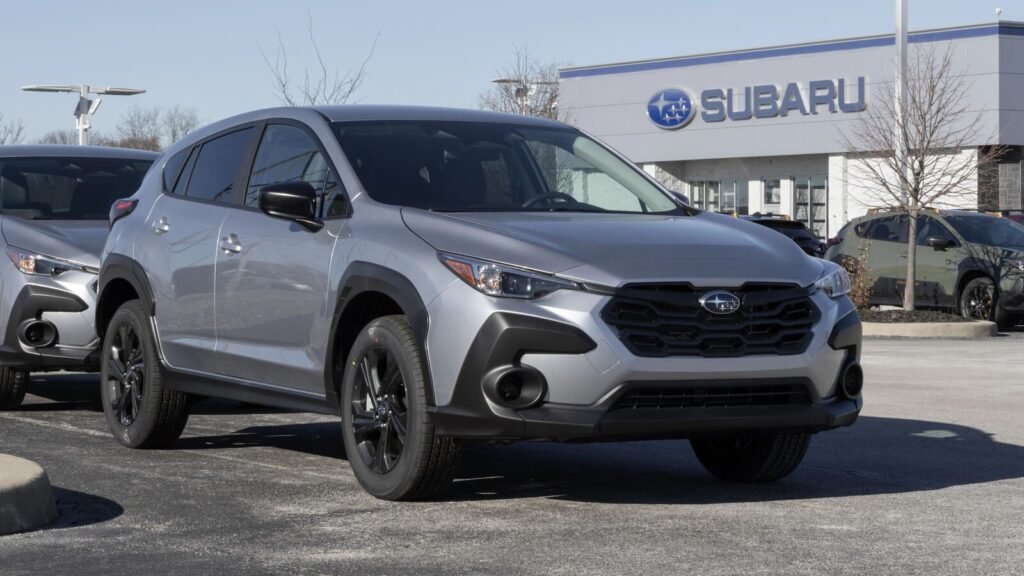
The base Crosstrek delivers Subaru’s core AWD and chassis advantages at the lowest price, but its 152-hp engine limits highway acceleration. With little difference in fuel economy.
Final Verdict: Is the 2025 Subaru Crosstrek Worth Buying?
The 2025 Subaru Crosstrek is a compelling small crossover for buyers who regularly encounter snow, gravel, or uneven roads. Its standard AWD, generous ground clearance, and compliant suspension deliver genuine capability without sacrificing everyday practicality.
However, competitors excel elsewhere. The Toyota Corolla Cross Hybrid offers superior efficiency, the Honda HR-V provides more interior space, and the Mazda CX-30 delivers sharper driving dynamics. The Wilderness extends the Crosstrek’s off-road capability but introduces compromises unnecessary for predominantly paved-road use.
Our recommendation is the 2025 Crosstrek Premium with the 182-hp 2.5-liter engine. It combines Subaru’s principal mechanical advantages with substantially better performance than the base model at a reasonable price. Ultimately, the Crosstrek’s strongest justification is its capability—not its superiority as an all-around small SUV.
- Chinese Cars Are Winning the Technology Race—But Will They Last?
- 2024 Toyota Camry Reliability: Is It Toyota’s Smartest Buy?
- 2023 Toyota Camry Reliability: Is Paying More Really Worth It?
- 10 Most Reliable Used Cars in 2026: Specific Years to Buy
- 2022 Toyota Camry Reliability: Is It the Best Used Camry?
- Car Reliability Ratings Explained: Which Ones Can You Actually Trust?
*Disclaimer: This website provides automotive content for informational purposes only and should not be considered professional advice. While we strive for accuracy, we do not guarantee the reliability or suitability of any vehicle or product mentioned—always conduct your own research before making purchasing decisions. Additionally, some links on this site are affiliate links, meaning we may earn a commission if you make a purchase, at no extra cost to you.