
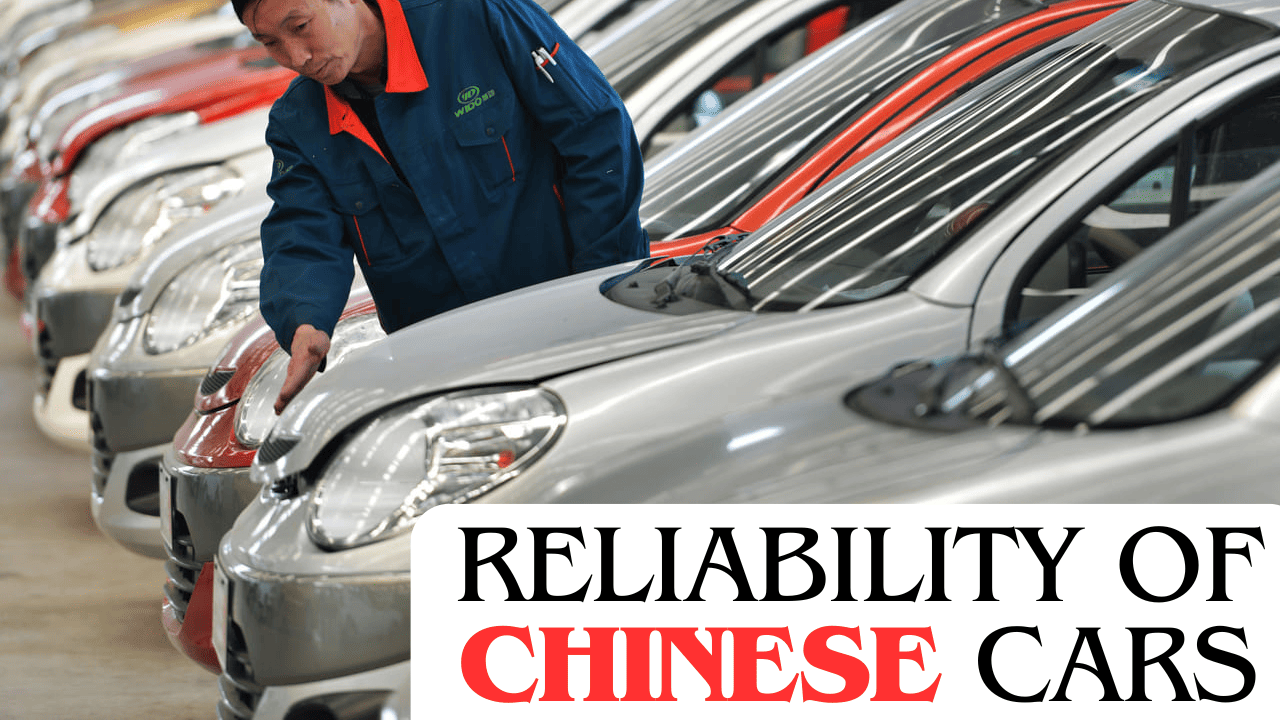
Ten years ago, dismissing Chinese cars as cheap and poorly built was common. In 2026, that assumption is increasingly difficult to defend. Chinese manufacturers now produce sophisticated EVs, competitive combustion cars and plug-in hybrids that can match established brands in technology, equipment and, increasingly, manufacturing quality.
But that still doesn’t answer the harder question: Are Chinese cars reliable?
The evidence points to a more interesting conclusion. Leading Chinese manufacturers have closed much of the quality gap, and some now perform extremely well during early ownership. What remains less certain is how today’s vehicles will behave after eight, ten or fifteen years.
| What we can reasonably say in 2026 | Evidence |
|---|---|
| Chinese cars are much better built than they once were | Strong |
| Leading Chinese brands can deliver competitive initial quality | Strong |
| All Chinese brands are equally reliable | False |
| Useful 1–4 year dependability evidence exists | Yes, but varies by market and powertrain |
| Toyota-like 10–15 year durability is proven | Not yet |
| Chinese EVs are inherently unreliable | Unsupported |
| Parts and service affect real-world dependability | Absolutely |
The distinction matters because initial quality, reliability and long-term durability are not the same thing.
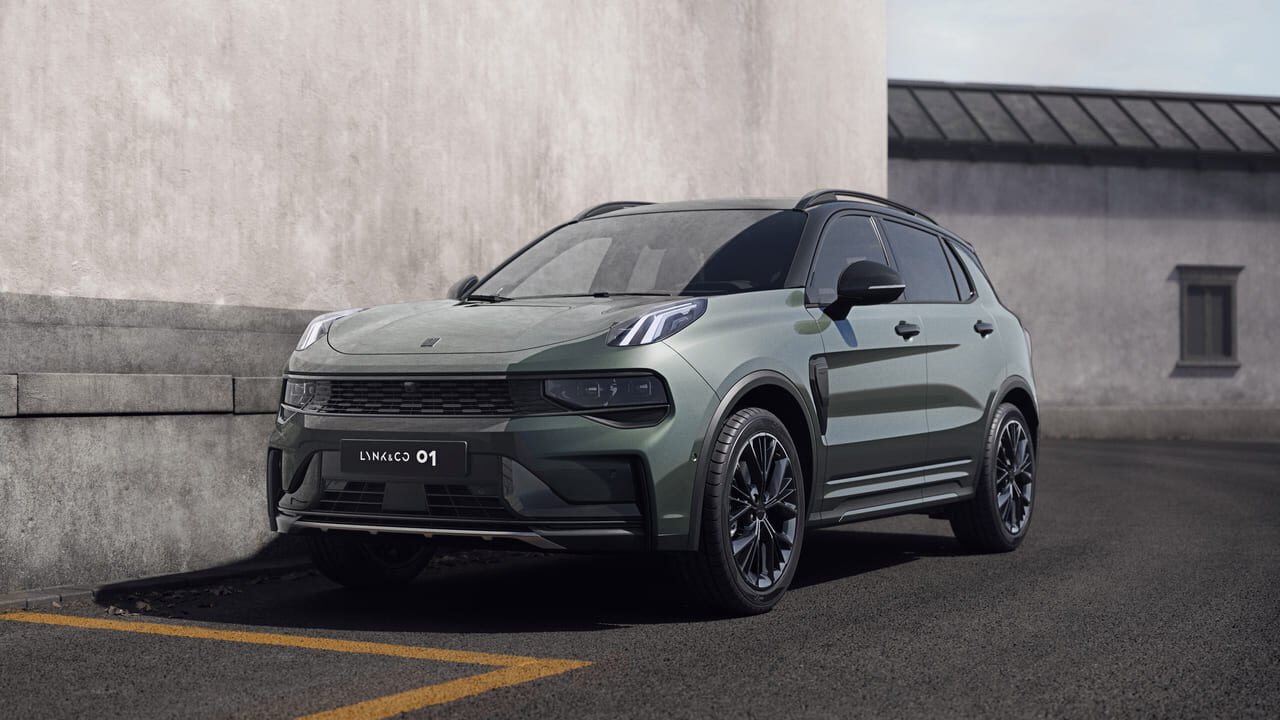
Chinese Cars Have Largely Closed the Initial-Quality Gap
J.D. Power’s 2026 China Initial Quality Study produced an important milestone. Chinese domestic brands averaged 218 problems per 100 vehicles (PP100), compared with 224 for international mass-market brands and 219 for premium brands. Lower is better.
For the first time, domestic Chinese manufacturers collectively outperformed international mass-market brands in that study. That is significant evidence that the old assumption—Chinese cars are automatically poorly assembled or badly engineered—has become outdated.
But initial quality measures problems experienced relatively early in ownership. It doesn’t tell us whether suspension components, batteries, interiors, electronics or powertrains will remain dependable after 100,000 miles. For that, we need older vehicles.
And That’s Where the Picture Changes
J.D. Power’s 2026 China Vehicle Dependability Study provides an interesting contrast. It examines owners of internal-combustion vehicles after 13 to 48 months.
| 2026 J.D. Power China study | Chinese domestic brands | International mass-market |
|---|---|---|
| Initial Quality Study | 218 PP100 | 224 PP100 |
| Vehicle Dependability Study | 201 PP100 | 191 PP100 |
The direction is more important than the raw numbers. Chinese brands now perform extremely competitively when new, while international brands still retain an advantage in J.D. Power’s longer-term dependability data.
Even that gap is narrowing. J.D. Power reported that malfunction-related problems among Chinese domestic brands declined notably in its 2026 dependability study.
Chery is particularly interesting: it ranked highest among Chinese domestic brands in the 2026 VDS at 181 PP100, after also ranking highest among Chinese domestic brands in J.D. Power’s 2025 Initial Quality Study.
So the evidence isn’t telling us that Chinese vehicles are unreliable, it is telling us that early quality has improved faster than we can establish long-term durability.
Stop Treating “Chinese Cars” as One Brand
There’s another problem with the question itself. BYD, Chery, Geely, SAIC and Great Wall don’t share one engineering department any more than Toyota, Nissan and Mitsubishi do.
| Manufacturer/group | Why it matters |
|---|---|
| BYD | Huge EV/PHEV scale and deep battery/power-electronics integration |
| Geely | Broad platform experience and extensive international engineering relationships |
| Chery | Large export footprint and increasingly useful dependability evidence |
| SAIC / MG | Extensive international exposure provides data outside China |
| Great Wall / Haval | Long experience with SUVs and growing overseas ownership base |
The gap between the strongest and weakest Chinese manufacturers may ultimately matter more than the gap between “Chinese” and “European” cars.
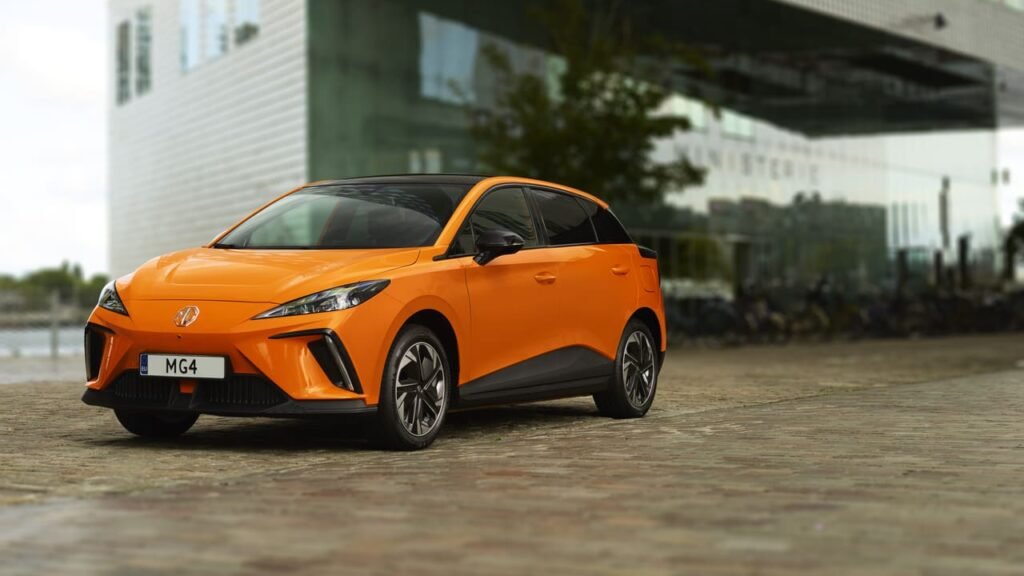
The MG4 EV, a modern Chinese-made model (SAIC’s MG), has impressed on price and features but suffered reliability glitches. In a 2024 UK survey, the MG brand scored worst overall and the MG4 was rated the least reliable electric vehicle with just 63.8% reliability
MG performing poorly in one European reliability survey, for example, cannot establish the reliability of BYD or Chery any more than a poor result from a European brand establishes the reliability of every German, Swedish or French vehicle, therefore nationality is becoming a weaker shortcut.
EVs Changed What Can Go Wrong
Chinese manufacturers also complicate traditional reliability comparisons because many of their most important products are electric. An EV removes several traditional failure points:
engine → fuel system → exhaust → conventional multi-speed transmission
But complexity hasn’t disappeared. It has moved. Modern EV reliability increasingly depends on the high-voltage battery, battery-management system, inverter, onboard charger, thermal management, charging communication, sensors and software. That creates an important distinction.
A Chinese EV could potentially avoid the oil leaks, timing-system failures or transmission problems associated with combustion vehicles while developing completely different problems involving charging, software or electronic modules. Fewer moving parts does not mean nothing can fail.
This is also why technological leadership shouldn’t automatically be interpreted as proof of long-term engineering maturity. We examine that question separately in [Chinese Cars Are Winning the Technology Race. But Are We Confusing Innovation With Engineering Maturity?].
The Missing Ingredient Is Time
This is the biggest limitation in almost every Chinese-car reliability debate.
Toyota has vehicles that have accumulated hundreds of thousands of miles across multiple generations and decades. Mechanics know their aging patterns. Independent parts exist. Used components are plentiful. Common failures have been documented repeatedly.
A four-year-old Chinese EV cannot provide ten years of durability evidence, no matter how sophisticated its engineering appears. But that doesn’t make it unreliable. It makes its long-term reliability unproven—an important distinction.
Chinese automakers can accelerate engineering development, improve manufacturing, and learn from millions of vehicles already on the road. What they cannot accelerate however is time. Engineering can mature quickly; but reliability evidence still has to accumulate. or in simple words: cars have to age!
Reliability Doesn’t End With the Vehicle
There’s another factor traditional reliability surveys don’t always capture well enough: what happens after something breaks.
Imagine one car suffers two minor failures over five years, but both are repaired the next day. Another suffers one electronic-module failure, but the replacement part takes six weeks to arrive.
Which owner experienced the more dependable vehicle?
For an emerging brand entering a new market, the answer may depend as much on the support network as the factory.
| Reliability layer | What buyers should investigate |
|---|---|
| Mechanical | Powertrain, suspension and cooling |
| Electronics | Infotainment, ADAS, modules and software |
| EV systems | Battery, charging and thermal management |
| Parts | Local stock and realistic delivery times |
| Service | Dealer coverage and technician capability |
| Warranty | Coverage and ability to perform repairs quickly |
| Resale | Market confidence after warranty expires |
This is why the same Chinese vehicle can be a sensible purchase in one country and a considerably riskier one somewhere else.
A strong distributor with stocked parts, trained technicians and several service centers materially changes the ownership equation.
So, Are Chinese Cars Reliable?
The evidence supports one conclusion confidently:
The era when Chinese cars could automatically be dismissed as poorly built is over.
J.D. Power’s latest Chinese-market data shows domestic manufacturers competing directly with established international brands in initial quality, while brands such as Chery are also performing increasingly well in shorter-term dependability studies.
What we don’t yet have is equivalent evidence across the full vehicle lifespan. That matters because an impressive first three years doesn’t prove what happens after ten years, 120,000 miles, several software generations and two or three owners.
Buyers therefore shouldn’t ask simply, “Are Chinese cars reliable?”
Ask which manufacturer built the car, which platform and powertrain it uses, how long that technology has been in service, what reliability evidence exists in your market, and—critically—who will supply the parts and repair it five years from now.
Chinese manufacturers have already demonstrated that they can build highly competitive vehicles.
The next test is much less glamorous.
How well do those vehicles age?
We are finally starting to get that evidence. But there is no shortcut.
Engineering can accelerate. Reliability evidence cannot.
Feel free to take your time browsing, and don’t forget to bookmark our homepage for updates down the line!
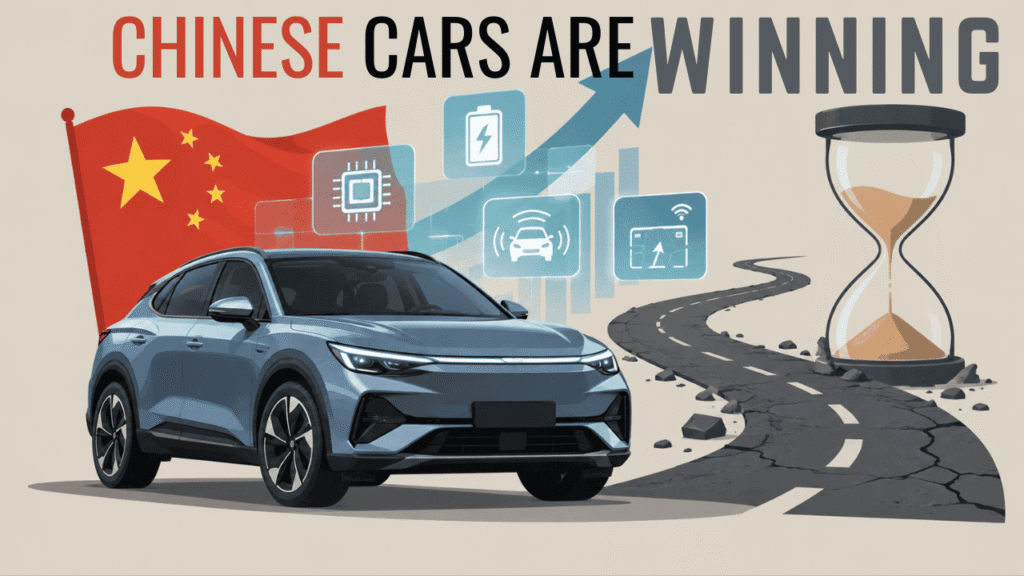
- Chinese Cars Are Winning the Technology Race—But Will They Last?
- 2024 Toyota Camry Reliability: Is It Toyota’s Smartest Buy?
- 2023 Toyota Camry Reliability: Is Paying More Really Worth It?

- 10 Most Reliable Used Cars in 2026: Specific Years to Buy

- 2022 Toyota Camry Reliability: Is It the Best Used Camry?

- Car Reliability Ratings Explained: Which Ones Can You Actually Trust?
*Disclaimer: This website provides automotive content for informational purposes only and should not be considered professional advice. While we strive for accuracy, we do not guarantee the reliability or suitability of any vehicle or product mentioned—always conduct your own research before making purchasing decisions. Additionally, some links on this site are affiliate links, meaning we may earn a commission if you make a purchase, at no extra cost to you.