
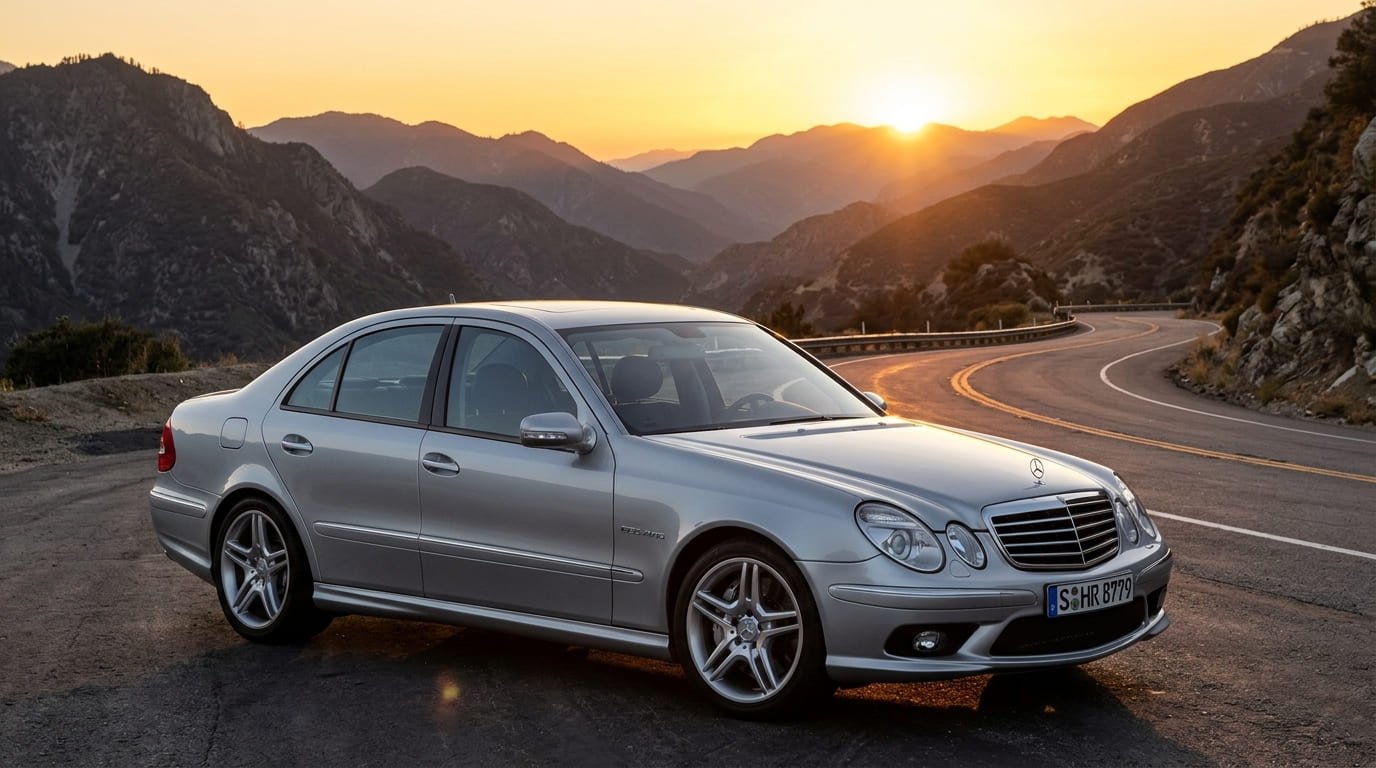
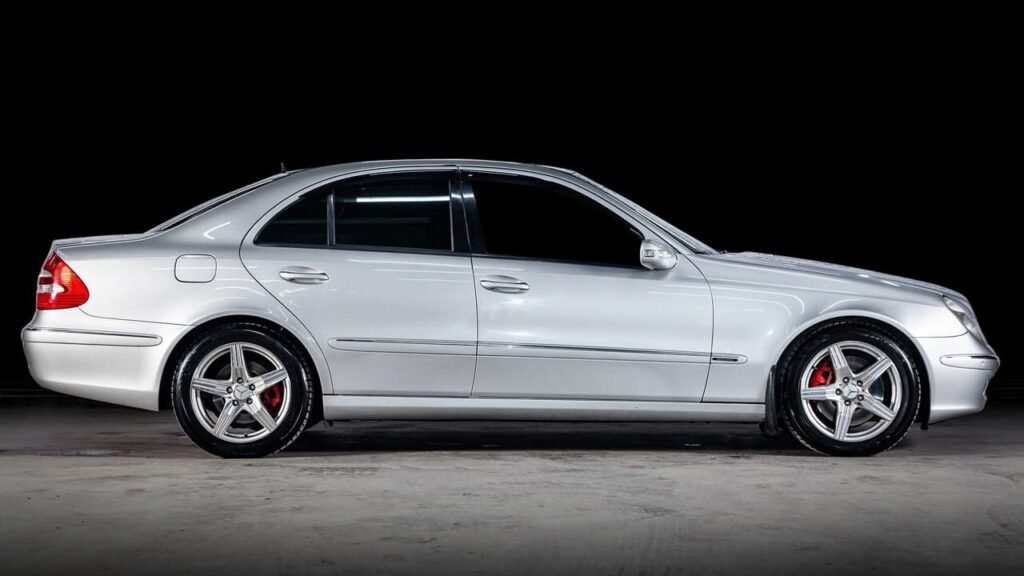
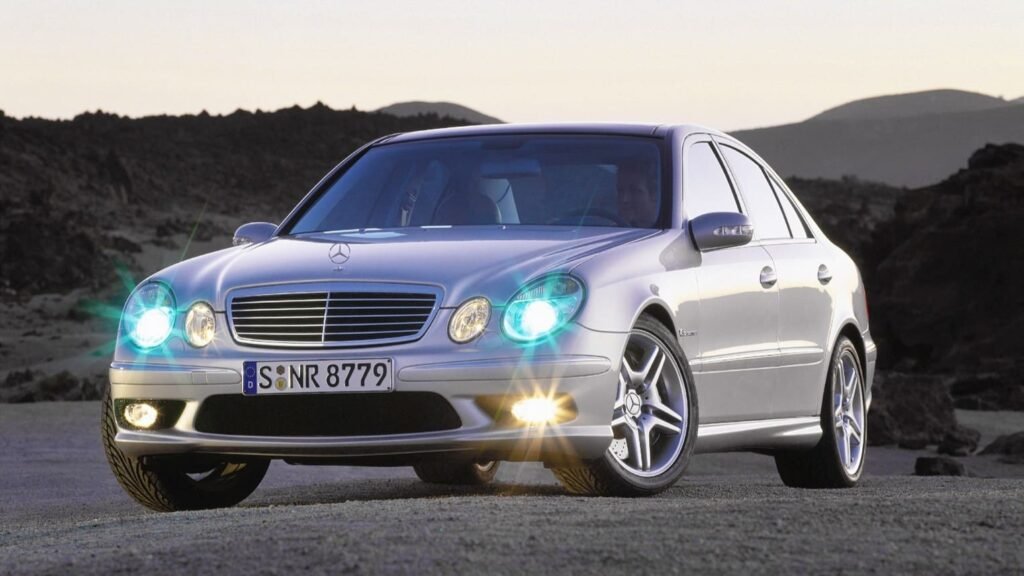
The Mercedes-Benz E55 AMG (W211) pairs a remarkably durable supercharged V8 and five-speed automatic with 469 hp and 516 lb-ft of torque. Its drivetrain remains one of AMG’s strongest, but that doesn’t make the entire car equally dependable.
Two decades later, air suspension, electrohydraulic brakes and aging electronics can cost more to maintain than the engine itself. So, is the E55 AMG reliable? Mechanically, yes—but buying one safely depends on its condition, service history and your tolerance for expensive repairs.
W210 vs. W211 E55 AMG: Two Different Cars
Before examining reliability, it’s important to distinguish between the two generations sold in the United States.
| Specification | W210 E55 AMG | W211 E55 AMG |
|---|---|---|
| U.S. model years | 1999–2002 | 2003–2006 |
| Engine | 5.4L naturally aspirated M113 V8 | 5.4L supercharged M113K V8 |
| Horsepower | 349 hp | 469 hp |
| Torque | 391 lb-ft | 516 lb-ft |
| Transmission | 5-speed automatic | 5-speed automatic |
| Main reliability concern | Corrosion and age-related deterioration | Suspension, SBC brakes, and supporting electronics |
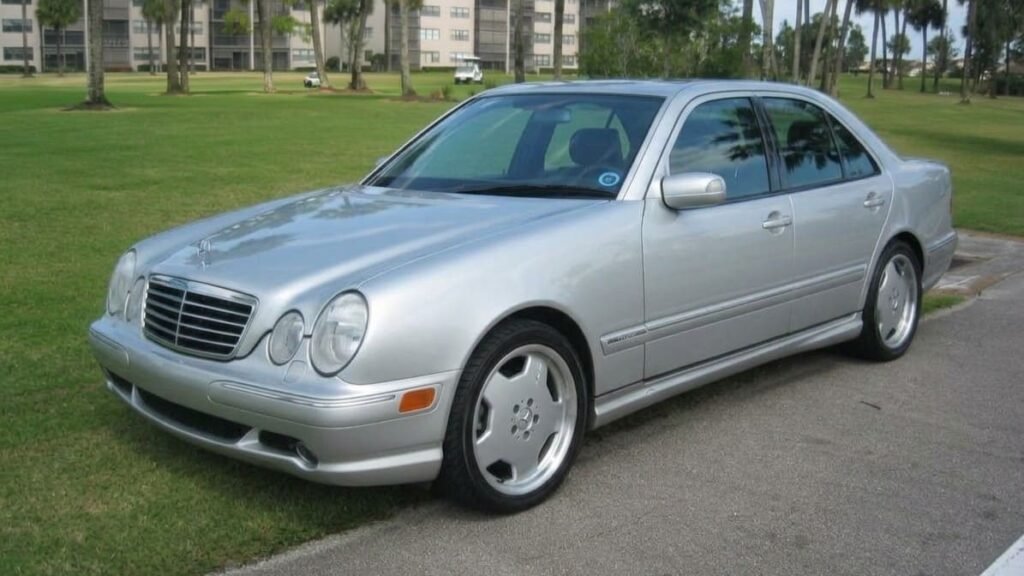
Choose the W210 for simplicity and lower mechanical complexity, or the W211 for performance and everyday usability. Either way, condition and maintenance history matter more than generation alone.
The W210 E55 is mechanically simpler, with a naturally aspirated M113 V8 and conventional suspension and brakes. The W211 E55 delivers substantially greater performance and refinement, but its supercharger, air suspension, and electrohydraulic braking system introduce additional repair risks.
Why the M113K V8 Is So Reliable
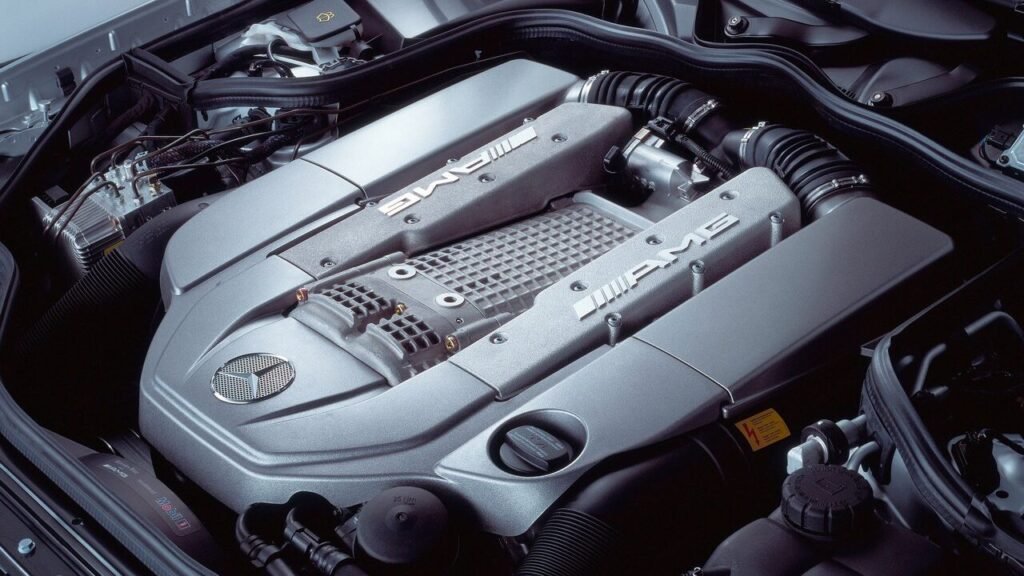
The W211 E55 AMG’s 5.4-liter supercharged M113K V8 combines proven engineering with components designed for high output.
Its single-overhead-camshaft, three-valve-per-cylinder architecture reduces valvetrain complexity, while port injection avoids the intake-valve carbon buildup associated with some direct-injection engines.
Despite producing 516 lb-ft of torque, the M113K benefits from reinforced internals and the maturity of the established M113 engine family. Its durability comes from engineering designed to withstand substantial mechanical loads—not simply from having fewer components than newer AMG engines.
The Supercharger Adds Complexity, but Not Necessarily Fragility
The M113K’s mechanical supercharger delivers immediate boost without the extreme exhaust temperatures experienced by turbochargers. However, its drive belt, charge-air cooling system, and electric circulation pump introduce additional maintenance requirements.
The engine itself is exceptionally robust, but its supporting systems can become expensive with age. For buyers prioritizing simplicity, the naturally aspirated M113-powered C55, CLK55, and W210 E55 are worth considering. See our guide to the most reliable Mercedes-AMG models.
The 722.6 Transmission: One of the E55’s Greatest Strengths
The E55 AMG retained Mercedes’ proven 722.6 five-speed automatic rather than adopting the newer 7G-Tronic. Its established design and torque-handling capability made it well suited to the M113K’s 516 lb-ft output.
Although generally durable, electrical connector leaks, conductor-plate faults, and neglected fluid servicing can cause shifting problems. During inspection, check for prompt Drive and Reverse engagement, smooth cold and warm shifts, and transmission fault codes.
The 722.6 is a major reliability advantage, provided it has been properly maintained.
Five Common Mercedes E55 AMG Problems
1. Intercooler Pump Failure and Heat Soak
The M113K’s electric intercooler circulation pump can fail with age, reducing charge-air cooling and causing the engine to lose power as intake temperatures rise. A typical symptom is strong initial acceleration followed by reduced performance during repeated pulls, even when the main engine coolant temperature remains normal.
Before blaming the supercharger, have an AMG specialist check pump operation, coolant circulation, and intake temperatures. This is particularly important in hot climates and modified E55s running higher boost.
2. Airmatic Suspension Failure
The W211 E55’s AMG-tuned Airmatic suspension delivers excellent comfort and body control, but aging air springs, compressors, and valves can become expensive to replace. Sagging after parking or excessive compressor operation may indicate air leaks. Replacing the compressor without fixing the leak risks another failure.
Before buying, verify that the suspension maintains its height, adjusts correctly, and has no stored fault codes. A healthy Airmatic system is a major advantage; a neglected one can quickly erase the savings of a cheap E55.
3. Sensotronic Brake Control (SBC)
The W211 E55’s Sensotronic Brake Control (SBC) uses electronically controlled hydraulic pressure, adding complexity compared with conventional braking systems. Pump, hydraulic, or electronic faults can trigger serious brake warnings that require immediate attention.
Mercedes has offered extended coverage for certain SBC units, but eligibility must be verified by VIN and market.
Documented SBC repairs are a positive, although the entire braking system still requires inspection. Servicing also demands proper diagnostic equipment and safety procedures because the system can pressurize automatically.
4. Engine Sensors, Ignition Components, and Oil Leaks
Despite its strong internals, the M113K can develop crankshaft-position sensor failures, ignition problems, and oil leaks as it ages. Its twin-spark design also requires 16 spark plugs, increasing routine servicing costs.
These problems are generally manageable, but neglected maintenance can quickly add up. During inspection, check for rough idle, misfires, oil leaks, deteriorated wiring, and poorly executed repairs. A durable engine still needs consistent maintenance.
5. Aging Electronics and Interior Equipment
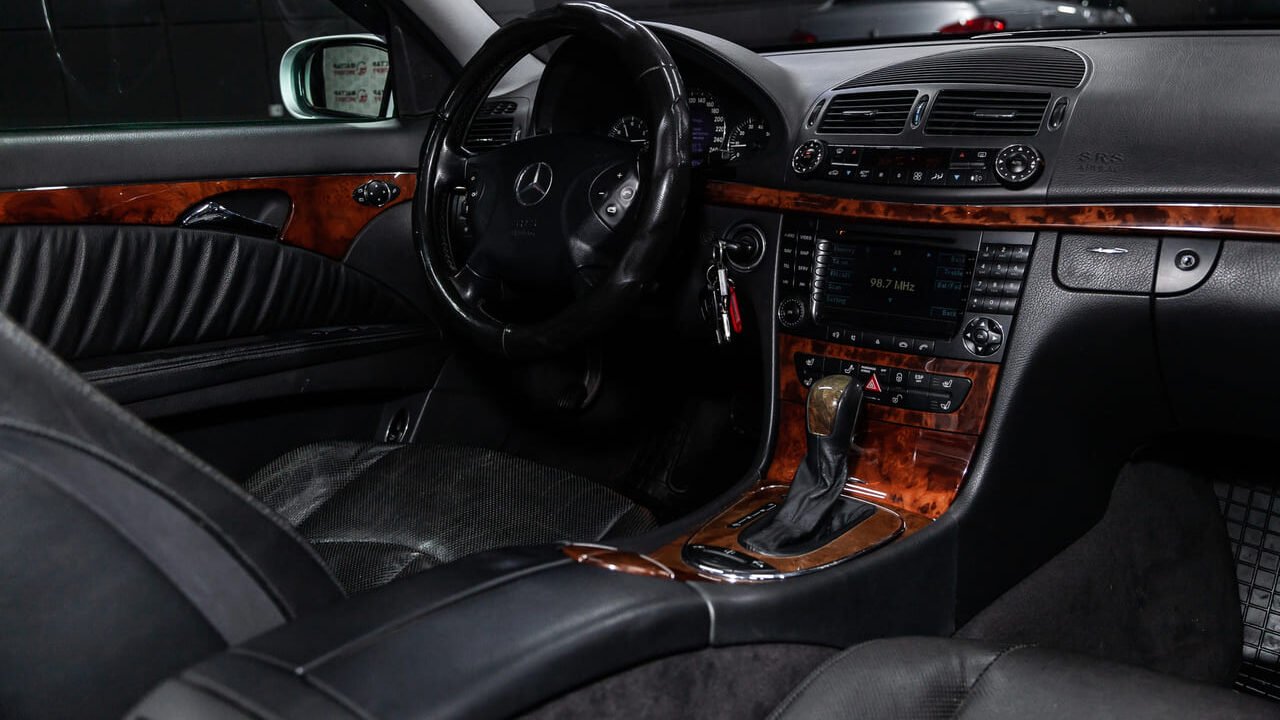
The W211’s sophisticated electronics introduce additional age-related risks, including seat controls, climate systems, instrument electronics, and communication modules.
Individual faults may be manageable, but multiple failures can become expensive. Water intrusion, weak batteries, and previous wiring repairs are particularly concerning. Before buying, test every electrical feature and perform a comprehensive diagnostic scan. The absence of dashboard warnings doesn’t guarantee a healthy electrical system.
E55 AMG Maintenance Costs: What Should Buyers Expect?
The W211 E55 has depreciated considerably, but its AMG-specific maintenance and repair costs haven’t fallen proportionally. Even with a healthy M113K engine, aging air suspension, brakes, cooling systems, and electronics can generate substantial expenses.
Rather than relying on an annual maintenance average, buyers should separate routine servicing, predictable age-related repairs, and unexpected major failures when budgeting for ownership.
| Expense category | Typical ownership considerations |
|---|---|
| Routine maintenance | Engine oil, filters, spark plugs, transmission servicing, and brake fluid |
| Wear-related repairs | Engine mounts, suspension components, brakes, tires, and rubber seals |
| Major unexpected repairs | Airmatic components, SBC hydraulic unit, transmission faults, or supercharger-related hardware |
E55 ownership costs depend heavily on condition, maintenance history, and local repair costs. A well-maintained example may prove considerably cheaper than one with a lower asking price but neglected suspension or cooling-system repairs.
Prioritize documented maintenance over purchase-price savings, and keep a separate repair reserve for unexpected expenses.
E55 AMG vs. E63 AMG: Which Is More Reliable?
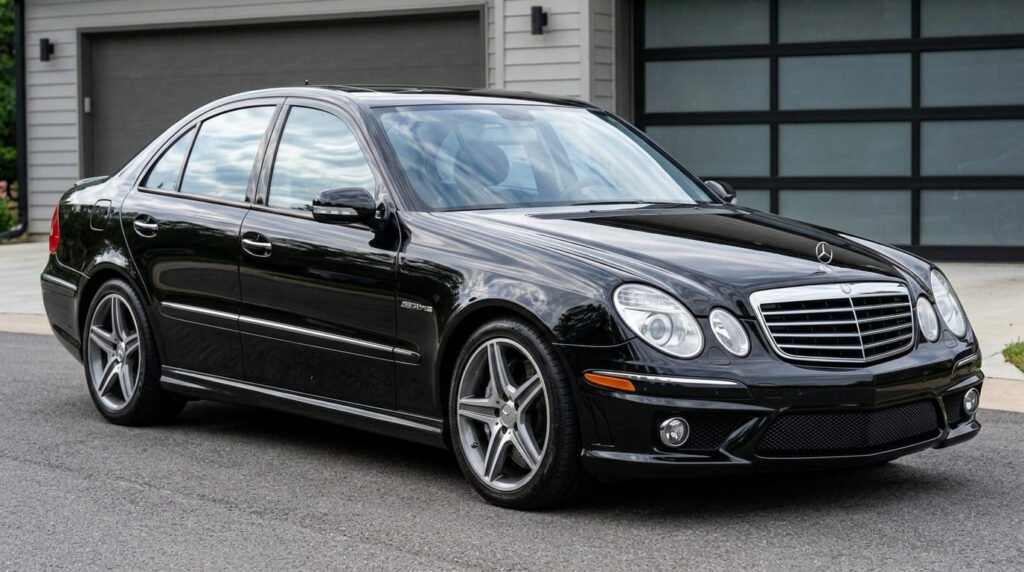
The 2007 E63 AMG replaced the E55’s supercharged M113K with a 507-hp, naturally aspirated M156 V8 and seven-speed automatic. Although the E63 eliminated supercharger-related maintenance, its more sophisticated engine introduced different risks, particularly early head-bolt failures and camshaft wear.
The E55’s M113K generally has the stronger reputation for internal durability, despite its charge-cooling system requiring attention. For long-term drivetrain reliability, I’d favor a well-maintained E55 over an early E63. However, documented repairs and individual vehicle condition matter more than the badge or model year.
Which E55 AMG Model Years Should You Buy?
The 2003–2006 U.S.-market E55 AMG models share the same fundamental drivetrain and major reliability concerns. No single year stands out as dramatically more dependable.
Maintenance history matters far more than model year or mileage. A well-maintained 2003 E55 with documented suspension, cooling, and brake repairs can be a better purchase than a neglected 2006 example.
Likewise, a properly serviced 150,000-mile car may be preferable to a 70,000-mile example with deteriorated seals, aging electronics, or unresolved suspension problems.
What About the E55 AMG Wagon?
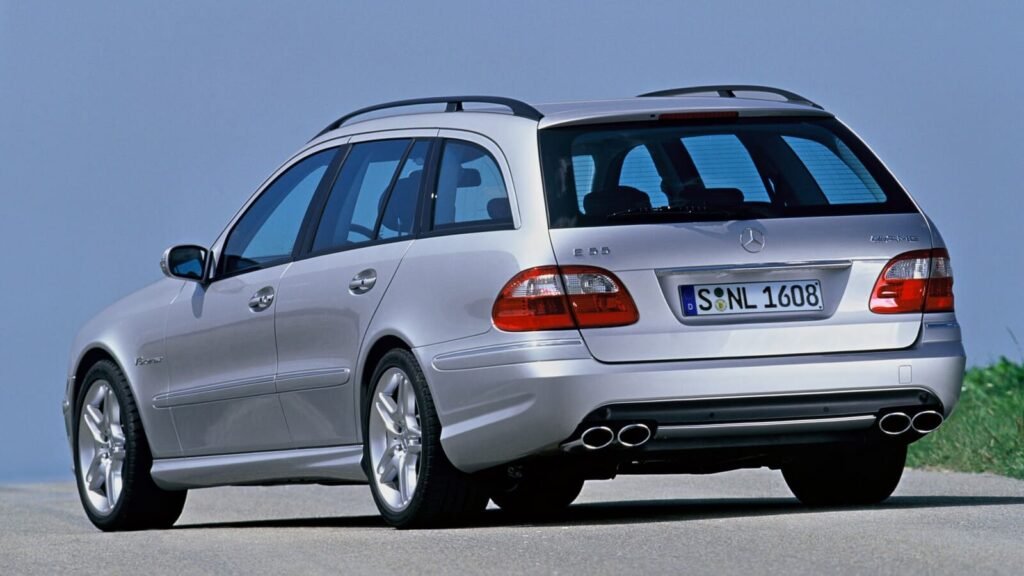
For reliability and value, I’d favor the sedan. The wagon makes more sense for buyers who specifically want its practicality and rarity.
The rare W211 E55 AMG wagon shares the sedan’s supercharged M113K drivetrain and major reliability concerns, but adds wagon-specific body and cargo-area components worth inspecting. Its limited U.S. availability makes finding a well-maintained example—and certain replacement parts—more difficult.
Used E55 AMG Inspection Checklist
Before purchasing a W211 E55 AMG, I would prioritize the following:
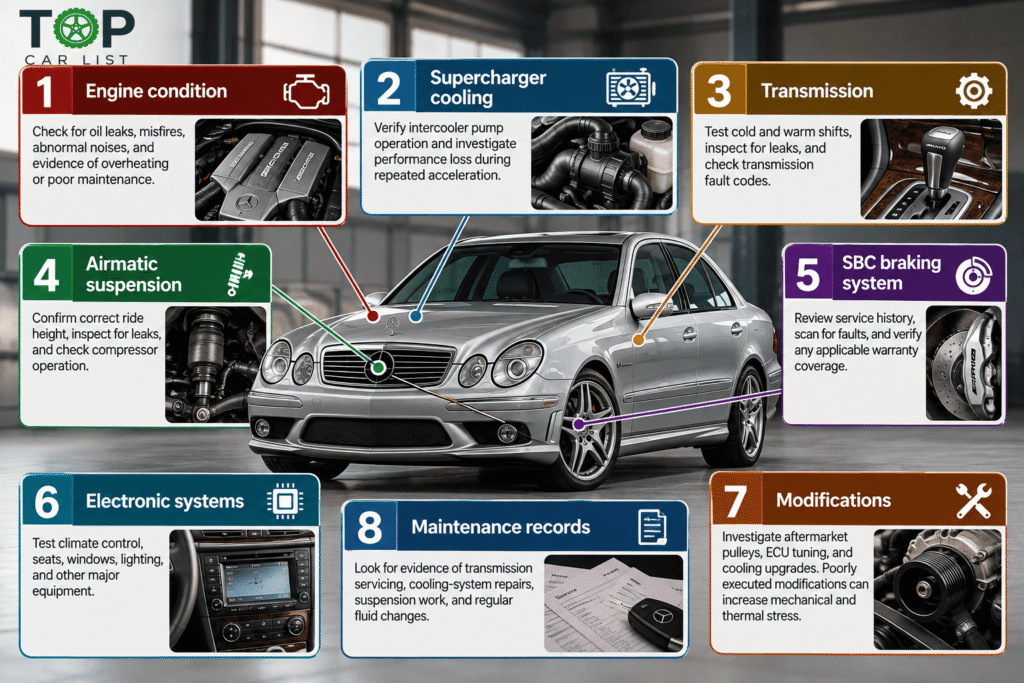
- Engine condition: Check for oil leaks, misfires, abnormal noises, and evidence of overheating or poor maintenance.
- Supercharger cooling: Verify intercooler pump operation and investigate performance loss during repeated acceleration.
- Transmission: Test cold and warm shifts, inspect for leaks, and check transmission fault codes.
- Airmatic suspension: Confirm correct ride height, inspect for leaks, and check compressor operation.
- SBC braking system: Review service history, scan for faults, and verify any applicable warranty coverage.
- Electronic systems: Test climate control, seats, windows, lighting, and other major equipment.
- Modifications: Investigate aftermarket pulleys, ECU tuning, and cooling upgrades. Poorly executed modifications can increase mechanical and thermal stress.
- Maintenance records: Look for evidence of transmission servicing, cooling-system repairs, suspension work, and regular fluid changes.
Most importantly, arrange a pre-purchase inspection with a Mercedes specialist familiar with the M113K and W211 platform. A generic inspection may overlook expensive model-specific problems.
Final Verdict: Is the Mercedes E55 AMG Reliable?
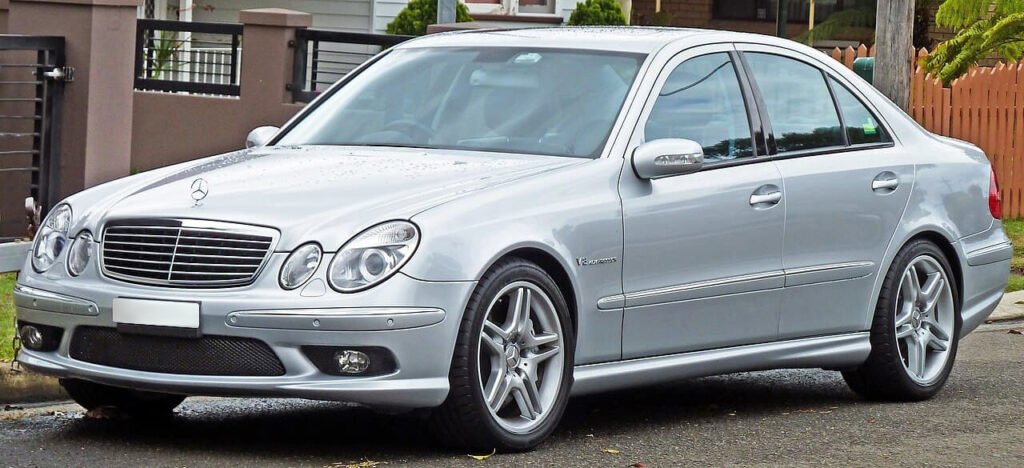
The W211 E55 AMG has an exceptionally durable drivetrain, but that doesn’t make it cheap to own. Its M113K V8 and 722.6 automatic are major strengths. The greater financial risks come from aging Airmatic suspension, SBC brakes, charge-air cooling, electronics, and AMG-specific components.
Would I buy one? Absolutely—but only with documented maintenance, a thorough specialist inspection, and a realistic repair reserve.
The E55 remains one of AMG’s most appealing performance sedans, provided you understand that mechanical reliability and affordable ownership aren’t the same thing.
- Chinese Cars Are Winning the Technology Race—But Will They Last?

- 2024 Toyota Camry Reliability: Is It Toyota’s Smartest Buy?
- 2023 Toyota Camry Reliability: Is Paying More Really Worth It?
- 10 Most Reliable Used Cars in 2026: Specific Years to Buy
- 2022 Toyota Camry Reliability: Is It the Best Used Camry?
- Car Reliability Ratings Explained: Which Ones Can You Actually Trust?
*Disclaimer: This website provides automotive content for informational purposes only and should not be considered professional advice. While we strive for accuracy, we do not guarantee the reliability or suitability of any vehicle or product mentioned—always conduct your own research before making purchasing decisions. Additionally, some links on this site are affiliate links, meaning we may earn a commission if you make a purchase, at no extra cost to you.