

Automotive quality is surprisingly difficult to define. A luxury car can have semi-aniline leather, real aluminum trim and soft-touch surfaces yet develop squeaks and misaligned trim. A cheaper car can surround its occupants with ordinary molded plastics while remaining tightly assembled and remarkably free of rattles after years of use.
Both observations can be true because material quality and build quality are not the same thing. More importantly, neither should automatically be confused with reliability.
For engineers and serious buyers, vehicle quality is better understood as several overlapping disciplines: material specification, manufacturing execution, perceived quality and long-term durability. Understanding where one ends and another begins explains why some inexpensive cars feel exceptionally well made—and why expensive materials cannot rescue poor execution.
What Build Quality Actually Means
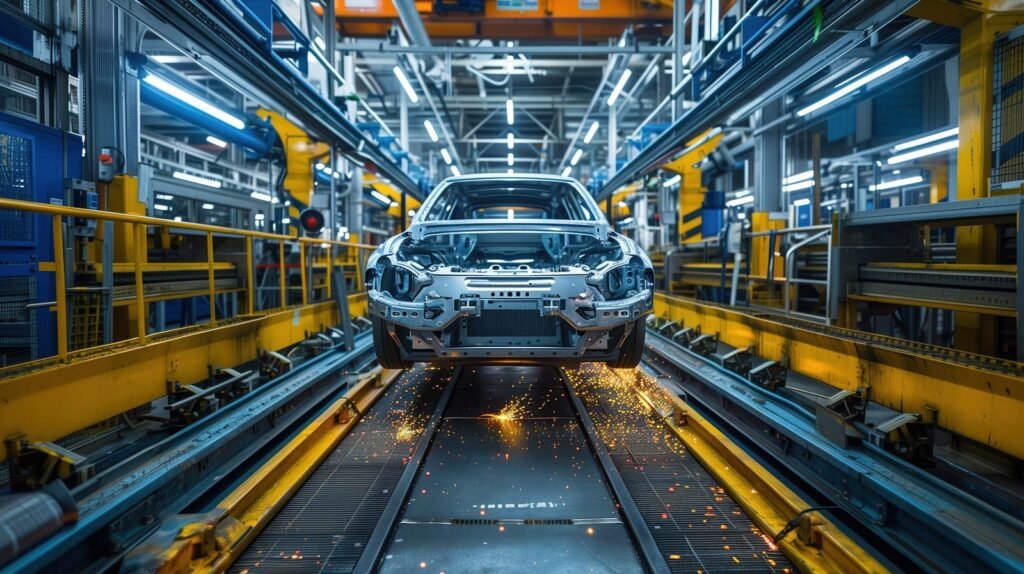
Build quality describes how consistently the manufactured vehicle conforms to its engineering intent. That includes dimensional accuracy, weld and adhesive consistency, fastening, sealing, paint application, trim installation, body alignment and the control of variation across thousands of components.
Panel gaps are the easiest example because consumers can see them. But the objective is not necessarily to create the smallest possible gap.
A narrow hood-to-fender gap that measures 3 mm on one side and 6 mm on the other indicates greater variation than a deliberately engineered 5 mm gap maintained consistently around the vehicle. This leads to one of the most misunderstood principles of automotive quality:
Consistency matters more than simply making tolerances appear tight.
Automotive bodies contain long chains of interconnected dimensions. Small deviations in stamped panels, mounting points, closures, seals and trim can accumulate through what manufacturing engineers call tolerance stack-up. Each individual component may technically meet specification while the finished assembly still produces undesirable visual alignment, wind noise or fit.
Good manufacturing engineering therefore controls variation across the entire process rather than merely demanding microscopic tolerances everywhere. Tighter tolerances also cost money and can make production unnecessarily difficult when they provide no functional or customer-perceived benefit.
Material Quality Is About Fitness for Purpose, Not Price
Material quality is often discussed as though materials exist on a simple ladder: plastic is cheap, aluminum is better, carbon fiber is better still. Engineering does not work that way.
A material should be judged against what the component needs to accomplish. Strength, stiffness, mass, impact resistance, fatigue behavior, corrosion resistance, temperature stability, UV resistance, manufacturability, recyclability, cost and even acoustic behavior can matter.
An engineering polymer may be a better material than aluminum for a particular interior component because it is lighter, does not corrode and can incorporate complex geometry in a single molded part. Aluminum may be preferable elsewhere because reducing mass or providing structural stiffness justifies its higher material and manufacturing cost.
The same principle applies inside the cabin. A thick, soft surface can produce an immediate impression of luxury, but if its coating becomes sticky under prolonged heat or its finish wears rapidly at high-contact points, expensive initial presentation has not translated into long-term material performance.
Material quality Is More Than Material Cost
Material quality should be measured by fitness for purpose and durability, not simply material cost. This is why comparing vehicles by counting soft-touch surfaces, metal trim or leather coverage tells us surprisingly little about their underlying engineering quality.

The Missing Category: Perceived Quality
There is another discipline between engineering specifications and reliability: perceived quality.
Automakers deliberately engineer how a vehicle feels, sounds and responds because customers cannot inspect weld penetration, adhesive application or material fatigue data in a showroom. They judge quality through sensory evidence.
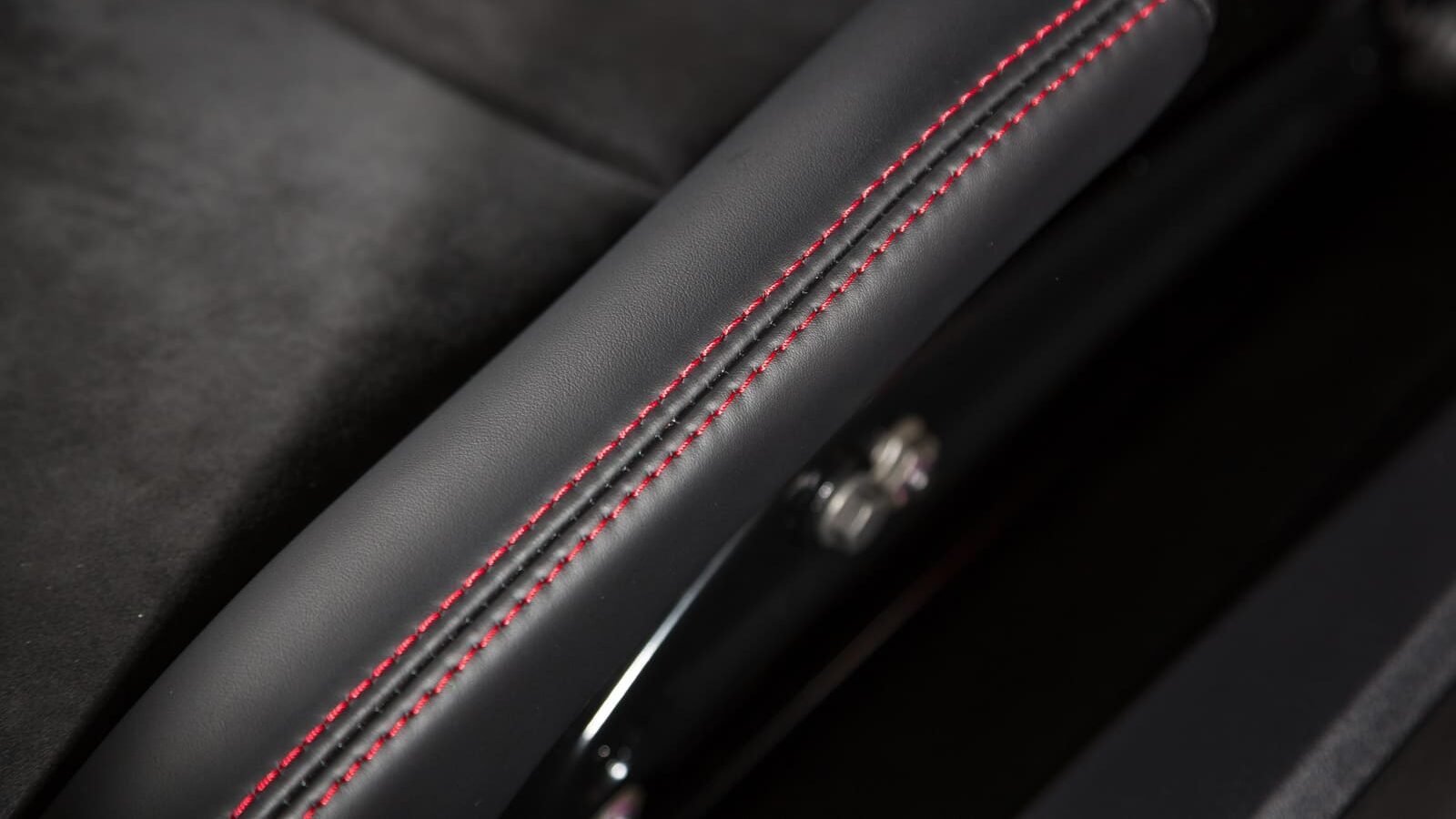
Door-closing sound matters. So do switch resistance, button damping, stitching consistency, surface grain, illumination uniformity, seat cushioning, panel alignment, control effort and the absence of secondary vibrations.
SAE-published research into automotive interiors describes perceived quality as multisensory: visual appearance matters, but so do touch, sound and even smell. That explains why two vehicles built to acceptable manufacturing standards can create completely different impressions. It also creates an important warning for buyers.
Perceived quality vs Durability.
Perceived quality can be engineered independently of long-term durability. A beautifully damped rotary controller demonstrates excellent attention to tactile experience. It does not tell you whether the cooling system will remain trouble-free at 150,000 miles. Likewise, hard dashboard plastics do not prove that a vehicle is mechanically inferior.
Premium feel and engineering durability sometimes overlap. They are not interchangeable.
Build Quality Is Not Reliability
This distinction is equally important.
Build quality asks whether the factory manufactured the vehicle consistently. Reliability asks whether its systems continue functioning over time.
A vehicle could leave the assembly line with excellent paint, uniform gaps, perfectly installed trim and no rattles yet contain an engine component whose design produces premature failure years later.
The reverse is also possible. A vehicle might have mediocre paint finishing or occasional interior squeaks while its engine and transmission routinely survive high mileage.
Manufacturing quality can certainly affect reliability. Improperly torqued fasteners, contaminated components, defective welds or poorly installed seals can eventually cause failures. But a perfectly executed manufacturing process cannot eliminate weaknesses inherent in the underlying engineering design.
That is why brand-level statements such as “this manufacturer has excellent build quality, therefore its cars are reliable” require caution.
The specific platform, model year, powertrain and component design matter.

Software Has Changed the Definition of Automotive Quality
For most of automotive history, a discussion about build quality naturally focused on physical objects. Modern cars make that definition incomplete.
J.D. Power’s U.S. Initial Quality Study measures owner-reported problems during the first 90 days, including mechanical systems, design execution, infotainment and emerging technologies. Recent studies repeatedly show infotainment among the industry’s largest problem areas.
This creates an unusual modern vehicle: one whose body may be assembled with exceptional dimensional consistency while the owner still considers it poorly made because the phone disconnects, the touchscreen freezes or an electronic feature behaves unpredictably.
The Shift in Automotive Quality
Automotive quality has shifted from predominantly manufacturing quality toward systems-integration quality. The challenge for manufacturers is therefore expanding. Mechanical, electrical and software systems must operate together convincingly. Therefor, a perfectly fitted dashboard surrounding an unreliable interface is no longer enough.
What Matters After Five or Ten Years?
The showroom is actually one of the worst places to judge long-term quality because almost every new vehicle is presented under favorable conditions, but time exposes differences that visual inspection cannot.
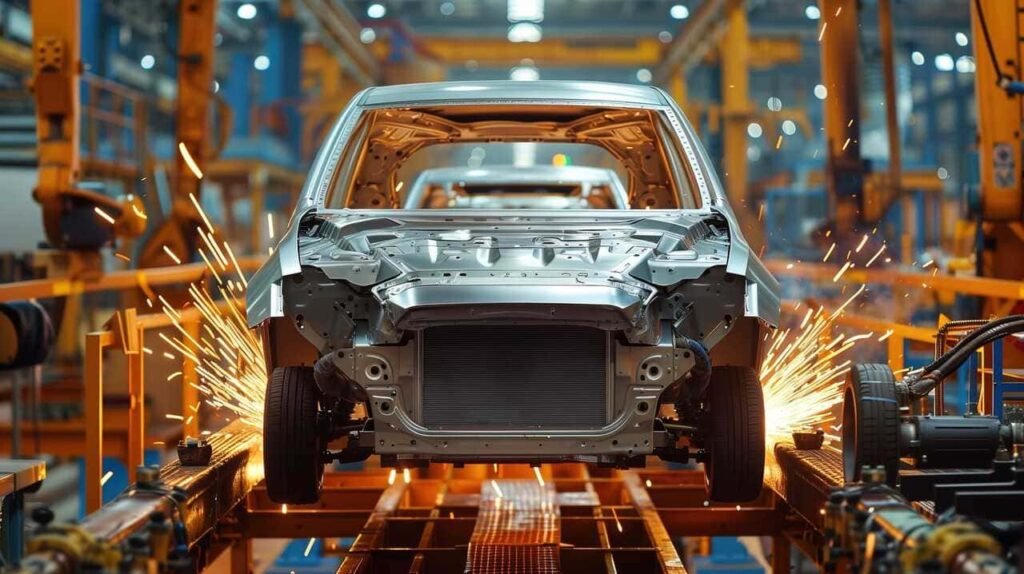
Interior polymers experience UV radiation and repeated thermal cycling. Seat bolsters endure thousands of entry-and-exit cycles. Weather seals compress and relax. Adhesives encounter heat, cold and vibration. Exterior coatings face road salt, chemicals, stone impacts and sunlight. Clips and fasteners repeatedly transmit structural vibration.
This is where material specification and build quality finally meet. A properly selected material still needs correct manufacturing and installation. An excellent assembly process cannot make an unsuitable material durable. Long-term quality is the product of both.

How to Evaluate a Car Beyond the Showroom Finish
Buyers can still identify useful clues though, compare left-to-right panel alignment rather than obsessing over absolute gap size. Inspect paint consistency around edges and adjoining panels. Look closely at weather seals and trim junctions. Operate frequently used controls repeatedly rather than merely touching them once.
Then drive the vehicle over imperfect pavement, as broken surfaces can reveal secondary motions and noises that a smooth dealership route can hide. Listen for movement from doors, seats, dashboard structures and the cargo area. Pay attention to wind noise around closures and seals.
For used vehicles, this becomes even more valuable because age has already performed part of the durability test.
Most importantly, separate what you observe from what you are trying to predict. Beautiful stitching tells you something about craftsmanship. Consistent panel alignment tells you something about manufacturing execution. A quiet cabin suggests effective NVH engineering. None, by itself, proves mechanical reliability.
The Real Meaning of a Well-Built Car
The best-built vehicle is not necessarily the one containing the most expensive materials, nor is the most luxurious cabin automatically the most durable. True automotive quality comes from alignment between design intent, appropriate materials, manufacturing control and long-term execution.
That distinction matters increasingly as vehicles become more technologically complex. Quality now extends from stamped steel and adhesives to touchscreens, software and electronic architecture.
So when a car feels exceptionally well made, the right question is not simply whether the plastics are soft or the panel gaps are narrow. It is whether the engineering behind those details will still make sense after the showroom smell disappears.
If the distinction between materials, manufacturing execution, and long-term durability interests you, the next question is why some manufacturers consistently get that combination right. Our guide to car reliability ratings explains what major reliability studies actually measure, while Japanese vs. American Cars: Which Makes More Sense for U.S. Buyers? examines how engineering philosophy, manufacturing strategy, and product specialization differ between the two industries. For another perspective on how automotive quality standards evolve, see Will Chinese Automakers Repeat the Success of Koreans?. You can also explore the latest analysis and buyer-focused research on the TopCarList homepage.
- Chinese Cars Are Winning the Technology Race—But Will They Last?

- 2024 Toyota Camry Reliability: Is It Toyota’s Smartest Buy?

- 2023 Toyota Camry Reliability: Is Paying More Really Worth It?

- 10 Most Reliable Used Cars in 2026: Specific Years to Buy

- 2022 Toyota Camry Reliability: Is It the Best Used Camry?

- Car Reliability Ratings Explained: Which Ones Can You Actually Trust?
*Disclaimer: This website provides automotive content for informational purposes only and should not be considered professional advice. While we strive for accuracy, we do not guarantee the reliability or suitability of any vehicle or product mentioned—always conduct your own research before making purchasing decisions. Additionally, some links on this site are affiliate links, meaning we may earn a commission if you make a purchase, at no extra cost to you.