

You never know when a dead battery will strand you, so choosing the right red and black jumper cables is a tiny investment that pays off in safety and real convenience. Good cables get you back on the road faster, cut risk to delicate electronics, and make a jump-start straightforward even if you’re not car-savvy. But what actually matters — gauge, length, clamps, construction, and safety features — and how do you match a set to your car?
Think like this: gauge = thickness = how much current the cable will carry. Lower gauge numbers are thicker and better: 8-gauge works for small cars, 6-gauge is a safe pick for most sedans, 4-gauge for SUVs and V6/V8s, and 2-gauge for big trucks or diesel engines. Keep length practical: 12–16 ft hits the sweet spot for reach without too much resistance; 20 ft can help with awkward parking but needs thicker wire to avoid voltage drop.

Now let’s check out some of the top jump start cables you can grab:
Best Jumper Cables
|
Category |
Product |
Price |
Score |
|---|---|---|---|
|
Best Overall |
37.59 |
95/100 |
|
|
Best for Heavy-Duty / Trucks |
42.99 |
92/100 |
|
|
Best for Beginners |
32.99 |
90/100 |
|
|
Best Value |
AutoChat 6 Gauge 16 Ft Jumper Cables (Includes Gloves & Brushes) |
17.59 |
88/100 |
|
Best Safety Features |
37.97 |
89/100 |
|
|
Best Budget Reliable |
25.97 |
86/100 |
How We Picked These Cables
You should focus on a few practical factors so the cables work when you need them. Key points to weigh: 1) Gauge — lower AWG numbers mean thicker wire and better current delivery. For most cars 4–2 gauge is fine; for diesel trucks or heavy loads choose 1/0 or 1 gauge.
2) Length — 16–25 ft gives flexibility when vehicles can’t be parked nose-to-nose. 3) Clamp quality — look for strong, corrosion-resistant clamps with good teeth and insulation so they grip battery terminals securely.
4) Amperage rating and certification — higher amp ratings and third-party safety certifications (ETL, etc.) increase reliability and reduce risk to vehicle electronics. 5) Conductor material — pure copper conducts best but costs more; copper-clad aluminum (CCA) works and reduces weight and price. 6) Insulation and weather performance — thick, flexible insulation that stays pliable in cold weather is safer and easier to use.
7) Extra features — reverse-polarity indicators, protective covers, gloves, and carrying bags add convenience and safety. 8) Intended use and budget — pick a heavier gauge for trucks or regular heavy use, and a mid-range gauge for everyday passenger cars.
Following these criteria helps you balance safety, performance, and cost so you’re prepared in an emergency.
A ABIGAIL Heavy Duty Jumper Cables 1 Gauge 800A 25 Ft

If you want a no-nonsense set of jumper cables to stash in your trunk, these are the kind you’ll actually use. They’re 1 gauge (copper-clad aluminum), rated 800A and 25 feet long, so you get real reach for awkward parking situations or when you need to jump a truck. The clamps are heavy-duty with a non-slip rubber coating and serrated jaws, and the PVC jacket keeps the cables flexible in hot and cold weather.
That means daily usefulness for a dead car battery and genuine peace of mind for bigger jobs like diesel trucks, farm equipment, or helping a friend roadside. They come with a carrying bag and the reviews show people find them durable and good value — worth keeping in your emergency kit.
What People Say
Most users say the cables are heavy-duty, long enough to reach across vehicles, and the clamps feel secure — many call them a good value for the price.
Jake
I bought these for my diesel truck and they worked perfectly. The professional clamps made connecting quick and secure, the 25-foot length gave me plenty of reach, and the included carrying bag kept everything organized. Durable and reliable — great value.
oldgoat
Very well made — the grips are strong and heavy duty. The cable is heavier than smaller gauge jumpers. I saw similar sets selling for 50–120, and these were on sale for 36.00, so I grabbed a set.
Ease Of Use
|
Feature |
Ease Level |
|---|---|
|
Clamps |
Easy |
|
Cable Flexibility (hot/cold) |
Easy |
|
Reach / Length |
Easy |
|
Storage / Carrying Bag |
Moderate |
Problem Solving
These cables solve the core problem of a dead battery: reliable connection, enough amperage for most passenger cars and many trucks, and extra length so you don’t have to shuffle vehicles around. They’re also built to stay flexible in different weather and come with a bag so you can keep them handy for emergencies or seasonal trips.
Key Benefits
- 1 gauge copper-clad aluminum for solid conductivity
- 800A rating suitable for cars, SUVs and many trucks
- 25 ft length gives extra reach in tight situations
- Sturdy serrated clamps with non-slip rubber coating
- Weather-resistant PVC jacket and included carrying bag
HORUSDY 1-Gauge Best Jumper Cables For Car

If you keep one set of jumper cables in your car, these are a solid choice. They’re thick (1 gauge), rated for 800A and long at 25 feet, so you won’t be shuffling cars around when one battery’s dead. The clamps are beefy with strong teeth and copper connections, the cable jacket stays flexible even in deep cold, and the smart protector with LED lights warns you if you hook them up backwards.
That makes them useful for everyday dead batteries, winter mornings, road trips, or bigger jobs like jump-starting a truck, ATV or even a semi in a pinch. I’d keep them in the trunk — they remove a lot of the guesswork when someone needs a boost.
What People Say
You’ll see users praising the heavy-duty build, long reach and the smart LED indicator that prevents connection mistakes — many note it’s worth the price for peace of mind.
Wayne
They may seem a bit pricey but these are something that, when you need them, they really work. Especially good grip on newer style batteries.
LibbyNikki
I need to speak on behalf of the community that owns full size trucks — these are the only cables that will get the job done. The 25′ length, strong build and the little box that shows correct connection and voltage flow make jumping large vehicles straightforward. I bought multiple sets.
Ease Of Use
|
Feature |
Ease Level |
|---|---|
|
Clamps |
Easy |
|
LED Smart Protector (polarity check) |
Easy |
|
Cable Flexibility (hot/cold) |
Easy |
|
Reach / Length |
Easy |
|
Storage / Carrying Case |
Moderate |
Problem Solving
These cables solve the common headaches: they give you enough amperage and length to jump a variety of vehicles, the LED protector stops accidental reverse hookups, and the rugged clamps and flexible jacket mean the set works in all seasons. In short, they make roadside boosts simpler and safer.
Key Benefits
- 1 gauge construction and 800A rating for reliable power transfer
- 25 ft length so you can reach awkwardly parked vehicles
- Reverse polarity protection with LED indicators to prevent miswiring
- Heavy-duty alligator clamps with strong grip and copper contacts
- PVC jacket stays flexible in cold weather (-40°C/-40°F)
AutoChat 6 Gauge 16 FT Jumper Cables
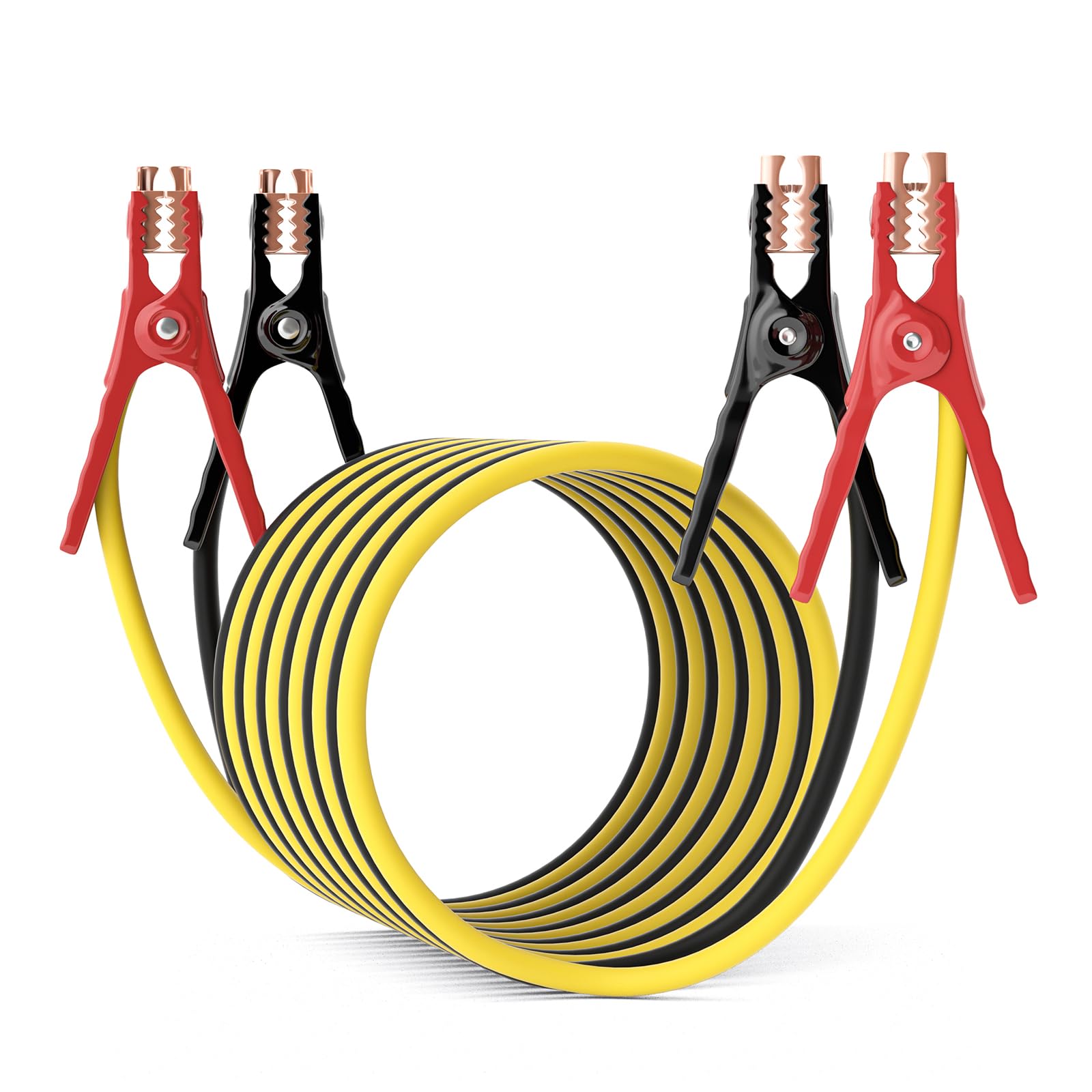
If you want a dependable emergency set to keep in the trunk, these AutoChat 6-gauge, 16-foot cables are a practical pick. You get long reach so you don’t have to reposition cars, big clamps with jagged teeth for a secure bite, and a thick vinyl jacket that helps resist rust and stay flexible even in bitter cold.
They’re copper-clad aluminum (AAC), so they balance conductivity and cost — you’re getting heavy, industrial-feeling cables without paying for full-copper prices. The included carrying bag, gloves and brushes make storage and occasional maintenance less of a hassle, so whether you’re dealing with a dead battery on a weekday commute, helping a friend in a parking lot, or prepping for a winter road trip, these cables cover the basics well. I’d tuck them into your emergency kit and stop worrying about whether you can reach from one car to another.
What People Say
Users highlight the heavy-duty feel, reliable clamps and the convenience of the carry case; many appreciate the flexibility in cold weather and the value compared with pricier all-copper sets.
Andrew Gower
Heavy duty and well made — thick insulation and solid clamps. Review mentions they’re copper-coated aluminum (AAC) and still feel industrial strength, plus the hard case makes storage easy.
JAMES HARRINGTON
Simple but useful: the carrying case makes storage and transport straightforward, so the set is easy to keep in the car.
Ease Of Use
|
Feature |
Ease Level |
|---|---|
|
Clamps |
Easy |
|
Cable Flexibility (cold) |
Easy |
|
Reach / Length |
Easy |
|
Storage / Carrying Bag |
Easy |
|
Included Accessories (gloves, brushes) |
Moderate |
Problem Solving
These cables solve common roadside headaches: the 16 ft length lets you reach a donor vehicle without juggling positions, the beefy clamps give a positive grip on battery terminals, and the flexible jacket keeps the cords usable in freezing conditions. The carry bag and extras mean you can store and maintain them easily, so when a battery dies you’re more likely to have a ready-to-use solution.
Key Benefits
- 6 gauge, 16 ft length gives reach for awkward parking situations
- Strong alligator clamps with jagged teeth for a secure connection
- Copper-clad aluminum conductors balance power and cost
- Thick vinyl coating resists rust and stays flexible in cold (-40℉)
- Includes carrying bag, gloves and brushes for storage and maintenance
GOODYEAR Heavy Duty Jumper Cables (4 Gauge, 16 ft)

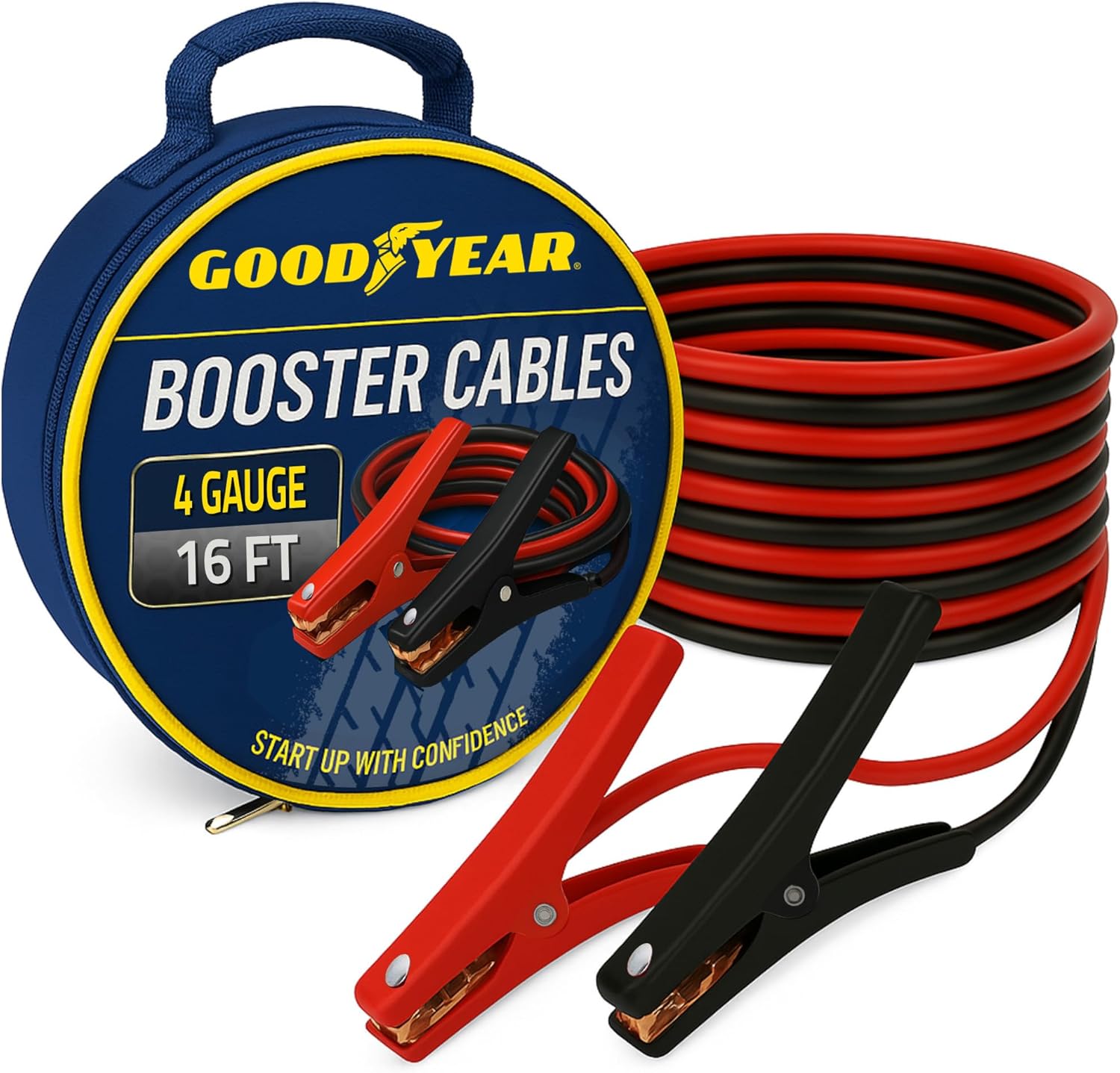
If you want a reliable set to stash in the trunk, these Goodyear 4‑gauge, 16‑foot booster cables are a solid pick. You get thicker wire for faster, steadier current transfer, plenty of reach so you don’t have to shuffle cars, and a PVC jacket that stays flexible in cold weather. The clamps feel robust and the hard carrying case keeps everything tidy — just expect to compress the cables a bit to fit them back in.
For everyday dead-battery fixes, helping someone in a parking lot, or prepping for a winter road trip, these are dependable and easy to keep on hand.
What People Say
You’ll hear that people like the heavy, reliable feel, the 16 ft reach and the cold-weather flexibility. The carrying case gets praise for keeping things tidy, though several users mention it’s snug when you put the cables back in.
Christian B. McGhee
Bought them for peace of mind and they performed exactly as you’d hope: 4-gauge power that jump-started a truck quickly, a full 16 ft of reach, and PVC-coated cables that stayed flexible in freezing temps. The carrying case is handy, though a little tight when packing the cables back in.
JJ
Haven’t had to use them in an emergency yet, but they’re clearly heavy duty — thick cable and sturdy clamps — and the hard case feels well made. Note that the case is on the small side, so you need to wind the cables tightly to fit.
Ease Of Use
|
Feature |
Ease Level |
|---|---|
|
Clamps |
Easy |
|
Cable Flexibility (cold) |
Easy |
|
Reach / Length |
Easy |
|
Storage / Carrying Case |
Moderate |
|
Instructions / Setup |
Easy |
Problem Solving
These cables tackle the most common roadside headaches: the 16 ft length means you can reach a donor car without awkward positioning, the 4‑gauge wiring delivers steady current for quick starts, and the flexible PVC jacket keeps the cords usable in cold weather. The hard case and included ties make it simple to store them so they’re ready when you need them — just allow a little patience to pack them back in tightly.
Key Benefits
- 4 gauge wire for strong, reliable energy transfer
- 16 ft length so you can reach awkwardly parked donor vehicles
- PVC insulation stays flexible in cold and resists weathering
- Universal fit for cars, trucks and SUVs
- Hard carrying case and cable ties for organized storage
Energizer Jumper Cables (20 ft, 2 Gauge)

If you want a dependable pair of jumper cables to keep in your trunk, these Energizer 20‑foot, 2‑gauge cables are a practical choice. You get a beefier wire gauge for steadier power, long reach so you can connect vehicles without awkward positioning, and thick vinyl‑coated clamps that resist rust.
The copper‑clad aluminum core stays flexible even in very cold weather, and the included travel bag keeps everything tidy. They work well for everyday dead‑battery fixes, helping a friend in a parking lot, or as part of your winter road‑trip kit — and with a two‑year warranty, they’re easy to recommend as a low‑stress safety item to carry.
What People Say
People praise the strong clamps, clear positive/negative labeling, cold‑weather flexibility and the convenience of the included bag — overall they call these sturdy, reliable cables you can trust when a battery dies.
Raeanna Gamble
“These Energizer Jumper Cables have been a lifesaver! … The build quality is excellent; the clamps are sturdy and provide a strong grip without slipping. They are also long enough to easily connect between vehicles… The cables are clearly labeled for positive and negative terminals, making the setup foolproof. The insulation is thick and durable, giving me confidence that they will last a long time.”
MikeCallery
“You see people with a thin set of jumper cables and just scratch your head. Not this set. These are quite robust and will definitely carry the amps from one battery to another to give that second battery a good jump start. What I really liked was the connections. Very well made and of a good size!… There is even a bag providing various screws and terminals to get you where you need to be to hook this up properly.”
Ease Of Use
|
Feature |
Ease Level |
|---|---|
|
Clamps |
Easy |
|
Cable Flexibility (cold) |
Easy |
|
Reach / Length |
Easy |
|
Storage / Carrying Bag |
Moderate |
|
Labeling / Setup |
Easy |
Problem Solving
These cables address the most common battery headaches: the 20‑ft reach lets you connect cars even when parking is tight, the 2‑gauge wire delivers steady current for faster starts, and the thick insulation plus solid clamps reduce the chance of a poor connection. The carrying bag helps keep the kit accessible so you’re not digging around in the trunk when you need it.
Key Benefits
- 2‑gauge heavy‑duty wiring for reliable current transfer
- 20 ft length so you can reach donor vehicles without shuffling
- Thick vinyl coating and sturdy clamps resist rust and wear
- Copper‑clad aluminum core stays flexible in very cold temps
- Compact carrying bag and 2‑year warranty for peace of mind
EPAuto 4‑Gauge 20 ft Jumper Cables

These EPAuto 4‑gauge, 20‑foot jumper cables are the kind of kit you want stashed in the trunk. You get a beefy 4 AWG cable that can handle most car and light‑truck jobs, long reach so you don’t have to shuffle vehicles, and copper‑plated clamps that grip well. EPAuto bundles a travel bag and a pair of safety gloves, which makes this feel like a complete, ready‑to‑use kit. In everyday life they’re perfect for rescuing a friend with a dead battery or getting a rarely driven car going again; on road trips or winter mornings the extra length and solid clamps are especially handy.
A couple of users note the cables are a bit stiff (so coiling takes practice) and the storage bag is snug, but for the price — about $25.97 — they’re a practical, no‑fuss safety item to keep in your vehicle.
What People Say
People tend to praise the strong clamps, durable cables and generous length — buyers like that it comes with gloves and a bag, and many call it good value for occasional emergency use.
Amazon Customer
“I use these quite a bit… I found the description of these cables accurate – they are copper covered aluminum… I also like that these have little extensions on the clamps for those of use with side terminal batteries. The cables even came with a little set of gloves and an instruction tag strapped right to the cables… I got these on sale, they’re a little more expensive now, but even if they’re 20 – it’s a great deal.”
Courtney-Jo
“These EPAuto 4 Gauge 20 Ft cables are very sturdy and performed well when needed. The clamps are strong and the cables feel durable, even in cold weather. The length is generous, making it easy to connect cars without having to reposition vehicles. The only downside is that the cables are stiff and a bit bulky, which makes coiling them up and storing them neatly a challenge.”
Ease Of Use
|
Feature |
Ease Level |
|---|---|
|
Clamps |
Easy |
|
Cable Flexibility (cold) |
Moderate |
|
Reach / Length |
Easy |
|
Storage / Carrying Bag |
Moderate |
|
Labeling / Setup |
Easy |
Problem Solving
These cables solve the common dead‑battery headaches: the 20 ft length lets you reach donor vehicles without complicated positioning, the 4‑gauge wire and solid clamps deliver dependable current for a quick start, and the included gloves and instruction tag help make jumping safer for a novice. Expect a bit of stiffness when handling and a snug storage bag, but otherwise they’re a straightforward, budget‑friendly fix for emergency starts.
Key Benefits
- 4‑gauge heavy‑duty wiring for reliable jumps on most cars and light trucks
- 20 ft length so you can connect vehicles without awkward positioning
- Copper‑plated clamps that provide a solid grip
- Includes travel bag and safety gloves for safer, tidier storage
- No‑tangle design and a complete kit you can grab in an emergency
How To Jumpstart A Car

first take the red clamp and attach it to the positive terminal on the dead battery. Next, connect the other red clamp to the positive terminal on the working battery. Then, use the black clamp and hook it up to the negative terminal on the working battery.
Jump-starting a car is a handy skill, but do it the right way — and safely. First, check that both vehicles use the same voltage (12V) and that the dead battery shows no cracks, swelling, or leaking fluid; if it does, don’t attempt a jump and call roadside assistance. Park the donor car close enough for the cables to reach but not touching, switch off both engines, set parking brakes, and turn off all accessories. Wear gloves and eye protection. Use heavy-gauge jumper cables (lower gauge number = thicker wire); 4-gauge is a good general choice for most cars, 2-gauge for larger trucks. Clean corroded terminals if needed. Attach cables in this order: positive (red) clamp to the positive terminal on the dead battery, positive clamp to the donor’s positive terminal, negative (black) clamp to the donor’s negative terminal, then the last negative clamp to an unpainted metal ground on the dead car — away from the battery — to avoid sparks near hydrogen gas.

For the black clamp connect one end to the donor car’s negative terminal, while the other black clamp make sure to attach it to an unpainted metal part on the dead car instead of the other negative terminal.
Start the donor vehicle and let it idle for a few minutes to build charge, then try to start the dead car; avoid extended cranking, which stresses the starter and wiring. Once the car starts, remove clamps in reverse order and keep the engine running; drive for at least twenty minutes or use a battery charger to restore charge. What to avoid: never connect clamps to the wrong terminals or let clamps touch each other, don’t jump a frozen or visibly damaged battery, never jump between 12V and 24V systems, and be cautious with hybrids and EVs — consult the manual before attempting a jump. If batteries repeatedly die, have the battery and charging system tested. When used correctly, jumper cables and a lithium jump starter are safe tools to get you on the road.

FAQ
How Do I Choose The Right Gauge And Length For Jump Start Cables?
You should match cable gauge and length to the vehicles you drive most. For heavy trucks, diesel engines, or frequent use choose 1‑gauge or 0‑gauge cables that handle higher amperage; for most passenger cars a 2‑ to 4‑gauge set is usually enough and 6‑gauge can work for occasional light use.
Longer cables like 25 feet give you flexibility to position vehicles without moving them — for example the A ABIGAIL 1 Gauge 800A 25 Ft set costs $42.99 and is aimed at heavier vehicles, while shorter 16–20 ft 4‑gauge or 2‑gauge options are more compact and cheaper. Also check clamp quality and insulation: thicker, well‑insulated jackets resist abrasion and cold stiffness, and solid clamps make reliable contact. Remember that thicker wire (lower gauge) reduces voltage drop, so if you jump big engines or may need to reach across vehicles, prioritize gauge over saving a little money.
Are Cheaper Cables Safe For Modern Cars And Electronics?
You can find affordable cables that work, but you should be cautious because thin, low‑quality wires and poor clamps increase the risk of overheating, poor connection, or electrical spikes that could affect modern vehicle electronics. Copper is more conductive than copper‑clad aluminum (CCA), so pure copper cables are ideal but more expensive; a well‑built CCA cable of a thicker gauge can still perform reliably.
Look for safety features like reverse polarity protection or an indicator light and third‑party certification (some HORUSDY sets include ETL‑style protections and connection indicators), and prefer heavy clamps and robust insulation. If you primarily drive modern cars with sensitive electronics, invest in a midrange set from a reputable brand rather than the cheapest option, and consider keeping a portable jump pack as an alternative to relying on another vehicle.
What Are The Best Practices For Using And Storing Jumper Cables Safely?
Before you get started, make sure to park both cars so they don’t touch. Turn off the ignitions and any accessories, and if you can, put on some gloves. When attaching the clamps, here’s the order you need: first the red one to the positive on the dead battery, then the red to the positive on the good battery, then the black to the negative on the good battery, and finally the black to some unpainted metal ground on the dead vehicle—this helps avoid sparks. Just remember, it’s all about connecting positive to positive and grounding the negative. And when you’re done, always take them off in the reverse order.
Before using the cables, check for any fraying, corrosion, or loose clamp teeth. Don’t let the clamps touch while you’re connecting them. Let the donor vehicle run for a minute or two before trying to start the dead one. Keep the cables all clean and neatly coiled in their bag, and stash them in your trunk. It’s a good idea to check them every so often for any damage or stiffness that can come from extreme temperatures. A 25-foot heavy-duty set like the A ABIGAIL or HORUSDY can be super handy for tricky spots, but if space is tight, a compact 4-gauge or 2-gauge set is way easier to store.
Take a good look at the clamps and how they’re built—look for strong, springy jaws, full insulation, and copper or copper-plated contacts. Watch out for those thin copper-clad-aluminum (CCA) cables sold as “heavy duty”—they might be lighter but don’t conduct as well as pure copper, so you’d need thicker cables to make up for that. Look for safety features like spark-proof or reverse-polarity protection, LED polarity indicators, and inline fuses or heavy-duty insulation.
Here’s a quick tip: store your cables coiled in a trunk bag and check them for any cracks or corrosion every year. It might be smart to grab a compact lithium jump starter as a backup since they’re easier to use and safer around modern electronics. When you buy your cables, think about your vehicle and the climate you’re in rather than just the flashy packaging, and you’ll be all set the next time your battery decides to let you down.

Wrapping Up
Pick cables that fit your vehicle size and how you plan to use them. If you’re just using them now and then on a regular car a 4–2 gauge, 16–20 ft set should do the trick and won’t break the bank. But if you have a diesel, tow a lot, or need one good set for a few vehicles go for 1-gauge, 25 ft cables with sturdy clamps and safety features. Keep them in your trunk along with a simple checklist like gloves, instructions, and a bag so you’re ready to go when your battery dies. With the right cables you can cut down on stress, save time, and even help others out on the road.
Now about those charging cables that let you connect two cars, sometimes that just isn’t gonna happen. Like if you’re stuck on a deserted road with no other cars around or if you wake up in the morning and your other car’s battery isn’t any good. In those cases, the smarter move is to grab yourself a portable car jump starter. Want to know how to pick a good one? Check out this article “How to Choose the Best Portable Car Jump Starter” where we’ve rounded up some of the best options you can buy online.
| Product | Image | Rating | Price | Cable Gauge / Length | Weight | Special Highlights |
|---|---|---|---|---|---|---|
| A ABIGAIL Heavy Duty Jumper Cables |
 | 4.8/5 (810 reviews) | 42.99 | 1 Gauge / 25 Feet | 8.84 pounds |
|
| HORUSDY 25FT Jumper Cables |
 | 4.8/5 (841 reviews) | 37.59 | 1 Gauge / 25 Feet | 9.49 pounds |
|
| AutoChat Jumper Cables |
 | 4.8/5 (184 reviews) | 17.59 | 6 Gauge / 16 Feet | 3.7 pounds |
|
| Goodyear Heavy Duty Jumper Cables |
 | 4.8/5 (1,730 reviews) | 32.99 | 4 Gauge / 16 Feet | 4.86 pounds |
|
| Energizer Jumper Cables |
 | 4.7/5 (5,270 reviews) | 37.97 | 2 Gauge / 20 Feet | 7.5 pounds |
|
| EPAuto Jumper Cables |
 | 4.8/5 (8,755 reviews) | 25.97 | 4 Gauge / 20 Feet | 5.37 pounds |
|
Make sure to check out our latest posts for some cool gadgets and handy car accessories. Feel free to pop over to our homepage whenever you want!
- Best Car Interior Cleaning Kits: Make Your Cabin Look New

- Which XV70 Camry Year Should You Buy? A Tested Guide

- Magnetic Phone Mounts & Mounts for Thick Cases: That Actually Work!
- Best Wireless CarPlay Adapters for Older Cars
- Best Seat Gap Fillers for Leather Seats
- The Most Underrated Cars — Hidden Gems You Should Actually Consider

*Disclaimer: This website provides automotive content for informational purposes only and should not be considered professional advice. While we strive for accuracy, we do not guarantee the reliability or suitability of any vehicle or product mentioned—always conduct your own research before making purchasing decisions. Additionally, some links on this site are affiliate links, meaning we may earn a commission if you make a purchase, at no extra cost to you.
**When you click on links we might get a small commission on purchases that qualify.