

The E30 is the car that made BMW’s compact executive style known to every car lover out there. It has that perfect rear-drive balance, precise controls, and it can serve as anything from a grocery runner to a fun weekend track car. But if you think about it now, it’s getting old, a bit quirky, and yeah sometimes pricey to maintain, which isn’t a surprise for a BMW, right? So just how much does it really cost to keep this little Bavarian beauty running? Let’s take a quick look at the info we’ve gathered.
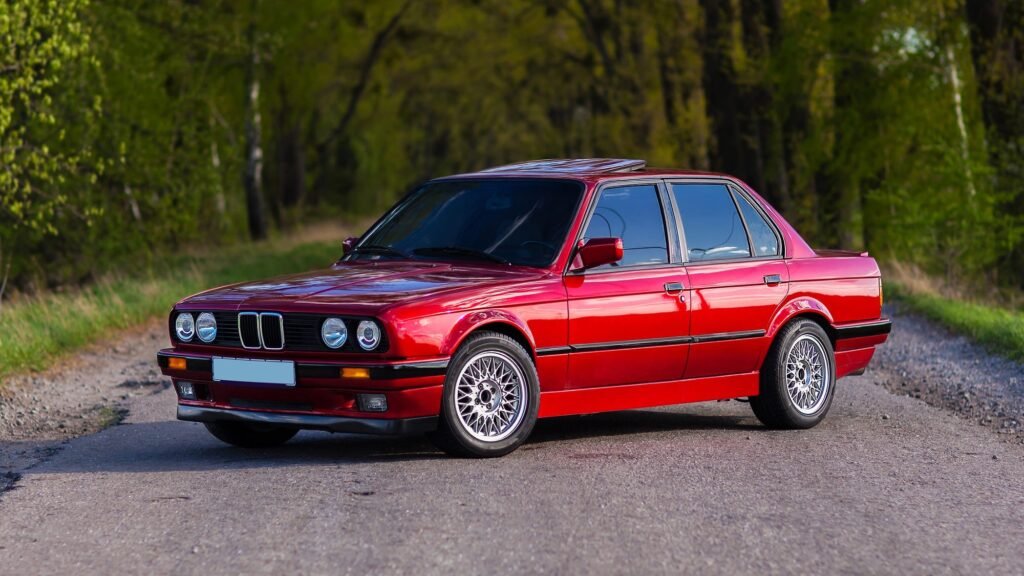
E30 Engines
The BMW 3-Series E30 was made from around 1982 to 1994 but in the U.S. it was available from 1984 to 1991. You could get it as a 2-door coupe, a 4-door sedan, a convertible, or a touring wagon. It came with either 4-cylinder or 6-cylinder engines and you had the option of manual or automatic transmission. Now if you’re wondering which engine to go for when snagging one of these beauties let’s take a closer look:
Four-cylinder family
- M10 (1.6–1.8L) — early 316/318 models. Old-school pushrod/overhead cam era; robust and simple, uses a timing chain. Strong reputation for longevity if maintained.
- M40 (1.6–1.8L) — later economy 318i in the late-1980s; lighter and more modern than the M10 but less loved by purists. The M40 uses a timing belt (service interval matters).
- M42 (1.8L 16-valve DOHC) — higher-revving 318is and other sport variants; generally well-regarded for its revvy nature and more modern design. The M42 uses a chain (different maintenance profile to M40/M20).
Six-cylinder family (the engines that give the E30 its smoothness)
- M20 (2.0–2.7L inline-6) — used in 320i/323i/325i/325e. Mechanically simple, torquey and very tunable. The big reliability caveat: the M20 uses a timing belt and that belt is service-critical — change it on schedule (BMW/enthusiast guidance: every 4 years or ~50–60k miles). If the belt fails you can cause catastrophic engine damage. Beyond that, M20s are generally honest: valve adjustment, routine gasket and seal maintenance, cooling-system vigilance.
Performance / special engines
- S14 (the M3 engine) — a high-revving, race-bred 4-cylinder built for the E30 M3 (1986–1991). It’s a more complex, higher-maintenance engine than the standard lumps and rewards careful oil and valve care; parts and specialist labor cost more.
Bottom line: The M10 and M20 engines are pretty tough as long as you keep an eye on their weak spots like the timing belt on the M20 and the tensioner or chain guides on the older models. The M42 is fun to rev up but isn’t as common, while the S14 is quite rare and can cost a lot to maintain. If you’re looking for something reliable for daily driving, a well-maintained M20 six-cylinder E30 will feel smooth and last a long time. Just make sure to check the timing belt service history first.
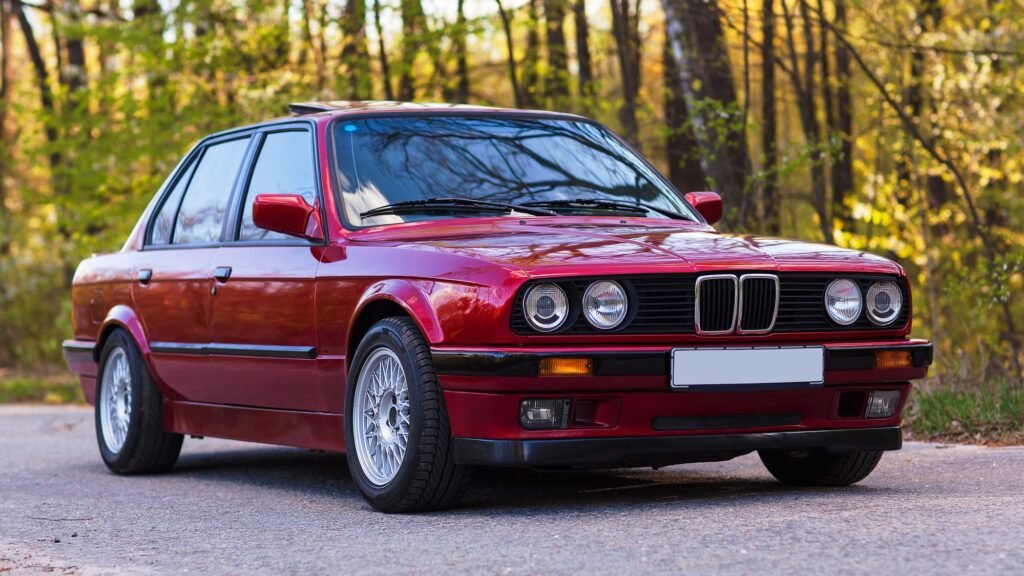
Common reliability headaches
Structural / rust
Rust is by far the biggest long-term problem for E30s in humid or salted-road climates. Typical trouble spots:
- battery tray / rear valance / trunk floor,
- rocker panels and sills,
- floor near the transmission crossmember and rear subframe mounting points,
- wheel arches and lower fenders.
Surface rust can be fixed cheaply; structural corrosion (subframe mounts, rotted rails) is expensive and sometimes a deal-breaker. Have a specialist look for patchwork welding and “cosmetic” filler that hides rot.
Drive-train & engine
- Timing-belt (M20): age or unknown service history = replace before you buy if you want to avoid a potentially ruined engine. Recommended interval: ~4 years / 50–60k miles. A full front-motor service (belt + water pump + seals + ancillary items) is a common and sensible first job.
- Oil leaks: valve-cover gasket, oil pan, front crank seal — expect to reseal on older cars. Not usually catastrophic, but messy and a clue the car hasn’t been recently sorted.
Suspension, steering, and brakes
- Rubber bushings (control arms, subframe bushings), tie rods, ball joints and steering-rack leaks are common with age — they affect feel and safety; budget for bushings, shocks and wheel bearings as part of “owning an E30.”
Cooling and fuel systems
- Radiator, hoses, thermostat and the fuel pump can fail on older cars. Replacing cooling parts when you service the timing belt is good preventive maintenance. Fuel tanks and straps can rust through in high-mileage cars.
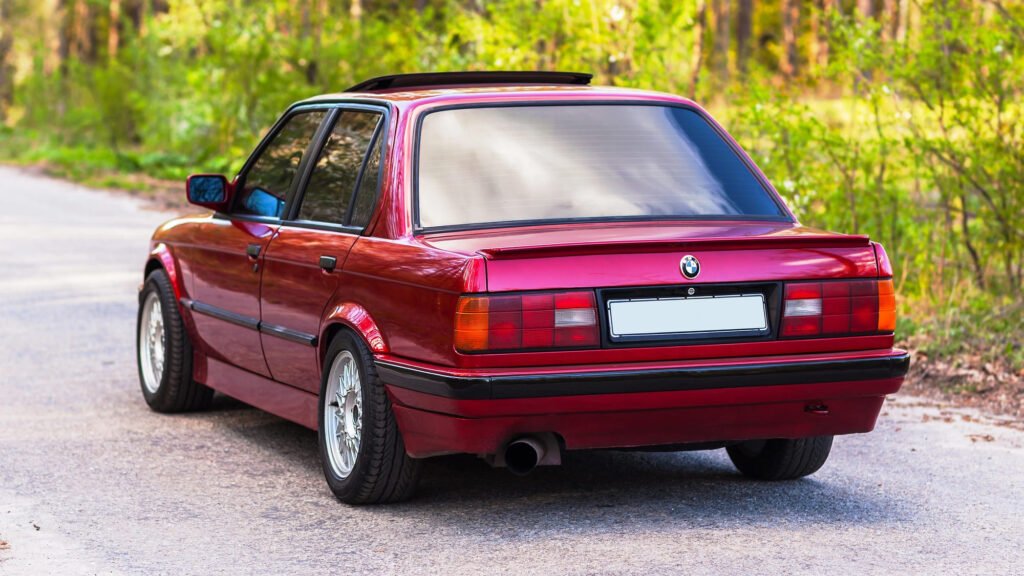
Rough long-run maintenance costs
The E30 is really getting into classic car territory, and you probably know that owning a classic car can cost a lot depending on its condition, your DIY skills, and the weather where you live. For the E30, you can expect a fair cost if the car’s in good shape when you buy it:
- Annual routine ownership (parts + consumables): $500–$1,500. That covers fluids, brakes, tires, shocks over time, minor bushings, filters, bulbs, etc. (DIY lowers this a lot).
- Timing-belt + water-pump + front-seal service (M20): $500–$1,200 (parts + labor estimates vary by region and whether you do it yourself). RepairPal median ranges and enthusiast shops support that ballpark. If a shop includes valve adjustment, belts, water pump, seals and fresh coolant, expect the higher end.
- Subframe / heavy rust repair (welds, replacement of mounting points): $600–$5,000+ depending on damage and the shop. Reinforcement kits themselves are cheap; labor, welding and replacing brake lines or panels drive the price. If the rear subframe is cracked or the chassis is eaten, costs spike quickly.
If you’re thinking about buying a car that has some visible rust but runs well, be ready to drop a few hundred to a few thousand bucks on bodywork later on. But if it needs big fixes like welding under the back seats or on the transmission tunnel and subframe mounts, it’s best to walk away unless you’ve done the math and are okay with the repair costs.
Practical checklist
Think of it like buying a second-hand house—you gotta check the foundations first. Trust me, you don’t want to end up with a lemon BMW. A solid BMW can bring you tons of happiness but it needs some good care to keep it running well.
- Rust & structure
- Check the rear battery tray/trunk floor, sills, rocker panels, front footwells, rear subframe mounting area and around the shock towers. Look for fresh welds, filler, uneven paint, or misaligned panels. If you don’t see the full inner wheel arch or trunk floor, ask for pics or lift the carpet.
- Timing-belt history (M20)
- Ask when the timing belt/water pump/tensioner was last done. If unknown, budget to have the job done immediately — the penalty for neglect is engine failure.
- Drivetrain & fluids
- Check for oil in the coolant, thick black oil (signs of neglect), compression test for cylinders, smooth idle, and smoke on startup. Strong whine from the differential or knocking from suspension are warning signs.
- Suspension & steering
- Bounce test, check for play at wheels, listen for clunks, inspect front lower control arm bushings and rear subframe bushes. Steering rack leaks and worn bushings radically change feel.
- Service history & paperwork
- Receipts for belts, brake work, head gasket work, suspension and any welding are gold. For M3s specifically, seek documentation proving originality (S14 engine, matching VIN, correct chassis code).
- Pre-purchase inspection (PPI)
- Get a specialist or an experienced independent BMW mechanic to inspect. They’ll spot rust that a seller hides and estimate welding vs. replacement costs. A PPI is cheap insurance compared to major repairs.
When you’re thinking about buying a car, your driving habits play a big part in your decision. If you’re driving the car every day or you’re just starting out with your first E30, then make sure to look for a rust-free 318 or 325 that’s been well taken care of. You want to find one with recent belts and brakes that are in good shape. It’s super important to have a clean floorpan, solid brakes, and a good suspension too. Be ready for some routine maintenance and try to get the best condition you can afford.
Now if you’re more of a weekend driver or like to tinker here and there, you can look at cheaper E30s that might have some surface rust but are solid where it counts. Just keep in mind what your welding costs could be. And finally, if you’re in it for investment or concours purposes, stay away from cars that have been modified or raced. For something like an M3, it’s all about originality and how much mileage it has. Be prepared to spend a bit more and make sure you check everything to verify it’s the real deal.
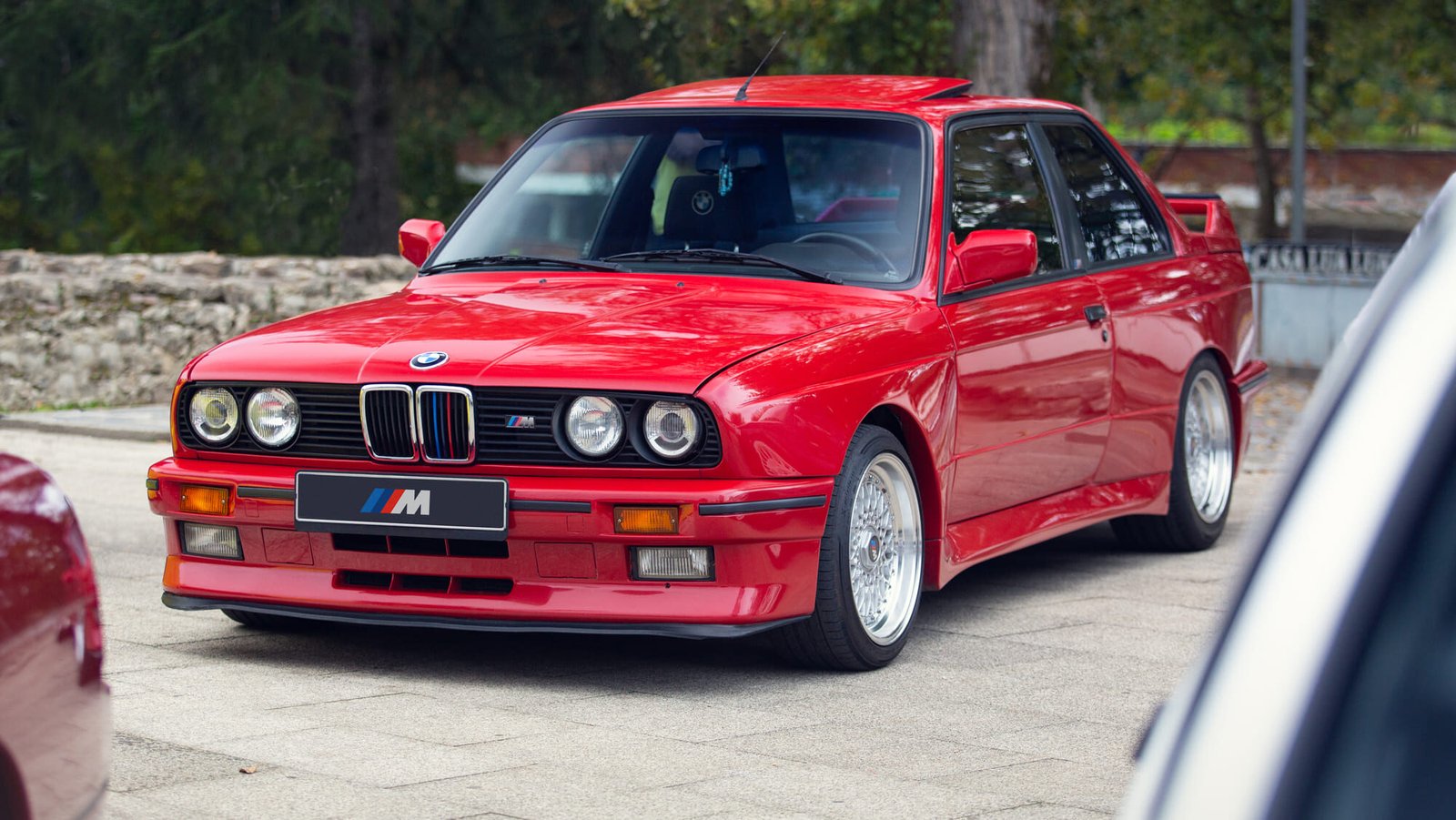
The Legendary E30 M3
The E30 M3 is really where everything started for the love of compact sports cars. This ride took a small BMW and turned it into a racing legend with its race-ready body, a screaming S14 four-cylinder engine, and a chassis that’s all about performance. It was made from 1986 to 1991 for everyday drivers, plus a bunch of cool special editions like the Mitsubishi Evolution and Evo II came after.
What makes the M3 different for buyers:
- S14 engine — This engine is pretty much a high-performance engine that’s built with a lot of precision, but it can be pricier to repair or rebuild compared to a standard M20. Keeping up with the right service like timing, oil changes, and valve adjustments is key. Plus, parts and specialized help are generally on the more expensive side.
- Rarity & provenance — genuine, stock examples with a solid history can really fetch a high price. On the flip side, cars that have been heavily altered or have been in accidents usually aren’t worth as much. Places like Hagerty and auction houses show a lot of ups and downs in prices, but overall, the typical values have been on the rise lately. So when you’re thinking about the M3, see it as a collectible rather than just a budget-friendly ride.
Specific M3 inspection points
- Make sure to check the S14 engine and see if the VIN and chassis plates match up. Look for any signs it might’ve been raced or pushed too hard like roll-cage welds or engine swaps. Big upgrades like oversized brakes can hurt its value for collectors down the line.
- Take a good look at the subframe and see if there are any suspension mods that scream “track car.” A lot of the M3s you find out there might have been really pushed to their limits.
- Check the interior for its originality including the Recaro seats, door cards, and gauges. If you find replacement parts, they could lower the value a bit but if everything else is in good shape, don’t let that stop you from making a deal.
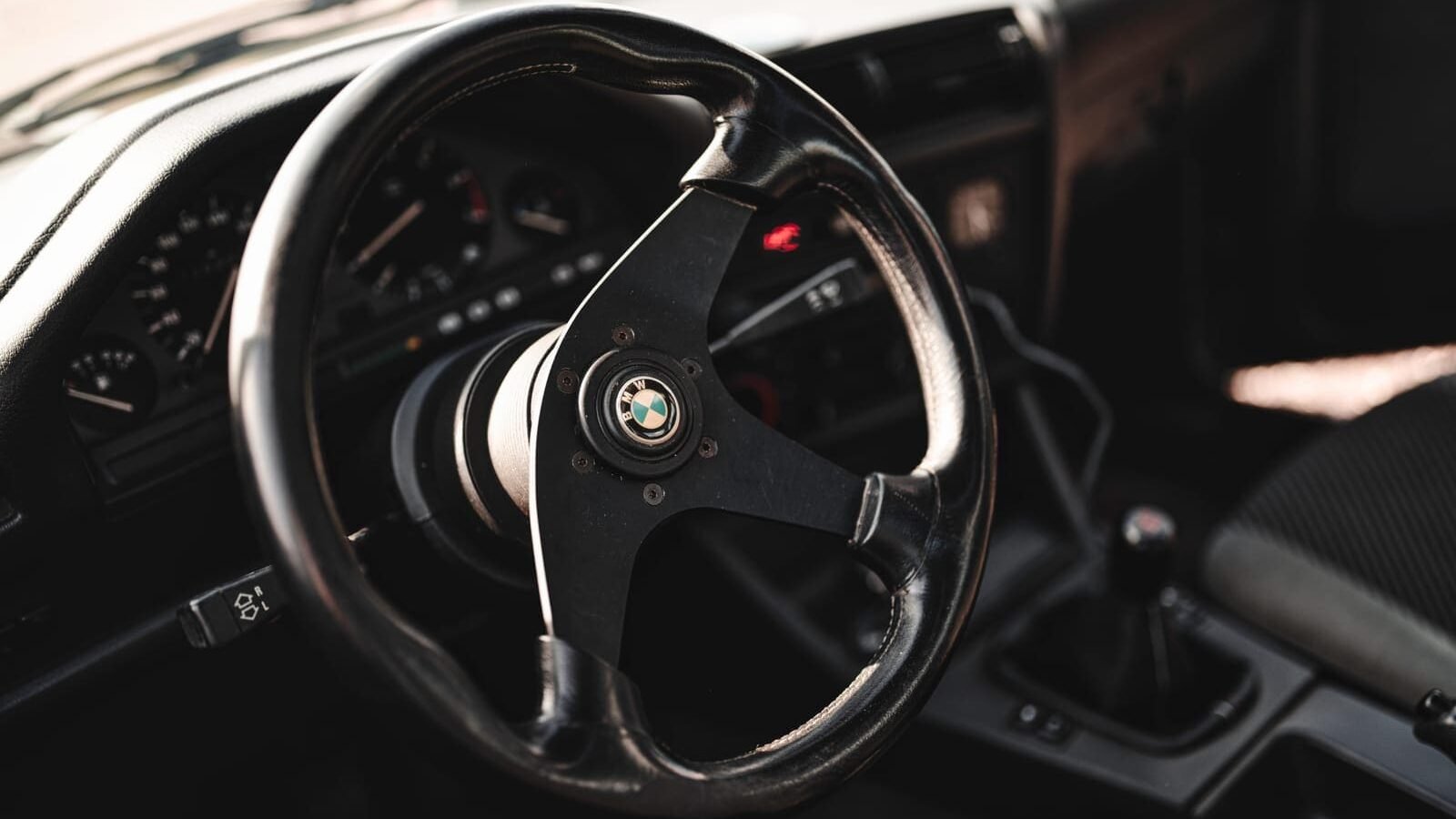
Final takeaways — should you buy an E30?
So to wrap things up here’s what you need to know about the BMW E30. It’s tough to say if you should buy one or skip it since it really comes down to how well the car’s been taken care of by the last owner. Go for it if you’re after a classic BMW that’s fun to drive and responds well to maintenance. When looked after these E30s can last a long time and offer a satisfying ride. Plus there’s a great community out there for parts and support.
But you might want to pass if the car has really bad rust where the subframe connects or if the timing belt history is a total mystery on an M20 engine. Also steer clear if the seller isn’t okay with a pre-purchase inspection. Those kinds of repairs can cost way more than what the car is worth.
If you want to learn more about cars and get some buying tips check out our homepage. You might want to bookmark it for easy access. And don’t miss our latest posts some of them might catch your eye:
- Best Car Interior Cleaning Kits: Make Your Cabin Look New

- Which XV70 Camry Year Should You Buy? A Tested Guide
- Magnetic Phone Mounts & Mounts for Thick Cases: That Actually Work!

- Best Wireless CarPlay Adapters for Older Cars
- Best Seat Gap Fillers for Leather Seats
- The Most Underrated Cars — Hidden Gems You Should Actually Consider
*Disclaimer: This website provides automotive content for informational purposes only and should not be considered professional advice. While we strive for accuracy, we do not guarantee the reliability or suitability of any vehicle or product mentioned—always conduct your own research before making purchasing decisions. Additionally, some links on this site are affiliate links, meaning we may earn a commission if you make a purchase, at no extra cost to you.