
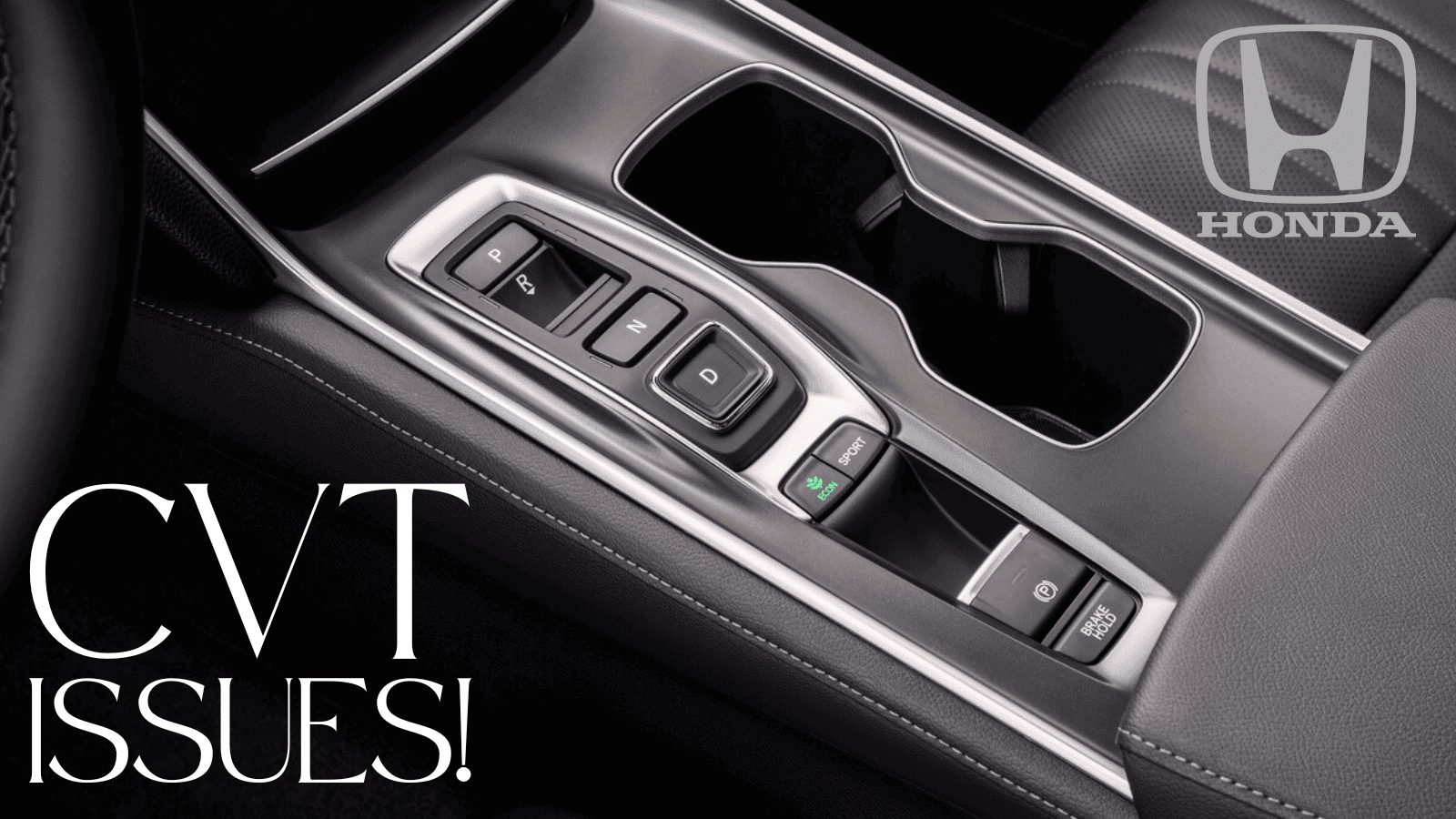
When you think of Honda, the first thing that comes to mind is probably reliability, right? Just like when you’re looking to buy any trusted Japanese car, you want something that gives you peace of mind and lasts for a while. Sure, you might miss out on that thrill you get from driving a German or Italian car, but honestly, it’s usually worth it. Now, let’s dive into CVTs, which stands for continuously variable transmissions. Honda has really embraced CVTs in models like the Civic, Accord, CR-V, and HR-V because they help get better fuel economy and a nice smooth drive from smaller engines.
Now here’s the thing: CVTs work a bit differently when it comes to mechanics and heat, and that can lead to different issues and maintenance needs. Luckily, Honda’s CVTs usually hold up better than some of the notorious ones out there. If you’ve heard the not-so-great things about Nissan’s CVTs and all the bad press they’ve gotten, you might think all CVTs are a headache. But honestly, Honda’s version has received praise from car enthusiasts and reviewers alike for being smooth and more fuel-efficient than Nissan’s, which can feel like you’re driving on a bouncy rubber band.
However, Honda’s CVTs can be a little tricky. If you treat them well with the right fluid, keep them cool, and stick to regular maintenance, which many people and shops didn’t realize at first, they can last a long time. But if you ignore them or give them a rough time, like overheating them or using the wrong fluid, some Honda models and years may run into issues like shuddering, delays in engagement, slipping, or even worse, needing a costly rebuild. That’s definitely not what you want from a ride you expect to be dependable.
This article will break down the common problems, easy fixes, realistic costs, and how Honda’s CVTs stack up against others. You’ll get simple advice so you can confidently own a Honda CVT without the hassle.
The Most Reported Honda CVT Problems
- Shuddering / judder at low speeds or during acceleration.
- Overheating — often in hot climates or after heavy duty (towing, mountain roads).
- Hesitation or delayed acceleration (sometimes called “slip”).
- Strange noises (whine/grind) from the transmission under load.
- Fluid leaks (seals, cooler lines).
- Electronic gremlins — limp mode or stored codes that need software updates.
- Premature belt or pulley wear in severe or early cases.
Keep in mind that many of these symptoms can overlap. For example, an overheating CVT often leads to juddering as the fluid degrades, and a slipping CVT might also produce surges and noises. If you experience one or more of these warning signs, it’s wise to have the transmission inspected. Ignoring symptoms can lead to more severe damage – such as complete failure – which we’ll discuss later.
Why These Problems Happen?
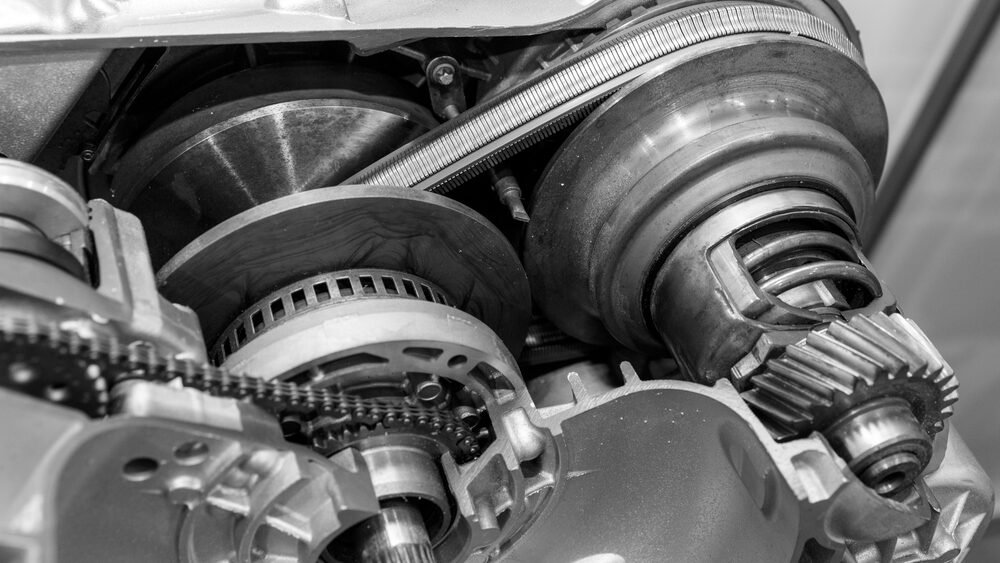
A CVT is essentially a gearbox using a belt (or chain) that rides between variable-diameter pulleys. That design is superb for continuous, efficient gearing — until thermal and friction limits are exceeded. Understanding why these issues occur is key to solving them. Honda CVT problems usually boil down to a few root causes: mechanical design limitations, software/calibration errors, and premature wear due to fluid breakdown or maintenance issues.
- Heat is the common enemy. CVT fluid breaks down at high temreperature. Degraded fluid loses lubrication and hydraulic behavior, which causes belt slippage, judder and eventual component wear. Many Honda CVT failures trace back to overheated/burned fluid.
- Contaminated or old fluid behaves badly. Unlike torque-converter automatics, CVTs are sensitive to the exact fluid chemistry. Use Honda-specified fluid (HCF-2 or the specified ATF-DW1 where listed) — wrong fluid accelerates failure.
- Heavy loads & towing accelerate wear. A CVT designed for commuter duties can overheat under towing or prolonged mountainous driving.
- Software and valve-body control matter. Modern CVTs use electronic control strategies; a software update or TSB sometimes fixes judder/shift-management issues without mechanical work. Honda has issued TSBs and service bulletins addressing CVT behavior.
Understanding these causes helps in addressing them. Honda has taken steps to correct many of these issues (as we’ll cover next), but knowing why they happen empowers owners to take preventative action – like changing fluid more often if you drive in severe conditions, or getting recalls done promptly to update flawed software.
Models With Notable CVT Issues
Honda has been using CVT transmissions in many of its models for about twenty years now. Some of these years are more known for having issues with the CVT because they were among the first to use the tech or had certain flaws. Here are a few of the key models and the years they had problems.
- 2001–2005 Civic (HX Coupe, Civic Hybrid) and 2000–2006 Insight: These were Honda’s first forays into CVTs in North America. Common issues were start clutch judder (a shudder when taking off from a stop) and acceleration slipping.
- 2013–2015 Accord (4-Cylinder Models): The 2013 and 2014 models had some teething problems. There was no major recall, but expect premature CVT failures around the 100k–150k mile mark.
- 2014–2015 Civic: The 2014 Civic (with the 1.8L engine) and the early 2015 Civics are known for the recall we discussed – the CVT software flaw that could cause the drive pulley shaft to break.
- 2015 Fit (Jazz): Its transmission is essentially the same CVT unit as the 2014–15 Civic, so the drive pulley shaft issue and software update apply.
- 2015 CR-V: The CR-V switched to a CVT for 2015 (paired with the 2.4L engine). This model year gained notoriety for a different issue – vibration problems. Many 2015 CR-V owners complained about significant vibrations at idle (in Drive, when stopped) and at certain speeds (~1,500–2,000 RPM).
- 2016–2018 Civic (10th Generation): The 2016 redesign of the Civic brought a new 2.0L engine with CVT and a 1.5L turbo with CVT. They are generally more reliable. However, this generation did face a different notable issue: the parking/roll-away problem that was subject of the 2018 class-action lawsuit. The CVT itself wasn’t breaking; rather, the complaint was that the car could roll even when “Parked” if the electronic parking brake hadn’t engaged.
- 2016–2020 HR-V: Owners of 2016–2018 HR-Vs started reporting CVT failures (often around 70k–90k miles) where the vehicle would lose drive or not move in gear. These were traced to premature belt deterioration – essentially the CVT belt and pulleys wearing out faster than expected.
- Other Models: Most other Honda models that use CVTs (like the Honda City, Grace, Freed – in overseas markets – and newer models like the 2019+ Insight hybrid eCVT, etc.) each have their own nuances, but the ones above are the primary ones U.S. owners have noted. The 2023 Accord and CR-V hybrids had a recall for a manufacturing defect in the hybrid eCVT’s motor/rotor – again, a specific case. Overall, Honda’s later implementations of CVT (post-2018) show far fewer drama. It’s the transitional years (early adopters and new generation launches) that had the most notable issues.
If your Honda is in one of those “notable” groups above, no need to freak out – especially if it’s been regularly maintained or already had repairs done from a recall. Just keep an eye on the trouble spots. If you’re looking to buy a used one, make sure to check the service history and give it a good once-over.
Proven Fixes
Taking good care of your Honda CVT and driving it the right way can really help it last longer and avoid a bunch of issues. Unlike some may think Honda CVTs don’t just run forever without maintenance – they need attention just like any other type of transmission. Here are some friendly tips to keep your Honda CVT in great shape:
- Software update / TSB remedy (free if in warranty). Always check with the dealer for PCM/TCU updates — sometimes the fix is a reflash. If you have hesitation/judder, this is the first clinic check.
- CVT fluid and filter service (the no-brainer). Changing to fresh, Honda-approved fluid and replacing the filter (if serviceable) often cures judder and restores hydraulic control. Honda recommends specific intervals — early CVT problems improved a lot once owners and shops started doing timely changes. Many independent pros recommend 25–30k mile intervals for long life.
- Transmission cooler upgrades / improved cooling routing. For owners in hot climates or towing, installing a larger external cooler or rerouting can reduce fluid temps dramatically and extend life. This prevents repeated fluid breakdown.
- Valve-body or solenoid repair / replacement. If software + fluid didn’t fix it and codes point to hydraulic problems, solenoids/valve-body work may be needed. These are mid-range shop jobs.
- Belt, pulley or clutch pack replacement / rebuild. This is major mechanical work and can be costly; sometimes replacement with a reman or replacement CVT is the most economical long-term route. RepairPal’s transmission replacement averages give a useful reference for headline costs.
So to sum it up just remember that getting a CVT back on track usually starts with the basics check the fluid and software. Most of the time just handling these two things can clear up common problems like slipping or jerking. If you’re after a bit more reliability or performance you might want to check out aftermarket options like improved cooling and some adjustments.
What You’ll Likely Pay
- Fluid + filter service / TCU reflash: $150–$600 (dealer often higher; independent shops lower). This is the first, cheap step and often resolves symptoms.
- Valve-body/solenoid work: $800–$2,500 depending on parts & labor.
- Reman CVT replacement / rebuild: $3,500–$7,000+ (RepairPal/industry averages for transmission replacement cluster in mid-$5k–$6k). CVTs can run on the higher end because they’re often replaced as a sealed assembly.
Bottom line: catch it early (fluid/flash) and you’ll probably spend a few hundred. Wait until mechanical wear sets in and you’re in thousands.
Honda CVT vs Rivals
Here’s a simple summary comparing reliability and ownership risk. Just a quick takeaway: Honda’s CVTs aren’t the worst out there (Nissan’s have an even rougher rep), and when it comes to independent reliability scores, Toyota usually comes out on top.
| Trait / metric | Honda CVT | Nissan CVT (Jatco) | Toyota CVT (Direct-Shift & others) | Subaru Lineartronic |
|---|---|---|---|---|
| Public failure reputation | Mixed — judder/heat cases common but many long-lived examples. | High-profile failure history; many consumer complaints & warranty claims. Often cited as worst CVT offender. | Generally better reliability; Toyota tunes CVTs conservatively and often ranks higher in CR/J.D. Power for transmission reliability. | Mixed — durable but some early Lineartronic units had issues; Subaru improved over generations. |
| Typical fix-first-step | Fluid change + TCU reflash | Fluid & mechanical repair; sometimes early replacement | Software, fluid, conservative gearing; fewer rebuilds reported | Fluid + valve/solenoid work |
| Recommended maintenance interval (practical) | 25–30k miles (many pros recommend 25k) — Honda OEM often states service intervals; follow TSBs. | 20–30k (tight attention recommended) | 30k–60k (Toyota tends to be more forgiving) | 30k (check model) |
| Relative repair cost risk | Moderate | High (historically) | Lower–moderate | Moderate |
Caveat: across any brand, model year and usage pattern matter more than the make alone. A well-maintained Nissan CVT can outlive a neglected Toyota or Honda, and vice versa.
Honda Acknowledgments
Honda has been pretty good about tackling the CVT issues that have popped up. They’ve put out service bulletins and even extended inspection and warranty coverage in a few cases. For instance, if you have an HR-V, some model years now have coverage for CVT belt problems that lasts up to 7 years or 150,000 miles.
This shows that they’ve noticed the problem and are taking steps to fix it. They’re doing things like updating software (often through recalls or service campaigns), making changes to parts or fluid, and offering customers extra support like warranty extensions and goodwill repairs.
If you own a model that might be affected, make sure to keep an eye out for any recalls or TSBs for your vehicle. These fixes can really help with CVT reliability, so checking your VIN for coverage is a good idea:
Quick Tips
If you own a Honda CVT:
- Book a dealer visit and request software updates / TSB checks. Get confirmation in writing.
- Do an immediate CVT fluid service with Honda-specified fluid (HCF-2 / ATF-DW1 as per your TSB). Keep receipts. Many shops recommend 25k-mile intervals for longevity.
- Fit a transmission cooler if you live in a hot climate or tow often — this reduces the heat cycles that break down fluid.
- Watch symptoms: judder, strange noises, lost acceleration — act fast. Early intervention often saves thousands.
- Don’t Use non-specified ATF or “universal” fluids — CVTs are chemistry-sensitive and the wrong fluid causes harm fast. Don’t ignore warning lights.
If you’re buying one:
- Ask for documented CVT service history (fluid change dates, software work). If none, discount the price or walk. A missing CVT fluid service history is a big red flag.
- Have a PPI that includes a CVT-specific check: road test at various speeds, scan for codes, and ask the mechanic to watch for judder.
- Check for open recalls/TSBs and whether recalls were completed; dealers will fix open safety recalls for free.
FAQ
Below we answer some of the most common questions Honda owners have about CVT transmission issues, maintenance costs, and what to expect in terms of longevity and reliability.
Q: What are the common problems with Honda CVT transmissions?
A: The most frequently reported Honda CVT problems include shuddering or juddering during acceleration, delayed response or hesitation when hitting the gas, the transmission slipping (engine revs unpredictably), overheating issues, and in worst cases complete transmission failure.
Q: Did Honda ever recall or fix these CVT issues?
A: Yes, Honda has taken action on known CVT problems. The biggest move was a 2015 recall covering 2014–15 Civics and 2015 Fits to update the transmission software (preventing pulley shaft breakage). That recall likely prevented many failures (it addressed a major safety concern of possible wheel lock-up). Honda also issued service bulletins and warranty extensions instead of recalls for other issues.
Q: How long can I expect a Honda CVT to last?
A: When properly maintained, a Honda CVT can last a long time – often well over 100,000 miles before any major issues. There are plenty of examples of Honda CVTs going 150,000, 200,000 miles or more.
Q: Should I be afraid to buy a Honda with a CVT?
A: In general, no – you shouldn’t be afraid. Honda has refined its CVTs to the point that by the late 2010s, they are well-regarded in terms of reliability.
Q: Are Honda CVTs unreliable overall?
A: No — Honda CVTs are mixed. Many owners get 150k+ trouble-free miles with proper service. But CVTs are less tolerant of overheating and wrong fluids than conventional automatics, so they require attention.
Q: Will a fluid change fix my judder?
A: Often yes — if the underlying problem is degraded fluid or varnish. If the belt/pulleys are already damaged, it won’t be enough. Start with the fluid/filter and software check.
Q: How long do Honda CVTs last?
A: With recommended maintenance and temperate use, many last well past 100k miles. But failure risks rise with neglected service and high thermal loading.
Q: How much will a full CVT replacement cost?
A: Expect roughly $3,500–$7,000+ in the US depending on model, whether you choose reman vs new, and labor rates.
Conclusion
To wrap it all up, don’t freak out. Just be smart about it. Honda’s CVTs aren’t perfect, but they do have their perks. They give you smooth acceleration and help with fuel economy making Hondas nice to drive for everyday use. They’re also pretty easy to handle if you keep up with some basic maintenance. If you see any warning signs, don’t wait—get the CVT checked out right away. Stick to Honda’s maintenance schedule, and if you drive hard, change the fluid a bit more often. Keep your car’s software updated with any CVT fixes and avoid letting it overheat. Basically, treat the CVT like it matters: keep it cool and clean with fresh fluid. Do all this, and you’ll enjoy better fuel efficiency and a smooth ride—without the constant worry. It should last you a good while too.
Now for anyone thinking about buying a used Honda with a CVT, do a bit of research on the model year. If it’s one of the “problem years” we talked about, make sure the necessary recalls or fixes were done, or that the car has been looked after regularly. Millions of these cars on the road have happy owners. But remember that a neglected CVT can be costly to fix, so it’s smart to check the fluid condition when you’re doing a pre-purchase review.
The CVT is here to stick around because of its efficiency benefits, and Honda has done a pretty good job with it. Just keep in mind that CVTs brought a bit of a learning curve when it comes to maintenance and had their share of issues, especially in the early days. If you find a used Honda CVT with a questionable service history or showing signs of trouble, it’s best to steer clear.
Finally, happy driving, and may your Honda CVT keep running smoothly for many years to come!
If you found this post useful you might want to check out “Why Are Japanese Cars So Reliable and Known for their Longevity?” Don’t forget to look around our site for other stuff like detailed car reviews expert buying guides and the latest updates from the industry. There’s a lot to keep you in the loop! Be sure to take a peek and remember to bookmark us for future updates.
- Best Car Interior Cleaning Kits: Make Your Cabin Look New

- Which XV70 Camry Year Should You Buy? A Tested Guide

- Magnetic Phone Mounts & Mounts for Thick Cases: That Actually Work!

- Best Wireless CarPlay Adapters for Older Cars
- Best Seat Gap Fillers for Leather Seats

- The Most Underrated Cars — Hidden Gems You Should Actually Consider

*Disclaimer: This website provides automotive content for informational purposes only and should not be considered professional advice. While we strive for accuracy, we do not guarantee the reliability or suitability of any vehicle or product mentioned—always conduct your own research before making purchasing decisions. Additionally, some links on this site are affiliate links, meaning we may earn a commission if you make a purchase, at no extra cost to you.